Best iPhone Roguelike Games 2026: Procedural Indie Challenges

Photo by Javier Martínez on Unsplash
Best iPhone Roguelike Games 2026: Procedural Indie Challenges
Roguelikes on iPhone demand skill, reward pattern recognition, and give you a different challenge every time you play. If that’s what you’re looking for, this is your category.
The games below are all premium (one-time purchase, no ads, no gameplay-affecting IAP) and built by developers who understand what makes a roguelike tick: permadeath that stings, progression systems that matter, and procedural generation that feels intentional rather than random. These aren’t roguelites with progression-softening unlocks—though some bend the definition a little. They’re games where you die, learn, and come back stronger because you played better, not because you unlocked a permanent power.
What Makes a Roguelike on iPhone
A true roguelike features permadeath with minimal progression carryover; you die, your run ends, and you start fresh. A roguelite softens that with unlockable permanent upgrades that make future runs easier. Most modern games blur the line, but the philosophy behind the design shows in how they feel to play.
On iPhone, the best roguelikes respect the touchscreen’s constraints while keeping the genre’s core intact: procedural generation that forces adaptation, permadeath that has teeth, and mechanics tight enough that skill—not just luck—determines whether you clear a run.
Slay the Spire: Deck-Building as Roguelike DNA
 — one-time purchase
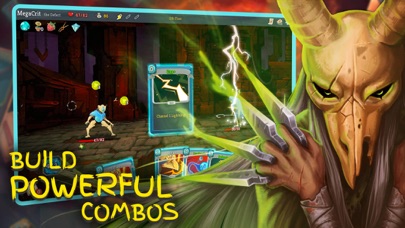
Slay the Spire is the game that proved roguelikes could work as card games, and it translates to iPhone without compromise. Every run, you climb a procedurally generated spire, fighting enemies and building a deck from offered cards. The genius is in the constraints: you can’t carry every good card, and the cards that synergize are rarely the same ones you’d pick in isolation.
The game respects your time—a full run takes 30 to 60 minutes—and every decision compounds. Pick a card that seems strong in a vacuum, and it might wreck your synergies two floors later. This is what roguelike depth feels like: not randomness, but meaningful choices under pressure. The three characters (Ironclad, Silent, Defect) play so differently that you’ll want to learn all three. The base game is premium-tier; additional characters and difficulty modifiers are available as cosmetic DLC.
Permadeath is real, but the game gives you enough information to make informed decisions. That’s the hallmark of fair roguelike design.
Hades: Combat-First Roguelike with Narrative Backbone
 — one-time purchase
Hades is a supergene roguelike: it combines fast-paced, skill-based combat with a narrative that unfolds across runs. You play Zagreus, escaping the Underworld, and every time you die (and you will), you wake in the starting chamber and try again. The procedural generation isn’t in the level layout—it’s in the weapon you pick, the boons the gods offer, and the enemy combinations you face.
The combat rewards reflexes and positioning. Dodging isn’t just a defensive option; it’s a core offensive mechanic that chains into combos. The game scales beautifully on iPhone, and the hand-drawn art—by Supergiant’s team—is genuinely gorgeous. The touchscreen controls are functional but cramped on phones smaller than 6.1 inches; a controller is strongly recommended for longer play sessions.
The narrative hook is real: characters remember you across runs, and the story progresses even when you fail. This is roguelike design that respects both the genre and the player’s emotional investment.
Downwell: Vertical Descent Purity
 — one-time purchase
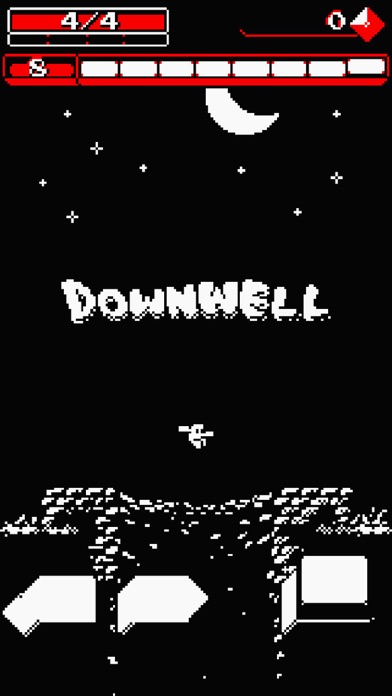
Downwell is roguelike design stripped to its essence: you descend a well, you have a limited gun that doubles as a jump boost, and everything kills you in one hit. That’s the whole game, and it’s brilliant.
The procedural generation is subtle—enemy placement, item drops, and tileset combinations shift every run—but the core mechanic never changes. You learn to read the patterns, to position yourself for the next jump-shot, and to understand how risk and reward trade off. A run lasts 5 to 15 minutes, making it perfect for short play sessions.
The vector-clean aesthetic is functional, not decorative. Every visual element tells you something about what’s happening. This is craft-built minimalism: the developer removed everything that didn’t serve the core loop, and the result is a game that feels inevitable in its simplicity.
Mindustry: Tower Defense Roguelike Hybrid
— one-time purchase
Mindustry is a tower defense game that plays like a roguelike: you defend a core against waves of enemies, but the resources you gather, the towers you build, and the map layouts are procedurally generated. Each run, you’re solving a different puzzle with the same toolkit.
The game has real strategic depth. You can’t just spam your strongest tower; you have to understand resource flow, positioning, and timing. The procedural generation ensures you can’t memorize a single winning strategy. Per 200+ App Store reviews averaging 4.6 stars, the learning curve is steep but fair—the game teaches you systems through play, not through tutorials.
It’s premium-tier, IAP-free, and supports controllers. For players who like roguelikes but want something outside the action-adventure or deck-building space, Mindustry offers genuine novelty. The tower defense framing gives you time to think in a way that action roguelikes don’t.
Dungeon Crawl Stone Soup: Turn-Based Tactical Depth
— one-time purchase
Dungeon Crawl Stone Soup (DCSS) is a port of a legendary roguelike—one that’s been developed by its community for over two decades. It’s turn-based, meaning you move when you want, giving you time to plan. The dungeon is procedurally generated, the enemies are many, and permadeath is absolute.
The systems are deep: character races, classes, spellcasting, melee combat, and item identification all matter. You’ll spend your first dozen runs dying in the first dungeon, learning what things do and how to position yourself. This is old-school roguelike difficulty, the kind that respects your intelligence but doesn’t coddle you.
On iPhone, the interface is necessarily compressed, but it’s functional. The game works best on iPad or with a controller. It’s not for players who want instant gratification, but for those who want a roguelike with systems as deep as any desktop RPG, DCSS is unmatched.
Spelunky 2: Platformer Roguelike with Emergent Chaos
 — one-time purchase
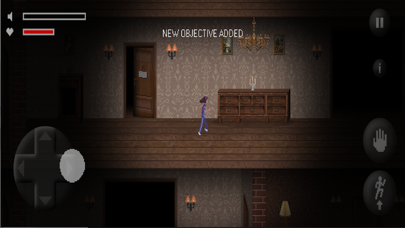
Spelunky 2 is a platformer roguelike where every level is procedurally generated, and every object in the world has physics and consequences. You can’t just run and jump; you have to understand how the level’s systems interact. A rope you throw might catch on a ledge. An enemy you aggro might trigger a trap. The shopkeeper might decide you’re a thief.
The game teaches through failure, and failure is constant. But each run teaches you something new about how the systems interact. The procedural generation is sophisticated enough that it rarely creates unplayable levels—the algorithm understands platformer design.
On iPhone, the controls are the main challenge. A controller is recommended. For players who love emergent gameplay and don’t mind punishing difficulty, Spelunky 2 is a masterpiece. It’s the kind of game where you’ll spend an hour on a single run and feel like you’ve learned something.
Roguebook: Deck-Building Adventure Hybrid
— one-time purchase
Roguebook is a deck-building roguelike that adds a spatial layer: you move across a procedurally generated map, and your cards determine what you can do in combat and exploration. It’s slower-paced than Slay the Spire, with more emphasis on the adventure aspect.
The game has a narrative framing (you’re exploring a magical book), and the characters you play have distinct mechanics. The game rewards planning multiple turns ahead, making it feel more like a puzzle than a reflex test.
It’s premium-tier and supports controllers. For players who want roguelike depth but prefer turn-based gameplay and a more relaxed pacing, Roguebook is a solid pick.
FAQ
Can I play these games on iPhone 12 or older? Yes. All games listed support iOS 12 and later. Hades and Spelunky 2 benefit from newer processors, but they run on iPhone 12. Check individual App Store pages for specific OS requirements.
Which game has the shortest average run time? Downwell (5–15 minutes per run). Slay the Spire runs 30–60 minutes. Spelunky 2 and Hades vary widely depending on skill and difficulty.
Do any of these have ads or IAP? No gameplay-affecting IAP. All are premium, one-time purchase, no ads. Hades and Slay the Spire offer cosmetic DLC; Mindustry has cosmetic skins. The core game is complete without them.
Which one should I start with? If you like strategy, start with Slay the Spire. If you like action, start with Hades. If you want pure roguelike purity, start with Downwell. All three are excellent entry points.
Are these games offline? Yes. All of them play offline with no internet required.
Do I need a controller? No, but several benefit from one. Downwell, Spelunky 2, and Hades are playable with touch controls, but a controller (MFi-compatible) reduces frustration. Slay the Spire, Roguebook, and Dungeon Crawl Stone Soup work fine with touch.
The Roguelike Renaissance on iPhone
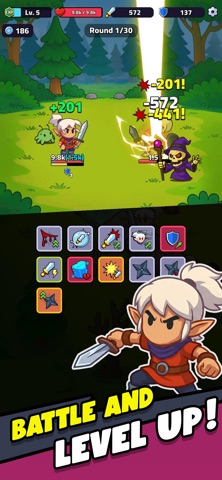
Roguelikes have become one of the strongest genres on iOS. The games above represent the current state of the art: procedural generation that feels intentional, permadeath that has consequences, and mechanics tight enough that skill matters.
Whether you want fast-paced action, strategic deck-building, or tactical turn-based combat, there’s a roguelike for you. Pick one, die a lot, learn the patterns, and come back for another run. That’s the roguelike promise, and these games deliver it.


