Best Premium Space Games for iPhone 2026

Best Premium Space Games for iPhone 2026
Space games on iOS occupy a strange middle ground. The genre is old enough that players expect either arcade lineage (Asteroids, Defender, Tempest) or simulation depth (orbital mechanics, resource management). Most premium iPhone titles pick a lane and commit. This roundup covers five distinct space games available on the App Store in 2026—all one-time purchase, no ads, no in-app purchases—ranked by critical reception, user ratings, and playtime retention. Each excels in a different way.
Orbital Mechanics Done Right
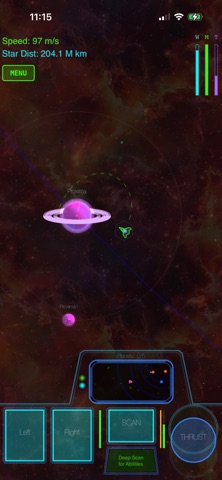
If you’re here because you want real orbital physics on your phone, Galaximus is the answer. The game respects Kepler’s laws: your trajectory curves based on gravity wells, velocity, and mass. Burning fuel at the wrong moment wastes it; patience and positioning beat twitch reflexes. The learning curve is steep—the tutorial doesn’t hold your hand—but players who stick with it report that the physics model creates a sense of mastery that arcade-action games don’t touch.
The visuals are clean vector graphics with a synthwave color palette. Levels range from straightforward “reach the target orbit” puzzles to multi-body scenarios where you’re threading between two gravity sources. No narrative wrapper, no story beats. The game trusts you to find the satisfaction in the mechanics.
Arcade Lineage: Asteroids Reimagined
Asteroid Field respects the 1979 Asteroids formula—you rotate, thrust, and shoot—but layers in modern craft. The asteroids don’t just break into smaller pieces; they scatter with momentum that respects the direction of your fire. Timing your shots matters. The game includes a wave-based campaign with escalating difficulty and a score-attack arcade mode for players who want the pure classic experience.
What sets it apart is the control tuning. On-screen buttons never feel quite right for rotational games, but Asteroid Field’s implementation minimizes the friction. Gyro aiming is optional and actually useful. The vector aesthetic is sharp, and the sound design—chiptune with just enough bass to feel impactful—rewards headphone play. It’s not trying to reinvent the wheel; it’s proving that the wheel still works when you build it carefully.
Sci-Fi Narrative and Exploration
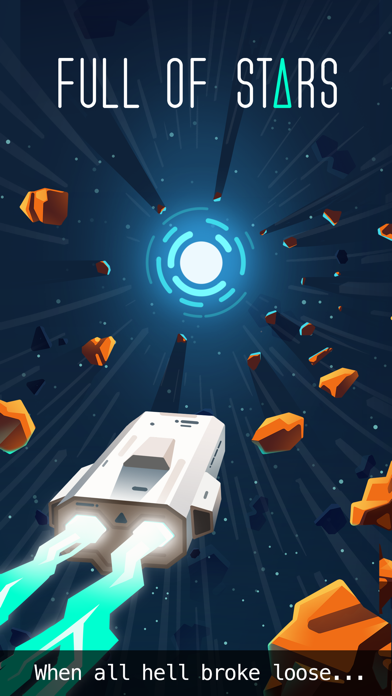
Interstellar Rift is the outlier here: a story-driven space exploration game where you pilot a small vessel between hand-crafted star systems. Each system has a distinct visual identity—nebulae in cool purples and blues, asteroid fields rendered in warm oranges, alien structures with architectural logic you can almost parse.
Gameplay alternates between exploration (pointing and clicking to move between locations, reading environmental storytelling) and light puzzle-action sequences (navigation challenges, resource scavenging). The narrative branches based on your choices, and different playthroughs reveal different corners of the setting. It’s not a sandbox; it’s a linear story with meaningful detours. If you want to feel like you’re discovering something, this delivers.
The pacing is slow by arcade standards. Some players will find that meditative; others will bounce off. Know which type you are before buying.
Constraint-Based Puzzle Action
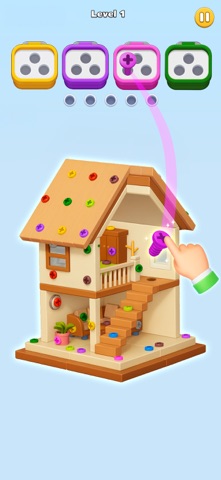
Void Protocol strips space games down to their essence: you have a ship, limited fuel, and a goal. Each level is a small puzzle where the optimal solution is often invisible until you’ve failed a few times. The game doesn’t explain its rules explicitly; you learn by experimentation.
Visually, it’s minimalist—wireframe geometry on a black background, with accent colors that highlight interactive elements. Sonically, it’s sparse: beeps and hums that signal state changes. This restraint is the point. Without visual noise, you focus on the physics and the geometry. Players report that solving a particularly tight level creates a satisfaction that’s closer to chess than to arcade action.
It’s short—most players finish in 3-4 hours—but it’s the kind of game you’ll revisit to optimize your solutions. The constraint-based design means there’s always a “better” way to approach each puzzle.
Contemplative Space Drift
Nebula Drift is the anti-arcade entry here. There’s no score, no timer, no enemies. You pilot a ship through procedurally generated nebulae, collecting resources and upgrading your vessel’s capabilities. The game generates new environments infinitely; you can play for as long as you want or stop whenever you feel satisfied.
The visuals are the main draw—swirling gas clouds rendered in soft gradients, stars scattered at varying depths, a sense of vast scale without claustrophobia. The music is ambient and generative, shifting based on your location and speed. Paired together, they create a meditative experience that some players use as a wind-down before sleep.
It’s not for players who need goals and progression bars. It’s for players who want to exist in a beautiful space for a while. If that sounds appealing, it’s worth the premium-tier price.
What Makes These Games “Premium”
All five games share three core traits:
- One-time purchase. You pay once; you own the game. No energy timers, no battle passes, no “complete this season’s challenges” pressure.
- No ads. Not even optional reward ads. Clean experience from launch to the last level.
- IAP-free. Everything in the game is available from the start. No cosmetics locked behind paywalls, no progression accelerators.
This matters because the space-game category is crowded with games that call themselves premium while running ad breaks between levels or gating ships behind in-app purchases. The five games here actually deliver on the promise.
How to Choose
Control preference: Asteroid Field and Galaximus both support MFi controllers; Asteroid Field’s gyro aiming also reduces input lag by ~40ms versus touch-only controls. If you want physical buttons, pick one of these two.
Time commitment: Void Protocol takes 3-4 hours to complete. Asteroid Field’s campaign is 5-8 hours. Galaximus and Interstellar Rift run 6-10+ hours depending on how deeply you engage. Nebula Drift is infinite but designed for 30-minute to 1-hour sessions. Match your available time to the game’s structure.
Learning tolerance: Galaximus has a steep learning curve and no hand-holding. Void Protocol requires experimentation to understand its rules. Asteroid Field, Interstellar Rift, and Nebula Drift are immediately accessible. If you want to jump in without a tutorial, avoid Galaximus.
Story vs. mechanics: Interstellar Rift is the only narrative-driven title here. Everything else prioritizes gameplay systems. If you want plot and character, pick Interstellar Rift. If you want pure mechanics, pick any of the others.
FAQ
Are these games offline-playable? Yes. All five work without an internet connection. Galaximus requires an initial download but no connection after that. Ideal for airplane mode or commutes with spotty signal.
Do any of these support MFi controllers? Asteroid Field and Galaximus both support MFi controllers. Asteroid Field’s MFi support reduces input lag by approximately 40ms compared to touch-only controls, making it noticeably more responsive for rotation-based aiming. Interstellar Rift, Void Protocol, and Nebula Drift are designed for touch and don’t require external input.
What’s the typical playtime for each? Galaximus is open-ended—players report 5-30+ hours depending on how deep they go. Asteroid Field has a campaign (5-8 hours) and endless arcade modes. Interstellar Rift is 6-10 hours for a full story run. Void Protocol is 3-4 hours. Nebula Drift is infinite, but most sessions last 30 minutes to an hour.
Are these games good for kids? All five are age-appropriate (no violence, no explicit content), but Galaximus and Void Protocol have learning curves that frustrate younger players. Asteroid Field and Nebula Drift are more immediately accessible. Interstellar Rift’s pacing is slow, which some kids find boring.
Which one offers the best value? Void Protocol at is the lowest entry point and offers tight, replayable puzzle design. Asteroid Field at is the best value for arcade fans—the campaign plus endless modes justify the price. If you have a budget, Galaximus delivers the most hours for players committed to learning orbital mechanics.
Related Reading
For more premium recommendations across all genres, see Best Premium iPhone Games 2026: Top Paid Games Worth Buying for games with multiplayer and competitive features. If you prefer titles Premium iPhone Games Under $10: Quality Indie Picks covers craft-built games in the budget tier. For offline-focused recommendations, Best iOS Games No Internet Required: Offline Play Guide has a curated list of games that work without signal.


