Indie Puzzle Games for iPhone Without Ads

Photo by Tanja Tepavac on Unsplash
Indie Puzzle Games for iPhone Without Ads
Finding a puzzle game on the App Store that doesn’t interrupt you with ads every 90 seconds or gate progression behind energy timers is harder than it should be. The indie developers who build genuine puzzle experiences—games that respect your time and attention—are still out there, but they’re buried under layers of free-to-play noise. This guide surfaces the ones worth your attention: craft-built puzzle games that charge once and leave you alone.
What Makes a Puzzle Game “Premium”
On the App Store, the word “premium” gets slapped onto games that still serve ads between levels or lock progression behind a 4-hour energy timer. For this guide, premium means something stricter: one purchase, complete game, no ads, no in-app purchases, no energy system. The game ends when you finish it or reach a natural stopping point—not when the monetization clock runs out.
All games in this guide meet this definition. When a developer can’t rely on engagement metrics and ad revenue to prop up weak level design, every puzzle has to work. Difficulty curves get tuned carefully. Tutorials don’t feel like tutorials because they’re woven into the first few levels. The game respects your intelligence and your time.
Logic and Constraint-Based Puzzles
These games lean on systems and rules rather than reflexes. You have time to think, and the satisfaction comes from finding an elegant solution within tight constraints.
Opus Magnum exemplifies this approach. You’re given a set of mechanical arms, a grid, and a chemical reaction to produce. The puzzle is to position and time your arms so they execute the reaction efficiently. There’s always a solution, often multiple solutions, and the game rewards you for finding the most elegant one. No timer. No ads. Just you and the constraint space.
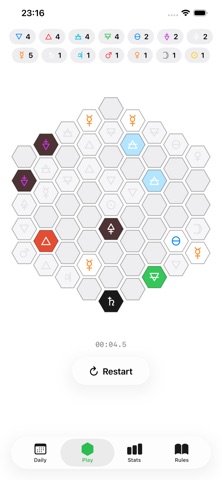
A Monster’s Expedition takes block-pushing—a mechanic as old as Sokoban—and wraps it in a gentle narrative about a monster exploring a museum. The puzzles escalate in complexity without ever feeling punitive. The pacing is deliberate; you’re meant to sit with each puzzle until something clicks. Importantly, there’s no “undo limit” or “move counter” that forces you to restart. The game trusts you to learn by experimenting.
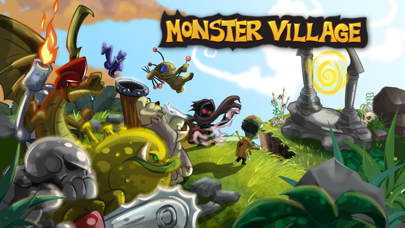
The Witness is a masterwork in environmental puzzle-solving. You explore an island and solve line-drawing puzzles embedded in the landscape. Each puzzle teaches you a rule through example rather than explanation. It’s meditative and challenging in equal measure, and the iOS port preserves the full experience without compromise.
Tile-Shifting and Pattern Games
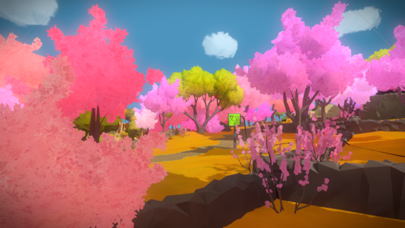
These games take a simple mechanic—slide tiles, match patterns, arrange blocks—and build enormous depth on top of it.
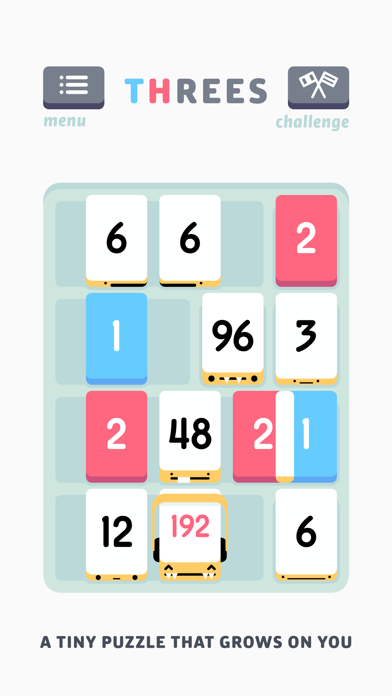
Threes! is the original. Two players, one board, tiles that double when they touch. It’s elegant, it’s maddening, it’s addictive in the way only perfectly-balanced games are. The game that followed it (2048) became more famous, but Threes! is the more thoughtful design.
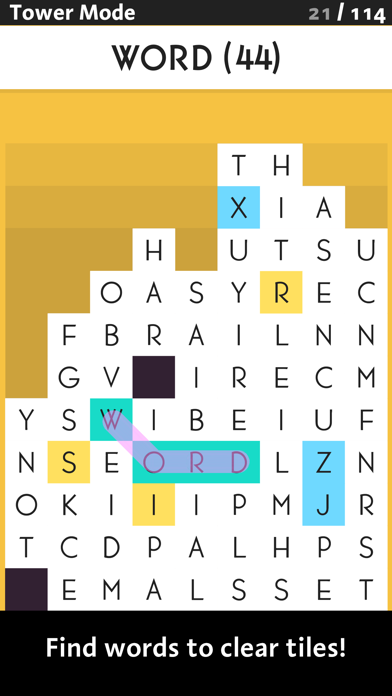
Spelltower marries word search with tile-shifting. You swipe adjacent letters to form words, and when you do, the tiles above fall down—creating cascades and new word opportunities. It’s part puzzle, part word game, part Tetris. The difficulty curve is generous enough for casual players but deep enough to keep word-game enthusiasts busy for weeks.
Letterpress is a word game built on a grid. You and an opponent (or the AI) take turns claiming letter tiles by spelling words. Once you claim a tile, your opponent has to use more letters to take it back. It’s chess-like in its strategic depth, wrapped in a deceptively simple interface.
Narrative Puzzle Games
Some of the best indie puzzle experiences weave story and mechanics together so tightly you can’t separate them.
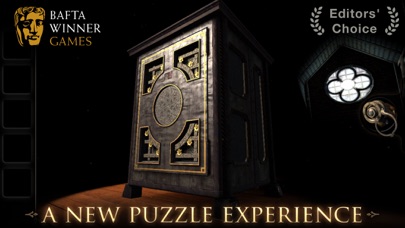
The Room series (starting with the original, then The Room Two, The Room Three) treats puzzle-solving like archaeology. You’re examining a mysterious locked box, manipulating hidden mechanisms, uncovering clues. Each game is a self-contained mystery with beautiful hand-crafted visuals and sound design that makes every click satisfying.
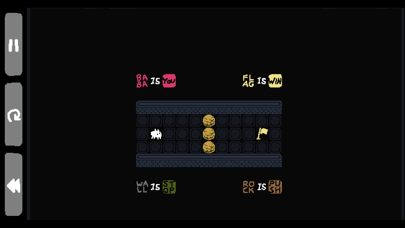
Baba Is You flips the script on puzzle design. The rules of the game are written as objects on the screen, and you push the words around to change the rules. “Baba Is You” means you control Baba. Change it to “Baba Is Wall” and you become an obstacle. It’s conceptually wild and mechanically brilliant, and it respects your ability to experiment and fail without penalty.
Picross S (and its sequels) brings nonogram puzzles—the pencil-and-paper logic puzzles—to the iPhone with polish. You’re given a grid and number clues; you fill in squares to reveal a pixel-art image. There’s no time pressure, no ads between puzzles, just hundreds of handcrafted nonograms ranging from easy to brutally difficult.
Spatial and Physics-Based Puzzles
These games ask you to think in three dimensions or work within physics constraints.
Tumble Seed is a marble-rolling puzzle game with a twist: you tilt the world, not the marble. You’re guiding a seed down a hand-drawn landscape, collecting power-ups and solving environmental puzzles. The art style is gorgeous, the controls are intuitive, and the difficulty ramps thoughtfully.
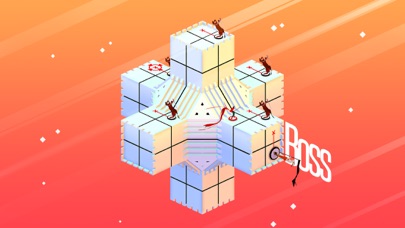
Euclidean Lands is an isometric puzzle game about moving blocky animals across grid-based levels. Rotate the world, slide the creatures into place, solve the spatial constraint. It looks like a toy and plays like a logic puzzle.
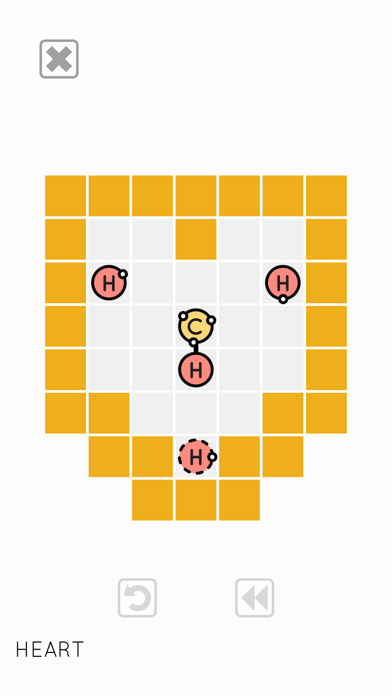
Sokobond is Sokoban with atoms. You’re bonding molecules by pushing atoms into the right configurations. It’s chemistry-flavored block-pushing, and it works because the theme reinforces the mechanic. The puzzles escalate from trivial to genuinely tricky.
Pricing and Commitment
Most premium puzzle games on this list and. A few premium titles (notably The Witness and Baba Is You) sit at the higher end. You pay once at purchase; there are no additional charges, no energy systems, and no ads. The game is yours to play indefinitely.
Where to Find More
If you’ve worked through these and want to keep exploring:
- TouchArcade’s Premium Games Forum (toucharcade.com/forums) hosts active discussion of new indie releases. Search the puzzle games subforum for recent recommendations from players who prioritize craft over monetization.
- r/iosgaming’s monthly premium game recommendations thread (search “premium” on r/iosgaming) surfaces community picks with detailed discussion of what makes each game worth the price.
- AppShopper (appshopper.com) tracks App Store releases and lets you filter by price and category. Set it to “paid” and “puzzle” and check weekly. Most premium puzzle games stay under the radar until word-of-mouth builds.
FAQ
Do these games work offline? All of the games listed above work offline. They’re self-contained experiences with no server dependency. Download them once and play anywhere.
What if I don’t like puzzle games but want a thoughtful indie experience? Check r/iosgaming’s monthly premium game recommendations thread for coverage of strategy, narrative, and arcade-action games with the same premium (no ads, no IAP) constraint.
How long do these games take to finish? It varies widely per player. Per App Store reviews and player reports: Threes! and Spelltower are endless (you play until you lose), while The Witness takes 10-20 hours for a thorough playthrough. Opus Magnum and Baba Is You sit in the 5-10 hour range for most players. Read the App Store description for developer estimates.
Will these games get updates? Most of the games listed here are “finished” products—the developer shipped a complete game and moved on. Updates are rare but not unheard of. The upside: no pressure to chase new seasons or battle passes. The game you buy today is the game you’ll play in five years.
The Bottom Line
Indie puzzle games without ads are a discipline: they force developers to make every element count. There’s no engagement metric padding, no dark-pattern monetization, no artificial scarcity. What you get instead is craft—games where someone spent time thinking about how to make a single mechanic feel good and scale it into dozens of satisfying puzzles.
If you’re tired of free-to-play noise, these games are your antidote. Pick one, pay once, and enjoy the peace of a game that respects your attention.


