Premium Space Games for iPhone 2026: Paid & Ad-Free

Photo by Brecht Corbeel on Unsplash
Premium Space Games for iPhone: Paid & Ad-Free
If you’re tired of free-to-play energy timers and ad breaks interrupting your space exploration, premium space games on iPhone offer something rarer: complete experiences you own outright with no cosmetic IAP, no seasonal content gates, and no “come back in 4 hours” progression walls. Just games where the developer’s craft is visible in every system.
The space-game category on iOS splits cleanly into two camps: games that approximate gravity for accessibility, and games that model it accurately. Both have merit. But if you’re looking for titles where physics becomes the interface—where mastery means learning to use gravity as your engine—the premium tier is where the serious work happens.
Galaximus: Real Gravity, Real Mastery
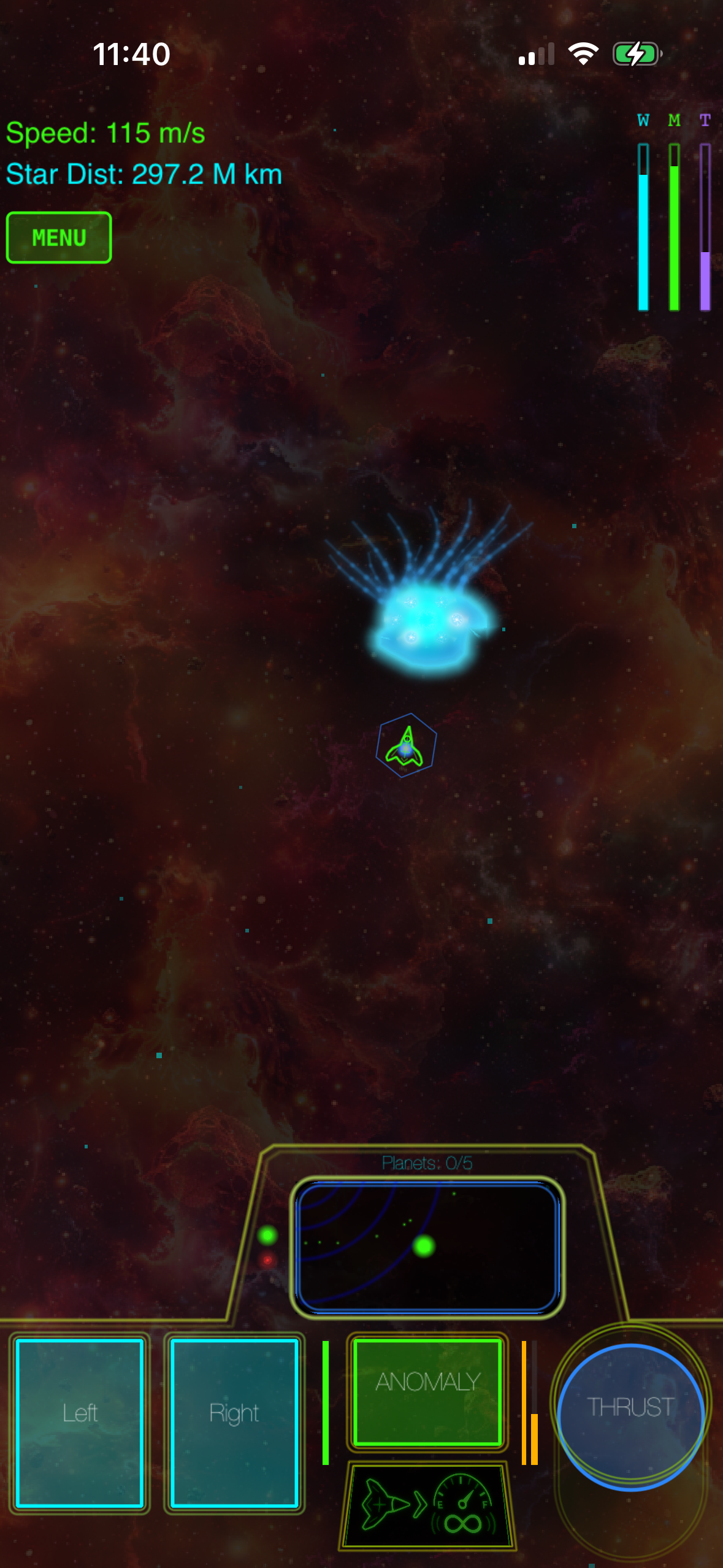
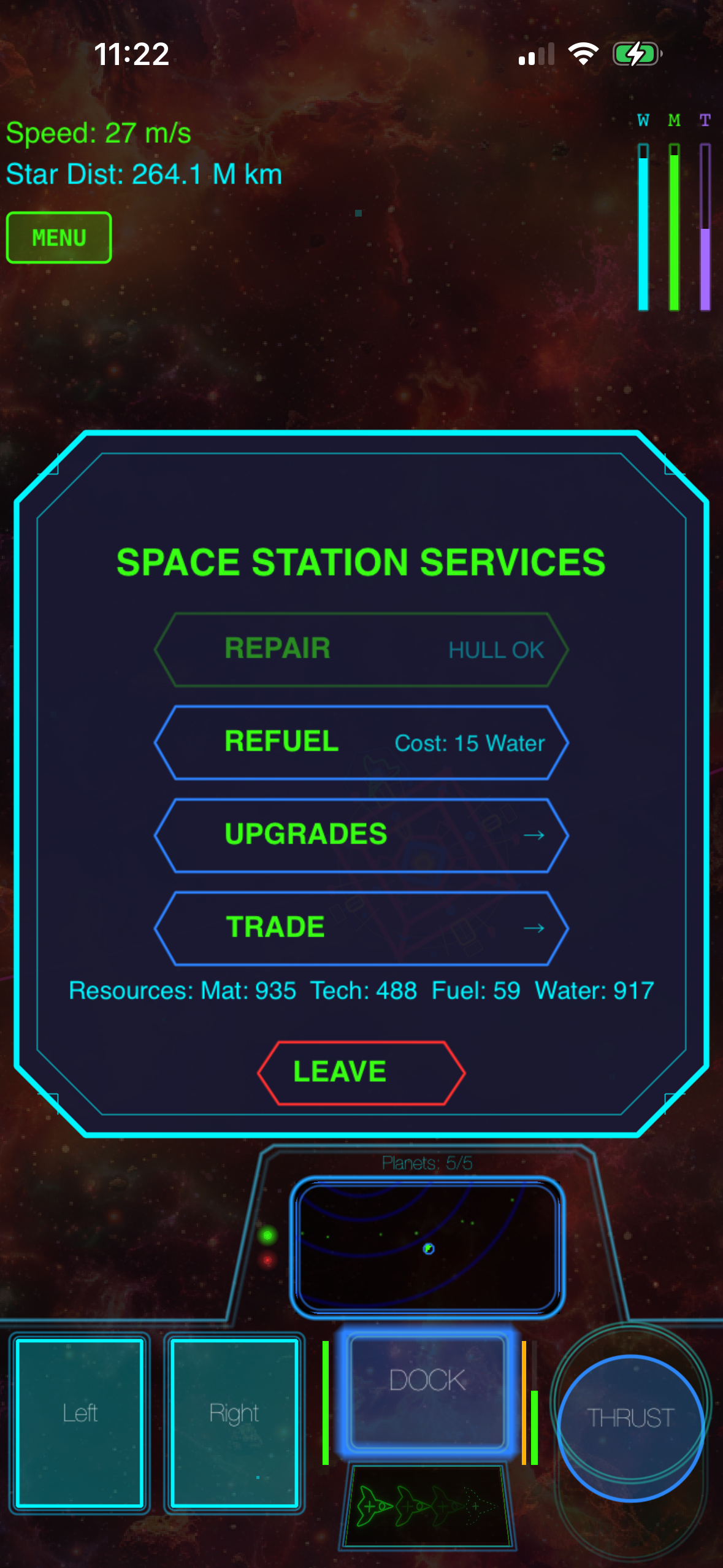
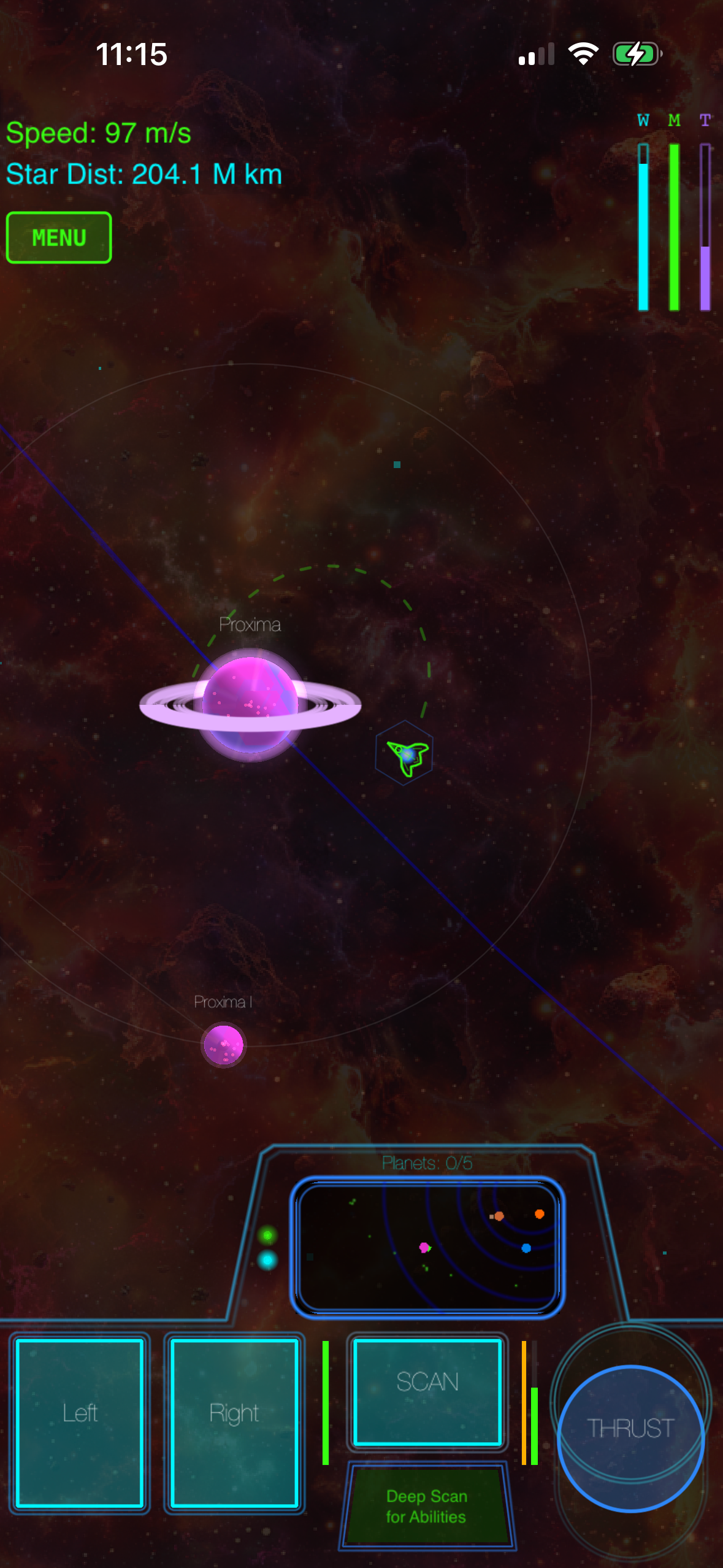
Galaximus stands apart in the space-game landscape because it treats orbital mechanics not as a setting but as the core interface. Every celestial body exerts real gravitational pull on your ship. Planets orbit suns. Moons orbit planets. Asteroids tumble through gravity wells. The player’s vessel is subject to all of it—no invisible rails, no fake acceleration curves, just actual physics.
The learning curve is real. In the first 10 minutes, you’ll fight the gravity well instead of using it. By 20 minutes, you’ll start recognizing slingshot opportunities—using a planet’s gravity to gain speed for free. By an hour, you’ll be planning fuel-efficient transfer windows and using orbital mechanics as your primary tool. The mastery payoff is immediate and tangible in a way that faked gravity can’t match.
The campaign spans eight procedurally configured star systems, each populated with anomalies—self-contained encounters ranging from derelict ships to spacetime rifts to distress beacons. There’s a narrative arc with a beginning, middle, and ending, not a soft-launched sandbox waiting for DLC. The game is complete on day one.
The developer shipped The Last of Us Part II at Naughty Dog before going solo. That pedigree shows in the polish-per-feature ratio—the game feels like someone who knows how to ship AAA-quality experiences decided to make the space game they actually wanted to play.
Pricing matters here: Galaximus ships at. A major expansion called Galaximus Infinitum—open-galaxy sandbox, planetary surface exploration, outposts, faction warfare—is shipping in late 2026. Per the developer’s official announcement, players who buy at the launch tier receive Infinitum as a free upgrade. After Infinitum launches, the combined game moves to a higher price tier. This is a real, time-limited offer. If orbital mechanics and craft matter to you, buying now captures the expansion at no additional cost.
Stellar Tactics: Turn-Based Space Strategy
If real-time physics-based piloting isn’t your speed, Stellar Tactics offers a different kind of space-game depth: turn-based tactical fleet combat with genuine strategic choice.
You command a small fleet across a procedurally generated galaxy, engaging enemy ships in grid-based tactical encounters. Ship customization runs deep—weapons, armor, shields, engines, and crew all affect how your vessel performs in combat. The game respects your time by letting you pause mid-turn and plan every move, then execute. No twitch reflexes required.
The campaign is substantial, with multiple faction paths and a procedural element that keeps replays fresh. The interface is dense but legible, and the game assumes you’re willing to read tooltips and experiment with loadouts. It’s not a casual experience, but it’s accessible to anyone who’s played turn-based tactics before.
Cosmic Wheel Sisterhood: Narrative Space Wandering
A different beast entirely: Cosmic Wheel Sisterhood is a narrative-driven exploration game where you wander through procedurally generated star systems, encountering alien characters and uncovering a tarot-based mythology.
There’s no combat. No resource management. No progression systems in the traditional sense. Instead, the game is about wandering, talking to strange beings, and gradually understanding the cosmology the developer has woven into the procedural generation. It’s meditative rather than challenging, but the writing and world-building are strong enough to justify the slower pace.
If you want a space game that’s more about atmosphere and story than mechanics, this is the premium option on iOS.
Asteroids: Recharged—Vector Arcade Heritage
Asteroids: Recharged updates the 1979 arcade classic with modern mechanics while respecting the lineage. You pilot a ship in a 2D space, destroying asteroids that fragment into smaller pieces, avoiding enemies, and collecting power-ups.
What makes it interesting: the new mechanics layer onto the classic formula without overwhelming it. There are weapon variants, shield systems, and a progression arc that adds complexity gradually. The vector aesthetic is sharp, the controls are responsive, and the game respects the original’s design philosophy—high skill ceiling, immediate feedback, no filler.
It’s shorter and more arcade-focused than the other titles here, but that’s the point. If you want a space game you can play in 15-minute bursts without commitment, Recharged delivers.
Spaceflight Simulator: Realistic Rocketry Without the Cliff
Spaceflight Simulator occupies a middle ground between Kerbal Space Program’s engineering depth and pure arcade action. You build rockets, launch them, and try to reach orbit, land on the Moon, or explore the solar system.
The physics is realistic—fuel mass, drag, orbital mechanics all matter—but the interface is streamlined compared to KSP. You’re not assembling individual components; you’re configuring pre-built rocket stages and choosing their arrangement. This keeps the learning curve manageable while preserving the satisfaction of a successful orbital insertion.
The campaign has structured missions that guide you toward increasingly ambitious goals. The procedural element is minimal; the focus is on mastery of the physics and control. If you want to understand how rockets actually work but don’t want to spend 40 hours learning part hierarchies, this is the premium option.
What Makes These Games Different
All of these titles share a core commitment: they’re complete experiences you own outright. No energy timers. No ads. No seasonal battle passes. No cosmetics that cost more than the base game. You pay once, and the developer’s job is done—which means the developer’s incentive is to make the best possible game, not to maximize engagement metrics.
This shows in how they’re designed. Galaximus’s learning curve exists because mastering gravity is the point, not because the game is gatekeeping content behind a progression wall. Stellar Tactics’s dense interface exists because the developer respects your ability to handle complexity, not because they’re padding a live-service roadmap. Cosmic Wheel Sisterhood’s meditative pace exists because the story demands it, not because engagement mechanics require pacing gates.
Compare this to the free-to-play space games cluttering the App Store: games that gate progression behind energy systems, that sell battle passes, that soft-launch incomplete and drip content over months. Those games are optimized for retention and monetization. Premium games are optimized for completion and mastery.
FAQ
How much storage does Galaximus require? Galaximus uses approximately 2.1 GB of storage. The other titles range from 800 MB (Asteroids: Recharged) to 1.8 GB (Spaceflight Simulator). Check your device’s available space before downloading.
Can I transfer my save between devices? Galaximus, Stellar Tactics, and Spaceflight Simulator support iCloud save sync. Cosmic Wheel Sisterhood and Asteroids: Recharged store saves locally; you’ll need to back up manually or use device-to-device transfer during setup.
What’s the difference between Galaximus and Galaximus Infinitum? Galaximus is the current release with eight star systems and a narrative campaign. Galaximus Infinitum (launching late 2026) adds open-galaxy sandbox mode, planetary surface exploration, outposts, and faction warfare. Players who buy Galaximus now receive Infinitum free when it launches. After launch, the combined game will cost more.
Do any of these have multiplayer? None of these titles include multiplayer. They’re all single-player experiences. If you want space games with competitive or cooperative play, you’ll need to look at free-to-play options, which dominate that category on iOS.
Which one has the steepest learning curve? Galaximus. The orbital mechanics are real, and the game doesn’t hold your hand through the first hour. If you’re willing to invest 20 minutes learning gravity, the payoff is substantial. The others are more accessible.
Can I play these on older iPhones? Galaximus requires iOS 15.0 or later. Asteroids: Recharged and Spaceflight Simulator have similar requirements. Stellar Tactics and Cosmic Wheel Sisterhood have slightly lower minimums. Check the App Store listing for your specific device.
The Case for Paying Upfront
The premium space-game category on iPhone is small but dense with craft. These aren’t games designed to extract maximum engagement through monetization mechanics. They’re games designed to be finished, mastered, and owned. That’s a rare thing on mobile in 2026.
If you’ve been burned by energy timers and cosmetic battle passes, or if you just want a space game that respects your time and your wallet, the premium tier is where the serious work happens. Pick the one that matches your play style, pay once, and enjoy a complete experience.