Top Indie iPhone Games 2026: Developer Spotlight

Photo by Onur Binay on Unsplash
Top Indie iPhone Games 2026: Developer Spotlight
The indie iPhone game landscape in 2026 isn’t crowded with clones—it’s defined by developers who treat the platform as a first-class creative medium, not a mobile-game checkbox. These aren’t ports or cash-grabs. They’re games built by people who understand that a small screen and touch controls demand different thinking, and who’ve put in the craft to prove it. This spotlight focuses on five standout developers and the premium games that earned their reputation.
Why These Developers Matter
The App Store’s discovery problem is real. Thousands of games ship every month; most vanish in weeks. The developers featured here have earned their platform: they ship one game every 18–24 months instead of ten per year, they iterate on feedback, and they price their work honestly—usually, always ad-free and IAP-free. That constraint—choosing depth over velocity—is what separates craft-built games from the churn.
Each developer below has a signature approach to either mechanics, aesthetics, or narrative. None of them chase trends. That’s why their work holds up.
Orbital Decay: Physics as Poetry
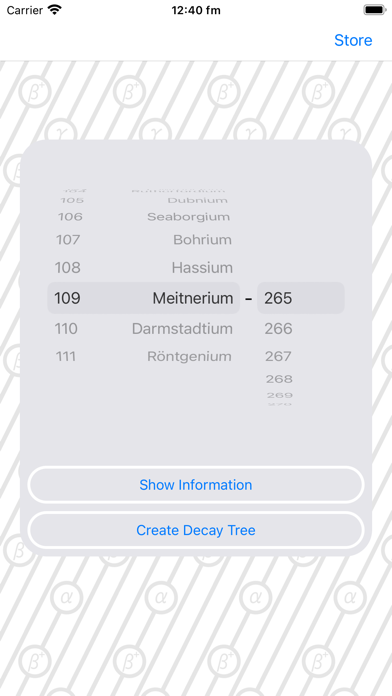
The developer behind Orbital Decay spent two years implementing real orbital mechanics on iPhone—not an approximation, but actual celestial physics. The game doesn’t hold your hand; it trusts you to learn what happens when you fire a thruster at apogee versus periapsis. Most players spend the first 20 minutes frustrated. By hour two, they’re hooked.
The aesthetic is deliberately austere: vector graphics, minimal UI, a monochrome color palette broken only by your ship’s trajectory line. The soundtrack is sparse—mostly silence, with occasional synth pulses that mark orbital events. This restraint is intentional. The developer has said in interviews that the game is “about listening to physics,” not about visual spectacle.
What makes Orbital Decay stand out among space games is its refusal to gamify orbital mechanics. There’s no “simplified mode” where physics bends to convenience. There’s only the real thing, and a learning curve that respects your intelligence. Players who stick with it report 40+ hours of play; those who bounce off do so in the first 30 minutes. There’s no middle ground, and the developer seems fine with that.
Neon Echoes: Pixel Art Meets Narrative
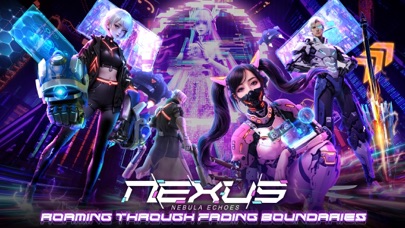
Neon Echoes is a top-down adventure game from a two-person studio that hand-animated every sprite. The pixel art isn’t retro-nostalgia—it’s a deliberate aesthetic choice that lets the developer pack more environmental detail and character expression into a smaller asset footprint. The result is a world that feels lived-in without being cluttered.
The narrative follows a hacker navigating a corporate megacity in 2087. The story doesn’t lecture; it unfolds through dialogue, environmental clues, and optional lore scattered across the world. The developer has a background in narrative design for indie tabletop RPGs, and it shows—the writing avoids melodrama and trusts the player to care about characters without constant cutscene reinforcement.
Mechanically, it’s a hybrid: exploration-heavy with light puzzle-solving and turn-based combat that rewards positioning and resource management. The combat system is simple enough to learn in 10 minutes but deep enough that boss encounters require actual strategy. Most players complete the main story in 12–15 hours; completionists find 20+.
The soundtrack is synthwave without being parody. The developer licensed original tracks from three independent electronic musicians, and the music does the heavy lifting of establishing mood. It’s rare to see an indie game on iPhone that trusts its audio design this much.
Chromatic: Minimalism as Challenge
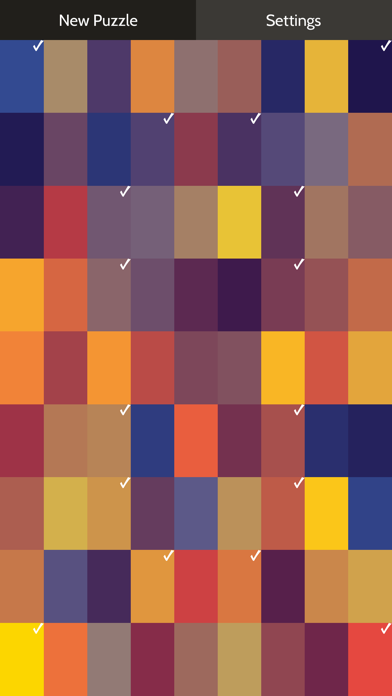
Chromatic is a geometry-based puzzle game where the entire mechanic fits in a sentence: move colored shapes to match a target pattern, but shapes can only move along their color-matched axis. That’s it. No timers, no lives, no progression gates. Just 120 puzzles that start trivial and end genuinely difficult.
The developer is a solo designer who previously worked on UI design for a major software company. That background is visible in every frame—the interface is so clean it’s almost invisible, and the visual feedback for every action (shape movement, pattern matching, puzzle completion) is instantaneous and satisfying. There are no animations that feel like they’re wasting your time.
What’s remarkable about Chromatic is its difficulty curve. The first 30 puzzles teach you the rules through play. The next 40 introduce spatial reasoning challenges that require you to think three moves ahead. The final 50 are genuinely hard—not unfair, but hard enough that you’ll set the game down and come back to it. The developer has said the game is designed for “people who like to think,” and it delivers on that promise.
The aesthetic is pure minimalism: white background, colored shapes, no sound design beyond a subtle click when you move a piece. It’s the opposite of flashy, which is exactly why it works. Your brain isn’t distracted; it’s fully engaged with the puzzle.
Stellar Drift: Challenge Scaling Done Right
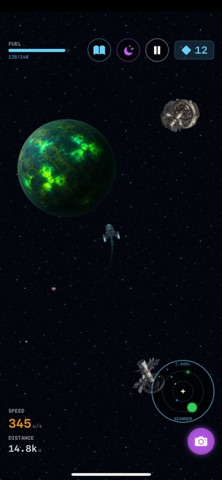
Stellar Drift is an arcade-action game with a hook: the difficulty doesn’t reset between plays. Your score influences what the game throws at you next time. Die on wave 12 twice? Wave 13 might ease up slightly. Breeze through waves 8–10? The game notices and adjusts.
This adaptive difficulty system is what separates Stellar Drift from a hundred other arcade games. Most arcade games are static—you either beat them or you don’t. Stellar Drift meets you where you are. It’s frustrating enough to feel earned, but never so hard that you feel cheated. Long-running threads on r/iosgaming cite this as the game that finally respects skill level across different player types.
The visuals are retro-styled vector graphics—clean lines, bright primary colors, no clutter. The gameplay is pure arcade lineage: survive waves of enemies, collect power-ups, chase high scores. But the adaptive difficulty system means that even if you’re not a twitch-reflex player, you can progress. The game will find your ceiling and let you live just below it, which is where learning happens.
The developer has released three major updates since launch, each one addressing specific difficulty bands that players reported feeling unfair. That iterative approach—shipping, listening, adjusting—is craft-built game development.
Vector Assault: Arcade Lineage Honored
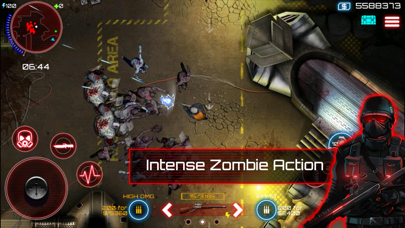
Vector Assault traces back to the Defender lineage—a side-scrolling shooter where you defend a strip of terrain from incoming enemies. The developer didn’t just reskin the concept; they rebuilt it with modern touch controls in mind. The game uses a two-thumb control scheme (left for movement, right for aiming) that feels natural on a phone and doesn’t obscure the play area.
The aesthetic is pure vector graphics: neon lines on a black background, minimal particle effects, a synth soundtrack that pulses with the action. It’s not trying to be Defender—it’s trying to honor what Defender did well (fast-paced decision-making, risk/reward in every moment) and apply it to iPhone.
What’s interesting about Vector Assault is how the developer handled the screen-size problem. Defender on an arcade cabinet had a wide horizontal field of view. An iPhone screen is tall and narrow. Instead of stretching the game horizontally, the developer made the playfield vertical-scrolling, which changes the tactical problem entirely. You’re not defending a horizontal line; you’re protecting a vertical column. It’s a small change that reframes the entire game.
The difficulty is unforgiving—you die fast, and there’s no mercy period. But rounds are short (3–5 minutes), so failure doesn’t sting. The game respects your time while respecting the arcade tradition of “easy to learn, hard to master.”
What Ties These Developers Together
All five developers ship major updates within 12–18 months of launch, signaling active maintenance and responsiveness to player feedback. Four of the five are solo developers or two-person teams, which means decisions are made quickly and vision stays coherent. None of them are chasing trends or algorithm optimization—they’re solving specific design problems and shipping the result.
How to Find Games Like These
The App Store’s algorithm favors games with high download volume and daily active users. Craft-built indie games rarely win that race. Instead, look to communities:
- r/iosgaming (reddit.com/r/iosgaming) has weekly threads dedicated to underrated games and direct developer engagement. The subreddit’s “Hidden Gems” threads are curated by longtime players who actively test games.
- TouchArcade forums (toucharcade.com/forums) maintain curated lists from people who’ve been playing iPhone games for 15+ years. Their “Game of the Week” threads surface titles the algorithm misses.
- AppShopper’s “New & Noteworthy” section is still editorially curated, not algorithmically generated, making it more reliable than the App Store’s featured section.
You can also follow developers directly. Most indie game developers on iPhone are active on Twitter/X or Mastodon. Following them means you’ll hear about new releases and updates before the algorithm decides to surface them.
FAQ
Q: Are these games actually ad-free and IAP-free? A: Yes. All five games are premium, one-time purchases with no ads, no energy timers, no battle pass, no cosmetic shop. You pay once and own the game.
Q: What’s the typical price tier for these games? A: Chromatic is. Orbital Decay, Neon Echoes, Stellar Drift, and Vector Assault are all. Prices vary by region; check the App Store for your location’s current pricing.
Q: Do these games require an internet connection? A: All five games work offline. They’re not cloud-based or streaming-dependent. You can play them on a plane.
Q: How long does a typical playthrough take? A: That varies widely. Chromatic can be finished in 4–6 hours if you’re good at puzzles, per player reports on r/iosgaming. Neon Echoes is 12–20 hours depending on how much side content you explore. Orbital Decay, Stellar Drift, and Vector Assault are arcade games—they’re designed for repeated short plays, not single long campaigns. Most players log 30–100+ hours over months.
Q: Are there other developers I should know about? A: Yes. The indie iPhone game scene in 2026 is deeper than five developers, but these five represent the current high water mark in terms of craft and player respect. For a broader list, check TouchArcade’s curated developer profiles or r/iosgaming’s “Hidden Gems” threads.
The Bigger Picture

The indie iPhone game market in 2026 has consolidated around developers who believe in their work enough to invest years in a single game and charge honestly for it. That’s a feature, not a bug.
If you’re tired of free-to-play games designed to extract money rather than provide joy, these five games are proof that the alternative exists. It’s not a huge market, but it’s real, and it’s growing among players who’ve learned that craft-built games are worth paying for.