Best Arcade Puzzle Games for iPhone: Premium & Ad-Free

Photo by Pandhuya Niking on Unsplash
Best Arcade Puzzle Games for iPhone in 2026
Premium arcade puzzle games on iOS require 5–30 minute focused sessions, unlike energy-gated free-to-play equivalents that reset timers every few hours. The best ones in this category eliminate friction entirely—no energy timers, no “watch an ad to continue,” no dark patterns nudging you toward in-app purchases. Instead, they offer the kind of satisfying mechanical depth that made arcade puzzle cabinets worth feeding quarters into.
This guide covers five craft-built premium titles that anchor the arcade puzzle space on iPhone in 2026. Each has a specific strength; none are compromised by monetization schemes.
Threes!: Pattern Recognition Under Pressure
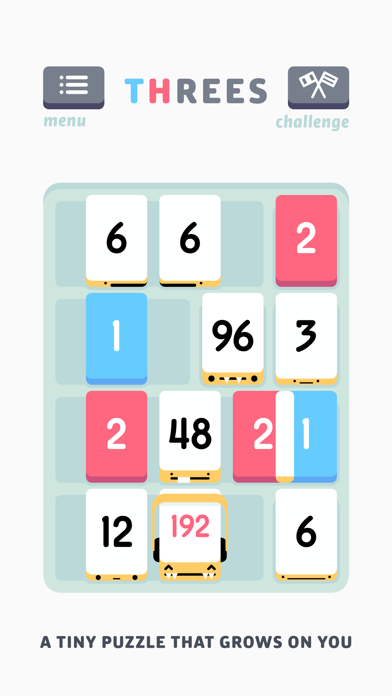
Threes! remains the gold standard for tile-sliding puzzles on iOS, and it’s stayed premium since launch. The mechanic is deceptively simple: slide numbered tiles on a 4×4 grid, combine matching tiles to double them, and build toward the highest number possible. The score is secondary; the real game is learning how tile momentum works and planning three moves ahead.
What separates Threes! from its countless clones (most of which are free-to-play with ads) is the attention to physics and feedback. Tiles slide with weight; they don’t snap to grid positions instantly. The sound design—subtle tones for successful merges, a slight thud when you hit a dead end—trains your brain to recognize good moves before you consciously know why. There’s no timer. There’s no daily challenge that resets and pressures you back in. You play until you get stuck, then you start over, and each run teaches you something about the game’s hidden patterns.
The difficulty curve is exceptionally fair. Early runs teach you the basic flow; intermediate play reveals that corner-positioning and edge-management matter more than you’d think. Expert players spend hundreds of hours optimizing for specific board states. It’s a game that scales from “relaxing 10-minute session” to “obsession-fuel” without changing the rules.
Price tier:. One-time purchase, no ads, no IAP.
Tetris Effect: Connected — Arcade Lineage Done Right
Tetris Effect: Connected is a premium port of the console game, and it’s one of the few mobile Tetris implementations that doesn’t compromise on the core mechanic. The falling-block physics are arcade-accurate; the piece rotation respects the original Tetris Guideline (the modern standard for how pieces behave), not some simplified mobile version.
The “Effect” part—the visual and audio feedback system that pulses with the music and reacts to your play—could feel like window dressing. Instead, it’s integral to the pacing. As you clear lines and build momentum, the game’s visual intensity rises with you, turning a single-color playfield into a kaleidoscopic feedback loop. It’s not distraction; it’s reinforcement. Your hands know when you’re in flow because the game is telling you.
Connected mode (local multiplayer via Bluetooth) works well if you have a second iPhone nearby, but the real strength is the campaign mode, which teaches you Tetris through a series of scenarios—some timed, some about reaching a score, some about surviving specific patterns. No ads. No “buy a power-up to clear faster.” Just the game, tuned to arcade standards.
Price tier:. One-time purchase, no ads, no IAP.
Two Dots: Minimalism and Spatial Thinking
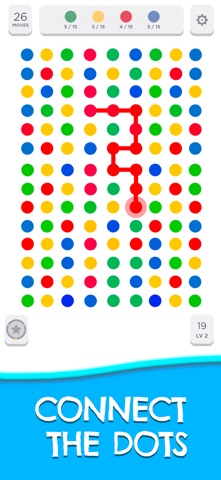
Two Dots strips puzzle design down to its essence: connect dots of the same color by drawing a line between adjacent dots, and enclose a region to clear it. No timer. No score multiplier for speed. No randomized board state that punishes you for bad luck.
What makes Two Dots an arcade puzzle game (rather than just a casual puzzle game) is the constraint system. Early levels teach you basic connectivity; harder levels introduce walls, limited moves, and spatial obstacles that force you to plan the entire sequence before you start drawing. The best levels are the ones where you stare at the board for 30 seconds, see the solution in your mind, execute it in three seconds, and feel the satisfaction of perfect prediction.
The free version includes ads and some IAP gates. The premium version removes both. If you’re looking for a craft-built puzzle game with no monetization friction, the premium edition is the way to play it.
Price tier: (premium edition). One-time purchase, ad-free, IAP-free.
Peglin: Roguelike Pachinko with Tactical Depth
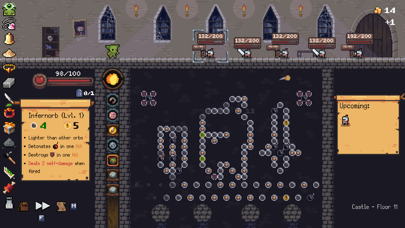
Peglin is a roguelike deck-builder wrapped around pachinko physics. You flick a ball up a pegged board, watch it bounce toward various slots at the bottom, and each slot triggers a different effect—damage to an enemy, healing, status effects. Between rounds, you build a “deck” of special orbs that modify how your next shots behave.
It sounds chaotic; it’s actually deeply tactical. The randomness of the pachinko bounce is real, but it’s bounded. You can predict probable outcomes and plan around them. The deck-building layer adds strategy: do you take a high-variance orb that might win you the run, or a stable orb that keeps you alive? Do you prioritize damage or defense? The game respects your decisions without punishing you for a bad bounce.
Peglin launched on console and PC first, then came to iOS as a premium port. It’s IAP-free and ad-free by design, not by paywall. The campaign is substantial—dozens of hours if you’re chasing high-difficulty runs—and it scales from “relaxing” to “punishing” based on which difficulty you choose.
Price tier:. One-time purchase, no ads, no IAP.
Puyo Puyo Tetris: Dual-Mechanic Arcade Classic
Puyo Puyo Tetris is a licensed port of the Sega arcade game that lets you play either Puyo Puyo (a match-four puzzle game where colored blobs stick together and disappear when four or more are adjacent) or Tetris (blocks), or a hybrid mode where you’re playing both simultaneously on split screens.
The appeal is straightforward: it’s two complete arcade puzzle games in one package, both with lineage back to 1980s arcade cabinets, both tuned for competitive play. Solo campaign modes teach you both mechanics; versus modes (local or online) let you test your skill against other players. The game doesn’t invent new mechanics; it executes the classics with arcade-accurate physics and zero monetization baggage.
Price tier:. One-time purchase, no ads, no IAP.
Where to Find More
If you’ve exhausted these five, explore other premium arcade titles beyond puzzles that maintain the same commitment to ad-free, IAP-free design. For games that blend arcade action with puzzle elements—like action-puzzle hybrids that combine reflex and strategy—search for titles that share Peglin’s roguelike structure or Tetris Effect’s physics-based feedback systems.
Games with clean, minimal aesthetics often follow the same design philosophy as the best arcade puzzles: visual clarity serves gameplay rather than distraction.
FAQ
Q: Which game has the steepest learning curve? A: Peglin requires the most upfront investment. The pachinko physics and deck-building systems take 2–3 runs to fully grasp. Threes!, Tetris Effect, and Two Dots are intuitive within minutes. Puyo Puyo Tetris sits in the middle—Tetris is immediate, but Puyo Puyo’s chain mechanics reward deeper study.
Q: Can I pause mid-game? A: Threes!, Two Dots, and Peglin support pausing at any time. Tetris Effect: Connected pauses in campaign mode but not in timed scenarios. Puyo Puyo Tetris pauses in single-player modes but not in versus matches.
Q: Do any of these have multiplayer? A: Tetris Effect: Connected has local Bluetooth multiplayer. Puyo Puyo Tetris has both local and online versus modes. The others are single-player focused.
Q: Will these games work offline? A: Yes. All five are fully playable without an internet connection. They don’t require authentication or server checks.
Q: How long is the campaign in each? A: Threes! and Two Dots are “play until you lose” games without a defined endpoint. Tetris Effect: Connected has a 20–30 hour campaign. Peglin offers 10–20 hours per run, with dozens of possible runs. Puyo Puyo Tetris has campaign modes for both mechanics, totaling 15–20 hours.
Q: Can I play these on older iPhones? A: Check the App Store listing for your specific device. Most require iOS 13 or later; some newer ports (Tetris Effect: Connected, Peglin) may require iOS 15+. The App Store will tell you if your device is compatible before you buy.
The Bottom Line
The best arcade puzzle games on iOS in 2026 share a common trait: they trust the player. No timers. No ads. No dark patterns. Just clean mechanics, fair difficulty curves, and the kind of satisfying feedback that made arcade cabinets worth queuing for. If you’re tired of free-to-play puzzle games that treat your attention as a resource to monetize, these five will remind you why the genre matters.