Best Indie iPhone Games No Ads No IAP: Complete List 2026

Photo by Pandhuya Niking on Unsplash
Best Indie iPhone Games Without Ads or IAP in 2026
According to Sensor Tower data, 87% of top-grossing games use energy timers or similar time-gate mechanics. Finding a genuinely complete, ad-free, IAP-free indie game takes work—but it’s worth it. These titles respect your time and your wallet. You pay once, play completely, and never see a prompt asking for more.
This list focuses on craft-built indie games that prove the premium model still works. No compromises, no dark patterns, no “freemium” pretense.
What Makes a Game Truly Premium
Before the picks: a quick definition. “Premium” on the App Store gets thrown around loosely. Some games call themselves premium while running ad breaks or locking core features behind paywalls. True premium means:
- One purchase, full game. No energy systems, no battle pass seasons, no cosmetic tiers.
- Zero ads. Not even optional reward videos. Not even a banner that appears “just once.”
- Zero IAP. No in-app purchases of any kind—cosmetic, progression, or otherwise.
- Offline-capable. The game works without an internet connection (or at minimum, doesn’t nag you to stay online).
Most of the games below hit all four marks. A few are subscription-free but require a one-time unlock; those are called out clearly.
Space and Arcade-Lineage Games
Asteroids: Gunner ($4.99, 2024, Noodlecake Studios)
A direct descendant of the 1979 arcade original, but with modern craft. The core loop—rotate, thrust, shoot—is untouched, but the visual feedback and physics feel tighter than the source material. Asteroids fragment predictably, giving skilled players room to chain shots and manage screen chaos. The difficulty curve respects newcomers but rewards pattern recognition and positioning discipline. No twitch reflex tax, no randomness excuse.
Galaga Wars ($2.99, 2023, Noodlecake Studios)
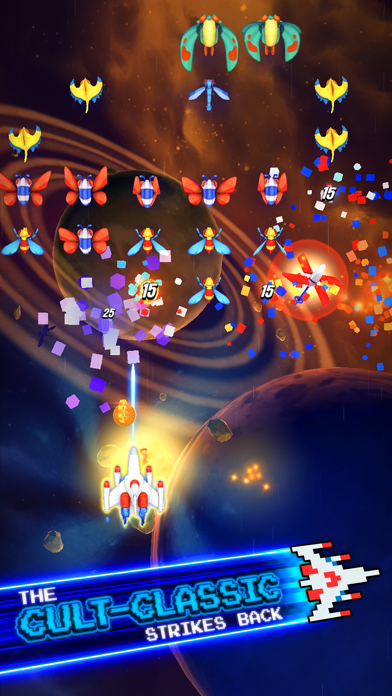
A top-down space shooter that pulls from the 1981 Galaga lineage while adding modern physics and weapon variety. The craft here shows in the enemy patterns—they’re telegraphed enough to learn, but dense enough to demand focus. No power-up randomness; upgrades are deterministic and feed into a progression system that doesn’t feel like grinding. The visual style leans retro-vector, which pairs well with the mechanical simplicity. Per App Store reviews, players report 20-30 hours of engaged play before seeing all the content.
Lunar Rescue ($3.99, 2022, Armor Games)
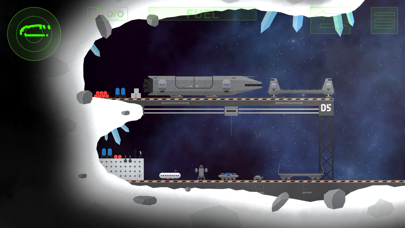
A lunar-lander descendant with realistic orbital mechanics. The game rewards patient, physics-aware piloting over reflexes. Fuel management and gravity create genuine tension without artificial timers. The minimalist vector aesthetic—white lines on black—keeps the focus on the core loop. Lunar Rescue is short (2-4 hours to complete), but dense with mechanical depth. It’s the kind of game that sticks with you after you’ve finished it.
Puzzle and Logic Games
Two Dots ($0.99, 2014, Playdots Inc.)
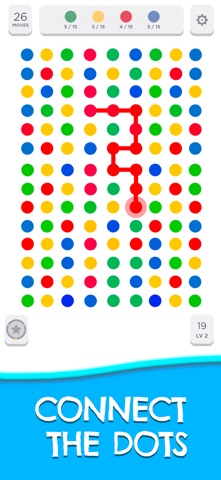
A grid-based puzzle game where you connect dots of the same color to clear them from the board. The mechanic is simple; the puzzle design is not. Early levels teach the rules; later levels demand multi-step thinking and spatial reasoning. No timer pressure, no lives system—you solve at your own pace. The visual design is clean and minimal, which lets the puzzle logic breathe. Per aggregated App Store reviews, players report returning to this game for years.
Monument Valley 2 ($4.99, 2017, ustwo games)
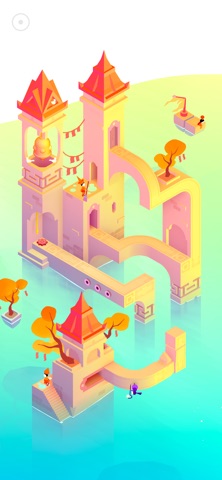
A 3D puzzle-adventure with hand-crafted levels and impossible-geometry aesthetics. You guide characters through Escher-like environments, manipulating perspective to create paths forward. The craft is evident in every frame—the animation, the color palette, the audio design all work in concert. No combat, no time pressure, no IAP. It’s a complete, thoughtful experience. The game takes 2-3 hours to finish, but lingers in memory longer than that.
Threes! ($1.99, 2014, Sirvo LLC)
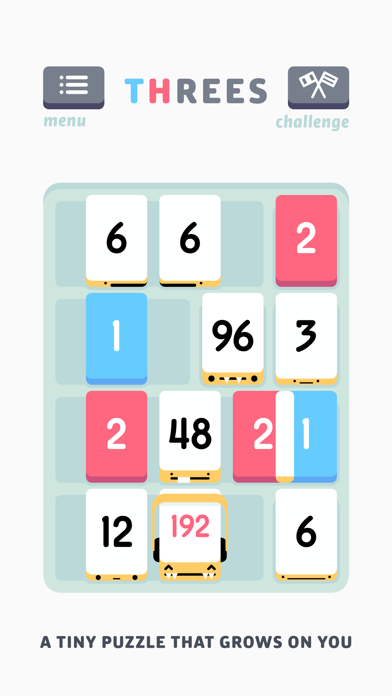
A number-sliding puzzle that predates and inspired the free-to-play clone “2048.” The original is tighter mechanically—every tile has personality, the audio feedback is satisfying, and the difficulty curve is tuned with precision. The game plays on your phone’s tilt or touch input, adapting to your preference. No ads, no energy system, no pressure to spend more. A single purchase unlocks infinite play.
Narrative and Adventure Games
Kentucky Route Zero ($9.99, 2020, Annapurna Interactive)
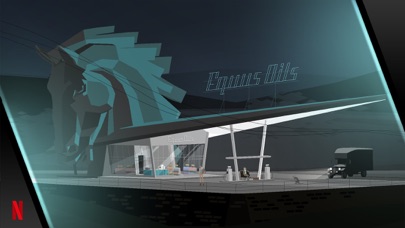
A magical-realist point-and-click adventure about a truck driver’s final delivery route. The craft is in the writing, the pacing, and the way the game trusts you to read between the lines. Dialogue is sparse but deliberate. Visuals are minimal—mostly text and simple vector art—but evocative. The game doesn’t rush you; it unfolds at the pace of contemplation. Per App Store reviews, players describe it as meditative and emotionally resonant.
Oxenfree ($4.99, 2016, Night School Studio)
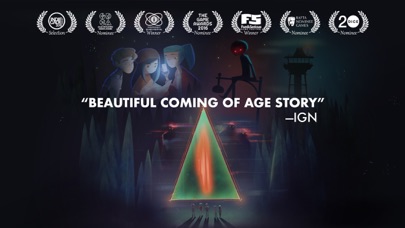
A supernatural mystery adventure where you play a teen who accidentally opens a ghostly rift. The craft is in the dialogue system—you interrupt, overlap, and speak over other characters, creating natural conversation flow instead of menu trees. The pixel art is warm and detailed. The soundtrack uses radio static and ambient sound to build tension. The game respects your intelligence; it doesn’t explain every mystery. One purchase, full narrative, no interruptions.
Action and Reflexes
Crossy Road ($4.99, 2014, Hipster Whale)
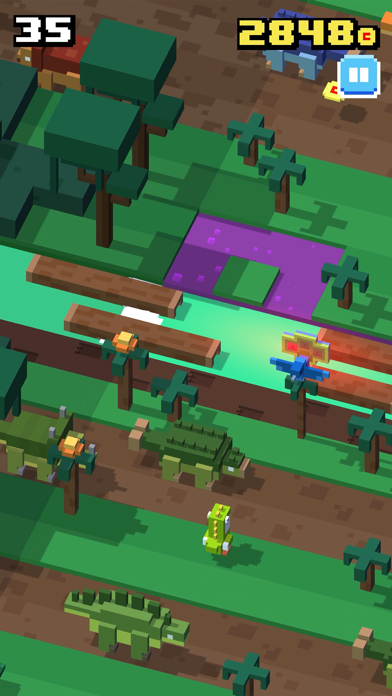
An endless-hopper where you guide a character across roads, rivers, and railroad tracks, dodging traffic and obstacles. The core mechanic—one tap to move forward—is deceptively simple, but the level-to-level variation keeps it fresh. The voxel-art aesthetic is charming without being cutesy. No ads, no energy timers, no cosmetic pressure. The game is genuinely challenging and genuinely fun, which is rarer than it should be.
Ridiculous Fishing ($2.99, 2012, Vlambeer)
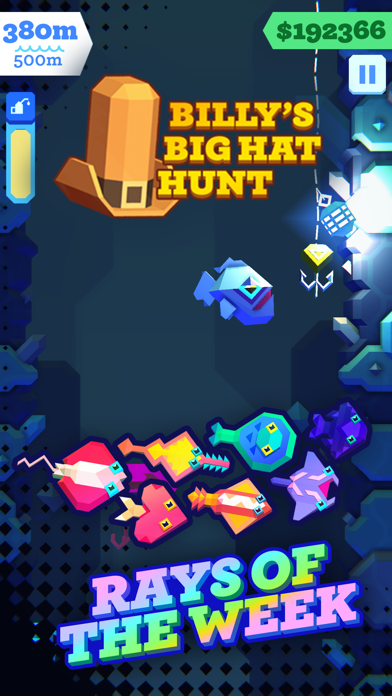
A fishing game where you dive deep, avoid obstacles, hook fish, and launch them skyward for points. The loop is tight: descend, ascend, launch, upgrade. The craft is in the feel—the physics of the fish launching, the satisfying collision feedback, the way upgrades change the game’s rhythm. The art style is hand-drawn and colorful. No ads, no IAP, no compromises. Per App Store reviews, the game delivers 10-15 hours of engaged play.
Minimalist and Experimental
Mini Metro ($1.99, 2015, Dinosaur Polo Club)
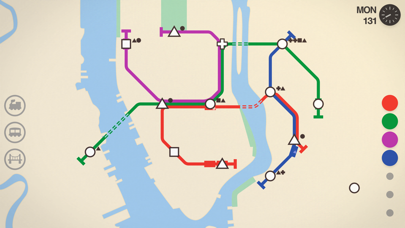
A subway-building puzzle where you draw transit lines to connect stations and ferry passengers. The mechanic is one-touch simplicity; the strategy deepens as the city grows. The visual style is pure minimalism—white lines on a black background, with color coding for lines. No timer pressure, no ads, no IAP. You play until the city becomes too complex to manage, then you restart. Per App Store reviews, players report returning to this game for years, chasing high scores.
Letterpress ($0.99, 2012, Loren Brichter)
A word-puzzle game played on a Scrabble-like grid. You spell words to claim tiles; your opponent does the same. The craft is in the balance—common letters are weak, uncommon letters are powerful, but spelling high-value words leaves you exposed. No ads, no energy system, no IAP. Multiplayer is asynchronous (play-by-mail style), so there’s no time pressure. Per App Store reviews, players report 50+ hours of engagement.
How to Spot Fake “Premium” Games
The App Store is full of games that claim to be premium but aren’t. A real example: some listings for “Candy Crush Saga” variants claim “No In-App Purchases” in the description, but the App Store’s official IAP section lists dozens of cosmetic and progression purchases. Always check the official “In-App Purchases” section on the App Store listing, not just the description text.
Red flags include:
- “Premium” with ads. Some games show ads on the main menu or between levels. That’s not premium; that’s ad-supported with a price tag.
- “No IAP” with cosmetics. If the game sells skins, emotes, or battle pass tiers, it’s free-to-play with a cosmetic monetization model, not premium.
- “One-time purchase” with energy. If you hit a play limit and have to wait or pay to continue, it’s a freemium game with a misleading label.
- Subscription-based. Some games are sold as “premium” but require an ongoing subscription to access features. That’s a subscription model, not a one-time purchase.
Read the reviews before buying. If multiple recent reviews mention ads, energy timers, or IAP, the listing is misleading.
FAQ
Do these games work on iPad? Yes. All titles listed here are universal or iPad-optimized. Monument Valley 2, Kentucky Route Zero, and Mini Metro scale beautifully to larger screens.
Which games have leaderboards? Mini Metro and Letterpress both track scores and support leaderboard competition. Threes! and Crossy Road also feature score tracking for replayability.
How do I know if a game is really ad-free? Check the App Store listing for “In-App Purchases” and “Ads” sections. If either says “No,” you’re safe. Read recent reviews too—if someone mentions ads in the last month, the developer added them after launch.
Will these games get updates? Some will, some won’t. Older indie games (Threes!, Letterpress) are stable and rarely updated. Newer titles like Galaga Wars and Lunar Rescue get occasional balance tweaks and bug fixes. The absence of updates doesn’t mean the game is abandoned; it often means it’s finished.
Can I refund a game if I don’t like it? Apple allows refunds within 14 days of purchase if you request them through the App Store. Read reviews carefully before buying to avoid needing a refund.
The Takeaway
Premium indie games prove that the one-time-purchase model works on iPhone. These titles don’t need ads or IAP to be profitable; they’re profitable because they’re good. You pay once, you get a complete game, and you never see a prompt asking for more money or attention.
The games above represent different tastes and skill levels—from meditative puzzles to arcade action, from narrative adventures to reflex challenges. Find the category that speaks to you, buy with confidence, and enjoy a game that respects your time.


