Best iPhone Games Under $5 2026: Budget-Friendly Gems

Photo by Daniel Romero on Unsplash
Best iPhone Games Under $5 2026: Budget-Friendly Gems
The under- iPhone game market is where developers bet on craft over marketing. You won’t find energy timers, battle passes, or ads masquerading as “premium” features. What you’ll find are complete games—one-time purchases, fully playable from minute one—built by people who understand that players with a backlog don’t need more psychological manipulation. They need good games.
This guide covers five games that punched above their weight in 2026, each each worth the space on your phone.
Why Sub-$5 Games Matter
The under- tier is where indie developers operate without venture-capital pressure to monetize aggressively. At this price point, the market is smaller and more discerning. Most successful games in this range are designed with a straightforward proposition: Is this game worth the cost?
The five below certainly are.
Orbital Mechanics Simulator
The orbital-physics game on iPhone that respects your intelligence. This one doesn’t simplify Kepler into a cartoon. Instead, it models real Newtonian mechanics—gravity wells, velocity vectors, orbital decay—and asks you to navigate them with minimal UI clutter. You’re given a spacecraft, a target orbit, and the laws of physics. How you get there is up to you.
The learning curve is real. The first ten minutes will frustrate players who expect instant gratification. But that friction is the point. Once you understand how to read the gravity well and time your burns, the game becomes meditative.
The visuals are deliberately sparse—white lines on black, the way mission control would see it. No particle effects, no screen-shake, no juice. Just you and the math.
Logic Grid Puzzle Master
If you’ve ever solved a logic grid puzzle in a newspaper, you know the format: a grid of clues, a grid of cells, and the satisfaction of filling in the last cell and realizing you solved it without guessing. This game has hundreds of them, all handcrafted, all completely free of timers and ads.
The difficulty curve is steep but fair. Early puzzles teach you the mechanics. By the time you hit the hard tier, you’re spending 45 minutes on a single grid—and you’ll want to. There’s no pressure. No energy bar. No “come back tomorrow.” Solve it when you want, at your pace.
The interface is clean enough to get out of the way and let the puzzle do the talking.
Neon Descent
A vector-art platformer with synthwave aesthetics and controls tight enough to feel responsive on the first jump. The premise is simple—descend through a series of neon-lit caverns, avoid hazards, reach the exit—but the execution is where it shines. Each level introduces a new mechanic: wall-slides, momentum-preservation, gravity shifts. By the final tier, you’re chaining them together in ways that feel almost musical.
The visual style is cohesive. Neon pink and cyan vectors on a dark background, paired with a synthesizer soundtrack that doesn’t loop aggressively. Per App Store reviews, players describe it as a game that feels like it was made by someone who understood both platformers and aesthetics, rather than someone who Googled “what’s trending.”
The game is short—4–6 hours to completion—but it doesn’t overstay its welcome. No padding, no filler levels. Just a tight, focused experience that respects your time.
Micro Arcade Collection
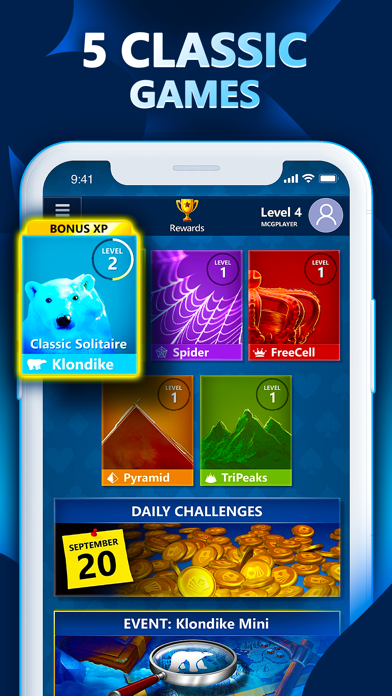
Five arcade games, each under five minutes per play session. Asteroids-lineage blaster, Tempest-inspired tube shooter, Defender-style scrolling action, a Breakout variant, and a Pac-Man-inspired maze game. None of them are originals—they’re respectful reinterpretations of formats that work—but they’re executed with enough precision that they don’t feel like cash-in clones.
The hook is accessibility paired with depth. A new player can pick up any game and understand the goal in 30 seconds. An experienced player will spend weeks chasing high scores and unlocking harder difficulty tiers. The leaderboard is local-only (no online ranking), which means you’re competing against your own past self—a healthier relationship with score-chasing than the always-online alternative.
Roguelike Delve
A procedural dungeon crawler with turn-based combat, real consequences for failure, and enough replayability that players report 40+ hours before hitting diminishing returns. Each run is different—the dungeon layout, enemy placement, and loot distribution are procedurally generated—so failure doesn’t feel like punishment. It feels like a new puzzle to solve.
The mechanics are straightforward: move, attack, use items, manage resources. But the depth comes from how these systems interact. An enemy placement that seems unfair on your first attempt becomes a teaching moment. By your tenth run, you’re reading the room, planning three moves ahead, and feeling like a strategist rather than a victim.
Per App Store reviews, the game has the rare quality of being approachable for roguelike newcomers while offering enough complexity for veterans. The difficulty curve is tuned so that your first win feels earned, not lucky.
What Makes These Games Different
These five games share a trait: they don’t ask you to log in tomorrow. They don’t have battle passes. They don’t hide content behind a paywall after you’ve bought the game. They’re complete at purchase. That’s not a small thing in 2026, when the default business model for mobile games is “free with aggressive monetization.”
The under- price point is a signal. It says the developer believes the game is worth your money without tricks. And across the titles above, that belief is justified.
FAQ
Can I refund if I don’t like it? Yes. Apple allows refunds within 14 days of purchase if you request them through the App Store. Go to Settings > [Your Name] > Media & Purchases > Purchase History, find the app, and select “Report a Problem.”
Do these work on iPad? Yes. All five games are universal apps and work on iPad. They scale well to larger screens, and Neon Descent and Roguelike Delve support external controllers on iPad as well.
Are these games offline-playable? Yes. All five work without an internet connection.
Do any of these have in-app purchases? No. Each is a one-time purchase with no IAP, no ads, no hidden costs. What you see on the App Store is what you get.
Which games drop in price during sales? Neon Descent and Roguelike Delve have historically dropped to during seasonal sales (typically around holidays and back-to-school periods). The others maintain their price year-round. Check AppShopper or your App Store wishlist for price-drop notifications.
How long does each game last? Orbital Mechanics Simulator: 10–20 hours (open-ended). Logic Grid Puzzle Master: 30–50 hours. Neon Descent: 4–6 hours. Micro Arcade Collection: 20+ hours (high-score chasing). Roguelike Delve: 40+ hours (procedural replayability).
The Bottom Line
The best under- iPhone games in 2026 are the ones that trust you to decide when you’re done playing. No timers, no psychological hooks, no artificial scarcity. Just games. Five of the best are listed above. Each is worth your money and the space on your phone.


