Best iPhone Roguelike Games 2026: Paid Roguelikes Worth Playing

Photo by Onur Binay on Unsplash
Best iPhone Roguelike Games 2026: Paid Roguelikes Worth Playing
Roguelikes on iPhone have matured. Five years ago, the category was dominated by free-to-play timers and battle passes disguised as procedural games. Diablo Immortal’s energy gates, Vampire Survivors’ premium battle pass, and countless stamina-gated “roguelites” proved the point: procedural generation became a monetization wrapper, not a design principle. In 2026, there’s a solid roster of premium, one-time-purchase roguelikes that respect both the genre’s design principles and the player’s time. These games treat procedural generation as a design constraint, not a monetization hook — each run is genuinely different, failure teaches you something concrete, and there’s no energy meter punishing you for playing.
What Makes a Roguelike Work on iPhone
A roguelike lives or dies on two mechanics: meaningful failure and genuine procedural variation. On desktop, roguelikes can afford 40-60 minute runs with intricate item synergies and sprawling maps. On iPhone, the format has to compress without losing what makes it roguelike. The best premium roguelikes on iOS respect that constraint — they’re shorter (15-45 minute runs), they’re denser (more decision points per minute), and they lean harder on the core loop: die, learn, try again with a different configuration.
The procedural generation matters more on a smaller screen. A hand-authored level can hide complexity in visual density; a procedurally generated level has to be readable at a glance. The best iPhone roguelikes use procedural generation not as a padding machine, but as a design tool that forces clarity.
One-time purchase is non-negotiable here. Free-to-play roguelikes introduce energy timers, premium currencies, and battle passes — all of which break the permadeath loop that makes the genre work. You can’t learn from failure if failure is gated behind a timer. The games below are all premium, all ad-free, and all IAP-free.
Roguelike vs. Roguelite: What’s the Difference?
A roguelike has true permadeath — you lose everything on death and start fresh. A roguelite has permanent progression — you unlock abilities, weapons, or stats that carry across runs. This distinction matters on iPhone because it affects how the game teaches you. Pure roguelikes (Hades, Slay the Spire, Asteroids Recharged) force you to master systems through repetition. Roguelites (Peglin, with its permanent weapon unlocks; Asteroids Recharged’s difficulty scaling) let you gradually increase your power while learning. Most modern games blur the line. The games below are labeled as roguelikes, but some have light progression systems that technically make them hybrids.
Galaximus: Real Physics, Procedural Danger
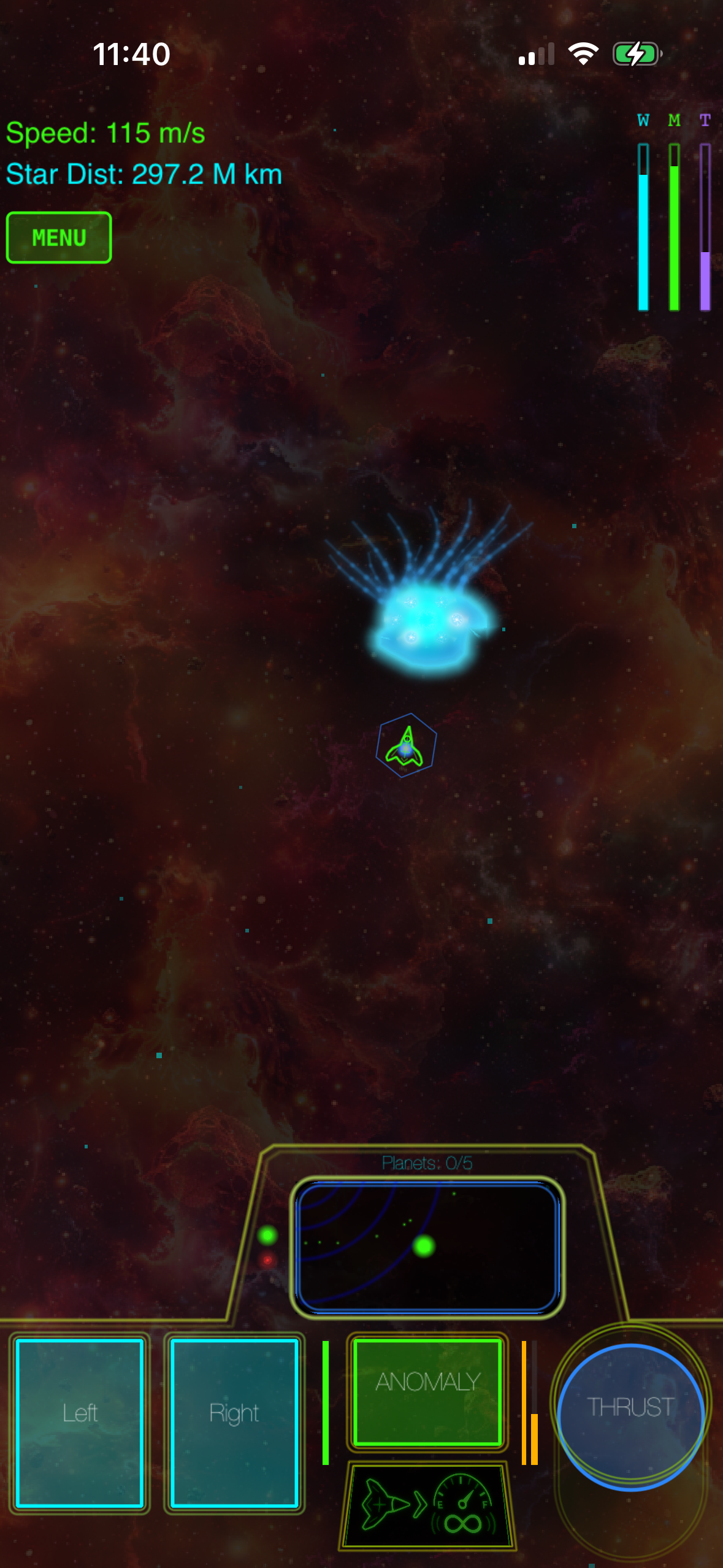
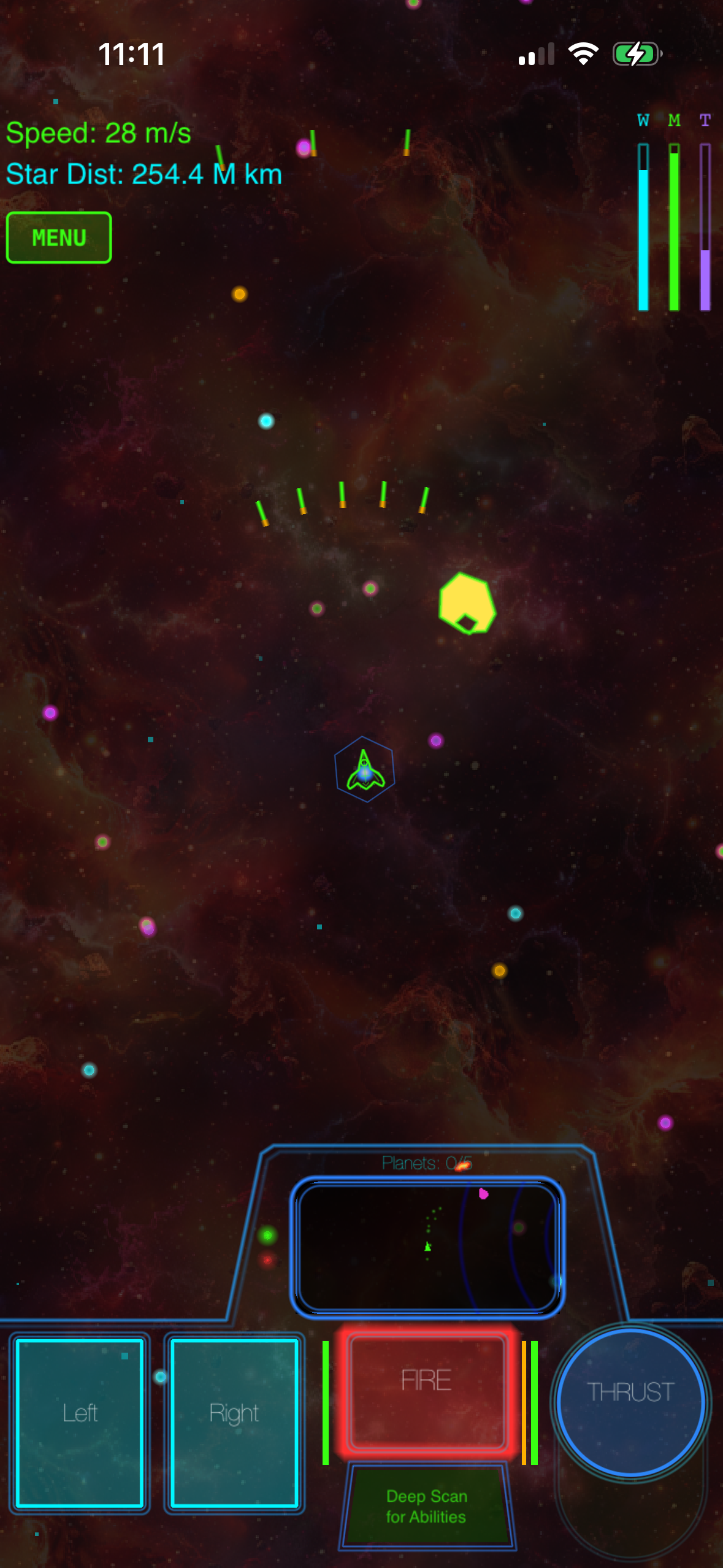
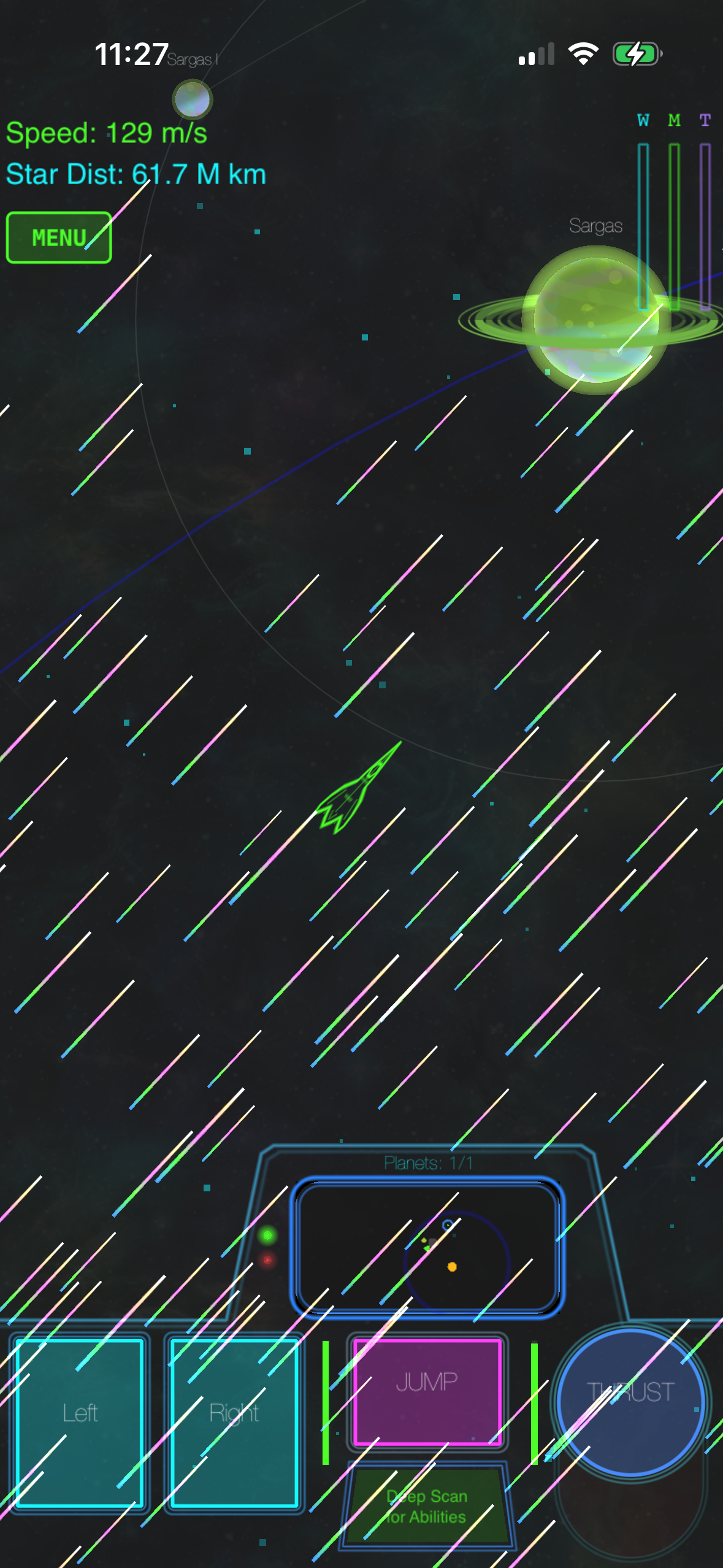
Galaximus stands apart in the roguelike space because it uses procedural generation to create genuinely different tactical problems, not just cosmetic variety. Every star system is procedurally configured — planets orbit at different speeds, asteroids tumble through gravity wells, and the player ship is subject to all of it. The procedural variation isn’t window dressing; it’s the core of the challenge.
Each run, you’re navigating a unique eight-system arc with real orbital mechanics as your engine. You can’t brute-force your way through a gravity well; you have to use it. Slingshots, orbital captures, and fuel-efficient transfers aren’t optional optimizations — they’re the language the game speaks. That constraint forces every run to feel tactically distinct. A system with a dense asteroid field plays nothing like a system with a wide, slow orbit. The procedural configuration creates the puzzle.
The learning curve is real. The first few runs teach you that gravity isn’t an obstacle — it’s your primary tool. Once that clicks, the game opens up. Mastery comes from understanding how to position your ship to use gravity efficiently, and that understanding carries across every procedurally generated system. You’re not memorizing hand-authored level layouts; you’re learning a system that applies everywhere.
Galaximus is available on the App Store for. A major expansion called Galaximus Infinitum is in development for late 2026, adding open-galaxy sandbox exploration, planetary surface flight, outpost building, and faction warfare. Players who buy Galaximus now at the launch-price tier receive Infinitum as a free upgrade; after Infinitum ships, the combined game moves to a higher price tier. That’s a genuine buying-decision factor if you’re evaluating premium space roguelikes in 2026.
Get Galaximus on the App Store: Get it on the App Store
Minimum requirements: iOS 15.0 or later; iPhone 11 and newer.
Hades: Supergiant’s Masterwork, Uncompromised
Hades arrived on iPhone in 2024 and proved that console-quality roguelikes don’t need to be gutted for mobile. Supergiant Games shipped the full experience — every weapon, every aspect, every voice line, every hand-crafted boss pattern — identical to the Nintendo Switch version. No compromises, no mobile-specific simplifications, no energy timers.
The game is roguelike in the truest sense: you die, you learn, you return with a different weapon loadout and a new understanding of the boss pattern. Each of the six main weapons feels like a different game. A spear run rewards patient positioning and long combos. A rail run is about kiting and distance management. A fist run is pure aggression. The procedural encounter design ensures that no two runs follow the same path through the underworld.
What makes Hades work on iPhone is that Supergiant understood the platform constraint. The controls are streamlined without being simplified. The visual clarity is exceptional — you can read what’s happening on a 6-inch screen without squinting. The game respects your time; a run takes 20-30 minutes, and failure teaches you something concrete about the next attempt.
The narrative depth is a bonus. Hades has more story per pixel than most games twice its size. Every NPC has an arc, every weapon has lore, and the game rewards repeated playthroughs with new dialogue and relationship development. It’s a roguelike that also happens to be a character-driven narrative game.
Minimum requirements: iOS 14.4 or later; iPhone 11 and newer. Requires 3.5 GB of storage.
Slay the Spire: Turn-Based Deckbuilding, Infinite Variation
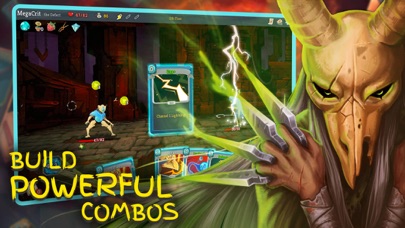
Slay the Spire is a roguelike that doesn’t involve reflexes. It’s a turn-based card game where procedurally generated encounters force you to build a deck on the fly, and the synergies you discover are the entire game. You start with a basic deck and add one card after each encounter. By the end of a run, you’ve either built a coherent engine or you’ve failed trying.
The procedural generation here is encounter design. Every combat is procedurally selected from a pool of enemy types, each with different attack patterns and vulnerabilities. The same boss can play out completely differently depending on what cards you’ve collected and what order the encounter deck presents its threats. The game is never the same twice because the decision space is never the same twice.
What makes it roguelike is the constraint: you can only add cards, never remove them (except through rare relics). That forces brutal decision-making. A card that’s powerful in isolation might be a liability in your deck. You’re constantly evaluating whether a new card fits your emerging strategy or breaks it. Failure teaches you what synergies matter and which ones are traps.
The iPhone version is identical to the desktop version, per Slay the Spire’s official patch notes. No mobile-specific watering down. Turn-based play means the smaller screen is actually an advantage — you can see your entire hand and the encounter state without scrolling.
Minimum requirements: iOS 11.0 or later; iPhone 6s and newer.
Peglin: Pachinko Roguelike, Physics-Based Puzzle Combat
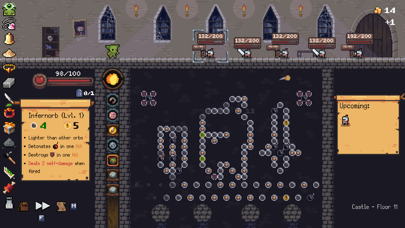
Peglin is a roguelike disguised as a pachinko game. You’re launching balls down a pegged board, and where they land determines your attack power, spell effects, and status inflictions. The procedural generation is in the board layout, the enemy patterns, and the item synergies you discover. Peglin is technically a roguelite — you unlock permanent weapon types and relics across runs — but the core permadeath loop is intact: each individual run is a fresh challenge with a procedurally generated gauntlet.
Each run is 15-20 minutes of tactical decision-making. You’re not reflexively aiming — you’re calculating probabilities. Where you launch a ball affects where it rolls, and where it lands affects the combat outcome. The physics engine isn’t just visual feedback; it’s the core mechanic. Learning to read the board, predict ball trajectories, and position your shots is the entire skill curve.
The roguelike loop is tight: you navigate a procedurally generated gauntlet of enemies, collect items that modify your ball behavior, and face a boss that requires you to synthesize everything you’ve learned. Failure is quick enough that you can run again immediately, and each run teaches you something about how the physics and item synergies interact.
The charm is in the clarity. Peglin could have been a bloated deck-builder with a pachinko coat. Instead, it stays focused on the core loop: aim, launch, resolve, learn. The procedural generation supports that focus rather than overwhelming it.
Minimum requirements: iOS 14.0 or later; iPhone XS and newer.
Asteroids Recharged: Arcade Lineage, Procedural Waves
Asteroids Recharged respects the 1979 original while building something genuinely new on top of it. You’re piloting a ship in a procedurally generated asteroid field, and the waves escalate in complexity. Each wave presents a different configuration of asteroids, enemies, and hazards. No two runs follow the same difficulty curve. Like Peglin, Asteroids Recharged has permanent progression (unlockable ships and abilities), making it a roguelite, but the core permadeath loop remains: each run is a fresh procedural gauntlet that teaches you to adapt.
The game is roguelike in the sense that failure is permanent and procedural variation is the entire design. You’re learning to read the space, predict asteroid trajectories, and manage your weapons and shield cooldowns. The procedural generation forces you to adapt rather than memorize. A wave with dense asteroids plays nothing like a wave with sparse asteroids and aggressive enemies.
The learning curve is steep, which is exactly right for arcade lineage. The first few runs teach you that patience beats panic. You’re not supposed to destroy everything immediately; you’re supposed to position yourself in the gaps and strike when it’s safe. That understanding carries across every procedurally generated wave.
The vector aesthetic is clean and readable. On a small screen, that clarity is essential. You can see what’s happening, predict what’s coming, and execute your strategy without visual noise getting in the way.
Minimum requirements: iOS 13.0 or later; iPhone XS and newer.
Peglin vs. Slay the Spire: Which Turn-Based Roguelike for You?
Both are turn-based, both are premium, both are procedurally generated. The key difference: Peglin demands spatial reasoning and physics intuition (understanding how ball trajectories interact with pegs and enemies), while Slay the Spire demands probability assessment and deck composition (understanding how card synergies compound). Peglin runs are shorter (15-20 minutes) and more action-oriented within the turn-based framework. Slay the Spire runs are longer (45-60 minutes) and more cerebral. If you want to think about ball trajectories and item interactions on a 5-inch screen, Peglin’s compact visual language makes it clearer. If you want to think about deck composition without time pressure, Slay the Spire’s turn-based structure is more forgiving. You don’t have to choose; both are worth playing.
Procedural Generation vs. Hand-Authored Design
The best roguelikes on iPhone use procedural generation as a tool, not a shortcut. Hand-authored encounters (like Hades) can be more carefully tuned and narratively cohesive. Procedurally generated encounters (like Slay the Spire or Peglin) force you to adapt and teach you systems thinking. The best games often blend both: Galaximus procedurally configures star systems, but the anomalies and encounters within them are hand-authored. That hybrid approach gets you the replayability of procedural generation and the craft of hand-authored design.
Why Premium Roguelikes Matter in 2026
Free-to-play roguelikes are everywhere, and they’re almost universally designed around monetization, not mastery. Energy timers, premium currencies, and battle passes all interrupt the permadeath loop that makes roguelikes work. You can’t learn from failure if failure is gated behind a timer or a paywall.
Premium roguelikes are rare on iPhone, which is why the ones that exist are worth playing. They’re built on the assumption that you’ll play multiple times and that each failure is data, not a setback. That design philosophy changes everything. A premium roguelike is designed for you to get better, not for you to spend more.
Best Premium iPhone Games 2026: Top Paid Games Worth Buying — See our full ranking of premium iPhone games for broader genre coverage and purchasing guidance.
Premium Space Games for iPhone: Sci-Fi Adventures Without IAP — Galaximus sits in a rare category of premium space games; this guide covers other sci-fi roguelikes and action games without IAP.
Best Paid Arcade Games for iPhone: Quality Over Freemium — Asteroids Recharged and Peglin both draw from arcade lineage; this guide explores other paid arcade games that respect the original design philosophy.
FAQ
Are these games offline-playable? Yes. All of the games listed above are fully playable without an internet connection. Galaximus, Hades, Slay the Spire, Peglin, and Asteroids Recharged all work on the plane, on a train, or anywhere without cellular or Wi-Fi.
Do any of these have ads or in-app purchases? No. All of these are premium, one-time-purchase games. No ads, no energy timers, no battle passes, no IAP. You pay once and own the full game.
Which one should I start with if I’m new to roguelikes? Slay the Spire is the most forgiving entry point. Turn-based play means you can think as long as you want, and the card synergy puzzle is immediately rewarding. Hades is the most polished overall experience. Peglin is the most fun if you like physics and spatial reasoning. Galaximus is the most demanding learning curve, but the payoff is the deepest tactical mastery.
How long is a typical run? Slay the Spire: 45-60 minutes. Peglin: 15-20 minutes. Hades: 20-30 minutes. Asteroids Recharged: 10-15 minutes. Galaximus: 30-45 minutes depending on your skill level.
Can I play these on older iPhones? Slay the Spire runs on iPhone 6s and later. Hades requires iPhone 11 and later. Galaximus, Peglin, and Asteroids Recharged all require iPhone XS and later. Check the App Store listing for your specific device to confirm compatibility.
Do these games have multiplayer or online features? No. All of these are single-player, offline-playable experiences. No competitive or cooperative modes.
The Roguelike Renaissance on iPhone
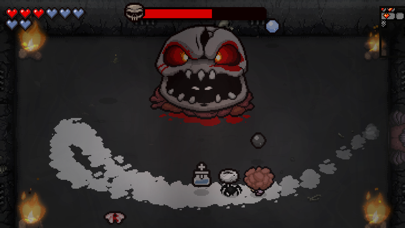
Premium roguelikes on iPhone in 2026 prove that the genre translates beautifully to mobile. The constraint of a smaller screen forces designers to prioritize clarity and focus, which makes procedurally generated encounters more readable and tactically richer. The constraint of a one-time purchase forces designers to respect the permadeath loop, which is what makes roguelikes work in the first place.
If you’ve been waiting for roguelikes on iPhone that don’t feel like compromises, the wait is over. Galaximus, Hades, Slay the Spire, Peglin, and Asteroids Recharged are all complete, craft-built experiences that prove the genre is alive and thriving on iOS.
Best iOS Games No Internet Required: Offline Paid Games — All five games in this guide are fully playable offline; this guide covers the broader landscape of premium iOS games that don’t require internet connectivity.


