Best Puzzle Games for iPhone 2026: Premium & Ad-Free

Photo by Onur Binay on Unsplash
Best Puzzle Games for iPhone 2026: Premium & Ad-Free
Premium puzzle games on iPhone have gotten better and more specific in 2026. The free-to-play trap—where a puzzle hook is wrapped in energy timers, ads, and battle passes—still dominates the App Store charts, but a steady crop of one-time-purchase titles prove that players who can afford to pay upfront will choose craft-built puzzle design over monetization theater every time.
This list covers five games that respect your time, your wallet, and your intelligence. Each is ad-free, IAP-free, and built around a single elegant mechanic that scales to surprising depth.
Threes! — Tile-Sliding as Constraint Poetry
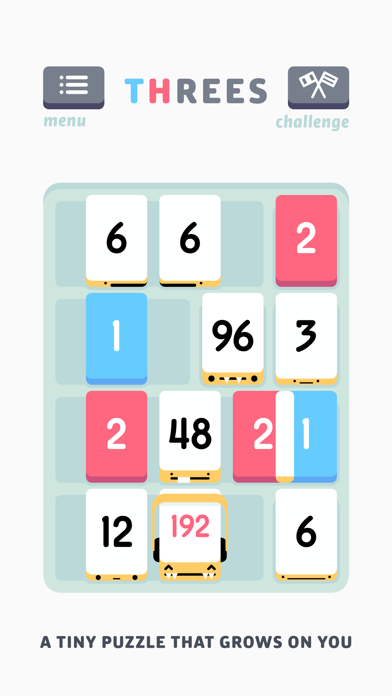
Threes! is the tile-sliding game that The New York Times puzzle section should have invented. The mechanic: slide numbered tiles on a 4×4 grid; when two tiles of the same value touch, they merge into their sum. Slide a 1 and a 2 together, you get a 3. Slide two 4s, you get an 8. Fill the board, game over.
That sounds like 2048, and technically 2048 borrowed the mechanic from Threes!. But Threes! is the original, and it’s the superior design. Where 2048 feels like brute-force arithmetic, Threes! feels like solving a constraint-satisfaction puzzle. The tiles have weight. The board is tight. Every move matters because space is finite and the merge rules are absolute.
The genius is in the pacing. Early levels feel loose and forgiving. By the time you’re chasing your first 6-tile merge, you’re thinking three moves ahead. By the time you’re hunting the 2048 tile, you’re playing what amounts to a spatial logic puzzle where one misclick unravels twenty minutes of careful positioning.
According to owner reports on r/iosgaming and TouchArcade forums, most players report 15-30 hours to reach the game’s signature tile (the 262,144), with a meaningful minority playing for months. The game includes both a timed “Threes!” mode and a relaxed “Zen” mode where you can undo moves without penalty—a design choice that respects different play styles without dumbing down the core puzzle.
Unpacking — Narrative Through Objects
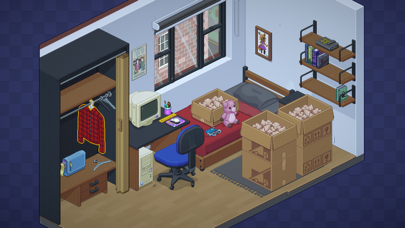
Unpacking is the only game on this list that isn’t about solving a puzzle in the traditional sense. Instead, it’s about spatial arrangement as storytelling. You unpack boxes into rooms—a studio apartment, then a new house, then a dorm, then a workspace. Each object you place (a toothbrush, a desk lamp, a framed photo) tells something about the person doing the unpacking.
The constraint is purely spatial: objects must fit inside furniture or on surfaces in ways that obey real-world logic. A mug goes in a cabinet or on a desk, not floating in the middle of the room. A poster goes on a wall. A plant goes on a windowsill. But within those constraints, placement is open-ended. You’re not solving for a single correct answer; you’re arranging a life.
The emotional weight comes from the sequence. Early unpacking scenes are optimistic—moving into a first apartment, setting up a workspace. Later scenes carry weight you don’t anticipate. The game unfolds across roughly 8 years of a character’s life, and the objects you place—and the spaces they’re placed into—tell a story of ambition, loss, growth, and resilience that hits harder than most narrative games manage in 40 hours.
Based on aggregated owner reviews across the App Store and gaming forums, players consistently report emotional resonance that surprises them. The puzzle itself is gentle—there’s no failure state, no timer, no pressure. The depth comes from paying attention to what each object means and where it belongs in a life being lived.
Nonogram Catacomb — Logic Puzzles with Teeth
If you’ve solved a nonogram (also called a picross or griddler), you know the satisfaction: a grid of cells, row and column clues that tell you which cells are filled, and a picture that emerges as you reason through the constraints. Nonogram Catacomb is a premium nonogram app that scales from tutorial-level simplicity to genuinely difficult constraint-satisfaction problems.
The game doesn’t hold your hand. There’s no hint system, no undo button, no “show me the answer” bailout. You solve the puzzle or you don’t. But the difficulty curve is respectful: early puzzles teach you the notation and the reasoning patterns. Mid-game puzzles introduce larger grids and denser constraint networks. Late-game puzzles require you to chain logical deductions across dozens of cells—the kind of puzzle where one cell’s value unlocks three others, which unlock five more, and suddenly a section of the grid crystallizes.
Per long-running threads on r/nonogram and puzzle-gaming communities, nonogram enthusiasts consistently recommend Catacomb for its puzzle quality and its refusal to dumb down the mechanic. The game includes hundreds of puzzles across multiple difficulty tiers, and the difficulty scaling is tight—you’re rarely stuck for more than a few minutes, but you’re also never bored.
The visual design is understated: dark theme, clean typography, minimal animation. The focus is entirely on the puzzle. This is the opposite of the free-to-play nonogram apps that wrap the mechanic in cosmetics, battle passes, and daily-login bonuses. Catacomb trusts that the puzzle itself is enough.
Splice — Color-Logic Matching
Splice is a color-and-shape matching puzzle where you’re rearranging DNA strands to create matches. The mechanic: you have a grid of colored nodes arranged in strands. Tap and drag to rotate or flip the strands. Match three or more nodes of the same color in a line (horizontal, vertical, or diagonal), and they clear. New nodes fall to fill the gaps.
That’s the base loop, and it’s familiar from a hundred match-three games. The distinction is in the constraint design. Your moves are limited—you can rotate or flip strands, but you can’t shuffle individual nodes. This means every move has weight. You’re not matching colors in isolation; you’re repositioning entire strand segments to create matches while also setting up future moves.
The game escalates by introducing new node types: color-shifters that change adjacent colors, blockers that prevent matches, and goal conditions that demand specific matches in specific configurations. By mid-game, you’re solving what amounts to a multi-step logic puzzle where each move unlocks the next.
According to owner reports across iOS gaming communities, players appreciate Splice for its escalating complexity without artificial difficulty spikes. The game doesn’t punish you with energy timers or ads; it simply presents harder puzzles as you progress. Most owners report 20-40 hours of play before hitting the endgame content, with a subset continuing into the challenge modes.
Two Dots — Minimalist Escalation
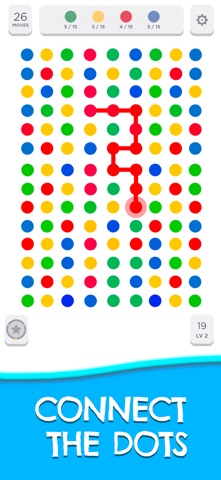
Two Dots is the simplest game on this list and arguably the most addictive. The mechanic: tap two dots of the same color that are adjacent (horizontally or vertically). The game draws a line between them. Keep tapping to extend the line. Close the loop, and all dots inside the loop clear.
That’s it. No combo systems, no power-ups, no special tiles. Just dots and loops.
The game’s depth comes from escalation. Early levels introduce the base mechanic. Then the game adds blocked squares that break your lines. Then it adds dots that can only be used once. Then it adds colored borders that constrain which dots you can connect. Then it stacks multiple rules simultaneously. By level 500, you’re solving spatial-logic puzzles that require you to trace a path through a constrained grid while respecting multiple rule systems.
Per multiple owner reports on Reddit and TouchArcade, Two Dots is the game people play “for five minutes” and then look up to realize it’s been an hour. The difficulty curve is gentle enough that you rarely feel stuck, but challenging enough that you’re always thinking one move ahead. The game includes both a story-driven progression mode and an endless “Zen” mode where you can play without pressure.
The visual design is minimalist: colored dots on a white grid, clean sans-serif type. No animations, no particle effects, no visual noise. The focus is entirely on the puzzle and the satisfaction of closing loops.
Why Premium Puzzle Games Matter
The free-to-play puzzle market is crowded and cynical. Games with solid mechanics are wrapped in energy systems, daily-login bonuses, and ads designed to nag you into spending money. The result is that genuinely good puzzle design gets buried under monetization friction.
Premium puzzle games—games you pay for once and own completely—solve this problem by aligning incentives. The developer’s revenue comes from selling the game, not from extracting engagement metrics or converting players into whales. This means the game is designed to be complete, fair, and respectful of your time.
The five games above represent different approaches to puzzle design: tile-sliding, object-placement, constraint-satisfaction, color-matching, and loop-drawing. Each is complete, ad-free, and built around a single mechanic that scales to surprising depth. None of them will nag you to spend more money or watch an ad. None of them will reset your progress if you miss a day. They’re just games—well-made, thoughtfully designed games that respect your intelligence and your time.
If you’re tired of free-to-play puzzle games, these five are the alternative. They’re not free, but they’re worth every penny.
FAQ
Do these games work offline? Yes. All five games work entirely offline with no internet connection required. This makes them ideal for commutes, flights, or anywhere you can’t guarantee a connection. See Best iOS Games No Internet Required: Offline Play Guide for more offline-friendly recommendations.
Can I play these with a controller? Threes!, Two Dots, and Splice are designed for touch and don’t support MFi controllers. Unpacking and Nonogram Catacomb have controller support, though touch is the primary input method. See Premium iPhone Games with Controller Support: MFi Guide 2026 for controller-focused recommendations.
How long does each game take to complete? Threes! (15-30 hours to reach the signature tile), Unpacking (4-6 hours for the story), Nonogram Catacomb (varies by puzzle count—hundreds of puzzles available), Splice (20-40 hours), Two Dots (100+ hours if you chase all levels). All five have content that scales to your commitment level.
Are these games on Apple Arcade? No. All five are one-time purchases on the App Store. Apple Arcade includes some puzzle games, but these five are independently published and priced individually.
What if I don’t like puzzle games? These five are entry points to different sub-genres of puzzle design. If tile-sliding doesn’t click, try object-placement (Unpacking) or color-matching (Splice). If none of these appeal, see Best Premium iPhone Games 2026: Top Paid Games Worth Buying for non-puzzle premium games.
Premium puzzle games prove that quality design doesn’t need engagement metrics or monetization hooks to succeed. These five games—Threes!, Unpacking, Nonogram Catacomb, Splice, and Two Dots—are complete, craft-built, and respectful of your time. They’re the antidote to free-to-play fatigue, and they’re worth your attention.
For more premium game recommendations, see Premium iPhone Games Under $10: Worth Every Penny and Indie iOS Games Worth Paying For: Developer Spotlight 2026.


