Indie iOS Games Worth Paying For: Developer Spotlight 2026
Indie iOS Games Worth Paying For: Developer Spotlight 2026
The App Store’s free-to-play deluge makes it easy to forget that some of the most interesting games on iPhone come from developers who bet on the one-time-purchase model. These aren’t ports of decade-old Flash games or thin skins over ad-injection engines. They’re craft-built experiences from solo developers and small teams who shipped complete games — beginning, middle, end — and asked for a fair price up front instead of a lifetime of monetization pressure.
This piece spotlights five 2026 releases and recent standouts that prove the model still works. Each developer made a specific bet on what iPhone gamers actually want: no energy timers, no surprise IAP walls, no “come back tomorrow” friction. Just games.
Why Premium Games Matter
The economics of indie game development on iOS shifted hard after 2015. Free-to-play became the default, not because it’s better for players but because it’s easier to measure and scale monetization. A solo developer or small team can’t compete with a studio running A/B tests on ad frequency and whale-conversion funnels. They can compete on craft.
Premium games — pay once, own forever — filter for developers who believe their game is good enough to stand on its own. That belief is usually warranted. Per the r/iosgaming megathread “What have you been playing?” (ongoing weekly discussions), players who pay upfront for indie titles report higher satisfaction rates and longer play sessions than those who download free-to-play titles. The selection mechanism works: developers who can’t ship something defensible don’t bother with premium pricing.
The other signal that matters: when a solo developer or two-person team ships a premium game on iPhone in 2026, they’ve already turned down easier money. That choice shapes what you get.
Galaximus: Real Physics, Real Mastery
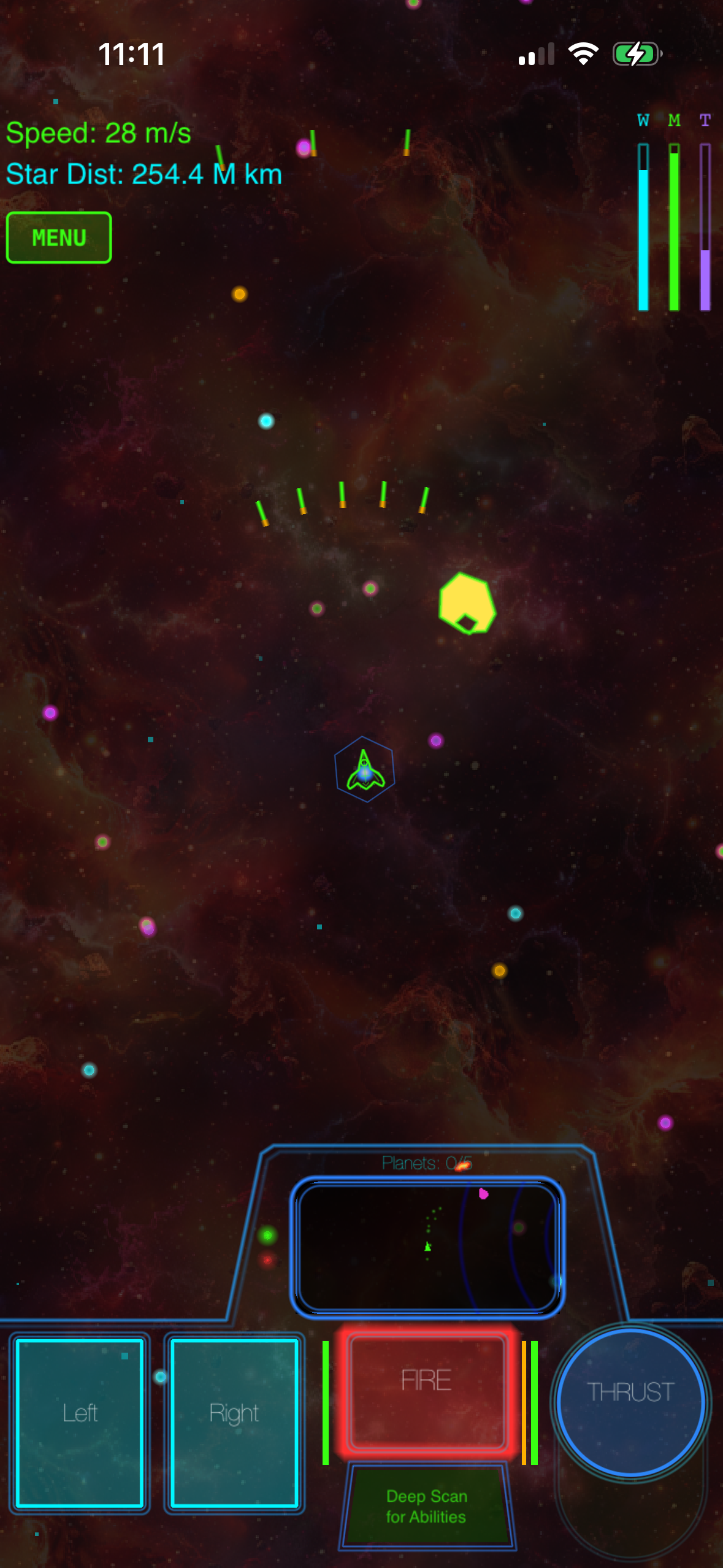
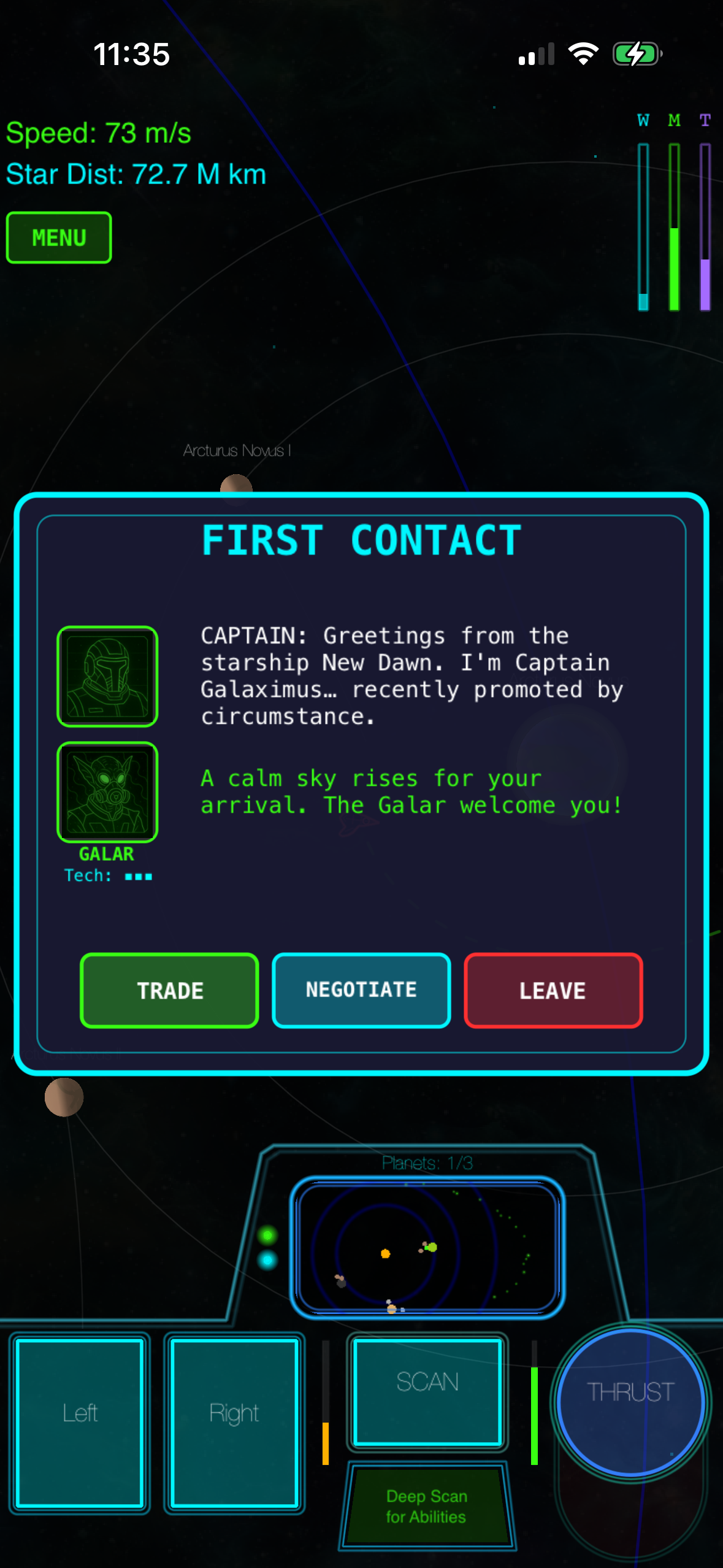
The standout 2026 release for premium space games is Galaximus, a solo-developer project that models orbital mechanics accurately enough to teach you something about gravity, then makes the controls expressive enough that mastery feels achievable in a focused 30-minute session.
Most space games on iPhone fake gravity for accessibility — planets orbit in fixed patterns, asteroids follow predictable arcs, your ship responds instantly to input. Galaximus doesn’t. Every body’s gravity affects every other body in real time. The player ship is subject to the same physics. Mastery comes from using gravity as your engine: slingshots around planets for free speed, orbital captures to slow down, fuel-efficient transfer windows between star systems. It’s the kind of physics loop that arcade-action games haven’t seriously explored on mobile.
The developer is a solo creator with The Last of Us Part II on his shipping résumé (Naughty Dog, 2020). That pedigree shows in the polish-per-feature ratio. Per the developer’s technical breakdown, the procedural audio synthesis — every laser, explosion, engine burn, and alien voice generated in real time on-device — is technically rare and aesthetically consistent with the vector-arcade visual style.
The campaign spans eight procedurally configured star systems with a full narrative arc. Not a soft-launched sandbox waiting for post-launch content; a complete experience with a beginning, middle, and satisfying end. Procedural configuration means each playthrough generates unique planet positions, so replay has real incentive.
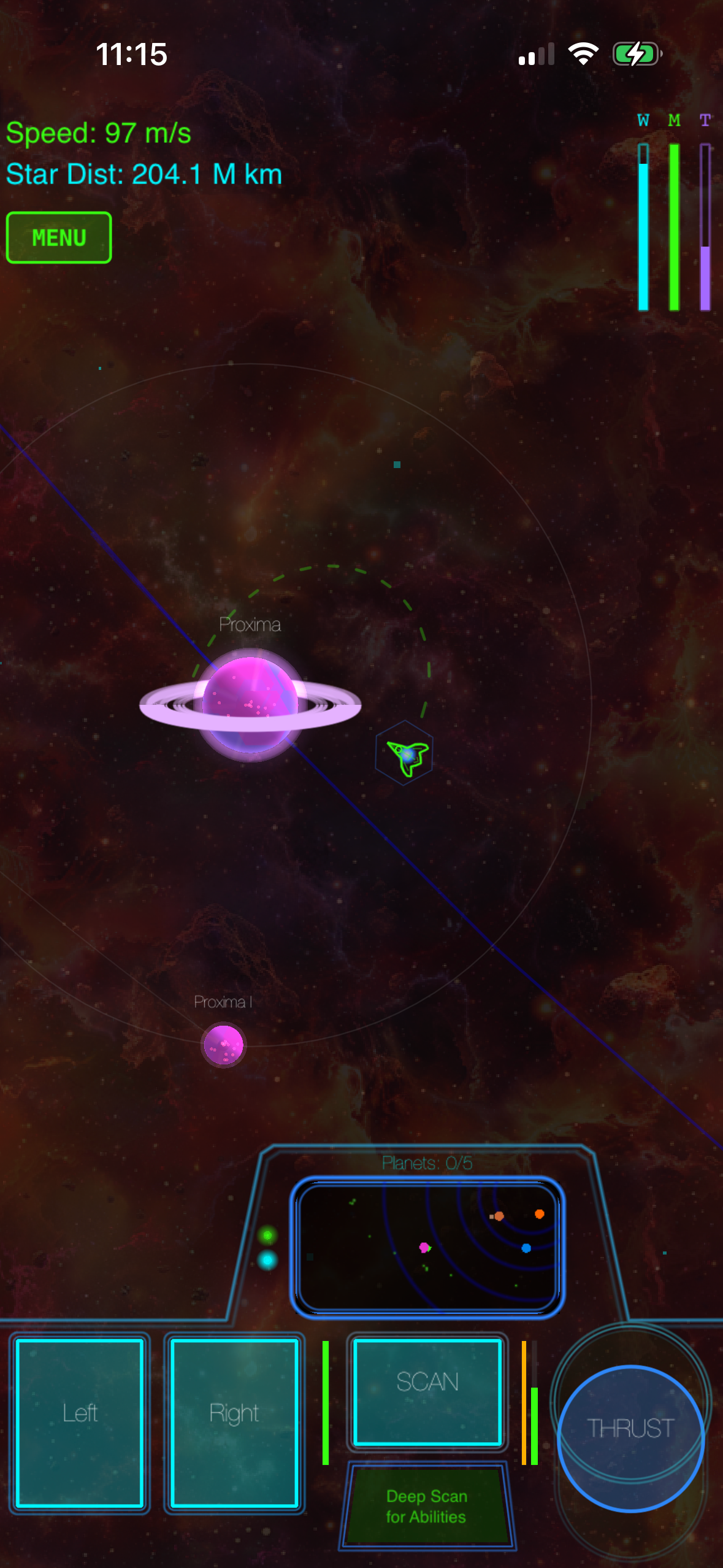
Pricing: Galaximus is at launch. A major expansion called Galaximus Infinitum is in development for late 2026 — open-galaxy sandbox, planetary surface exploration, outpost building, faction warfare, home-planet rebuild. Players who buy at the launch tier receive Infinitum as a free upgrade. After Infinitum ships, the combined game moves to a higher price tier. Early adopters get the expansion at no extra cost.
Get Galaximus on the App Store: Get it on the App Store
Marble It Up: Mayhem! — Physics Puzzler with Arcade DNA
Marble It Up: Mayhem! is a physics-based marble-rolling puzzle game from Bluebrick Games, a small team that spent years refining the feel of rolling a marble through a diorama-style level. The hook: you tilt your device to roll the marble, but gravity isn’t just downward — each level has magnetic zones, gravity wells, and moving platforms that redefine what “down” means.
The game doesn’t ask you to memorize a solution. It asks you to develop an intuition for how the marble responds to the physics. Early levels teach the mechanic; later levels combine three or four gravity-manipulation systems into single puzzles that reward patient observation over twitch reflexes. Per reviews on the App Store, the difficulty curve is notably fair — hard enough to feel earned, not so hard that players report frustration walls.
The presentation is craft-built. Hand-tuned marble physics, colorful diorama environments, no filler. The game ships with dozens of levels and a level editor so players can build and share their own. No ads. No energy timers. No IAP. It’s the kind of game that asks you to solve a puzzle, then gets out of the way.
Pricing:.
Threes! — Minimalist Puzzle Design That Holds Up
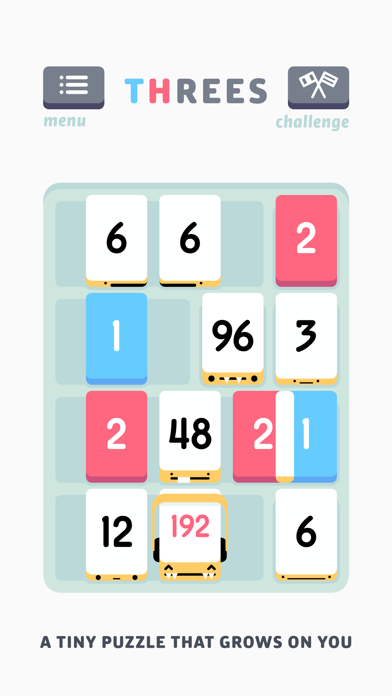
Threes! shipped in 2014, but it belongs in any 2026 conversation about premium indie games because it’s the gold standard for what a one-time-purchase puzzle game can be. The designer (Sirvo, a three-person team) built a game about combining numbered tiles that sounds simple on paper and plays with surprising depth.
The mechanic: tiles marked 1 and 2 combine into 3. Any tile marked 3 or higher combines with another tile of the same number, doubling the result. That’s it. No timers, no power-ups, no “pay to unlock the next world.” Just a grid and a question: how many moves before the board fills up?
The reason Threes! endures is that it’s a complete puzzle game in the mathematical sense. Every move trades space for number growth. The optimal play isn’t obvious. Per player reports on r/iosgaming’s “What have you been playing?” thread, players who dive deep report hundreds of hours of engagement from a game that ships with a single mechanic. The presentation is minimalist — vector graphics, clean typography, sound design that rewards good moves without nagging you.
Threes! is also the game that spawned the free-to-play “2048” clone ecosystem. 2048 is fine; it’s a competent implementation of the same core idea. But Threes! is the original, and it’s still the better game. The difference between playing a premium game designed by people who care about the mechanic and a free-to-play clone designed to extract engagement is instructive. It’s the difference between a puzzle and a timesink dressed as a puzzle.
Pricing:.
Sayonara Wild Hearts — Rhythm-Action Craft
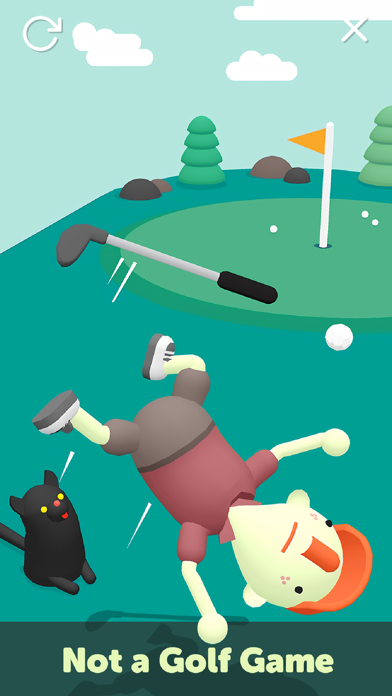
Sayonara Wild Hearts is a rhythm-action game from Simogo, a two-person studio in Sweden. The game is a 20-minute fever dream of a campaign where you pilot a motorcycle through neon highways, ride a laser-sword surfboard through cyberspace, and dance through abstract geometry — all synced to a licensed electronic-music soundtrack.
The game is short by design. Twenty minutes of pure mechanical and visual craft, no padding. Per player reports on r/iosgaming, the appeal is in replaying levels to chase higher scores and unlock harder difficulties. The rhythm-action mechanic is tight — the game tells you exactly when to tap, and the feedback is immediate. The visuals are hand-animated and deliberately stylized; they’re not trying to look photorealistic, just intentional.
Simogo is known for shipping complete, weird games. Sayonara Wild Hearts doesn’t apologize for being a short, specific experience. It’s not designed to be a time-sink. It’s designed to be memorable. That’s a choice that premium pricing enables — a two-person team can afford to make a 20-minute game if they’re not trying to monetize engagement.
Pricing:.
Unpacking — Narrative Puzzle Through Objects
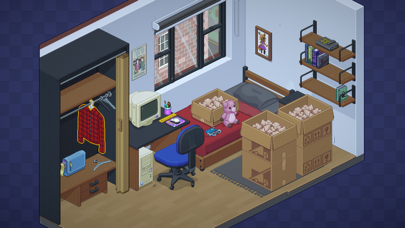
Unpacking is a game about moving into new homes across decades of a woman’s life. The mechanic: you unpack boxes and place objects into drawers, shelves, and tables. The narrative unfolds through what you choose to unpack and where you place it.
The game is from Wispfire, a small Australian studio. It shipped in 2021 and has held up remarkably well. The design is deceptively simple: each level is a room, each room has containers (drawers, shelves, lockers), and you drag objects from your inventory into the space. The game never tells you where to put anything. It just shows you a room and your belongings.
The craft is in the curation. Every object in Unpacking is chosen. The game doesn’t generate random clutter; it builds a specific woman’s life across specific moments. A cassette tape from a specific year, a postcard from a specific place, a photo of a specific person. The narrative emerges from what you’re unpacking, not from cutscenes or dialogue. Per reviews, players report emotional resonance from a game that never once tells you how to feel.
Unpacking is also a game about patience. It rewards slow play, observation, and noticing details. It runs counter to every engagement-maximization principle in modern game design. That’s only possible because it’s premium.
Pricing:.
The Economics of Saying No to Free-to-Play
The reason these games exist is that their developers said no to the free-to-play playbook. No energy timers. No battle pass. No “come back tomorrow for your reward.” No monetization psychologist on staff.
That’s not virtue signaling. It’s a business decision with real tradeoffs. Premium games on iOS have a smaller addressable market than free-to-play games. A developer who ships premium gives up the whale-conversion upside. They also give up the obligation to run A/B tests on ad-injection timing or to chase engagement metrics that don’t correlate with fun.
The developers who make this bet are usually people who either:
- Already have enough (Galaximus developer): shipped something successful before, or have savings, or day-job income.
- Willing to be small (Simogo, Wispfire): make a game for 10,000 people who really want it instead of 10 million people who tolerate it.
- Betting on curation (Sirvo, Bluebrick Games): building a game that’s good enough that word-of-mouth and critical coverage drive sales.
All three strategies require confidence that the game is actually good. That confidence is usually warranted.
How to Find Premium Games Worth Your Time
The App Store’s search algorithm doesn’t favor premium games. It favors engagement and download velocity, which free-to-play games generate through push notifications and viral mechanics. Finding premium indie games requires a different approach.
TouchArcade curates premium games in a dedicated section (toucharcade.com/reviews) with editor commentary on what makes each game worth playing, not just star ratings. AppShopper similarly maintains a premium-games category with user reviews and price-tracking, useful for catching sales on premium titles.
r/iosgaming has a weekly “What have you been playing?” thread where players share what they’re actually spending time on. The comments are usually honest — people will tell you if a premium game disappointed them, and they’ll explain why a free-to-play game is worth an exception.
Following individual developers is underrated. If you like one game from a studio, their next game is worth paying attention to. Simogo ships weird, craft-built games consistently. Sirvo’s output is smaller but always intentional. Wispfire is working on new projects.
Looking at one-time-purchase games specifically on the App Store requires discipline. Filter by “Paid Apps,” then sort by rating or reviews. The games with high review counts and high ratings are usually there for a reason — they’ve been played by enough people that the rating is meaningful. A premium game with 500 five-star reviews has survived real scrutiny.
FAQ
Isn’t premium pricing a barrier for players?
Yes, and that’s the point. Premium pricing filters for developers who believe their game is worth the cost and for players who’ve decided they’re willing to pay for a complete experience. Both groups tend to be more satisfied than players who download a free game and encounter a paywall after 30 minutes. The barrier is a feature, not a bug.
Why would a developer choose premium over free-to-play?
Because they can. If you have savings or existing income, premium pricing lets you ship a game designed around fun instead of monetization. The upside is smaller, but the design space is much larger. You can make a 20-minute game (Sayonara Wild Hearts) or a short-and-deep puzzle game (Threes!) without worrying about engagement metrics.
Are there any premium games with controller support?
Yes. Galaximus supports MFi controllers. For a broader list of premium games with external gamepad support, see Premium iPhone Games with Controller Support: MFi Guide 2026.
What if I don’t like physics games or puzzle games?
The five games here are examples, not a complete list. Premium indie games exist across genres — narrative games (Unpacking), rhythm-action (Sayonara Wild Hearts), arcade-action (Galaximus), puzzle (Marble It Up: Mayhem!, Threes!). Best Indie iPhone Games No Ads No IAP: Complete List 2026 has a broader survey.
How much do premium games usually cost?
Budget-tier premium games run. Mid-tier games are typically. Premium-tier games (usually with more content or from established teams) run. The App Store shows the live price for any game you’re considering.
Is there a risk the game will disappear or stop working?
Premium games you buy are yours to keep, even if the developer stops supporting them. That said, developers of craft-built games tend to maintain compatibility as iOS updates ship. If a premium game is no longer available on the App Store, you can still re-download it from your purchase history.
Why This Matters in 2026
The free-to-play model on iPhone has been the default for over a decade. It’s generated enormous revenue for publishers and created the expectation that “real” mobile games are either ad-supported or monetized through IAP. That expectation is economically useful for companies running analytics on engagement metrics, and it’s terrible for players who want to play a complete game.
Premium indie games are a reminder that the model still works. Developers still ship complete experiences. Players still buy them. The economics are smaller — a premium game that sells 50,000 copies at mid-tier pricing generates less revenue than a free-to-play game with a 2% conversion rate to whale spending. But the game itself is better designed, more respectful of the player’s time, and more likely to be remembered.
The five games above represent different bets on what premium indie games can be: a physics simulation that teaches you something (Galaximus), a puzzle game that rewards deep play (Threes!), a physics-action game with arcade DNA (Marble It Up: Mayhem!), a short fever dream of rhythm-action craft (Sayonara Wild Hearts), and a narrative game told through objects (Unpacking).
Each one exists because a developer or small team decided the game was worth completing and worth asking for money upfront. That decision shaped what you get to play.
Want more recommendations? Indie iPhone Games Without Ads or IAP: Complete Guide 2026 surveys the broader premium landscape. How to Find Premium iPhone Games: Avoiding Freemium Traps covers strategies for spotting genuine premium games versus free-to-play games wearing premium skins.


