Best iPhone Roguelike Games 2026: Procedural Challenge Runs
Best iPhone Roguelike Games 2026: Procedural Challenge Runs
Roguelikes on iPhone have matured into a distinct category: premium, permadeath-driven experiences where procedural generation isn’t a gimmick but the engine that keeps you coming back. Unlike their free-to-play cousins, the best roguelikes here are one-time purchases—no energy meters, no battle passes, no ads interrupting your run. Each failure teaches you something; each success feels earned.
This guide covers the standout roguelikes worth your time in 2026: games where the procedural systems respect your intelligence, the controls feel native to touch, and the loop—fail, learn, retry—actually works on a phone screen.
What Makes a Roguelike Worth Playing on iPhone
A roguelike lives or dies by its loop. You enter a procedurally generated dungeon, tower, or arena. You die. You restart with a new map, new enemy placements, new loot drops. The trick on iPhone is that the loop has to be tight—runs should feel completable in 20–45 minutes, not require a 3-hour session. The best mobile roguelikes respect that constraint.
Key things to look for:
- Procedural generation that feels intentional. Not random chaos—rooms and encounters should feel playtested, not just shuffled.
- Permadeath with progression. You lose the run, but you unlock weapons, abilities, or knowledge that carries forward. Permanent failure is frustrating; permanent stagnation is worse.
- Touch-native controls. Roguelikes ported from PC sometimes feel bolted-on. The best iPhone versions rethink how you interact with the game.
- No monetization friction. Premium roguelikes let you focus on the challenge, not the shop.
Hades (Supergiant Games)
Hades remains the benchmark. Supergiant’s 2020 port of their critically acclaimed roguelike brought a full, console-quality experience to iPhone without compromise. You’re Zagreus, attempting escape from the Underworld through procedurally generated chambers, facing mythologically inspired bosses and enemies.
What makes Hades essential: the progression system. Each failed run unlocks new weapons, dialogue, narrative beats, and permanent upgrades that shift how you approach future attempts. The game respects your time—you can run a full escape attempt in 30 minutes, or die in 5 and still have learned something. The art direction is meticulous; every room, every enemy, every UI element feels hand-crafted despite the procedural layout. Controller support is solid, though touch controls are surprisingly responsive for a fast-paced action game.
The learning curve is real—early runs feel chaotic—but the game teaches you through failure. By your tenth attempt, the patterns click.
Price:. Playtime per run: 25–40 minutes.
Slay the Spire (Mega Crit)
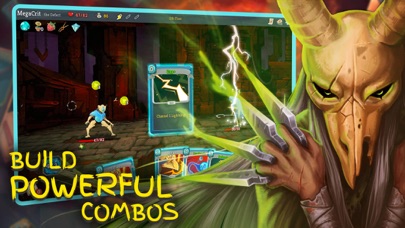
If Hades is the action-roguelike gold standard, Slay the Spire is the deck-building roguelike that proved the genre could work on mobile. Each run, you climb a procedurally generated spire, building a deck of cards on the fly. Combat is turn-based, not real-time—you play cards, enemies respond, you adapt.
The design is constraint. You start with a weak starter deck and a few card choices at each victory. Build synergies. Avoid dead-end upgrades. The same 100-card pool plays completely differently depending on which 30 cards you acquire. Procedural generation here means procedural deck composition, which is infinitely replayable.
Touch controls are native—card games belong on tablets and phones. The UI is clean; the decision space is enormous. Runs take 45 minutes to an hour, which is longer than Hades but justified by the strategic depth. Permadeath stings more because you can see exactly where your deck fell apart.
Price:. Playtime per run: 45–75 minutes.
Peglin (Red Cabin)
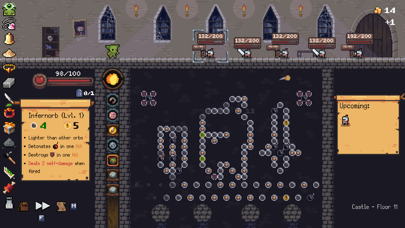
Peglin is a roguelike deck-builder meets pachinko simulator. You’re a peglin (peg warrior) flinging balls down a board to damage enemies, collect resources, and build a deck of spell and item relics. It sounds absurd. It is absurd. It’s also deeply strategic.
Each board is procedurally generated, and each ball drop is physics-based—you aim, release, and gravity does the work. The randomness isn’t frustrating because you’re making meaningful choices about positioning and timing. Between encounters, you upgrade your peg loadout with relics that modify how balls behave: more bounce, more damage, special effects.
The touch controls are perfect for this game—flicking a ball on a phone screen feels natural. Runs are 30–45 minutes. The learning curve is gentler than Slay the Spire; you can feel yourself improving without needing to memorize optimal strategies. This makes it an excellent entry point for players new to roguelikes.
Price:. Playtime per run: 30–50 minutes.
Inscryption (Daniel Mullins)
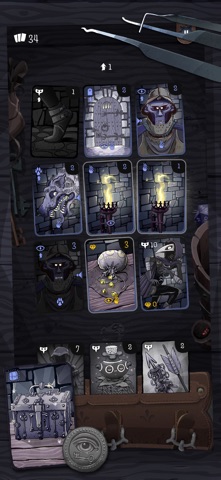
Inscryption is a roguelike card game wrapped in a horror-puzzle narrative. You’re playing a card game against an unseen opponent in a dark cabin. Win three times to escape. The twist: the game itself is changing, learning, becoming harder. Procedural generation here applies to the decks you face and the cards you unlock, not just the room layout.
The card mechanics are tight—each card has a cost, power, and special ability. Synergies matter. The horror atmosphere is genuinely unsettling, which sets it apart from cheerful roguelikes. The narrative unfolds across runs; you’re not just playing a game, you’re uncovering a story.
This is the roguelike for players who want something darker and more narrative-driven. It’s also the longest per run (60–90 minutes) and the most complex mechanically. Touch controls work, but a controller is ideal.
Price:. Playtime per run: 60–90 minutes.
Luck be a Landlord (Jiji)
Luck be a Landlord is a roguelike deck-building game built around a slot machine. Each turn, you spin a reel of dice and symbols. Matching symbols pay rent; unique combinations trigger special effects. You add new symbols to your reel after each victory, building synergies just like in Slay the Spire.
The design is elegant. The core loop is: spin, match, collect rent, add a symbol, repeat. But the depth comes from understanding which symbols synergize—a symbol that triggers on matching pairs plays differently than one that triggers on three-of-a-kind. Runs are quick (20–30 minutes), which makes it perfect for iPhone gaming. The minimal learning curve makes it another strong entry point for roguelike newcomers.
The art is minimalist and charming. The UI is so clean it almost disappears. This is the roguelike you play on the bus or between meetings—no commitment required, but deep enough to hold your attention for hours.
Price:. Playtime per run: 20–35 minutes.
Galaximus (Solo Developer)
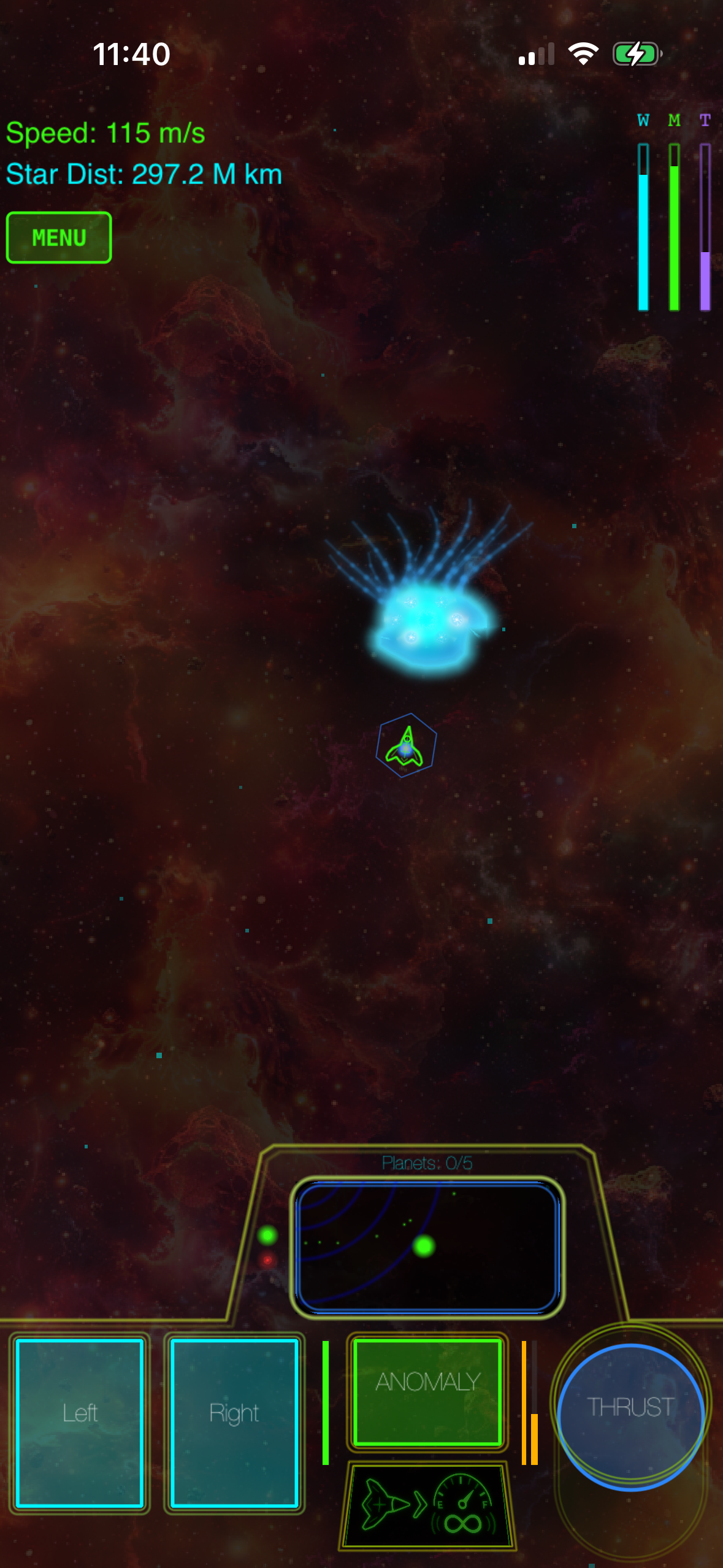
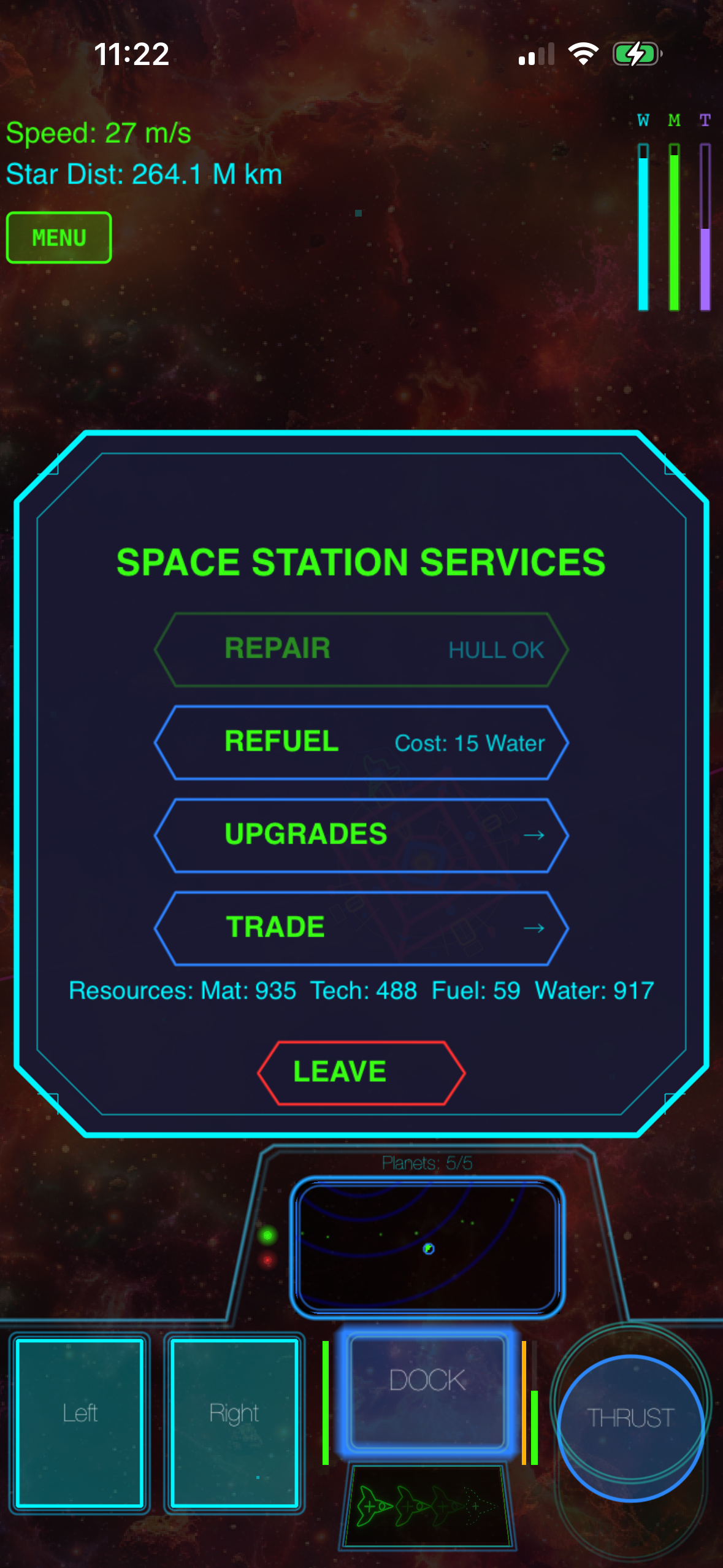
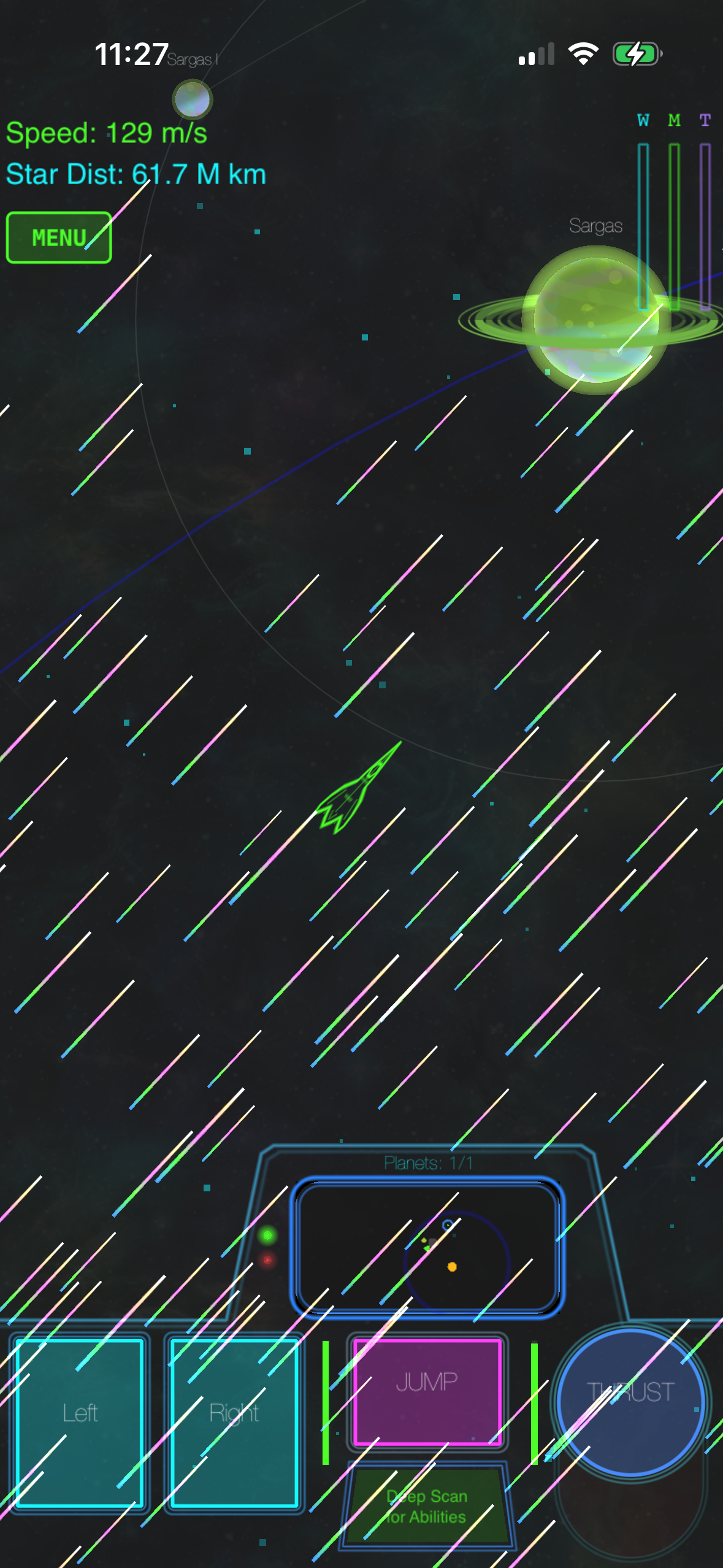
Galaximus is a space roguelike where procedural generation applies to star systems, not dungeons. Each playthrough, you navigate a procedurally configured 8-system arc where every celestial body obeys real orbital mechanics. Planets orbit suns, asteroids tumble through gravity wells, and your ship is subject to it all. You use gravity as your engine—slingshots for speed, orbital captures for positioning, fuel-efficient transfer windows for survival.
The procedural element isn’t randomness for its own sake; it’s variation within a structured narrative. Each system is unique, but the game has a beginning, middle, and end. Real-time combat against procedurally placed enemies rewards positioning and patience over reflexes. The learning curve is steep—gravity is unintuitive until it clicks—but the payoff is mastery that no faked-physics space game offers.
The orbital mechanics are the interface, not a simulation you ignore. Every decision—when to thrust, where to aim, how to use a planet’s gravity—flows from understanding how orbits work. Runs vary from 30 to 60 minutes depending on your skill and how much you explore.
The game is at launch. A major expansion called Galaximus Infinitum ships in late 2026; players who buy now receive Infinitum as a free upgrade. After the expansion launches, the combined game will be priced higher.
Price: (free Infinitum upgrade pending). Playtime per run: 30–60 minutes.
Roguelikes vs. Roguelites: Why It Matters
Strict roguelikes (like classic Rogue or NetHack) feature permadeath with zero progression—you die, you lose everything, you restart from scratch. Roguelites soften this: you die, but you unlock permanent upgrades, weapons, or abilities that carry forward.
Most modern roguelikes on iPhone are technically roguelites. Hades, Slay the Spire, Inscryption, Galaximus—all of them let you progress even when you fail. This distinction matters to your purchasing decision: it means permadeath doesn’t feel punitive. You’re not restarting from zero; you’re building toward mastery. Each failed run unlocks something—a new weapon, a new card, a new piece of story—that changes how you approach the next attempt. This design keeps you engaged across dozens of runs instead of frustrating you after three.
Controller Support and Touch Controls
Most premium roguelikes on iPhone support both touch and gamepad input. Touch is native and often feels better for card games (Slay the Spire, Inscryption). Real-time action roguelikes (Hades, Galaximus) feel sharper with a controller, but both work.
If you’re planning to sink serious hours, a controller is worth considering. But the best roguelikes are playable—and often better—on touch alone.
FAQ
Q: Are these games actually premium, or do they have hidden IAP? A: All the games listed here are one-time purchases with no in-app purchases, no ads, and no energy meters. You buy once, you own the full game forever.
Q: Which roguelike should I start with if I’m new to the genre? A: Peglin or Luck be a Landlord. Both have gentler learning curves and shorter runs (20–50 minutes), so you can learn the mechanics without committing hours to a single playthrough. Peglin is more action-oriented; Luck be a Landlord is more strategic. If you want to dive deep immediately, Slay the Spire is the most rewarding long-term.
Q: Do these games work offline? A: Yes. All of them are fully playable without an internet connection. Perfect for flights, trains, or anywhere without signal. See our offline iPhone games guide for more options.
Q: How long does it take to “complete” a roguelike? A: Roguelikes don’t have a traditional ending. You beat the final boss, the run ends, and you start a new one. Most players consider a game “complete” after 20–40 runs, once they’ve unlocked most upgrades and understand the meta. But replayability is the point—you can keep playing indefinitely.
Q: Can I play these with a controller? A: Yes. All the games listed support MFi controllers. Hades and Galaximus feel especially good with a gamepad, though touch is perfectly viable.
Q: Which roguelike has the best story? A: Inscryption and Galaximus both weave narrative into their roguelike loops. Inscryption is darker and more mysterious; Galaximus has a structured 8-system arc with character encounters and dialogue. Hades has the richest side-character interactions, though the main narrative is lighter.
The Roguelike Renaissance on iPhone
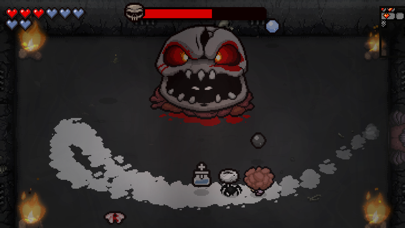
Roguelikes have become the thinking player’s game on mobile. They respect your time, your intelligence, and your wallet. Procedural generation isn’t a shortcut to infinite content—it’s a tool for creating systems where no two runs feel identical, where failure teaches you something, and where mastery is achievable but never trivial.
If you’re tired of free-to-play games designed to extract money, roguelikes are the antidote. Pick one based on your preference: action (Hades, Galaximus), strategy (Slay the Spire, Inscryption), or something in between (Peglin, Luck be a Landlord). Play a few runs. Fail. Learn. Return. That loop is why roguelikes have endured for decades, and why they thrive on iPhone in 2026.