Best iPhone Roguelike Games 2026: Procedural Challenges
Best iPhone Roguelike Games 2026: Procedural Challenges
Roguelikes on iPhone have matured from novelty ports into genuinely compelling experiences that leverage the platform’s strengths: touch controls, pick-up-and-play session design, and iterative progression that keeps you coming back after a brutal run ends. The genre’s core appeal—procedurally generated dungeons, permadeath stakes, and the knowledge that every run teaches you something—translates perfectly to mobile play.
What Makes a Roguelike Work on iPhone
A roguelike lives or dies on two mechanics: procedural generation and permadeath. The procedural part keeps runs fresh—no two dungeon layouts are identical, so muscle memory alone won’t carry you through. Permadeath makes every decision matter; you’re not grinding toward an inevitable win, you’re navigating uncertainty with imperfect information.
On iPhone, this translates to games that respect session length. Slay the Spire runs average 45 minutes per community playtime data. Dead Cells runs typically last 25-40 minutes depending on difficulty. Spelunky 2 runs average 20-30 minutes. Touch controls either integrate seamlessly (swipe-based movement, tap-to-shoot) or get out of the way entirely (turn-based games where input lag is irrelevant). The best iPhone roguelikes lean into one of these strengths rather than fighting the platform.
The genre also benefits from permadeath’s psychological hook: you’re not afraid of failure, you’re expecting it. That mindset shift—from “I need to win” to “I need to learn”—is what keeps players running the same dungeon 50 times and staying engaged the entire time.
Action Roguelikes: Real-Time Combat
Action roguelikes demand precision, but iPhone’s touch controls can either enable or sabotage that precision depending on how the developer approached input. The best ones use swipe-based movement or twin-stick layouts that map cleanly to two-finger control.
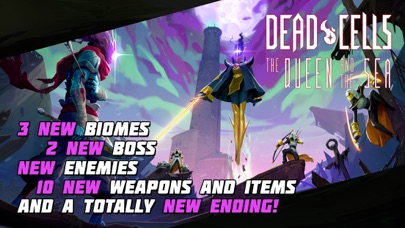
Dead Cells exemplifies this. The game is a side-scrolling action-roguelike where you’re rewarded for learning enemy patterns rather than button-mashing. Each weapon type has a distinct rhythm, and the procedural level generator ensures you’ll face those patterns in different spatial contexts. Boss fights teach through telegraphed attacks and punishment windows. After your first 20 deaths, you stop seeing failure as frustration and start seeing it as information. The hand-drawn animation makes every swing feel deliberate.
Price: | Requires: iPhone 11 or later
Hades takes the action-roguelike formula and wraps it in a narrative that unfolds across multiple runs. You play as Zagreus, attempting to escape the underworld, and each failed run feeds into dialogue and story progression. The combat system is touch-friendly: swipe to move, tap to attack, hold for special abilities. The game doesn’t punish you for a slower pace. The real draw is the art direction: every weapon, every enemy, every room is hand-animated by Supergiant Games, and the visual feedback is so clear that you understand what’s happening even during chaotic multi-enemy encounters.
Price: | Requires: iPhone 12 or later
Binding of Isaac: Rebirth is the outlier here—a twin-stick shooter roguelike with a deliberately grotesque art style and a learning curve that assumes you’ll die dozens of times before understanding item synergies. The procedural generation is aggressive; you might get a run where your starting tears (projectiles) are weak, or you might find an item that multiplies your damage output by 10x. The game doesn’t explain these synergies; you learn through experimentation and failure. It’s not for everyone, but players who click with it report hundreds of hours invested.
Price: | Requires: iPhone 11 or later
Turn-Based Roguelikes: Strategy Over Reflexes
Turn-based roguelikes remove the twitch-reflex requirement and replace it with decision-making under uncertainty. You have time to think, but the procedural generation ensures that no two encounters play out the same way.
Slay the Spire is the gold standard. It’s a deck-building roguelike where you construct a 20-30 card deck as you progress through a procedurally generated map. Every card choice cascades: a card that costs 1 energy might be weak in isolation, but paired with another card that triggers on energy spent, it becomes a combo. The genius is that the game never tells you these synergies exist; you discover them through play. Three different character classes have completely different card pools and playstyles, so the learning curve is steep but rewarding. Runs last 30-60 minutes, and you’ll lose most of them, but each loss teaches you something about card economy or enemy patterns.
Price: | Requires: iPhone 11 or later
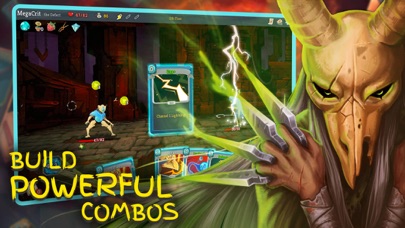
Inscryption blends roguelike mechanics with puzzle-box narrative design. It’s a deck-building game like Slay the Spire, but it’s also a mystery where the rules of the game itself are part of the story. Without spoiling anything: the first few runs feel like a standard roguelike, but the game has layers. The procedural generation is less prominent than in Slay the Spire, but the card synergies are deeper. It’s best played without spoilers.
Price: | Requires: iPhone 12 or later
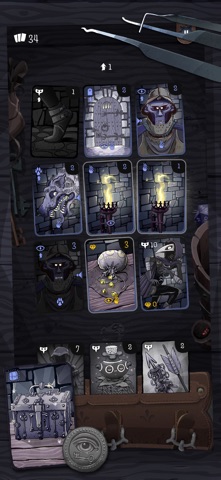
FTL: Faster Than Light is a real-time strategy roguelike where you manage a spaceship, crew, and resources while fighting enemy vessels. You’re allocating power to shields, weapons, and engines, and the procedural generation of enemy encounters means you’re always reacting to new threats. Runs last 30-45 minutes, and permadeath is harsh—one bad decision can cascade into an unwinnable state. The learning curve is steep, but the satisfaction of a successful run is proportional to the difficulty.
Price: | Requires: iPhone 11 or later
Platformer Roguelikes: Procedural Level Design
Platformer roguelikes inherit from games like Spelunky, where procedurally generated level layouts force you to adapt on the fly. The procedural generation here isn’t cosmetic; it’s fundamental to how you navigate space.
Spelunky 2 is the definitive platformer roguelike on iPhone. Each level is procedurally generated from pre-built room templates, so you recognize the building blocks but never know the exact layout. The game respects your skill: if you’re patient and methodical, you can navigate most levels without taking damage. If you’re greedy and rush, you’ll trigger traps. The permadeath is real—one mistake and your run ends—but the game gives you enough information to make informed decisions.
Price: | Requires: iPhone 11 or later

Crypt of the NecroDancer is a rhythm-based platformer roguelike where you move to the beat of the music. Every action—moving, attacking, dancing—must sync with the soundtrack. The rhythm constraint removes the “optimal” strategy because you can’t move faster than the beat allows. This forces a meditative, methodical approach that’s the opposite of twitch-reflex gaming. The procedural generation ensures that no two runs have the same music-level pairing.
Price: | Requires: iPhone 11 or later
Hybrid and Experimental Roguelikes
Some of the most interesting roguelikes defy easy categorization. They borrow mechanics from multiple genres and synthesize something new.
Noita is a pixel-art action-roguelike built around a physics engine and spell crafting. You pick up wands, modify them with spells, and the spells interact with the environment in unpredictable ways. A spell that shoots fireballs might also ignite the ground, which affects how enemies move, which changes how you approach the next room. The procedural generation is aggressive; nearly every pixel of the world is simulated. Runs typically last 1-3 hours for skilled players according to community speedrun data. The learning curve is brutal, but players who invest report that the game’s depth is nearly inexhaustible.
Price: | Requires: iPhone 13 or later
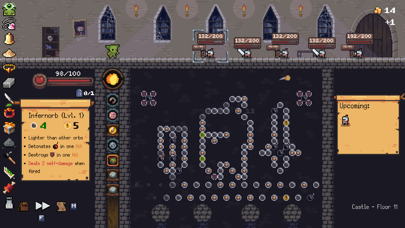
Peglin is a roguelike built around pachinko mechanics. You’re shooting pegs at enemies, and the trajectory is determined by physics and luck. Every peg you hit feeds into a combo multiplier, so the strategy is about maximizing hit chains rather than precision aiming. It’s turn-based, so there’s no time pressure, and the procedural generation ensures that no two enemy encounters are spatially identical.
Price: | Requires: iPhone 11 or later
What Separates Good Roguelikes from Great Ones
The best roguelikes on iPhone share core traits:
Meaningful progression within a run. You start weak and become stronger through item discovery or skill progression. Dead Cells exemplifies this: early-game enemies are trivial by mid-run, but late-game enemies still pose a threat because the difficulty scaling accounts for your power growth.
Clear feedback on failure. When you die, you understand why. Hades’ boss design teaches this well: each boss has telegraphed attacks and punishment windows, so failure is information rather than frustration.
Respect for session length. You can quit mid-run and resume later, or play a full run in one sitting. Slay the Spire handles this perfectly with its turn-based structure.
Permadeath with persistence. Most modern roguelikes unlock new items, characters, or mechanics as you progress. You’re not starting from zero every time; you’re building toward something.
FAQ
Can I play these games offline? Yes, all of them. These are native iOS apps, not cloud-based games. You can play without an internet connection.
Do any of these have ads or battle passes? No. All the games listed here are premium purchases with no ads, no battle passes, and no pay-to-win mechanics. You pay once and own the full game.
Do I need a controller to play these games? Most work perfectly with touch controls. A few (like FTL) benefit from a controller if you have one, but it’s not required. Dead Cells and Hades are specifically designed for touch and play better without a controller.
Which roguelike should I start with if I’ve never played one? Start with Slay the Spire if you prefer turn-based strategy, or Dead Cells if you want real-time action. Both are forgiving enough to teach their systems through play and have high replayability. Avoid Binding of Isaac and Noita until you’ve played a few others; their learning curves are steep.
Are these games available on other platforms? Yes, nearly all of them. But the iPhone versions are native ports, not cloud streams, so they play identically to the console versions.
The Roguelike Renaissance on Mobile
Roguelikes have become the most interesting genre on iPhone because they solve a fundamental mobile gaming problem: how do you create a game that respects short play sessions while remaining endlessly replayable? Procedural generation handles replayability, and permadeath creates meaningful stakes without requiring 40-hour campaigns.
The games listed here represent the best of what the genre has to offer in 2026. Each one respects both the roguelike formula and the iPhone platform. Whether you’re drawn to action, strategy, or something in between, there’s a roguelike here that will reward your investment.


