Best One-Time Purchase iPhone Games 2026

Photo by Onur Binay on Unsplash
Best One-Time Purchase iPhone Games 2026
If you’ve spent the last decade watching premium iPhone games disappear into free-to-play traps, you’re not alone. The good news: a robust catalog of one-time-purchase games still exists for players who value completion over compulsion loops. These aren’t ad-supported with a “remove ads” upsell, and they don’t gate progression behind battle passes or energy meters. You pay once, you own the full game.
This roundup covers the best paid iPhone games available in 2026—arcade-lineage titles, indie craft-builds, and narrative experiences that deliver complete experiences at purchase. Most titles range from to. Each recommendation is a complete game, not a free-to-play Trojan horse.
How to Choose: Filter by Your Playstyle
Before diving into recommendations, consider what you’re looking for:
- Available playtime: Arcade games (Asteroids, Geometry Wars) offer indefinite replayability; campaign games (Hyper Light Drifter, Hades) take 6–25 hours; narrative games (Kentucky Route Zero) are 2–6 hour experiences.
- Control comfort: Action games like Hades and Hyper Light Drifter use touch controls optimized for mobile. Turn-based games like Into the Breach have no time pressure. Puzzle games like Threes! rely on simple swipes.
- Genre preference: Choose arcade for reflexes, puzzle for logic, narrative for story, strategy for planning.
Arcade-Lineage Games: Direct Descendants of the Golden Age
The lineage matters. Games that trace back to 1979–1985 arcade formats—Asteroids, Defender, Tempest—and respect that heritage rather than just borrowing the aesthetic tend to reward mastery and pattern recognition over wallet depth.
Asteroids: Recharged
Atari’s official vector-based reimagining respects the 1979 original while adding modern visual polish and sound design. The core loop—rotate, thrust, shoot, avoid—remains untouched. What’s new is the visual feedback: asteroids shatter with satisfying particle effects, the vector lines glow against a dark backdrop, and the soundtrack hits with synth-driven intensity that escalates with difficulty.
No difficulty gating behind progression systems. No “unlock weapon variants.” The game gets harder naturally as waves increase in density and asteroid spawn patterns tighten. The one-time purchase includes all content; there’s nothing held back.
Geometry Wars 3: Dimensions
A more colorful cousin to pure arcade reflex games, Geometry Wars 3 layers geometric enemies and power-ups into an almost-psychedelic arena. The 3D perspective and particle density push the visual envelope further than the original arcade lineage, but the core demand—spatial awareness, rapid target switching, pattern prediction—stays intact.
The campaign mode structures progression around themed arenas (classic 2D plane, 3D spheres, enclosed boxes) rather than grinding progression. Each arena has its own scoring rhythm. Multiplayer modes are included in the one-time purchase , though the game is primarily single-player focused.
Space Games: Orbital Mechanics and Real Physics
Space-themed arcade games occupy a niche where craft-built indies often excel. Real orbital mechanics—or at least physics that reward understanding orbital principles—separate these from generic space shooters.
Galaximus
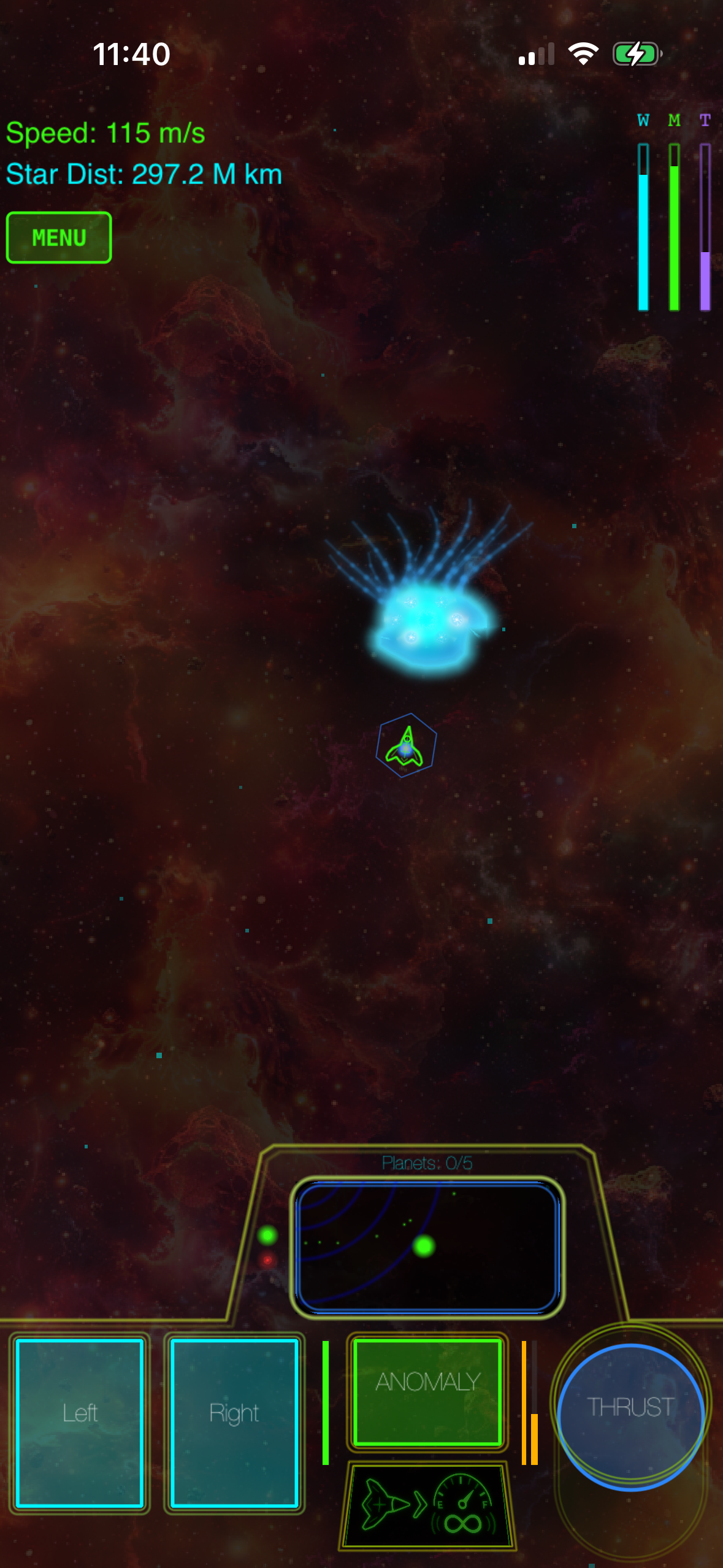
A space arcade game built around real orbital mechanics. The core loop involves maneuvering a small spacecraft, managing velocity and trajectory to intercept asteroids and enemies while respecting actual physics constraints. The game rewards patient positioning and understanding of orbital decay over twitch reflexes alone.
The visual presentation leans into retro vector aesthetics—glowing lines, minimal color palette, high contrast against the dark void. No ads, no energy timers, no battle pass. The full game unlocks at purchase . The game offers both a campaign mode and endless modes for score-chasing.
Hades
Supergiant Games’ rogue-like action title shipped on iPhone as a complete port—no cuts, no mobile-specific monetization. The game is narrative-heavy (you’re escaping the underworld, and the story unfolds across multiple runs) and mechanically rich (weapon variety, power-up synergies, difficulty modulation). The art direction is hand-crafted throughout; every animation and UI element reflects the developer’s attention.
One-time purchase unlocks the entire game. The rogue-like structure (short runs, permanent progression, randomized encounters) naturally extends playtime without artificial gating. The iPhone port maintains feature parity with console versions while optimizing touch controls for mobile reflexes. Campaign playtime averages 15–25 hours for story completion, with endless runs extending that further.
Puzzle and Strategy: Thinking Games Without Monetization Pressure
Puzzle and strategy games often suffer the worst under free-to-play models—timers on move counts, energy systems, “hint” paywalls. The best premium options cut all that noise.
Into the Breach
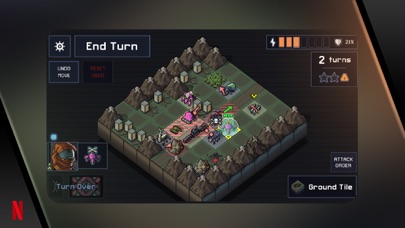
Subset Games’ turn-based tactical game strips away real-time pressure entirely. Each turn, you see enemy positions and attack patterns in advance, then arrange your three units to block, counter, or push enemies into hazards. The game is about reading the board state, not reaction time.
The one-time purchase includes the full campaign (multiple islands with escalating difficulty), all mech squads, and daily challenge mode. No cosmetic passes, no “premium currency” shop. A single campaign playthrough takes 6–8 hours; the daily challenges extend indefinitely for players chasing high scores.
Threes!
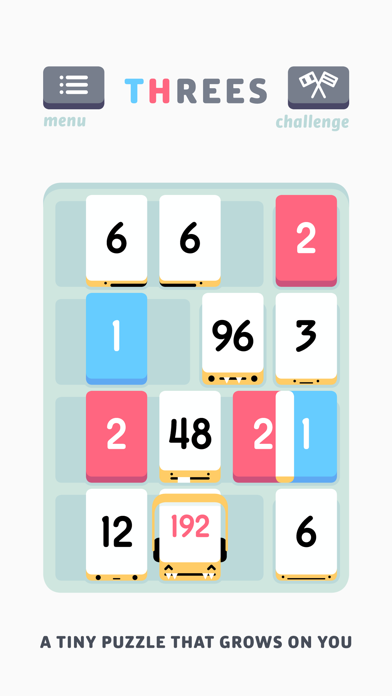
A sliding-block puzzle game where you combine numbered tiles (1+1=2, 2+2=4, etc.) to build larger numbers and clear the board. The elegance is in the constraints: tiles slide in cardinal directions, and the board fills from the opposite edge. No randomness beyond initial tile placement; pure logic.
The premium version is one-time purchase, no ads, no IAP. The game ships with a campaign mode and endless mode. The puzzle depth rewards long-term planning and forward-thinking positioning, with players reporting 20+ hours of engagement as they optimize strategies.
Narrative-Driven Games: Story Without Monetization
Some of the most craft-built games on iOS are narrative experiences where the story is the game. These tend to ship premium because they’re designed as complete arcs, not serialized content.
Kentucky Route Zero
Cardboard Computer’s magical-realist adventure unfolds across five acts (all released, fully available at purchase). You follow a truck driver on his final delivery along a secret highway, encountering strangers, songs, and moments of quiet reflection. The game is more visual novel than action game—you move through environments, read dialogue, and make occasional choices that shape tone rather than plot.
The art is hand-drawn and understated. The soundtrack is sparse and melancholic. There’s no combat, no timers, no progression bars. The one-time purchase is the entire experience, designed to be completed in 4–6 hours. The game is fully playable offline.
Oxenfree
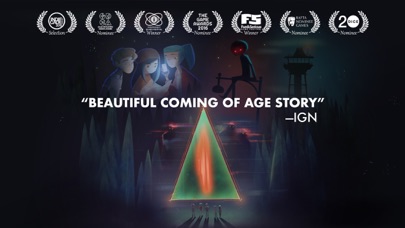
Night School Studio’s supernatural mystery involves a group of friends on an island who accidentally tune into a ghostly frequency on an old radio. The game is dialogue-heavy—you interrupt and overlap conversations in real time, shaping relationships and story direction through your word choices. The art is hand-animated with a distinctive flat aesthetic; the soundtrack is synth-driven and atmospheric.
The one-time purchase includes the full story (2–3 hours for a first playthrough, with multiple endings based on choices). No ads, no IAP. The game encourages replaying to explore alternate dialogue paths and uncover hidden lore. Fully playable offline.
Retro-Aesthetic Games: Pixel Art and Synthwave Visuals
A subset of premium games lean hard into retro visual language—pixel art, CRT effects, synthwave color palettes—without relying on nostalgia as a substitute for craft. These are hand-built, not asset-flipped.
Hyper Light Drifter
Heart Machine’s action game features a silent protagonist wandering a neon-soaked world, fighting enemies with a sword and gun in top-down combat. The pixel art is meticulously detailed; every frame of animation was hand-drawn. The soundtrack by Rich Vreeland (Disasterpeace) is synthesizer-based and emotionally resonant.
The game is light on narrative exposition—the story is told through environmental details, NPC dialogue fragments, and the player’s own interpretation. Combat rewards pattern recognition and deliberate positioning over button mashing. The one-time purchase includes the full campaign (6–8 hours) plus challenge modes. Touch controls are optimized for mobile reflexes.
Mini Metro
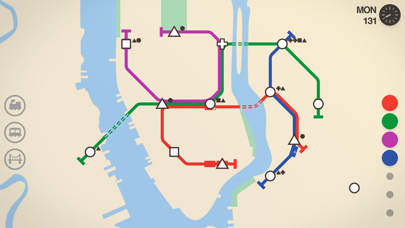
Dinopolitan’s minimalist puzzle game has you designing subway systems by drawing lines between stations. Trains spawn at random intervals; your job is to route them efficiently without creating bottlenecks. The visual language is pure geometry—lines, circles, minimal color. The soundtrack is sparse and meditative.
The game has no fail state (though inefficient routing slows your progress). Each playthrough is a relaxing design problem. The one-time purchase unlocks all cities and modes. Players cite 20+ hours of engagement as they optimize routes and experiment with different network topologies. Fully playable offline.
FAQ
Can I play these games offline?
Most run offline after download. Games like Asteroids: Recharged, Into the Breach, Threes!, Hyper Light Drifter, Kentucky Route Zero, Oxenfree, and Mini Metro all work on airplane mode with no internet required. Hades and Galaximus also support offline play. For a comprehensive list of offline-playable games across all genres, see our guide to Best iOS Games No Internet Required: Offline Indie Picks.
Do touch controls work well for action games?
Yes, with caveats depending on the game. Hyper Light Drifter uses virtual joystick controls optimized for mobile combat and feels responsive for top-down action. Hades translates console controls to touch effectively, though some players prefer a controller for intensive boss fights. Asteroids: Recharged’s rotate-and-thrust mechanics map naturally to touch. Turn-based games like Into the Breach have no time pressure, so touch controls feel natural. For more on control optimization, check Best Indie iPhone Games Without Ads or IAP.
How long do these games last?
Arcade games (Asteroids: Recharged, Geometry Wars 3): indefinite replayability through score-chasing. Campaign games (Hyper Light Drifter, Hades): 6–25 hours depending on difficulty and exploration. Narrative games (Kentucky Route Zero, Oxenfree): 2–6 hours per playthrough. Puzzle games (Threes!, Into the Breach, Mini Metro): 6–8 hours for campaign, with endless modes extending indefinitely. Galaximus: 15–25 hours for campaign, with endless modes for extended play.
Are these games optimized for iPhone, or are they iPad ports?
All listed titles are either native iPhone games or carefully ported to touch controls. Games like Hades and Into the Breach were originally console/PC games but shipped with full iOS optimization. Titles like Asteroids: Recharged and Galaximus were designed for mobile from the ground up. Hyper Light Drifter and Kentucky Route Zero are also optimized specifically for touch interfaces.
What’s the price range for these games?
Most titles range from to. Mini Metro and Threes! are budget-friendly. Mid-tier games like Asteroids: Recharged , Oxenfree , and Hyper Light Drifter offer substantial content. Premium titles like Hades , Into the Breach , and Kentucky Route Zero deliver 15+ hours of content.
Where do I find more premium iPhone games like these?
Best Indie iPhone Games Without Ads or IAP covers additional premium titles across different genres. Indie iOS Games Worth Paying For: 2026 Edition focuses on newer releases. iPhone Games for Adults: No Microtransactions, Pure Gameplay highlights games designed for adult players specifically.
The Case for Paying Once
The premium iPhone game market is smaller than it was a decade ago, but it’s more focused. Developers who choose one-time purchase over free-to-play are making a deliberate bet: that craft and completion matter more than engagement metrics and lifetime value.
That bet pays off. Games like Hyper Light Drifter, Into the Breach, and Kentucky Route Zero are complete artistic statements. They don’t need to extract more money from you after purchase because they were designed as finished products, not platforms for monetization.
If you’re tired of energy timers, battle passes, and “remove ads” paywalls, the one-time-purchase catalog offers a genuine alternative. Pick one that matches your mood—arcade reflexes, puzzle logic, narrative immersion, or retro aesthetics—and play a complete game.


