Best Paid iPhone Games One-Time Purchase 2026
Best Paid iPhone Games: One-Time Purchase Edition 2026
If you’re tired of energy timers, battle pass notifications, and “free” games that cost real money to actually enjoy, you’re in the right place. The App Store still hosts genuinely complete games that and and then stop asking for money. No ads. No IAP. Just a finished product.
This guide collects the paid iPhone games worth your attention in 2026 — titles where the developer respected your time and wallet enough to ship a complete experience upfront. These are games you can own, finish (or not), and return to without a payment prompt interrupting the moment.
Arcade Lineage: Modern Classics Built on Proven Foundations
Asteroids+
Price: | iOS: 12.0+ | Offline: Yes | Cloud Save: No
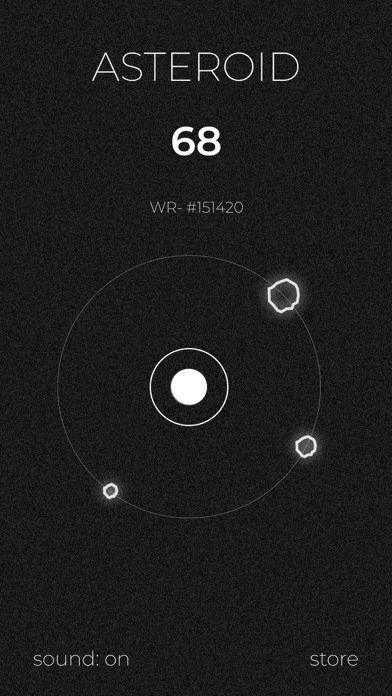
The template is 45 years old: rotate, thrust, shoot. The formula works because it’s elegant. Asteroids+ respects that elegance while adding modern flourishes — multiple game modes, cosmetic ship skins, online leaderboards — that don’t interfere with the core loop.
The vector-art aesthetic is clean enough to run smoothly on older iPhones, and the physics feel snappy without being twitchy. Leaderboards are real and competitive; the game doesn’t hide behind cloud saves or regional rankings. If you’re chasing high scores, this is the arcade game that’ll eat your evening.
Geometry Wars 3: Dimensions
Price: | iOS: 11.0+ | Offline: Yes | Cloud Save: No
Geometry Wars trades Asteroids’ simplicity for sensory overload. Enemies spawn in geometric waves. Your ship trails light. The screen fills with color and motion until you’re flying on pure instinct. It’s a game that rewards both pattern recognition and reflexes, and it punishes panic.
The “Dimensions” subtitle refers to the 3D arenas and perspective shifts that set this apart from the 2D original. Some players find the depth disorienting; others consider it the evolution the series needed. Worth trying if you’ve hit the ceiling on traditional twin-stick shooters.
Downwell
Price: | iOS: 9.0+ | Offline: Yes | Cloud Save: No
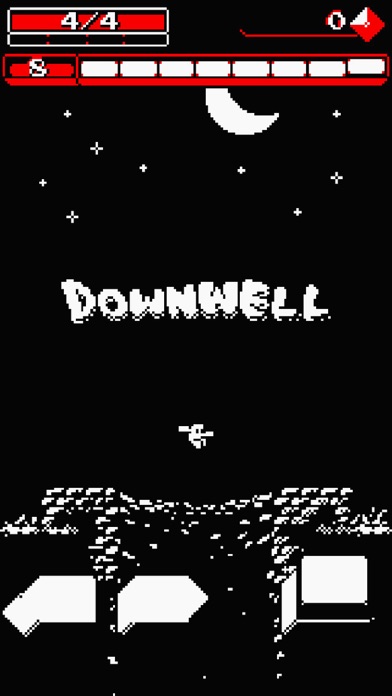
Downwell is a roguelike descent into a well, one screen at a time. You fall, you shoot downward, you dodge enemies, you collect power-ups. Each run is 10-15 minutes. Each run is different because the level layout and item drops are procedurally generated.
The pixel art is meticulous. The controls are tight — your jump arc feels intentional, not floaty. The difficulty curve is steep but fair; when you die, it’s because you misread the situation, not because the game was unfair. Roguelike fans who’ve played Hades or Slay the Spire will find Downwell shorter and snappier, but no less rewarding.
Puzzle Games: Brain Over Twitch
Threes!
Price: | iOS: 9.0+ | Offline: Yes | Cloud Save: Yes
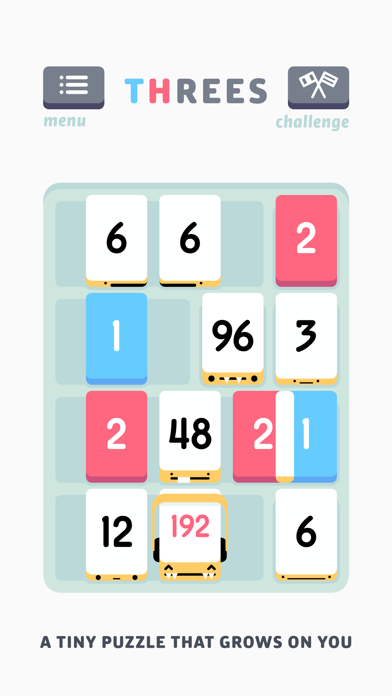
Threes! is a sliding-number puzzle where you combine tiles to create multiples of three. It sounds dry. It’s not. The mechanic is simple enough to explain in one sentence, but the strategy space is vast.
Every move shifts the entire board. Every tile you place blocks future moves. You’re constantly trading short-term progress for long-term position. It’s the kind of game where you’ll restart a run 20 times, each time spotting a slightly better path through the puzzle space.
The game ships with a clean, minimalist aesthetic and a serene soundtrack. It’s the opposite of flashy, which is exactly why it works. No animations are wasted. Every screen element serves the puzzle. This is craft-built design.
Two Dots
Price: | iOS: 11.0+ | Offline: Yes | Cloud Save: Yes
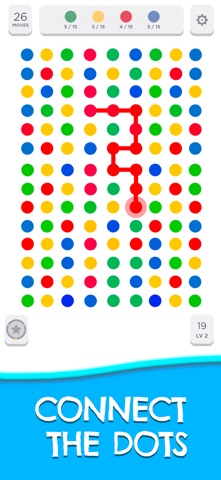
Two Dots is a connect-the-dots puzzle where you draw lines between same-colored dots to clear them. The constraint: your line can’t cross itself. That single rule generates thousands of solvable puzzles, each with multiple solutions.
The game includes a “Zen” mode with unlimited time and moves — pure puzzle-solving with no pressure. It also includes a timed “Classic” mode for players who want the clock working against them. Both modes are complete and well-tuned. The difficulty progression is gentle enough for newcomers and steep enough to challenge puzzle veterans.
Indie Craft: Games Built by People Who Care
Alto’s Adventure
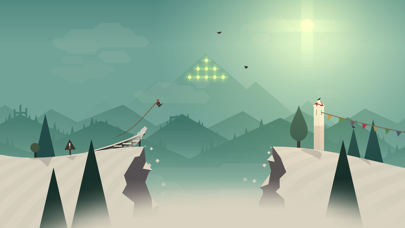
Price: | iOS: 10.0+ | Offline: Yes | Cloud Save: No
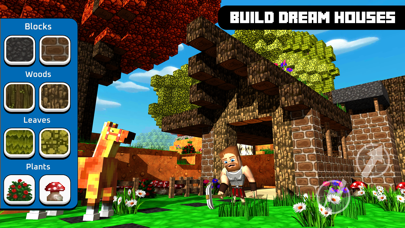
Alto’s Adventure is a side-scrolling endless runner where you’re snowboarding down a mountain. The art is minimalist — clean silhouettes against gradient skies. The mechanics are minimal too: tap to jump, hold to flip.
What makes it special is the attention to pacing. The mountain changes. The time of day shifts. Weather rolls in. The game features hand-crafted level sections that rotate in sequence, creating environmental variety without feeling random. It’s meditative without being boring, challenging without being punishing.
There’s a sequel (Alto’s Adventure 2) that refines the formula, but the original is where the magic happened. Many players prefer the simplicity of the first game to the added complexity of the sequel.
Monument Valley
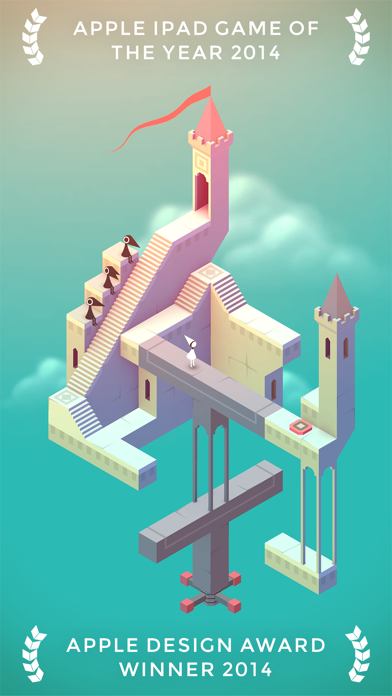
Price: | iOS: 10.0+ | Offline: Yes | Cloud Save: No
Monument Valley is a perspective puzzle game where you manipulate impossible architecture to guide a character through levels. The art is gorgeous — isometric geometry in soft pastels. The mechanics are tactile: you swipe and tap to rotate the world, and the character follows paths that seem impossible until you shift your perspective.
The game is short — 2 to 3 hours for a first playthrough. It’s also deeply satisfying. Every puzzle has an elegant solution, and the game never wastes your time with busywork. The narrative is light but present, told through visual storytelling rather than dialogue.
Monument Valley 2 exists and is equally good, but it’s a separate purchase. Both are worth the price.
Space and Sci-Fi: Gravity, Orbits, and Vacuum
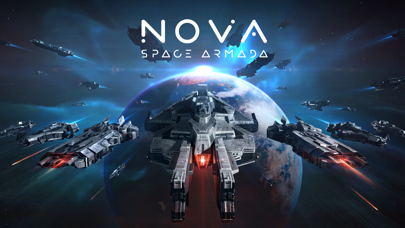
Orbiter
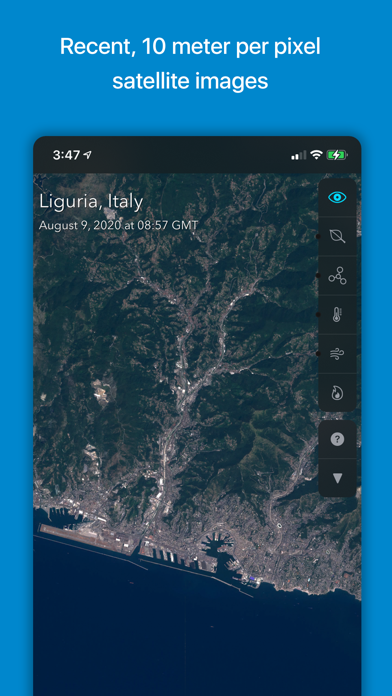
Price: | iOS: 12.0+ | Offline: Yes | Cloud Save: No | Last Updated: 2024
Orbiter is a space-flight simulator that teaches real orbital mechanics without a textbook. You control a spacecraft using realistic thrust vectors. You can’t just fly toward your target — you have to account for orbital velocity, gravity wells, and momentum.
The game starts with guided tutorials that make the physics intuitive. By the third or fourth mission, you’re executing gravity assists and planning multi-stage burns. It’s the kind of game that makes you feel like a pilot, not just tap a screen.
The visual design is clean and functional — more NASA than Hollywood. If you’ve ever wondered how orbital mechanics actually work, this game will teach you while entertaining you.
Celestia
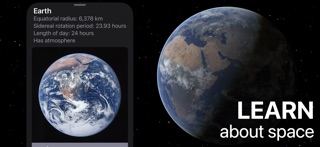
Price: Free (with optional in-app purchase for enhanced features) | iOS: 13.0+ | Offline: No | Last Updated: 2025
Celestia is a space exploration app that functions primarily as an interactive planetarium rather than a traditional game. You can fly to any star, planet, or moon in the known universe and see it rendered at scale. The visuals are stunning, and the educational value is significant.
The free version offers extensive exploration and learning. The optional purchase unlocks additional visualization modes and data overlays. There are no game-like progression mechanics or challenges. If you’re looking for a traditional game experience, this is better categorized as an educational tool. If you want an immersive way to explore the cosmos, it’s exceptional.
Controller-Friendly Titles: Console-Style Play on iPhone
Overcooked! 2
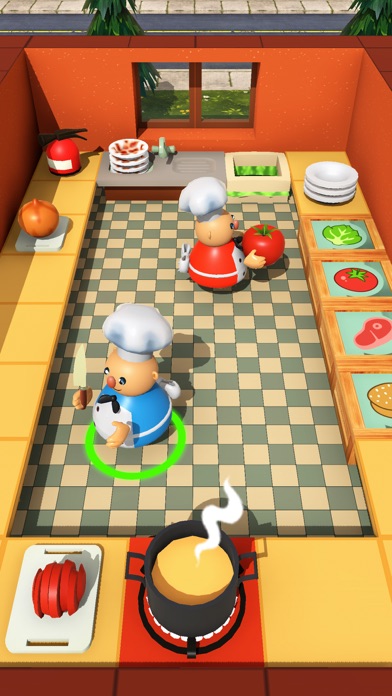
Price: | iOS: 12.0+ | Offline: Yes | Cloud Save: No | MFi Controller: Yes (recommended)
Overcooked! 2 is a cooperative cooking game where you and a partner (or up to four players on one device) manage a kitchen under time pressure. You chop ingredients, plate dishes, manage the oven, and coordinate with your teammates.
The game supports MFi controllers, which is where it shines. The touch controls work, but the game feels right with a controller in hand. It’s chaotic and fun, and it’s the kind of game that generates genuine laughs when your teammate plates a dish you forgot to cook.
Local multiplayer on one device is the main draw — no online required, no latency issues. If you have people in the room with you, Overcooked! 2 is a guaranteed good time.
Stardew Valley
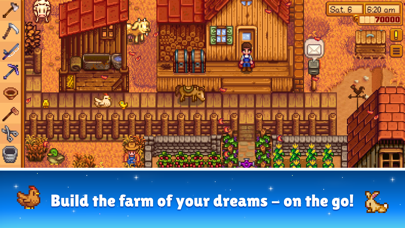
Price: | iOS: 11.0+ | Offline: Yes | Cloud Save: Yes | MFi Controller: Yes (supported)
Stardew Valley is a farming simulation where you inherit a farm and decide what to do with it. Plant crops, raise animals, fish, mine, befriend villagers, fall in love, get married, have kids. The scope is enormous, and the game respects your pace.
There’s no timer. No pressure. No “optimal” way to play. You can spend 100 hours farming and fishing, or 500 hours doing everything. The controller support is solid, and the game translates beautifully to iPhone.
This is a game you’ll return to for years. It’s complete, it’s deep, and it’s one of the most successful indie games ever made. The price is a bargain for the content.
FAQ
Q: Can I play these games offline?
A: Yes. Every game in this guide works offline except Celestia, which requires an internet connection to fetch astronomical data. Asteroids+, Geometry Wars 3, Downwell, Threes!, Two Dots, Alto’s Adventure, Monument Valley, Orbiter, Overcooked! 2, and Stardew Valley all play fully offline after download.
Q: Do these games sync across devices?
A: Some do, some don’t. Threes! and Two Dots support cloud saves, so your progress syncs between iPhone and iPad. Stardew Valley also supports cloud saves. Games like Asteroids+, Downwell, and Orbiter save locally only — your progress stays on the device where you play. Check the “Cloud Save” field for each game above.
Q: What’s the typical playtime for each game?
A: Downwell and Monument Valley are short experiences (10-15 minutes per run and 2-3 hours total, respectively). Threes!, Two Dots, and Alto’s Adventure are endless or near-endless — you can play for 5 minutes or 50 hours. Geometry Wars 3 and Asteroids+ are arcade games with no defined endpoint. Orbiter takes 5-10 hours to complete the campaign. Overcooked! 2 is 4-6 hours for the story, infinitely replayable with friends. Stardew Valley is 100-500+ hours depending on how much you explore.
Q: Do I need an Apple Arcade subscription?
A: No. These are all direct App Store purchases. Apple Arcade is a separate subscription service. Some games appear on both (like Overcooked! 2), but you don’t need a subscription to play any game in this guide.
Q: Will these games work on older iPhones?
A: Most will. Check the App Store listing for the specific iOS version requirement. Games like Asteroids+ and Downwell run on older hardware because they’re not graphically demanding. Monument Valley and Orbiter require more recent devices. The App Store will tell you if your phone is compatible before you buy.
Q: How long will these games stay available?
A: That depends on the developer and Apple’s policies. Paid games can be delisted if the developer removes them, but once you’ve purchased a game, you can re-download it anytime from your purchase history, even if it’s no longer available for new buyers. Your purchase is permanent.
Top picks by use case:
- Best for arcade reflexes and high scores: Asteroids+ by Noodlecake
- Best for space simulation depth: Orbiter
- Best for puzzle-action fusion: Threes!
- Best for retro aesthetic on a tight budget:

Downwell pump reliability: Geothermal experience update: Final ReportCheck price on Amazon → - Best for couch co-op on one device: Overcooked! 2 (, MFi controller support)


