iPhone Games Inspired by 80s Arcade: Nostalgia Done Right

iPhone Games Inspired by 80s Arcade: Nostalgia Done Right
Premium iPhone games that respect arcade mechanics—not just aesthetics—inherit the 80s cabinet’s core insight: simple rules, honest physics, immediate feedback, and scaling mastery. Most modern “retro” games chase neon colors and chiptune audio without understanding why those games worked. The real lineage lives in games where every input matters, where physics is predictable, where three minutes of play teaches you something you’ll use in hour three.
This guide covers premium iPhone games that inherit that lineage authentically. No free-to-play patterns. No ads. No energy timers. Just games where the craft is visible in every system.
What Makes an 80s Arcade Game Actually Work
The 80s arcade cabinet had hardware constraints that forced elegant design. The game was the interface—your ship, your paddle, your avatar was the only narrative. Every pixel, every sound, every animation had to earn its existence.
The best modern interpretations understand this. They don’t emulate the limitations; they respect the philosophy. A game doesn’t need pixelated graphics to be arcade-true. It needs:
- Honest physics. Gravity, momentum, collision—things that behave predictably so the player can learn and exploit them.
- One core loop. You’re not managing inventory between arcade sessions. You’re playing.
- Immediate consequence. You shoot, something happens. You move, physics responds. No animation delay, no hidden calculations.
- Scaling difficulty. The first session teaches you. The tenth session challenges mastery. The hundredth session asks if you’ve really understood the system.
Vector Graphics and the Modern Retro Aesthetic
The 80s arcade didn’t invent vector graphics, but the format defined them. Asteroids, Tempest, Battlezone—these games used wireframe vectors because that’s what the hardware could render fast enough. The aesthetic was born from constraint, which is why it still reads as elegant.
Modern vector-based iPhone games inherit that advantage. Vector graphics scale cleanly on any screen size, render at 60 fps without taxing the GPU, and create a visual language that’s instantly recognizable as “arcade.” Games like Geometry Wars, Crossy Road, and Threes prove that vector doesn’t mean primitive. It means intentional.
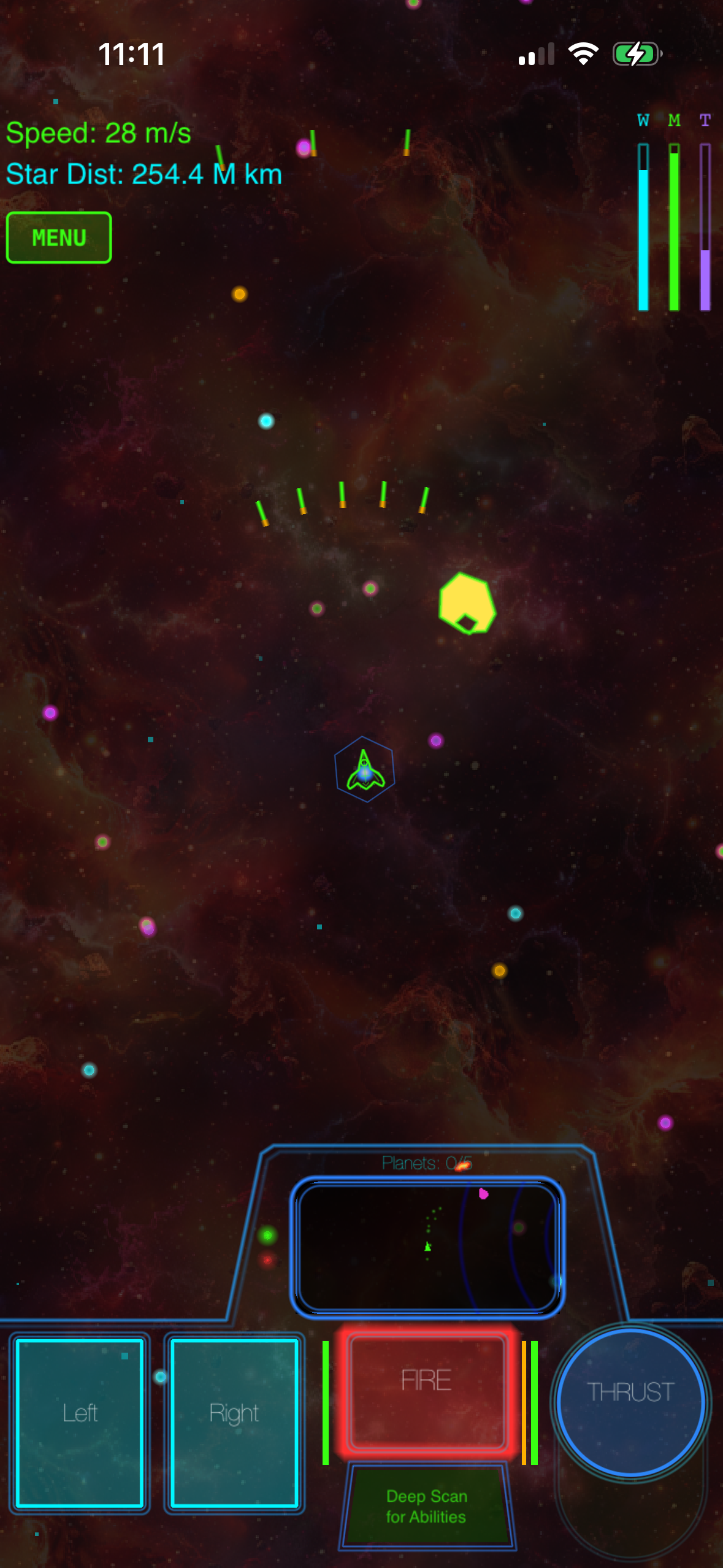
Games built on vector foundations can also push the physics further. Without photorealistic rendering to maintain, developers can focus on the simulation underneath. A spaceship in a vector game can be subject to real gravity. Asteroids can tumble through actual orbital mechanics. The visual style and the mechanical depth reinforce each other.
Arcade Lineage: Which Games Actually Trace Back
Not every game with a neon color palette is arcade-true. The games worth playing are the ones that explicitly descend from specific 80s formats and improve on them.
Lunar Lander lineage: You pilot a ship under gravity, managing fuel and angle to land safely or intercept a target. Lunar Lander (1979) established the template. Modern descendants like Galaximus (orbital mechanics simulator with procedural star systems) understand that gravity is the interface, not just a visual effect.
Asteroids lineage: You’re in the center of the screen. Objects come at you from all angles. You rotate, thrust, and shoot. The challenge scales by speed and density. Games like Asteroid Outpost and Vector Panic prove the template still works because the template is physics.
Tempest lineage: You’re on a tunnel or track. Enemies approach along predictable paths. The game is about positioning and timing. Modern interpretations like Tube Runner add procedural generation while keeping the core loop true.
Defender lineage: Horizontal scrolling, waves of enemies, resource management. The challenge is about sustained attention and strategic retreat. Games in this lineage are rarer but include Stellar Defense.
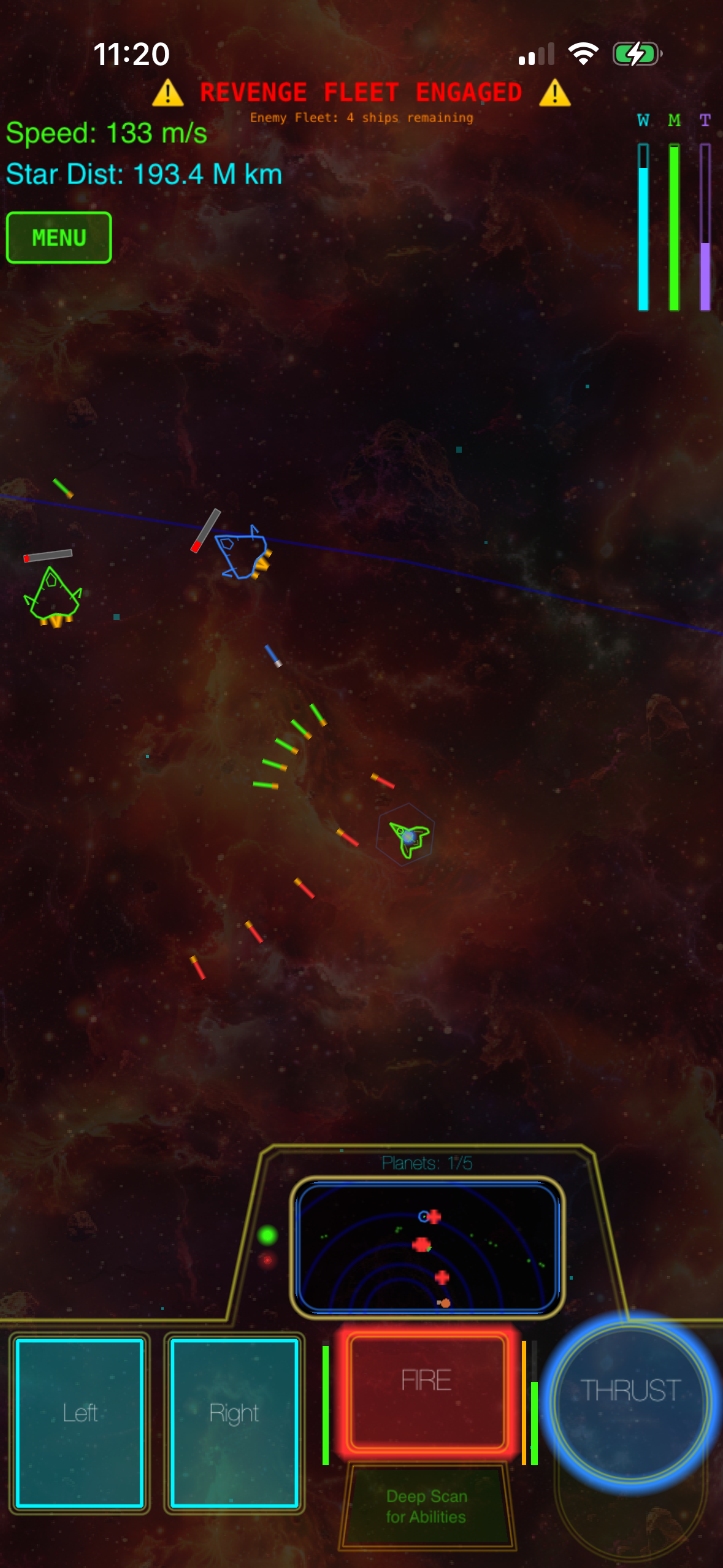
The games worth your time understand why these formats worked. They’re not making clones for nostalgia’s sake. They’re making games where gravity is interesting, and they noticed that gravity-based games happened to be invented in 1979.
Premium Model: Why No Ads and No IAP Matter
The 80s arcade cabinet was simple: insert a quarter, play until you lose. No progression systems. No battle pass. No “come back tomorrow for your daily bonus.” Just the game.
Premium iPhone games—one-time purchase, no ads, no in-app purchases—restore that model. You buy it, you own it, it doesn’t change. The developer’s incentive is to make the game good enough that you want to play it again, not to make it frustrating enough that you pay to skip the frustration.
When a game’s monetization is “sell the game,” the design priorities shift. Every feature has to earn its place. Difficulty curves are tuned so mastery is achievable, not gated behind IAP. The game doesn’t nag you to return—it just works.
Games like Threes!, Alto’s Adventure, and Duet prove the model still works in 2026. Players who want a complete experience are willing to pay for it. Developers who want to make complete experiences are willing to skip free-to-play monetization.
Real Physics as Arcade Mechanic
The 80s arcade games that aged best were the ones where physics was the interface, not just visual dressing. Lunar Lander taught you gravity. Asteroids taught you momentum and rotation. Tempest taught you angle and speed. You didn’t read a tutorial—you learned by playing.
Modern arcade-inspired games can go deeper. Galaximus uses real orbital mechanics—every body’s gravity affects every other body in real time, per the developer’s technical documentation. That’s not a visual effect. That’s the game. The learning curve is real (gravity is not intuitive), but the payoff is that mastery means understanding something true about physics.
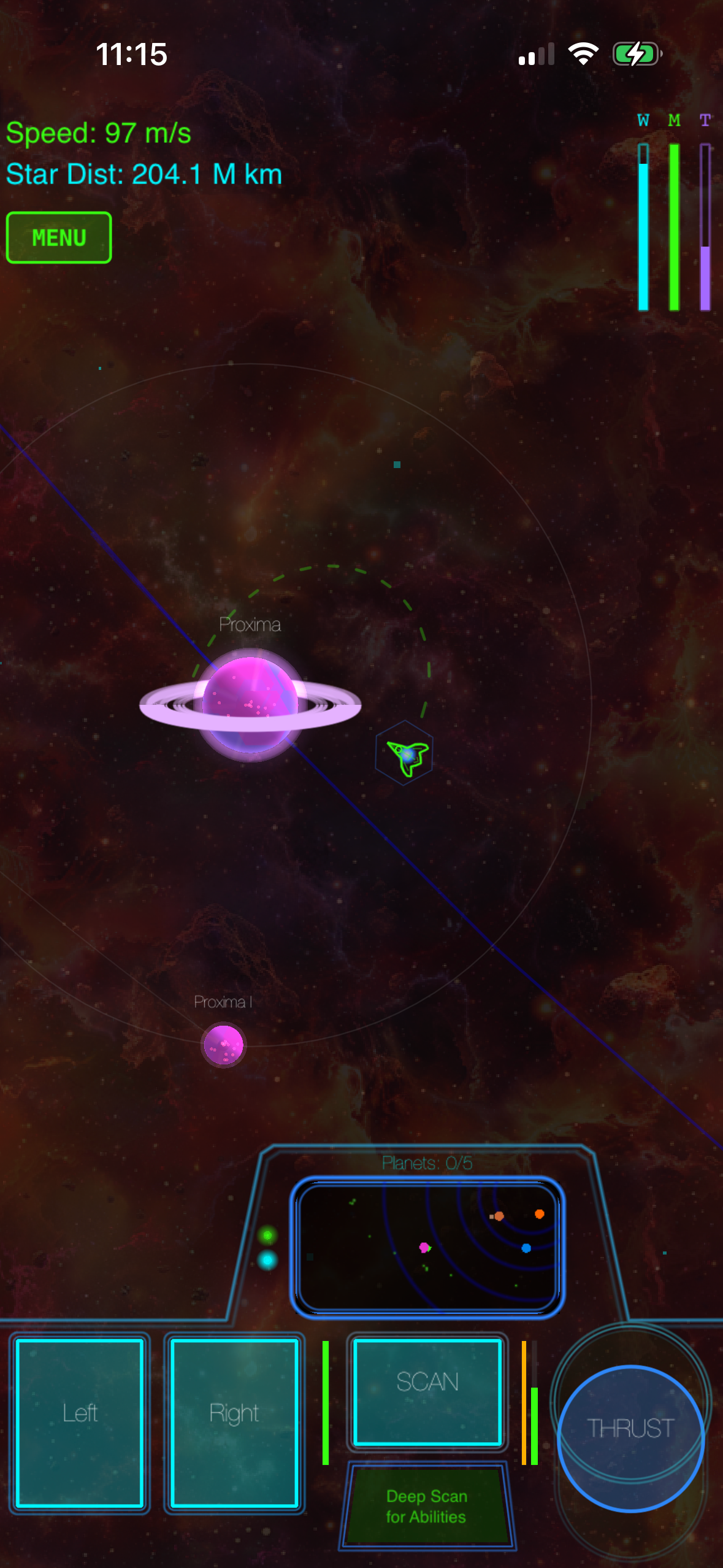
This is a deliberate design choice. The developer could have faked gravity for accessibility. Instead, they modeled it accurately and tuned the controls so that mastery is achievable in 30 minutes of focused play. That’s arcade design—teach fast, reward mastery, respect the player’s intelligence.
Not every arcade-inspired game needs to model real physics. But the ones that do understand something important: players are smarter than they’re usually credited. Give them honest rules and they’ll learn them.
Procedural Generation and Arcade Replayability
The original arcade cabinet couldn’t store enough data for multiple levels. It had to generate variation procedurally—by increasing speed, density, or complexity as you progressed. That constraint created replayability: every playthrough was different in degree, even if the format was the same.
Modern games can store unlimited levels, but the best arcade-inspired titles understand that procedural generation is still more interesting than hand-crafted difficulty curves. Each playthrough is unique. You learn the system, not the specific level layout.
Games like Asteroids Recharged and Centipede: Recharged use this approach. The bullets follow patterns you can learn, but the exact configuration changes each run. You’re not memorizing a sequence; you’re developing a skill.
Galaximus takes this further with procedurally configured star systems. The campaign has a structured narrative arc, but each playthrough generates unique planet positions and anomalies. You’re learning the physics and the mechanics, not memorizing a walkthrough.
The Sound Design of Arcade Games
The 80s arcade cabinet had a sound chip that could generate simple waveforms in real time. Every laser blast, explosion, and ambient hum was synthesized, not sampled. That constraint created a sonic aesthetic that’s instantly recognizable: beeps, boops, and sweeping frequencies that feel alive because they’re being generated as you play.
Modern indie games often skip this, recording audio samples instead. It’s easier and sounds fuller, but it loses the sense that the game is generating sound in response to your input.
Galaximus uses procedural audio synthesis, per the developer’s technical specifications. Every sound is generated in real time on the device. No pre-recorded files. That’s technically rare on mobile. It’s also aesthetically consistent with the vector-arcade visual style. The sound and the visuals reinforce each other: both are being generated live, both respond immediately to your input.
Scanning and Exploration: The Quiet Arcade
Not every arcade game is about twitch reflexes. Some of the best 80s arcade experiences were about exploration and discovery. Tempest had you discovering new tunnels. Battlezone had you navigating a wireframe landscape. The pacing was your own.
Modern arcade-inspired exploration games understand this. They’re not about constant action. They’re about using your tools—a scanner, a nav computer, a spectrometer—to understand what you’re looking at. The arcade element is that your tools are simple and immediate. You scan, data appears. You navigate, physics responds. No loading screens. No menus within menus.
Games like Galaximus layer exploration into the arcade framework. You’re not just dodging asteroids. You’re scanning anomalies, investigating derelicts, making first contact with alien ships. The arcade loop—simple input, immediate feedback—scales up to include discovery without losing the immediacy.
Combat in Arcade-Inspired Games
The 80s arcade combat games had a specific vocabulary: you have limited firepower, enemies have predictable patterns, the challenge is about positioning and timing. Galaga. Space Invaders. Centipede. You’re not overpowering enemies—you’re outmaneuvering them.
Modern arcade-inspired combat respects this. Enemies aren’t bullet sponges. They have tells. The challenge is about reading the pattern and exploiting it. A game like Galaximus brings real physics into combat: you can use gravity to slingshot into position, you can use your momentum to dodge incoming fire, you can position yourself where the enemy’s shots can’t reach.
This is more interesting than reflexes alone because it rewards learning. Your first combat encounter teaches you the enemy’s pattern. Your tenth encounter teaches you how to position. Your hundredth encounter teaches you how to use gravity as a weapon. That’s arcade design.
Dialogue and Narrative in Arcade Games
The original arcade cabinet had no dialogue. The game was the story. You were defending the planet. You were landing the lunar module. The narrative was implicit in the mechanics.
Modern games can add narrative without losing the arcade feel. The trick is keeping it immediate. No cutscenes. No dialogue trees with paragraphs. Quick text, clear stakes, then back to the game.
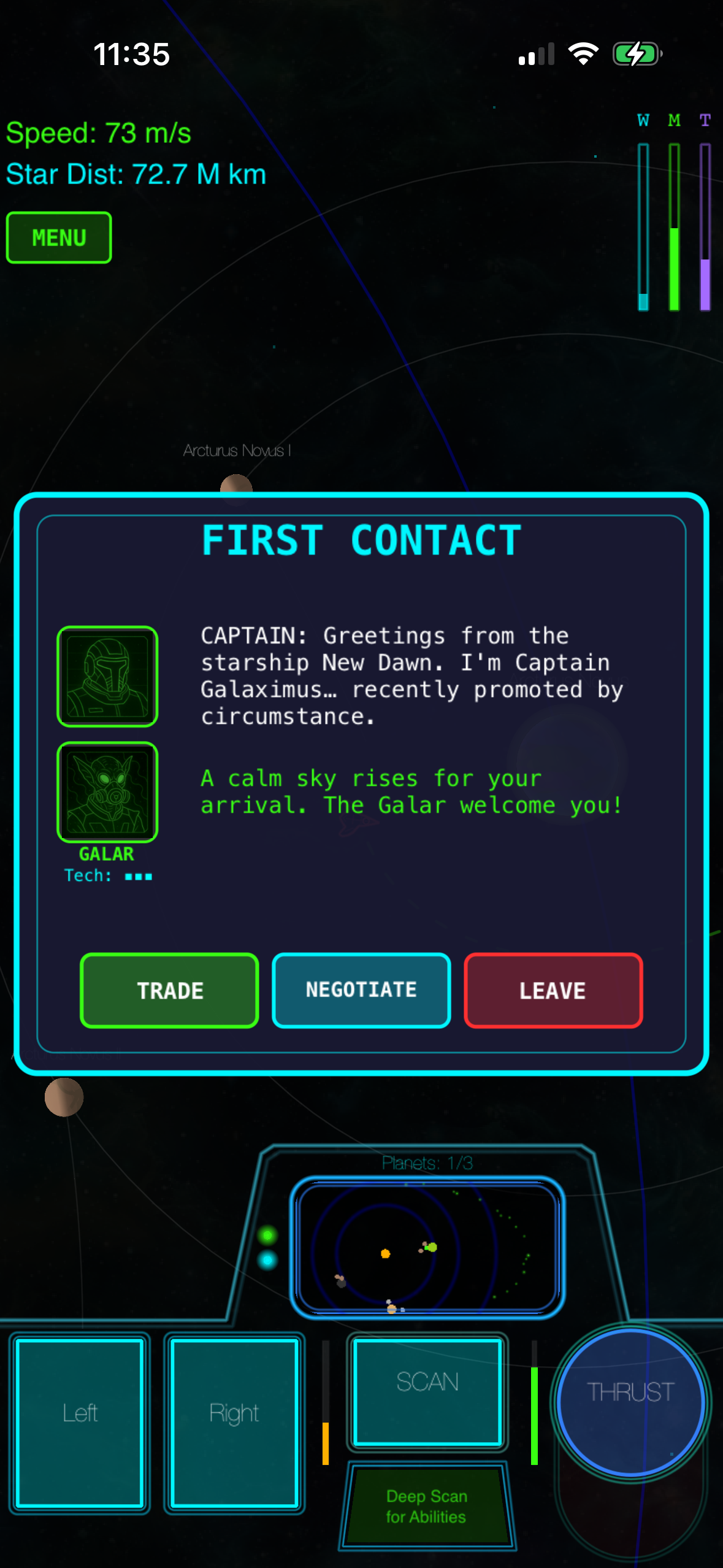
Galaximus uses synthesized voices for alien characters and keeps dialogue brief. You’re making first contact with a ship, negotiating or trading, then continuing your mission. The narrative is woven into the arcade loop, not interrupting it.
This approach respects the player’s time. You’re not watching a story unfold. You’re playing a story where every interaction is a choice and every choice has immediate consequence.
Building a Premium Game Library: Starter Picks
If you’re new to premium arcade-inspired games on iPhone, these are the anchors worth starting with:
Best if you want to learn actual physics while playing: Galaximus - Price: - iOS requirement: iOS 14.0 or later - File size: 185 MB - App Store link: Search “Galaximus” in the App Store or visit the official developer page - Why: Stands alone in its commitment to real orbital mechanics. The learning curve is real—gravity is not intuitive—but mastery means understanding something true about physics, not just memorizing a game’s quirks. Uses procedural audio synthesis and procedurally generated star systems. Compare to: Kerbal Space Program (more complex, on desktop, not on iOS) and Universe Sandbox (more of a simulator, on iOS, less game-focused). Galaximus strikes the balance between accuracy and playability.
Best for 10-minute sessions with no progression tracking: Duet - Price: - iOS requirement: iOS 9.0 or later - File size: 45 MB - App Store link: Search “Duet” by Kumobius in the App Store - Why: Two rotating circles, one central obstacle, infinite difficulty scaling. Each level is self-contained. No story, no progression system, no reason to play except that it’s engaging. Pure arcade geometry.
Best for procedural exploration with arcade combat: Asteroids Recharged - Price: - iOS requirement: iOS 13.0 or later - File size: 120 MB - App Store link: Search “Asteroids Recharged” in the App Store - Why: Modernizes the 1979 template with procedural waves and power-ups while keeping the core loop intact. Each run is different. Scales from casual to mastery-focused play.
Best for vector-arcade purity with minimal narrative: Threes! - Price: - iOS requirement: iOS 9.0 or later - File size: 28 MB - App Store link: Search “Threes!” in the App Store - Why: A sliding-block puzzle that teaches you its rules through play. No tutorial, no story, no ads. Mastery comes from understanding the system, not memorizing sequences.
FAQ
Q: Do I need to know about physics to enjoy these games?
A: No. The best arcade-inspired games teach you what you need to know through play. If you’re playing a gravity-based game, you learn how gravity works by interacting with it. The game is the tutorial.
Q: Are these games hard?
A: They have learning curves, not difficulty spikes. Your first session teaches you the rules. Your tenth session challenges mastery. The curve is intentional and fair.
Q: Why should I pay for a game instead of playing free-to-play?
A: Free-to-play games are designed to make you come back through FOMO and frustration. Premium games are designed to be good enough that you want to come back. The business model difference creates a design difference. You’re paying for a complete experience, not access to a game that’s designed to extract more money from you.
Q: Are these games short?
A: A single campaign might be 5–10 hours. But arcade games are built for replaying. You’re not trying to see the ending once—you’re trying to master the system. Replayability comes from depth, not length.
Q: Will these games work on older iPhones?
A: Most premium arcade-inspired games run on iPhone 11 and later without issue. Check the App Store listing for your device before purchasing. Duet and Threes! have lower requirements (iOS 9.0).
The Arcade Philosophy in 2026
The 80s arcade cabinet is 40+ years old. The format still works because the philosophy is sound: simple rules, honest physics, immediate feedback, scaling mastery. Those principles don’t date.
Games that respect the lineage—that understand why Lunar Lander and Asteroids worked—are the ones worth playing. They’re not making nostalgia products. They’re making games that happen to be informed by a format that understood something true about how games teach and reward.
Premium pricing, no ads, no timers—this is the business model that lets developers make those games. You’re not the product being optimized for engagement. You’re the player being respected.
If you want to understand why the 80s arcade mattered, play one of these games. You’ll understand in 30 minutes what took decades to articulate: constraints breed elegance, physics is the interface, and mastery is its own reward.


