Retro Arcade iPhone Games: The Premium, No-Freemium List

Photo by Sascha Reuter on Unsplash
Retro Arcade iPhone Games Worth Actually Paying For
The App Store is full of games that wave a CRT filter around and call it retro. Most of them are coin-op-themed slot machines with a stamina meter glued on — think Coin Dozer, which dresses up a pusher game in arcade clothing and runs on ad views and currency packs. This list is narrower: pay-once iPhone games with arcade lineage that respect the format — no ads, no in-app purchases, no nags to come back tomorrow for a free spin.
If you grew up feeding quarters into a cabinet, or if you just want games that end when you put the phone down, these are the ones holding the line.
What “premium retro arcade” actually means here
The word “premium” gets abused. Plenty of App Store listings call themselves premium while running interstitial ads between lives or gating power-ups behind currency. For this list, premium means three things, strictly:
- Pay once. A single up-front purchase, not a subscription, not a “starter pack.”
- No IAP. Nothing inside the app to buy. The game you launch is the whole game.
- No ads. Not banner, not video, not “watch this to continue.”
Retro arcade adds a fourth filter: the game has to trace back to an actual arcade-era format — Asteroids, Defender, Tempest, Centipede, Pac-Man, Robotron, Galaga, Lunar Lander — and treat that lineage as a starting point, not a costume. A neon palette and a CRT shader don’t qualify on their own.
Why pay for an arcade game in 2026
The honest answer: because the free ones are mostly hostile. Free-to-play arcade games on the App Store — per aggregated owner reviews — tend toward energy timers, ad walls every two or three deaths, and leaderboards that quietly favor whoever spent the most. The arcade format is built around tight, repeatable runs. Anything that interrupts the loop wrecks it.
A premium arcade game on iPhone, by contrast, is closer to the cabinet experience: launch, play, die, restart, no friction in between. That’s what the arcade-lineage feel actually depends on. If you’ve bounced off a half-dozen “free arcade classics” apps that turned out to be ad delivery vehicles, the fix isn’t a better free one — it’s paying a few dollars once.
The picks, grouped by what they’re best at
Five games, organized by which itch they actually scratch. None of these have IAP. All work offline.
Best for inertia-driven reflex runs (Asteroids lineage)
If your formative arcade memory is wireframe ships drifting through inertia, the modern descendants are doing interesting work.
Hyperburner
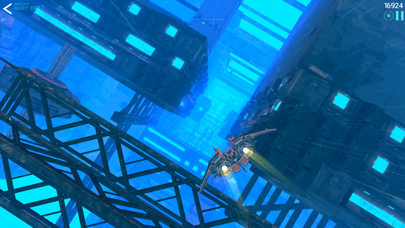
Hyperburner isn’t strictly Asteroids — it’s a tunnel runner — but it shares the lineage’s commitment to readable, abstract geometry and reflex-tier difficulty curves. The thing it gets right is feel: ship inertia is tuned so a perfect run feels earned, not lucky. Premium pricing tier, no IAP, no ads per the App Store listing. Works offline, which matters for a game you’ll replay on a flight.
Best for 5-minute commute runs (Defender lineage)
Defender’s defining quality wasn’t the scroll — it was the radar, the sense of a wider battlefield than the screen. Modern picks that honor that:
Phoenix 2
A vertical shmup rather than a strict Defender clone, but it inherits the lineage’s ethos: dense screens, weighted ships, scoring systems built for repeated runs. The original Phoenix was free-with-IAP; Phoenix 2 has gone through monetization shifts over the years, so verify the current model before buying. Concrete check: on the App Store listing, scroll to the “Information” section and confirm it shows “In-App Purchases: No” — if you see a list of IAP items there, the monetization has shifted since this writing. When it’s in premium configuration, it’s one of the best-feeling shooters on the platform per owner reviews.
Best for high-difficulty skill-building (Lunar Lander lineage)
The thrust-and-gravity arcade format is small but stubborn. The good ones use accurate-ish orbital or thrust physics rather than approximations.
Galaximus
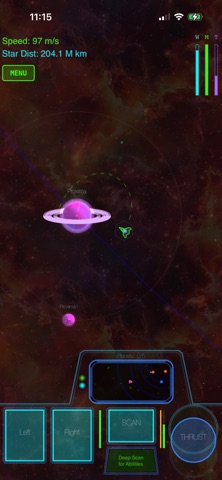
A space arcade game built around Newtonian thrust and orbital mechanics rather than the usual airplane-in-space handling. The developer leaned hard into making the physics feel correct rather than easy, which is the right call for the lineage but means the early learning curve is steeper than the genre average. Premium pay-once, no IAP, no ads. Players who liked the original Lunar Lander or Gravitar’s punishment-as-design philosophy will find more to chew on here than in most arcade reskins.
Best for a gentler entry into thrust-physics games
Lander Hearts
A more forgiving take on the lunar-lander format with hand-drawn art and a puzzle-y mission structure. Doesn’t have the physical depth of Galaximus but is friendlier as a first-time entry to the lineage.
Best for short replayable sessions (maze-chase lineage)
Pac-Man’s design has held up better than most 1980 games because the underlying loop — risk-reward routing under pursuit — is genuinely deep.
Pac-Man Championship Edition
As of this writing, the standalone Pac-Man Championship Edition premium iPhone release has been delisted; Bandai’s current App Store presence for the franchise is the free-to-play PAC-MAN app, which runs ads and IAP. The CE design is still available bundled inside Apple Arcade’s PAC-MAN Party Royale, but that’s a subscription, not pay-once. If you find a “Pac-Man Championship Edition” listing on the App Store today, check the IAP and ads status carefully before buying — the premium standalone version is not currently available through normal channels. Included here for completeness of the lineage; if it returns to premium configuration, it’s the gold standard.
How to spot hidden monetization (callout)
Quick verification checklist before you buy any “premium” arcade game:
- On the App Store page, look for “In-App Purchases: No” in the Information section. If there’s a list, read every item.
- Sort reviews by Most Recent, not Most Helpful. Monetization shifts show up in recent one-star reviews before the listing copy catches up.
- Check the search-results card for an “Offers In-App Purchases” subtitle under the price.
- If the developer also publishes a free version of the same game, assume the premium version’s status is volatile and recheck on the day of purchase.
FAQ
How do I know if a game has hidden IAP?
Open the App Store listing, scroll past the screenshots and description to the Information section, and look at the “In-App Purchases” line. “No” means none. If it lists items, tap through to see them — sometimes they’re cosmetic only, sometimes they unlock content or remove ads. Also scroll the recent reviews: owners flag gameplay-affecting IAP faster than Apple’s metadata reflects it.
What’s the typical price range for these games?
Most fall and as of this writing. Hyperburner and Lander Hearts sit at the lower end; Galaximus and the Pac-Man CE family, when available premium, sit higher. Sales are common — wishlisting and waiting a few weeks usually saves a couple of dollars.
Do prices vary by region?
Yes. Apple sets per-region price tiers, so a US game can land at £4.99, €5.99, or different equivalents elsewhere — not always proportional to exchange rates. The price you see on your local App Store is what you’ll pay; there’s no cross-region purchasing without changing your account country.
Are any free arcade iPhone games actually good?
A few. The honest answer is that most “free” arcade games on iOS are aggressive monetization vehicles, but a small number — often released as marketing for a paid sequel, or by developers with a different revenue source — are genuinely premium-feeling. They’re hard to find without a filter, and the free designation tends to be temporary. If you want the experience to be reliable, paying once is the cheaper path long-term.
Do these work without internet?
Most do, but verify per game. Premium arcade games are usually offline-capable because the format doesn’t need a server, but a few include optional online leaderboards that won’t break the game when disabled.
Is MFi controller support common in this category?
It’s gotten better. Most premium arcade games released or updated in the last few years support MFi and PS5/Xbox controllers via Bluetooth, per the App Store listings.
What about Apple Arcade versions of retro games?
Apple Arcade has a handful of genuinely good arcade-lineage titles, and the subscription model means no IAP by definition. The tradeoff is that you’re renting access — cancel and they lock. For a game you want to own and replay in ten years, pay-once still wins. For breadth-of-library, Apple Arcade is reasonable.
Adjacent aesthetics: vector-styled picks that aren’t strictly arcade
One game worth flagging for readers who came here for the look more than the lineage:
Mini Metro / Mini Motorways
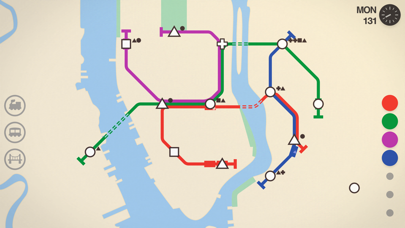
These are puzzle games, not arcade games — included here because they share the vector aesthetic (clean lines, geometric abstraction, no textures) and the arcade ethos of short, replayable runs against an escalating difficulty wave. If what drew you to this list is the look of vector-era arcades rather than the reflex format, Mini Metro scratches that itch better than a lot of nominally-arcade titles. Premium tier, no IAP, no ads. The kind of game that ships finished.
The short version
Retro arcade games on iPhone are worth paying for because the format depends on uninterrupted runs, and the only reliable way to get uninterrupted runs in 2026 is to take freemium off the table entirely. The picks above clear the bar: pay once, no ads, no IAP, lineage respected. Verify the monetization model on the App Store the day you buy — the listings can change — and you’ll end up with a small, durable arcade library that doesn’t beg for your attention between runs.