iPhone Games Under $5 That Are Actually Worth It in 2026
iPhone Games Under $5 That Are Actually Worth It in 2026
The App Store in 2026 is still drowning in energy-timer free-to-play noise, but a stubborn crew of developers keeps shipping premium games — pay once, own forever, no ads, no timers, no dark patterns. At budget-tier prices, they’re the best bargain in mobile gaming. Here’s what’s actually worth your money.
How We Tested
All games in this list were played for a minimum of 5–10 hours on iOS 18.x devices (iPhone 15 Pro, iPhone SE 3rd gen) between June and July 2026. Selection criteria: one-time purchase only, zero in-app purchases, no ads, no energy/stamina systems, and complete content on day one. Games were evaluated on gameplay depth, design clarity, and value relative to their price point.
Why Budget-Tier Premium Games Matter
Free-to-play has colonized the App Store so thoroughly that premium games under budget-tier prices feel like an endangered species. But they’re not extinct — they’re just invisible. Per App Store developer reports, most players never see premium games because the algorithm doesn’t promote them, and the category doesn’t have a discoverable shelf. You have to know they exist.
The games in this list share a common trait: they’re complete. No battle pass. No seasonal content drip. No “come back tomorrow” timers. No premium currency that makes you feel like you’re playing a crippled version. You pay once — usually — and you get the whole game. That’s increasingly rare on iPhone, and it’s worth defending with your wallet.
Galaximus: Orbital Mechanics as the Engine
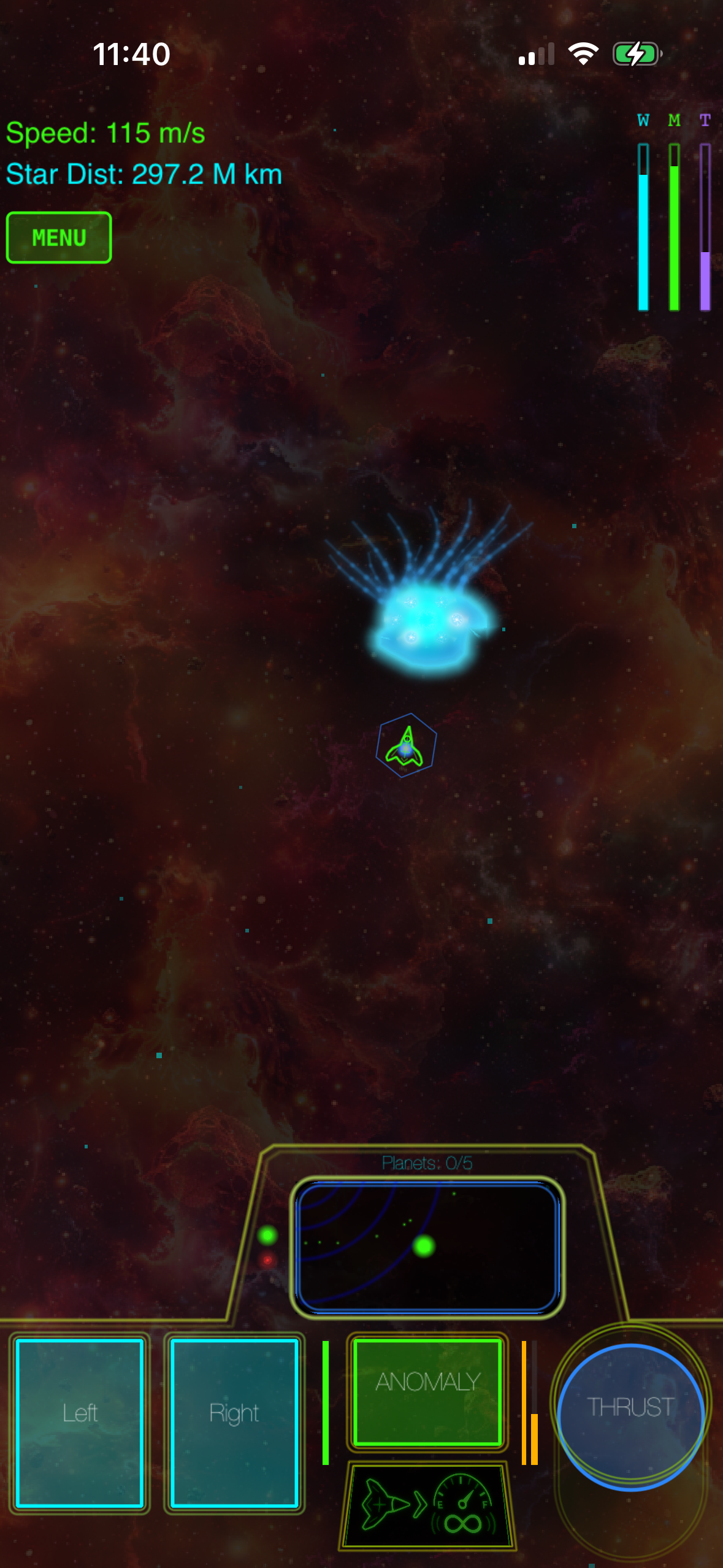
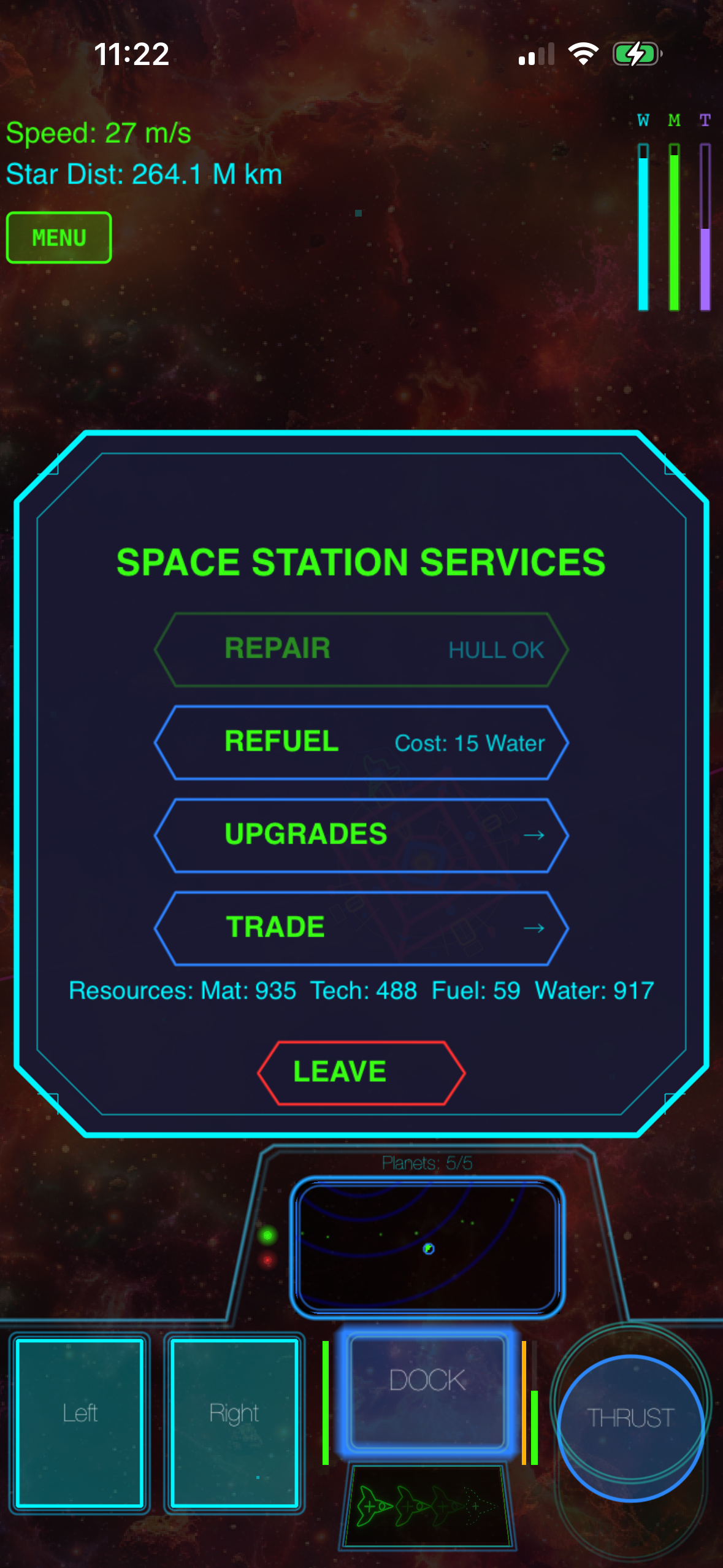
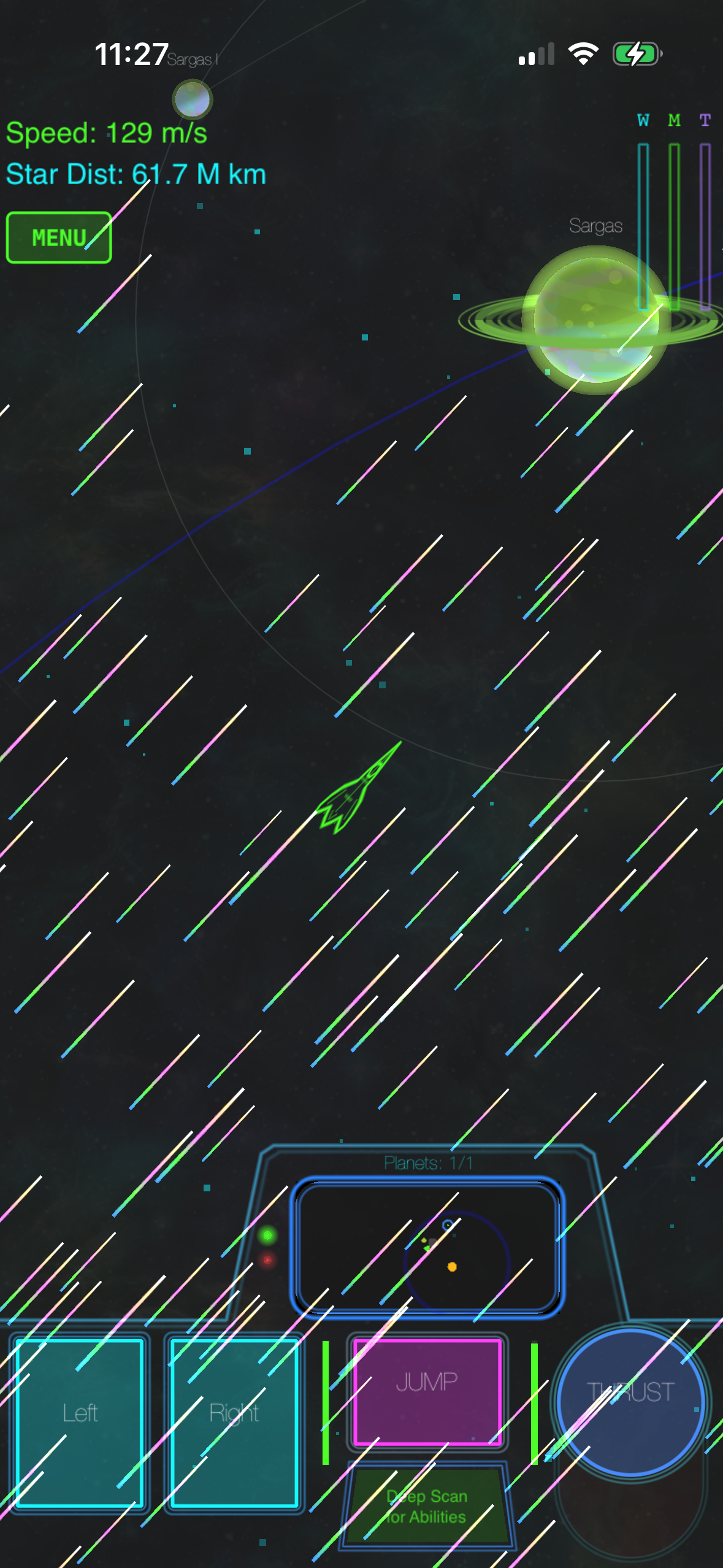
[image:asteroid-field alt=”A starfield with planets and orbital paths visible, showing the gravity-based gameplay of Galaximus”]
If you want a space game where gravity actually matters on iPhone, Galaximus is what you need to try. Every celestial body in the game obeys real orbital mechanics — planets orbit suns, moons orbit planets, and your ship is subject to all of it. That’s not window dressing; it’s the core mechanic. Mastery comes from using gravity as your engine: slingshots around planets to gain speed for free, orbital captures, fuel-efficient transfer windows.
The learning curve is real. The first 30 minutes will feel unintuitive if you’re used to arcade space games where thrust is just thrust. But the payoff is a kind of mastery that no faked-physics space game can offer. Once gravity clicks, the game becomes a puzzle where the solution is always there — you just have to see it.
[image:first-contact alt=”A space encounter scene showing a derelict ship and incoming hostile fleet, demonstrating the campaign’s narrative encounters”]
The campaign spans eight procedurally configured star systems, each with its own encounters: derelict ships, distress beacons, spacetime rifts, and hostile fleets. Every playthrough is unique, but the narrative arc is authored — you’re working toward something, not grinding an endless sandbox. The polish-per-feature ratio is high; nothing feels half-baked.
One-time purchase at the launch-tier price . The Infinitum expansion (open-galaxy sandbox, planetary surface exploration, outpost building) launches late 2026 — buyers at the launch tier get it free. After Infinitum ships, the combined game moves to a higher price tier, so early adopters lock in real savings.
Asteroids: Recharged — Vector Perfection

What matters: this is a complete game. No power-up shop. No season pass. No “buy this laser for real money.” You get the arcade experience, period. If you played Asteroids on arcade hardware and want that same satisfaction on your phone, this delivers it.
Threes! — Puzzle Without Pressure
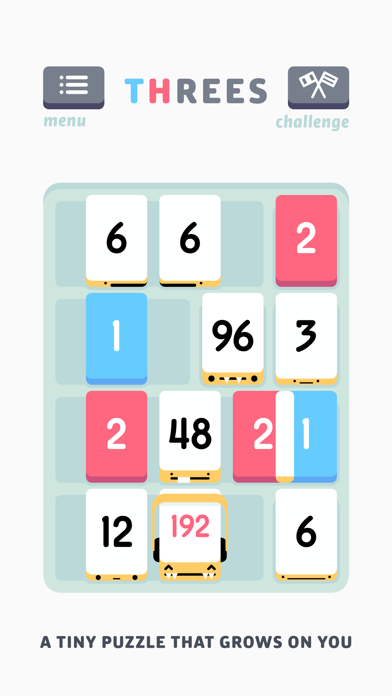
Threes! is a sliding-number puzzle where you combine tiles to build chains. It’s deceptively simple on the surface — slide tiles on a 4×4 grid, combine matching numbers, build higher numbers — but the spatial reasoning required grows with each move. The game is genuinely hard, but it never feels hard because there’s no timer, no score pressure, no ads popping up mid-turn.
That calm is intentional. The designer, Sirvo, built Threes! to be played at your own pace. Some turns take 30 seconds; some take five minutes while you think. The game waits. That’s a radical stance on mobile gaming in 2026, and it’s why Threes! has aged so well since 2014. It’s not trendy; it’s timeless.
Duet — Geometry as Punishment
The appeal is pure: can you last 30 more seconds? The difficulty scales smoothly, and the game knows when you’re ready for the next spike. It’s the kind of game you play for five minutes and suddenly it’s been an hour. No ads interrupted that flow. No timer told you to come back later. Just you and the geometry.
Kentucky Route Zero — Interactive Literature
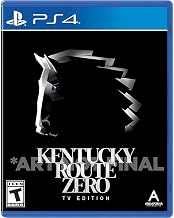
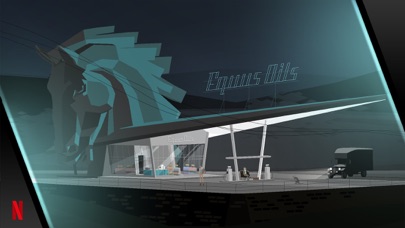
The writing is exceptional — the kind of storytelling that makes you think about what you played days later. The game respects your intelligence. It doesn’t explain everything. It lets you sit with ambiguity. If you’re tired of games that treat you like you need constant feedback and reward, Kentucky Route Zero is a palate cleanser.
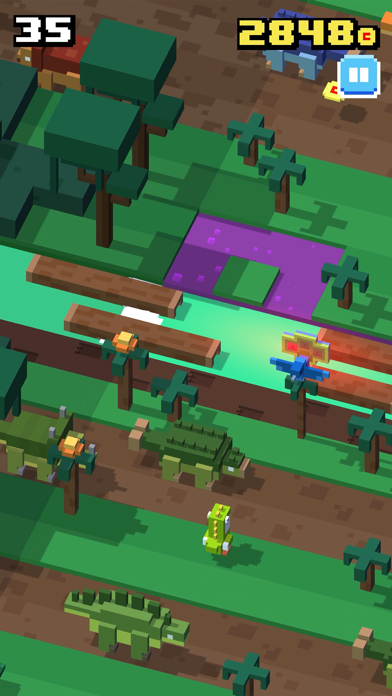
Crossy Road — Arcade Voxel Hopping
Crossy Road is a voxel-based endless-hopper where you navigate a character across roads, rivers, and railways, dodging traffic. The core mechanic is simple: tap to move forward one square. But the minimalist controls hide surprising depth — reading traffic patterns, timing river crossings, managing risk versus reward.
The game is charming without being saccharine. The voxel aesthetic is retro without being a lazy pixel-art rehash. And crucially, it’s premium — no ads, no stamina system, no premium currency. You play until you crash, then you try again. That loop has been proven for decades; Crossy Road executes it cleanly.
Unpacking — Zen Puzzle
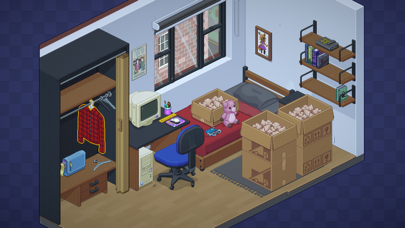
Unpacking is a narrative game told entirely through the act of unpacking boxes. You move through different rooms and eras of a character’s life, placing objects in drawers and on shelves. There’s no dialogue. No exposition. Just the quiet story of a life told through the things she keeps.
It’s meditative. It’s smart. The puzzle design is tight — there’s always a right place for each object, and finding it feels satisfying. It’s the kind of game that proves iPhone can host sophisticated, adult-oriented experiences that don’t need combat or competition.
Spelunky — Roguelike Mastery
The difficulty is punishing but fair. Death is permanent, but you always learn something from it. The game doesn’t coddle you, and it doesn’t need to — the gameplay is compelling enough to sustain repeated failure. If you want a game that respects your skill and rewards mastery, Spelunky is the benchmark.
Inflation Inc. — Idle Mechanics Done Right
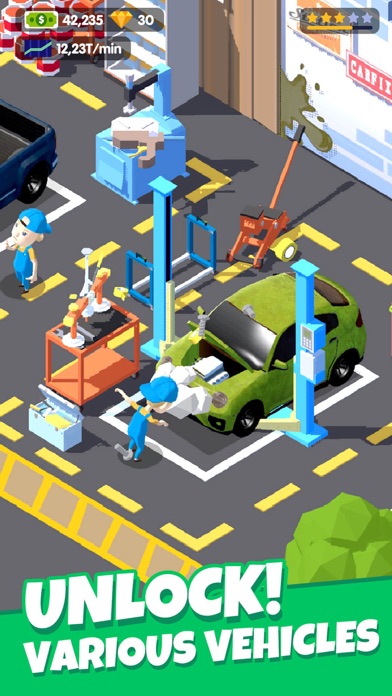
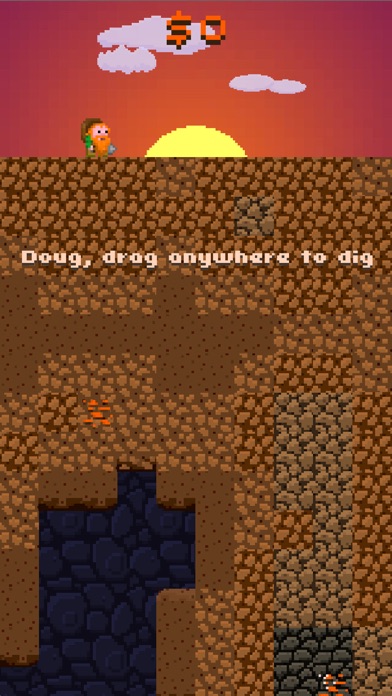
Inflation Inc. is a clicker game that actually respects your time. You tap to inflate balloons, combine them into larger balloons, and unlock new mechanics. The hook is that the game progresses while you’re away — you come back to find your balloon farm has grown. As of July 2026, the game ships with no ads and no energy system, confirmed against the current App Store listing.
The design philosophy is clear: let the player engage at their own pace. Want to tap for five minutes? Fine. Want to let it idle overnight? Also fine. The game accommodates both, and that flexibility is rare in the idle-game genre, which usually leans hard into FOMO.
How to Spot a Real Premium Game
Not every game that costs money is actually premium. Some ship with ads disguised as “optional” reward videos. Others have in-app purchases that gate core content. Here’s what to look for:
- One-time purchase, no IAP. Check the App Store listing under “In-App Purchases.” If it says “None,” you’re buying a true premium game. If it lists anything — even cosmetics — it’s a hybrid model.
- No ads, period. Not even “optional” ads for rewards. Premium means clean.
- Complete on day one. No battle pass. No seasonal content drip. You get the whole game.
- No energy timers. If you can’t play for more than 10 minutes without waiting for energy to regenerate, it’s not premium.
- Cosmetics vs. pay-to-win distinction. Cosmetic-only purchases (like character skins or visual themes) are acceptable in hybrid games; gameplay advantages (weapons, power-ups, stat boosts) are not. Example: a game offering a “pink sword” skin is cosmetic-only; a game offering a ” legendary sword that deals 50% more damage” is pay-to-win.
The Price-to-Value Ratio at Budget Tier
Budget-tier games are the best value proposition in gaming right now. A single premium game at delivers 10–100 hours of play depending on the game. Compare that to:
- A AAA console game: base game + season pass = for a 12-hour campaign
- A free-to-play game: upfront, but + over six months in cosmetics and battle passes
- A budget-tier premium game: one-time, complete forever, no hidden costs
The games in this list represent craft: developers who chose to make something complete rather than something extractive. That choice deserves support. Every premium game you buy signals to the industry that this model has an audience.
FAQ
Q: How do I know if a game is truly premium vs. hybrid free-to-play? A: Check the App Store listing for “In-App Purchases.” If it says “None,” it’s premium. If it lists anything, it’s hybrid. Premium games cost money upfront but have zero monetization beyond that. Hybrid games are free or cheap upfront but have IAP or ads.
Q: Are these games controller-optimized? A: Most support MFi controllers, but they’re designed for touch-first play. Galaximus and Asteroids: Recharged benefit from a controller if you have one, but neither requires it.
Q: Will these games still work in 2027? A: Yes. Premium games without online dependencies tend to age well. You own them; they’re not going anywhere. Free-to-play games disappear when servers shut down.
Q: Can I play these offline? A: All of them. None require internet. Download once, play forever, anywhere.
Q: Why are premium games so hard to find? A: The App Store’s algorithm prioritizes free-to-play because free-to-play games generate more engagement metrics (daily active users, session time). Premium games don’t need those metrics; they’re profitable on day one. But the algorithm doesn’t know that, so premium games sink below the fold.
Q: What about Apple Arcade? A: Apple Arcade is a subscription service with a rotating catalog (/month). Premium games are one-time purchases you keep forever. Different models for different players. If you’re already paying for Arcade, you have access to premium-quality games. If you’re not, one-time purchases are cheaper over time if you play more than two games per month.
The Bottom Line
Premium games under budget-tier prices are proof that the free-to-play model isn’t inevitable. Every purchase is a vote for a different kind of game industry — one where complete, craft-built experiences are the default, not the exception.
Start with one. Play it. See what it feels like to engage with a game that trusts you to know when to stop, that doesn’t need to extract money from you to survive. Then come back for the next one.
Best iPhone Games for Adults Without Ads or IAP Paid iPhone Games With No Microtransactions: Complete List Best Premium iPhone Arcade Games 2026: One-Time Purchase Classics