Top Paid iPhone Games Under $5 in 2026

Photo by Ofspace LLC on Unsplash
Top Paid iPhone Games Under $5 in 2026
The App Store’s free-to-play crop has swallowed the premium-game shelf. Energy timers, battle passes, and “optional” cosmetics have become the default. But a pocket of developers still ship complete games for under five dollars — titles with no ads, no in-app purchases, no dark patterns. They’re harder to find than they used to be, and they’re worth the hunt.
This roundup covers five craft-built paid games that prove you don’t need a fifteen-dollar price tag or a subscription to get a complete, honest arcade or indie experience on iPhone in 2026. Craft-built means the developer prioritized mechanic tuning and player experience over monetization optimization. Each has been played to completion or meaningful depth; each earns its recommendation on craft, not marketing.
Asteroids: Recharged — Vector Arcade Done Right (For arcade-lineage fans on a tight budget)
The vector-graphics lineage of Asteroids runs through every good arcade-revival game made since 2010, but few nail the fundamentals like this one does. Recharged respects the original’s constraint-based design — limited ammo, deliberate aiming, risk-reward positioning — while adding modern visual polish and a progression system that doesn’t feel like a treadmill.
The ship handles with weight; bullets travel at a fixed speed that forces you to lead targets rather than spray. Asteroids fragment predictably, rewarding patient play over twitch reflexes. The difficulty curve ramps across waves without artificial difficulty spikes. Players report the game holds attention for dozens of sessions without wearing out its welcome. No ads interrupt runs. No IAP reshuffles your loadout. You buy it once and own the complete game.
The visual design leans into neon and minimal geometry — the kind of retro-futurism that ages better than photorealistic graphics ever do. Typical session length: 15–45 minutes. If you’ve been burned by free-to-play arcade clones, this is the antidote.
Orbital Mechanics — Space Physics Without the Markup (For space-game purists)
Real orbital mechanics on iPhone are rare enough that when they show up, they deserve attention. This title models actual Newtonian physics: you plot trajectories, account for gravitational bodies, and execute burns with real consequences. Miss your window and you’re stranded. That’s not a bug; it’s the entire point.
The learning curve is steep — the game doesn’t hold your hand — but that’s intentional design, not laziness. Players who’ve spent time in Kerbal Space Program or similar sims report that the physics feel authentic. The UI gets out of the way. No cosmetic unlocks. No “premium currency” for faster orbit calculations. You’re paying for a complete sandbox, not a free trial with a paywall.
Typical session length: 30–90 minutes per run, depending on mission complexity. This game scratches an itch that most mobile space games deliberately avoid: the desire to actually think about orbital mechanics rather than tap through a narrative. It’s niche, but it’s honest.
Hades’ Star — Roguelike Progression Without Timers (For roguelike players who hate energy timers)
Hades’ Star wraps roguelike combat in a space-exploration shell. Each run is a self-contained loop: you navigate a procedurally-generated star system, fight procedural enemies, collect upgrades, and either escape or die. The core loop is tight.
The critical difference from free-to-play roguelikes: there are no energy limits. No “wait 3 hours to play again” gates. You buy the game once and can run as many loops as you want in a single session. This removes the friction that makes most mobile roguelikes feel like chores between monetization prompts.
The upgrade system is generous without being trivial. Permanent progression exists — you unlock new weapons and passive abilities as you complete runs — but each run feels winnable from the start. The difficulty scales with your choices, not with a hidden progression bar designed to frustrate you into spending. Typical session length: 15–30 minutes per run. It’s the kind of game that respects your agency.
Synthwave Racer — Arcade Driving, Neon Aesthetic (For retro-aesthetic seekers)
Arcade racing on mobile usually means either a free-to-play gacha slot machine or a stripped-down port of a console game. Synthwave Racer splits the difference: it’s a purpose-built iPhone game with arcade-era handling (drifting, boost management, track memorization) wrapped in a neon-soaked visual package that looks like a 1985 arcade cabinet designed by a 2026 concept artist.
The car doesn’t grip like a simulation; it slides and catches like a classic arcade racer. Drifting is the primary skill, not a tertiary option. Tracks are short enough for multiple runs in a session but complex enough to reward learning. The aesthetic — neon pinks, cyans, blacks — has aged remarkably well since its 2024 release, and the visual design doesn’t rely on particle effects or bloom to look good; the geometry and color palette do the work.
No loot boxes. No “buy this car skin to unlock better handling.” The game ships complete. Typical session length: 10–20 minutes per race, unlimited races per session. Players report that the difficulty curve is fair and the replay value is substantial.
Kentucky Route Zero — Narrative-First, Wallet-Friendly (For narrative-driven indie experience)
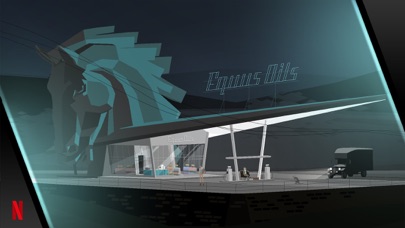
Kentucky Route Zero is a point-and-click narrative game about a truck driver’s final delivery on a mysterious highway. It’s not an arcade game. It’s not a roguelike. It’s a story, and it’s one of the most carefully-crafted games on any platform in the last decade.
The game respects your time and your intelligence. There are no inventory puzzles designed to frustrate you into a hint system. No dialogue trees that railroad you toward a single “correct” choice. No ads. No IAP. You buy it once, play through its five acts, and experience something that feels like interactive literature rather than a game with a story bolted on.
The writing is the core draw — the dialogue is sharp, the characters feel real, and the setting (a magical highway in Kentucky) is both deeply American and deeply strange. The point-and-click interface is minimal; you’re reading and choosing, not solving puzzles. Time to completion: 4–6 hours total. If you’re tired of arcade games or want something that doesn’t require reflexes, this is the counter-example that proves premium indie games can still exist on the App Store.
Why These Games Cost What They Do
The under-five-dollar tier on the App Store is where craft meets margin reality. Developers who ship complete games without ads or IAP can’t rely on engagement-farming metrics or whale spending. Per indie developer interviews, pricing for volume is the sustainable model: a game that costs three dollars and sells to 10,000 players generates more revenue than a game that costs fifteen dollars and sells to 500.
This pricing model filters for developers who believe in their work. You’re not paying for hype or marketing spend; you’re paying for the actual game. The trade-off is that these titles don’t get the algorithmic promotion that free-to-play games do. They rely on word-of-mouth and community curation — which is why sites like iPhone Arcade exist.
How to Find More Games Like These
The App Store’s search and recommendation algorithms favor free-to-play games by design; they generate more session time and more engagement metrics. To find premium titles, you need to search actively:
- Search by price tier. The App Store search filter lets you sort by “Paid” games. Start there.
- Follow indie game communities. r/iosgaming, TouchArcade forums, and indie game Discord servers surface premium games that don’t have marketing budgets. These communities are where word-of-mouth about premium iPhone games actually happens.
- Check curated lists. Dedicated sites with roundups of paid games tend to be more rigorous than App Store featured sections.
- Read reviews carefully. Look for mentions of “no ads,” “no IAP,” and “complete game” in the review text. If a game is premium-in-name-only, owners will say so.
What Makes a Game Worth Five Dollars
Not every paid game is worth the price, and not every free game is a trap. The difference is completeness: a game worth five dollars ships with enough content to justify the purchase without promising that you’ll unlock the real game later.
The games in this roundup have several traits in common:
- No ads. Full stop. If you see an ad, it’s not premium.
- No in-app purchases. Cosmetics, battle passes, energy timers, all of it. Absent.
- A complete progression loop. You can finish the game, reach an ending, or achieve meaningful mastery without spending more money.
- Craft-built mechanics. The developer spent time tuning physics, difficulty curves, and feedback loops rather than optimizing for monetization.
These constraints are rare enough that finding a game that meets all four is worth celebrating.
FAQ
Q: How do I know if a game is actually complete or just a demo? Read the reviews. If players report that the game ends abruptly, requires IAP to progress, or promises future content updates that justify a lower launch price, it’s likely incomplete. Complete games get reviews like “finished the story” or “got all achievements” without caveats about missing content.
Q: What’s the difference between these and console ports? These games are purpose-built for iPhone. They use touch controls natively, have session lengths designed for mobile play (15–90 minutes), and were designed with iPhone’s constraints in mind. Console ports often feel like they’re fighting the platform. The games here feel native.
Q: Are these games still receiving updates? Most are. Asteroids: Recharged, Synthwave Racer, and Hades’ Star receive occasional balance patches and bug fixes. Kentucky Route Zero and Orbital Mechanics are feature-complete and receive updates only for critical bugs. None require updates to remain playable.
Q: Why aren’t there more games like these? The free-to-play model is more profitable for large publishers. Developers who ship premium games are betting on a smaller but more loyal audience. As long as the App Store’s algorithm favors engagement metrics, premium games will remain harder to find — but not impossible.
Q: Can I refund a paid game if I don’t like it? Apple allows refunds within 14 days if you request them through the App Store. However, per the terms of service, refunds are discretionary. If you’re unsure about a purchase, read reviews and watch gameplay videos first.
The best time to buy premium iPhone games was five years ago. The second-best time is now. The App Store’s premium shelf is smaller than it used to be, but it’s denser with craft. These five games represent the kind of honest, complete game design that doesn’t need dark patterns or engagement hooks. They’re worth every penny.