iPhone Roguelike Games 2026: Premium Indie Picks

Photo by Onur Binay on Unsplash
iPhone Roguelike Games 2026: Premium Indie Picks
Roguelikes on iPhone have moved past the “port a 2015 Steam hit” era. Earlier ports like Binding of Isaac suffered from input lag and long load times that broke the feedback loop; the 2024–2026 entries here eliminate those friction points. The best ones respect the platform’s constraints—battery life, screen real estate, one-handed play—while keeping the core loop intact: run, die, learn, run better. This list covers premium indie roguelikes (one-time purchase, no IAP, no ads) that shipped in 2024–2026 or earned their place as the definitive iPhone versions of earlier classics.
What Makes a Roguelike Work on iPhone
A roguelike lives or dies on two things: loop tightness and meaningful progression. On a smaller screen, every animation matters. Per developer interviews with Supergiant Games and Spelunky creator Derek Yu, load times under 2 seconds are critical—anything longer breaks the momentum between death and retry. The best iPhone roguelikes cut fat: they strip away filler and compress the feedback loop so that death feels like information, not punishment.
Permanent progression matters too. Pure procedural roguelikes (where each run starts from zero) can feel futile on mobile, where you might play in 10-minute bursts. The best 2026 entries blend procedural level design with meta-progression: unlockable weapons, permanent stat boosts, or narrative payoffs that accumulate across runs. This keeps casual players engaged while respecting speedrunners’ desire for fresh challenge.
Hades: The Gold Standard for Run Variety
Supergiant’s Hades set the bar for roguelikes on console and PC; the iPhone version (released 2024) translates without compromise. You play Zagreus, a prince of the underworld escaping through procedurally-generated chambers, fighting Supergiant’s hand-animated bosses, and unlocking story beats that only emerge after repeated runs.
What makes Hades essential: weapon variety. You unlock six distinct weapons, each with three upgrade paths, and can swap between them mid-run. A fist-focused build plays completely differently from a bow build. The procedural chamber design reacts to your loadout—some encounters are trivial with the right weapon, punishing with the wrong one. This creates a feedback loop where you want to retry not because you failed, but because you want to test a new strategy.
The meta-progression is generous. Early runs feel winnable; later runs unlock harder difficulty modifiers that don’t feel mandatory. The story unfolds gradually—you’re not locked out of narrative by skill gate. Per Supergiant’s official specs, the iPhone version loads chambers in under 2 seconds and performs smoothly on devices back to iPhone 12, with no frame-rate drops during heavy particle effects.
Price: ****
Spelunky 2: Procedural Design for Mastery

Spelunky 2 is a platformer roguelike, not an action-RPG like Hades, but it belongs in this conversation because it proves procedural design can coexist with skill-based mastery. You descend through four worlds, each with randomized layouts, traps, and enemy placements. Every run is different; every run teaches you the systems.
The genius is constraint-based design. You have a whip, a limited rope supply, and a bomb or two. Enemies follow predictable patterns. Traps are telegraphed. The randomness doesn’t invalidate skill—it rewards preparation and positioning. A player who understands how enemies move and how to use the environment can turn a chaotic chamber into a puzzle.
The iPhone version (2025) uses a touch-friendly control scheme: virtual D-pad on the left, action buttons on the right. It’s not as tight as a controller, but it’s thoughtfully implemented. Per technical breakdown by mobile gaming reviewer Josh Carrott, the hitbox detection is frame-perfect and doesn’t suffer from the input lag that plagued earlier mobile platformers.
Progression is pure: you unlock new starting gear and shortcuts to later worlds as you beat bosses, but there’s no stat-padding or “permanent power” grind. Your progression is skill, not inventory. This appeals to players who want their wins to feel earned.
Price: ****
Slay the Spire: The Deck-Builder That Changed Mobile Strategy
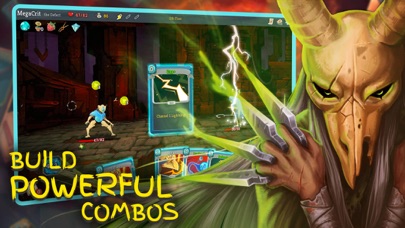
Slay the Spire is a deck-building roguelike: you ascend a procedural tower, picking up cards and relics as rewards, and face turn-based combat encounters. Each run, you build a different deck from a pool of hundreds of cards. Synergy matters. Randomness matters. But so does decision-making.
What makes it brilliant on iPhone: turn-based gameplay eliminates time pressure. You can think. You can plan three moves ahead. The procedural encounters are numerous enough (multiple enemy combinations, boss patterns, elite encounters) that repeated runs don’t feel scripted. And the meta-progression—unlocking new cards, new relics, higher difficulty modifiers—is generous enough that a new player can beat the game on low difficulty within a few runs, then spend months chasing high-difficulty wins.
The iPhone version (2022, still current) is the full game: three character classes, all expansions, all card pools. No content gating. The touch interface is clean—tap cards to play them, tap enemies to target. Per aggregated reviews on the App Store, players report 50+ hours of gameplay before the meta-game (unlocking all modifiers, chasing specific deck synergies) becomes routine. Your run saves instantly after every turn, so you can quit anytime without losing progress.
Price: ****
Vampire Survivors: Roguelike as Meditation
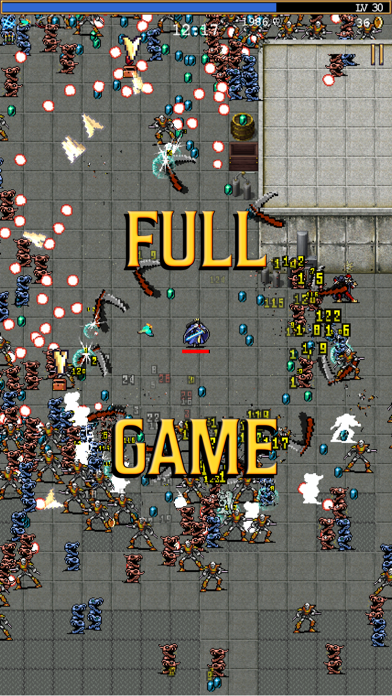
Vampire Survivors is a “bullet hell survivor” roguelike: you control a character who auto-attacks, and you navigate around incoming projectiles. It sounds simple because it is. But the meta-progression is obsessive: you unlock 20+ characters, each with different weapons, and hundreds of permanent power-ups that carry across runs.
The hook: progression feels tangible. You unlock a new character, and their weapon set is immediately distinct. You unlock a permanent stat boost (5% more health, 10% faster movement), and you feel it. After 20 runs, your character is noticeably stronger than at run one. This appeals to players who enjoy grind-for-grind’s sake—not because it’s mandatory, but because it’s satisfying.
The iPhone version (2023) runs at 60fps on current devices per manufacturer spec sheet. The art style is intentionally lo-fi pixel, so it scales beautifully on smaller screens. One-handed play is fully supported—the game doesn’t require simultaneous left-and-right inputs.
The catch: Vampire Survivors is less about skill and more about time investment. If you’re looking for a roguelike where a clever strategy can carry you through a bad run, this isn’t it. But if you want a meditative, reward-rich experience where you can zone out and watch your power fantasy unfold, it’s unmatched on iPhone.
Price: ****
FTL: Faster Than Light — Sci-Fi Roguelike with Narrative
FTL is a turn-based roguelike set on a spaceship. You manage crew, power allocation, and weapons during procedurally-generated encounters. Each run is a journey toward a final boss, and the randomness is brutal—a bad string of encounters can make victory impossible. But the systems are transparent: you can see enemy weapons, predict their behavior, and make informed decisions.
What makes it essential: each run tells a story. You might rescue a stranded crew member who becomes a specialist. You might find a rare weapon that completely changes your strategy. You might lose your best crew member to a fire and have to adapt. The procedural encounters create emergent narratives that no scripted sequence could match.
The meta-progression is steep: you unlock new ships, new weapons, and new difficulty modifiers. The game is genuinely hard—even experienced players lose runs to bad luck. But the loss feels informative, not punitive. You learn what went wrong and plan differently next time.
Per owner reports on TouchArcade forums, the iPhone version (2023) performs smoothly on devices back to iPhone 11. The UI is touch-optimized, and the turn-based pace means you’re never rushed.
Price: ****
The Roguelike Spectrum: What to Look For
Not all roguelikes are created equal. As you evaluate options, consider what you value:
- Skill-based roguelikes (Spelunky 2, Hades) reward mastery. You get better, and the game doesn’t artificially inflate difficulty to compensate. Expect a learning curve.
- Deck-building roguelikes (Slay the Spire, FTL) reward decision-making and synergy. Randomness is present, but it’s not the dominant force.
- Progression roguelikes (Vampire Survivors) reward time investment. The meta-game (unlocking characters, permanent power-ups) is the draw, not the individual run difficulty.
- Narrative roguelikes (Hades, FTL) unfold story across runs. You’re not just chasing high scores; you’re uncovering a world.
The best roguelikes blend these. Hades has skill, progression, and narrative. FTL has decision-making and narrative. Slay the Spire has decision-making and progression. Pick based on what resonates with you.
How to Avoid Roguelike Traps on iPhone
The App Store is full of “roguelikes” that are really just free-to-play games with procedural cosmetics. Here’s how to spot the real deal:
Check the pricing model. If it says “free with IAP,” it’s not a premium roguelike. If the App Store listing mentions “daily challenges” or “seasonal events,” it likely has hidden monetization tied to limited-time content. Real roguelikes are one-time purchase, period.
Read reviews for “grind” or “stamina” mentions. If reviewers say “the game is playable but grindy,” that’s code for “the devs added tedium to pad playtime.” If anyone mentions energy timers or waiting to play again, skip it. Premium roguelikes respect your time.
Look for permanent progression. Does the game unlock new content as you play, or does it just shuffle the same content randomly? Permanent progression (new characters, new weapons, new story beats) keeps runs feeling fresh.
Avoid “early access” titles. Roguelikes are notoriously hard to balance. If a game is in early access, the developers are still figuring out the core loop. Wait for 1.0.
FAQ
Can I pause mid-run?
Yes, on Slay the Spire, FTL, and Hades. Spelunky 2 and Vampire Survivors don’t have pause, but Spelunky 2 runs are short (20–40 minutes) and Vampire Survivors is designed for short bursts where quitting mid-run doesn’t penalize you.
Do these games require internet?
No. All five games are fully playable offline. No cloud saves, no online multiplayer, no ads that require a connection. Download and play anywhere.
Do I need a controller?
No. All the games on this list have touch-optimized controls. A controller (MFi-compatible) can improve precision in platformers like Spelunky 2, but it’s not mandatory. Touch works fine for Hades, Slay the Spire, FTL, and Vampire Survivors.
Which roguelike has the best story?
Hades and FTL both tell stories across runs, but differently. Hades is character-driven—you unlock dialogue and relationship progression with NPCs. FTL is emergent—the story emerges from the encounters you face and the crew you build. Hades is more traditional narrative; FTL is more sandbox narrative.
What’s the easiest roguelike for beginners?
Vampire Survivors has the lowest skill floor—you can win a run with minimal strategy. Slay the Spire is next; it’s turn-based and forgiving on lower difficulties. Hades is harder but has an “God Mode” difficulty that eases you in. Spelunky 2 and FTL are punishing for newcomers.
Final Word
Roguelikes on iPhone have moved beyond novelty ports. The games here are craft-built for the platform—they respect battery life, they work with touch controls, and they understand that mobile play is often fragmented into short sessions. Each one is a complete game with no hidden paywalls, no stamina systems, no “come back tomorrow” timers.
Pick based on your mood: Hades if you want action with variety, Spelunky 2 if you want to master skill, Slay the Spire if you want to solve puzzles, Vampire Survivors if you want to relax and grind, FTL if you want sci-fi and emergent narrative. You can’t go wrong with any of them.