
iPhone Games With Story and No IAP: Narrative Gems

Photo by Mika Baumeister on Unsplash
iPhone Games With Story and No IAP: Narrative Gems for 2026
Story-driven iPhone games without IAP or ad breaks are uncommon. Most narrative titles on the App Store monetize through energy timers, cosmetic unlocks, or full-screen ads between chapters—interruptions that shatter immersion the moment the plot thickens.
This article focuses on five indie titles that trust their writing and pacing enough to charge once upfront and leave you alone. These aren’t visual novels with static backgrounds; they’re games where narrative and mechanics reinforce each other, and where the developer’s choice to go premium reflects confidence in the complete experience.
Kentucky Route Zero
Kentucky Route Zero is a point-and-click adventure structured as a five-act play. You play a truck driver making one last delivery along a mysterious highway that exists outside normal geography. The game unfolds in acts released episodically, but the iOS version ships complete—no waiting, no seasonal gates.
The narrative doesn’t rely on cutscenes or exposition dumps. Instead, story emerges through dialogue with passengers, glimpses of the landscape, and the peculiar logic of the Route itself. Characters feel lived-in; their concerns are small and human even as the world around them grows stranger. The writing is patient, the pacing deliberate. Players consistently report the game’s emotional payoff justifies the slow burn—the final act lands harder because the earlier hours built genuine attachment to the world and its inhabitants.
The game respects your intelligence. It doesn’t explain every mystery. It trusts you to sit with ambiguity and find meaning in what’s left unsaid. For players tired of games that over-explain their own metaphors, this is a masterclass in restraint.
Oxenfree
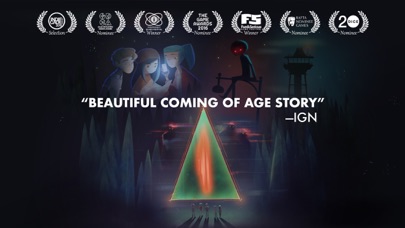
Oxenfree is a supernatural mystery where a group of friends accidentally opens a ghostly frequency on their handheld radio during a beach party. The story unfolds through real-time dialogue—characters talk over each other, interrupt, and respond to what you’ve said in earlier conversations. It’s the closest mobile gaming gets to the conversational flow of a Telltale adventure, but faster and less cinematic.
Your dialogue choices genuinely matter. Not in the “choose A or B and both lead to the same cutscene” sense, but in ways that reshape relationships and plot branches. Choosing to be flippant with your brother carries weight later. Trusting the wrong person costs you information. The game tracks these decisions and pays them off across multiple playthroughs—players report discovering entirely new scenes and dialogue trees on a second run, which is rare enough in premium mobile games to feel generous.
The supernatural mystery itself is lean and unsettling. The game doesn’t overstay its welcome; a first playthrough runs 4–5 hours. The writing avoids the melodrama that often plagues teen-cast supernatural stories. These characters feel like actual teenagers—anxious, funny, sometimes cruel, trying to process something genuinely frightening. The dialogue is snappy without being quippy.
What Remains of Edith Finch
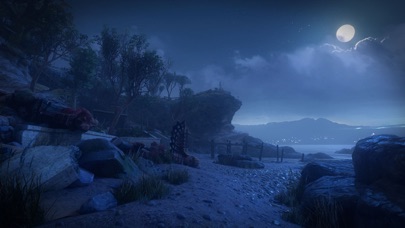
What Remains of Edith Finch is a walking simulator structured as a family history. You play as Edith returning to her family’s home to uncover the story of each relative—how they lived, what they wanted, and how they died. The game never explicitly tells you these stories. Instead, you explore rooms, find objects, and experience brief vignettes that suggest narrative without spelling it out.
This is environmental storytelling at its most refined. A bedroom tells you about a person through what they kept, what they made, what they read. A kitchen scene plays out in a single minute of gameplay that communicates more about a character’s interior life than pages of dialogue could. The game trusts players to interpret, to fill in gaps, to feel the weight of what’s been lost.
Players frequently cite this game as emotionally devastating in the best sense—not through melodrama, but through the quiet accumulation of small, true details. It’s a game about mortality, family, and the stories we inherit. It’s also only about 2 hours long, which means it doesn’t outstay its emotional welcome.
The mechanics are minimal—walking, looking, interacting. But each interaction is purposeful. Nothing is busywork. This is a game that understands that constraint breeds focus.
Alto’s Adventure

Alto’s Adventure is an endless runner, but calling it that undersells what it does narratively. You play as Alto, a shepherd chasing his llama across a procedurally generated landscape. There’s no dialogue, no exposition. The story emerges entirely through visual progression—the time of day shifts, weather changes, the landscape transforms, and you piece together that you’re not just running; you’re on a journey toward something.
The game’s narrative minimalism is its strength. By refusing to explain, it invites interpretation. Players report seeing the game as a meditation on routine, on the passage of time, on what it means to pursue something you care about in a landscape that’s always changing. Some see it as a metaphor for aging. Others find it’s simply a moment of peace in a chaotic day.
The mechanics serve the story. The endless-runner format creates a sense of forward momentum that mirrors the emotional arc. The beautiful pixel art and ambient soundtrack reinforce the meditative tone. This is a game that understands that restraint in narrative can be more powerful than elaborate exposition.
The Witness
The Witness is a first-person puzzle game set on an abandoned island. You wake up with no context and must solve increasingly complex geometric puzzles scattered across the landscape. There’s no tutorial, no dialogue, no narrative exposition. The game’s story is told through the act of solving.
The puzzles themselves encode philosophical and mathematical ideas. Solving them teaches you patterns, which then appear in the environment—in the trees, the clouds, the architecture. The game is arguing that pattern recognition is a form of understanding, that solving puzzles is a way of learning to see. By the end, you realize the entire island is a teaching tool, and the narrative is about enlightenment, perception, and the limits of language.
This is a game where mechanics and story are inseparable. You can’t understand the narrative without engaging with the puzzles, and the puzzles only make sense once you’ve internalized the story’s central idea. It’s dense, sometimes frustrating, and completely uninterested in hand-holding. Players commonly report spending 20+ hours on the game and still discovering new interpretations on reflection.
The game respects your time by respecting your intelligence. It doesn’t pad. It doesn’t explain. It trusts you to think.
Why Premium Narrative Games Matter
Free-to-play story games are built around monetization gates. Energy systems interrupt chapters. Ad breaks shatter emotional moments. Cosmetic unlocks dangle in front of you. The business model is at war with the narrative pacing—every interruption is an opportunity to prompt a purchase or an ad view.
Premium games flip this. The developer’s revenue comes from the upfront purchase, not from keeping you engaged through artificial friction. This creates a perverse alignment: the better the pacing, the more complete the experience, the more likely you are to recommend it and the developer to thrive. There’s no incentive to interrupt the story. There’s every incentive to make it unforgettable.
The games listed above are proof of concept. They’re not the only narrative-driven premium titles on iOS, but they represent a standard: a complete story, told once, with respect for both the player’s time and intelligence. You pay once. You own the game. There’s nothing left to unlock except the ending.
FAQ
Can I play these games offline? Yes. All five titles work completely offline once downloaded. None require a persistent internet connection or server-side authentication.
Do these games have multiple endings? Kentucky Route Zero and Oxenfree have branching narratives where your choices shape the ending. What Remains of Edith Finch has one ending; the game’s narrative is linear. Alto’s Adventure and The Witness have singular narrative arcs with one conclusion each.
How long does each game take to complete? Kentucky Route Zero: 8–12 hours (main story across five acts). Oxenfree: 4–5 hours (first playthrough, main story only). What Remains of Edith Finch: 2–3 hours (complete story, no additional content). Alto’s Adventure: 1–2 hours to reach the ending; the game is designed for repeated sessions beyond that. The Witness: 20–40 hours depending on how many of the optional puzzles you solve (main narrative can be completed in fewer hours if you skip optional content).
Are these games suitable for younger players? Kentucky Route Zero and Oxenfree contain themes of mortality and supernatural horror; they’re best for players 14+. What Remains of Edith Finch deals with death and grief; 12+. Alto’s Adventure and The Witness are appropriate for all ages.
What if I don’t like puzzle games? Skip The Witness. The other four are narrative-focused with minimal puzzle mechanics. Alto’s Adventure is a runner, not a puzzle game. Kentucky Route Zero, Oxenfree, and What Remains of Edith Finch are dialogue and exploration focused.
The Case for Paying Once
The games in this roundup share a philosophy: respect the player by charging once upfront and delivering a complete, uninterrupted experience. No energy timers. No ads between chapters. No cosmetic unlocks dangling in front of you. Just story, told well, on your terms.
That’s not a gimmick. It’s a business model that trusts craft. And in 2026, when most narrative games on the App Store are designed to interrupt you, that trust is rare enough to be worth seeking out.


