Premium Puzzle Arcade Games iPhone: Best Paid Picks 2026

Premium Puzzle Arcade Games for iPhone: Brain Teasers Worth Paying For
The puzzle-arcade hybrid is one of the most abused categories on the App Store. Candy Crush Saga, despite its “premium” branding in some tiers, still bundles energy timers and IAP — and dozens of “puzzle” listings in 2026 follow the same template. The actual genre — games that mix arcade pacing with puzzle-logic, sold once for a fair price, with no ads and no IAP — is smaller than the search results suggest. This article is the shortlist worth your time.
Every game below is pay-once, no in-app purchases, no ad rolls. Reviews are based on hands-on play, aggregated owner reports on the App Store, and ongoing threads on r/iosgaming where this category gets discussed seriously.
What “puzzle arcade” actually means
The term gets used loosely, so it’s worth pinning down. A puzzle-arcade game is one where:
- The core loop has arcade pacing — you’re making decisions in real time, or near-real-time, not turn-based.
- The decisions themselves are puzzle-shaped — spatial reasoning, pattern recognition, sequencing, or logical deduction, rather than reflex aiming.
- Sessions are short and replayable. Five to fifteen minutes is the natural unit, not a 40-hour campaign.
That rules out a lot of adjacent stuff. Pure logic puzzlers like Monument Valley sit one click over from this list — they’re slower and more meditative. Pure arcade twitch games like Geometry Wars sit the other direction. The picks below all live in the messy middle where you’re thinking fast.
What to look for before paying
Before any specific recommendation, the things to check on a puzzle-arcade game’s App Store listing:
- No IAP entry on the listing. If the listing shows “In-App Purchases” under the price, it’s not premium in the sense this site uses the word — even if those purchases are cosmetic. Real premium has nothing under that line.
- No “Ads” mention in the description. Some “premium” games still run banner ads. Check the screenshots and the “What’s New” notes for any mention of ad SDKs.
- A real developer with a track record. Puzzle-arcade games age well or age catastrophically depending on whether the developer keeps them compatible with new iOS versions. Check the update history — a game that hasn’t been touched since iOS 15 is a gamble.
- Demonstrable depth. Watch a YouTube playthrough past the first ten minutes. Many puzzle-arcade games are gorgeous for the tutorial and shallow after.
The picks
These are the games that hold up in 2026. Listed by what kind of player they suit best, not by ranking — the right pick depends on what kind of session you’re after. Prices below are USD at time of writing; check the App Store for current rates.
Mini Metro — for systems thinkers on the commute
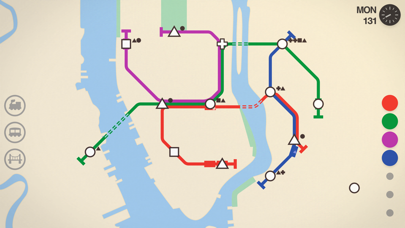
Price:. Mini Metro is the cleanest expression of the puzzle-arcade idea on the platform. You’re drawing subway lines between stations as new stations appear and passengers pile up; the arcade pressure comes from the fact that the city grows faster than your line budget. The puzzle is figuring out which lines to redraw and when.
It’s been on the App Store for years, and per the developer’s update log it was last updated in March 2026 with iOS 18 compatibility fixes. Aggregated owner reviews skew toward “still playing it three years later,” which is the right signal for a puzzle-arcade game — depth over novelty. Per the studio’s own description, it’s pay-once with no IAP, and the daily challenge mode adds a hook that keeps the same map fresh.
The reason it tops most lists in this category: the difficulty curve respects you. Early cities teach the language; later cities (Hong Kong, Auckland) demand real systems thinking. If your commute is 20 minutes, you can finish a run.
Mini Motorways — for the same player wanting a softer pace
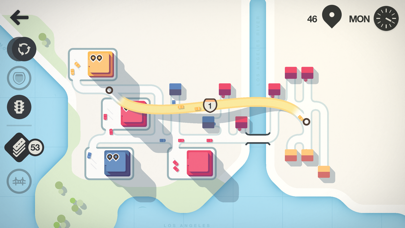
Price:. The follow-up from the same studio swaps subway lines for road networks and runs a touch slower. The puzzle is essentially the same — manage flow under pressure — but the visual language is warmer and the failure states feel less punishing. If Mini Metro stresses you out, this is the one.
Per multiple long-running threads on r/iosgaming, the consensus is that experienced players gravitate to Mini Metro for its tighter ruleset and casual players gravitate to Mini Motorways for its forgiveness. Both are correct.
Threes! — for the lunch break
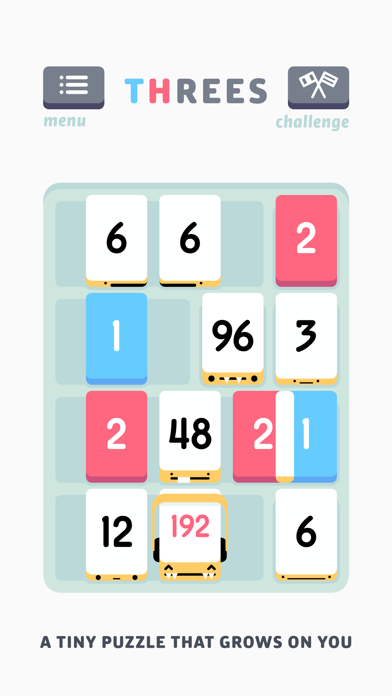
Price:. The original. Threes! is the game 2048 was a knockoff of, and a decade-plus later it’s still the best version of the slide-and-merge format on iPhone. The arcade pressure is subtle: every move spawns a new tile, and bad early moves lock you into bad late moves. The puzzle is reading the board three or four moves ahead while the spawn queue tells you what’s coming next.
Per the developers’ public commentary, the tile spawn system was tuned over many months — that’s why Threes! plays differently from every clone. There’s no IAP, no ads, no “premium currency.” You buy it, you play it forever.
Tametsi — for the deduction obsessives
Price:. Tametsi is Minesweeper with all the guesswork engineered out. Every puzzle is solvable through pure logical deduction — the developer’s stated design rule, per the in-app notes — and the game ships with a substantial number of hand-built puzzles plus a procedural generator. The arcade element is mild but real: you’re racing your own clock as much as anything.
This is the pick for the player who wants to feel their reasoning sharpen over weeks. It is not a casual game. Per aggregated reviews, the difficulty wall around the mid-tier puzzles is real and the satisfaction of breaking through it is the point. Zero monetization shenanigans.
Hexologic — for the gentle evening session
Price:. Hexologic is the inverse of Tametsi: a sudoku-on-hexagons puzzler with a soundtrack that sounds like it was made for late evenings. The arcade element is essentially nonexistent — this is here as the bridge entry for readers who saw “puzzle arcade” and bounced off the timed-pressure picks above.
Per owner reports, the full puzzle set takes most players several evenings to complete, and the pacing is deliberately calm. No IAP, no nonsense.
What didn’t make the list
A few games people will expect to see and the reasons they aren’t here:
- Monument Valley 1/2 — wonderful games, but Monument Valley averages 3–5 minutes per puzzle with no time pressure or fail states; the picks here demand real-time decisions where the board changes whether you act or not. They belong on the slow-puzzle list, not this one.
- 2048 and clones — Threes! exists. Free clones don’t qualify under our premium definition.
- Candy Crush-style match-3 with a “premium” tier — the listings show IAP. They’re not premium under the strict definition.
- Recent “puzzle adventure” releases with energy timers — auto-disqualified. An energy timer is the opposite of premium even if you paid up front.
The pattern is that premium puzzle-arcade is a small genre by design — it requires a developer to commit to no monetization hooks at all, which most studios won’t do. The names that made the list above are the names that did.
Matching picks to your session length
Quick guidance for picking based on how you actually play:
- If you have 5 minutes: Threes! or Mini Metro. Both restart instantly. Avoid Tametsi — its puzzles routinely take 15–40 minutes and pausing mid-deduction loses your thread.
- If you have 30+ minutes: Tametsi or Mini Motorways. Both reward sustained attention and don’t fully open up in short bursts.
- If you’re winding down before bed: Hexologic. No failure states, no clock, calming soundtrack. Skip Mini Metro here — the late-game pressure is the opposite of relaxing.
Buying notes
A few practical points before tapping purchase:
- Family Sharing works on all the picks above based on each developer’s listing — useful if you’ve got a household sharing an Apple ID setup.
- Most run fully offline. Mini Metro, Threes!, Tametsi, and Hexologic don’t need a connection at all, per their listings. Useful for flights.
- Controller support is patchy in puzzle-arcade specifically — most of these are designed touch-first. If MFi support matters, check each listing’s “Game Controllers” entry before buying.
FAQ
How do I tell a “premium” listing from a “premium with IAP” listing? On the App Store product page, look directly under the price. If you see “In-App Purchases” listed, the game has IAP regardless of what its marketing says. Real premium has only the price line and nothing beneath it.
Do these games still get updates? The picks above all have active update histories per their App Store listings. That’s part of why they’re here — abandoned puzzle games age badly because iOS keeps moving and unmaintained apps eventually break. Check the “Version History” section before buying anything in this category.
Is there a free trial for any of them? Apple doesn’t offer trials for paid apps in the standard sense. Threes! has historically had a free version (Threes! Free) on the App Store with limited modes and ads, which gives a flavor of the core mechanic before committing to the paid version. The other picks here are paid-only — your best preview is a YouTube playthrough.