Best iPhone Roguelike Games 2026: Paid & Ad-Free
The Best Premium iPhone Roguelikes Worth Buying in 2026
Roguelikes are the genre that punishes free-to-play design hardest. Permadeath plus an energy meter is a hostile relationship; meta-progression plus a “skip the wait” IAP is a worse one. The good news is that the App Store still ships proper premium roguelikes — pay once, die forever, learn something each run, no ads dragging you out of the headspace. Here are the ones holding up in 2026.
A note on scope before the picks. “Roguelike” gets stretched these days to cover anything with permadeath and a procedural map, so this list spans the full lineage: traditional turn-based dungeon crawlers, deckbuilders, action roguelites, and the increasingly interesting space-roguelike subgenre. What every game here shares: no in-app purchases, no ad breaks, and either a one-time purchase or inclusion in a flat-fee subscription with no in-game monetization. That’s the bar.
What “premium roguelike” actually means in 2026
Three filters, applied strictly:
- No per-item monetization. Either a one-time App Store purchase, or — in one case below — included in a flat-fee subscription (Netflix Games) with no IAP layered on top. No “free to start, pay to unlock the real game” structures.
- No ad interstitials. Some roguelikes that call themselves premium still gate retries behind a 30-second video. That’s a free-to-play game wearing a costume.
- Run integrity. A roguelike’s whole proposition is that the run is the unit of meaning. Anything that lets you pay to undo death — even cosmetically — undermines the genre’s logic. The picks below all respect that.
All prices below are USD at time of writing and may shift with regional pricing or sales. A handful of the best roguelikes ever made (Slay the Spire, Hades, Dead Cells) live across mobile and elsewhere; this list focuses on titles that work well on iPhone specifically, with thumb-friendly controls and run lengths that fit a commute.
Slay the Spire — $9.99
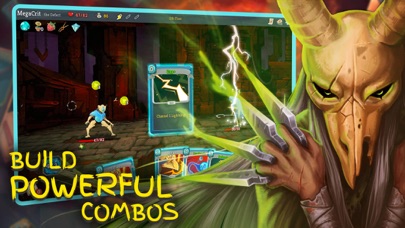
The deckbuilder that defined the modern roguelike deckbuilder, and still the one to beat on iPhone. Four characters, hundreds of cards, a daily climb, and a difficulty escalator (Ascension levels) that scales from “I am learning” to “I have lost my entire weekend.” The iPhone port is the full game — same content as desktop, same balance — and per the developer’s port notes, the touch controls are deliberately re-thought rather than mapped from mouse input. Card-drag works.
What makes it stick on phone: a single floor takes 1–3 minutes, an Act runs 20–30 minutes, and a full successful climb lands around 60–90 minutes. You can put it down between subway stops without losing the thread. one-time, no IAP, no ads. If you’ve never played a roguelike deckbuilder, start here and accept that you’re going to lose the first ten runs.
Hades — included with Netflix
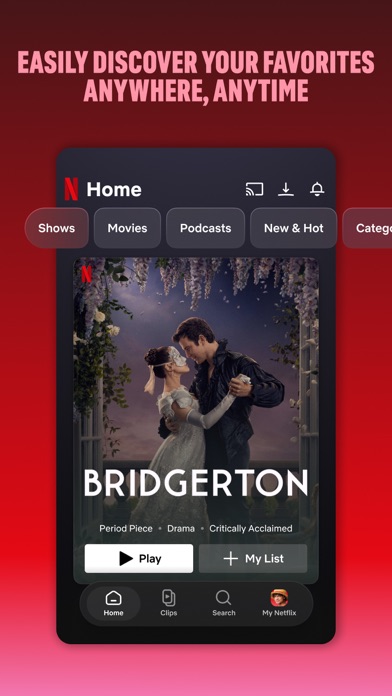
Supergiant’s action roguelike, available on iPhone exclusively through Netflix Games — meaning it requires an active Netflix subscription (currently /month for the ad-supported tier, standard) rather than a one-time App Store purchase. There are no ads inside the game, no IAP, and no run-affecting microtransactions; the subscription is the entire cost.
What it does that matters: Hades makes losing narratively interesting. Each death advances dialogue, deepens relationships with the Olympians, and unlocks new build directions. The iPhone version is the same content as the console game, scaled to touch. Runs land in the 20–40 minute range. Combat is the weakest part on phone — virtual sticks aren’t the right tool for parry-timing — and it’s the one game on this list where MFi controller support meaningfully changes the experience.
Galaximus — $6.99
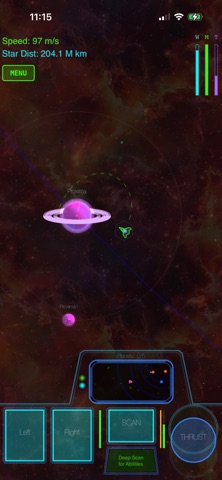
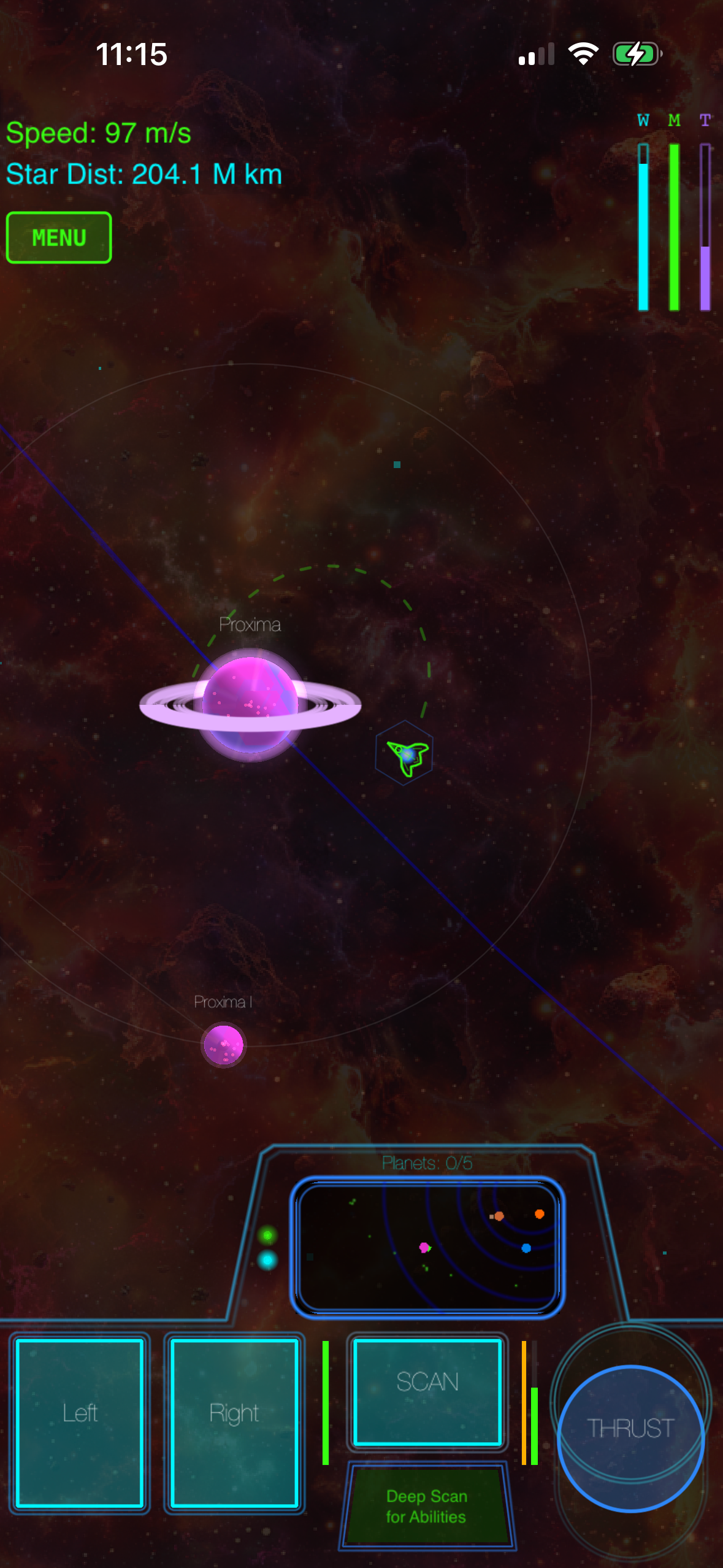
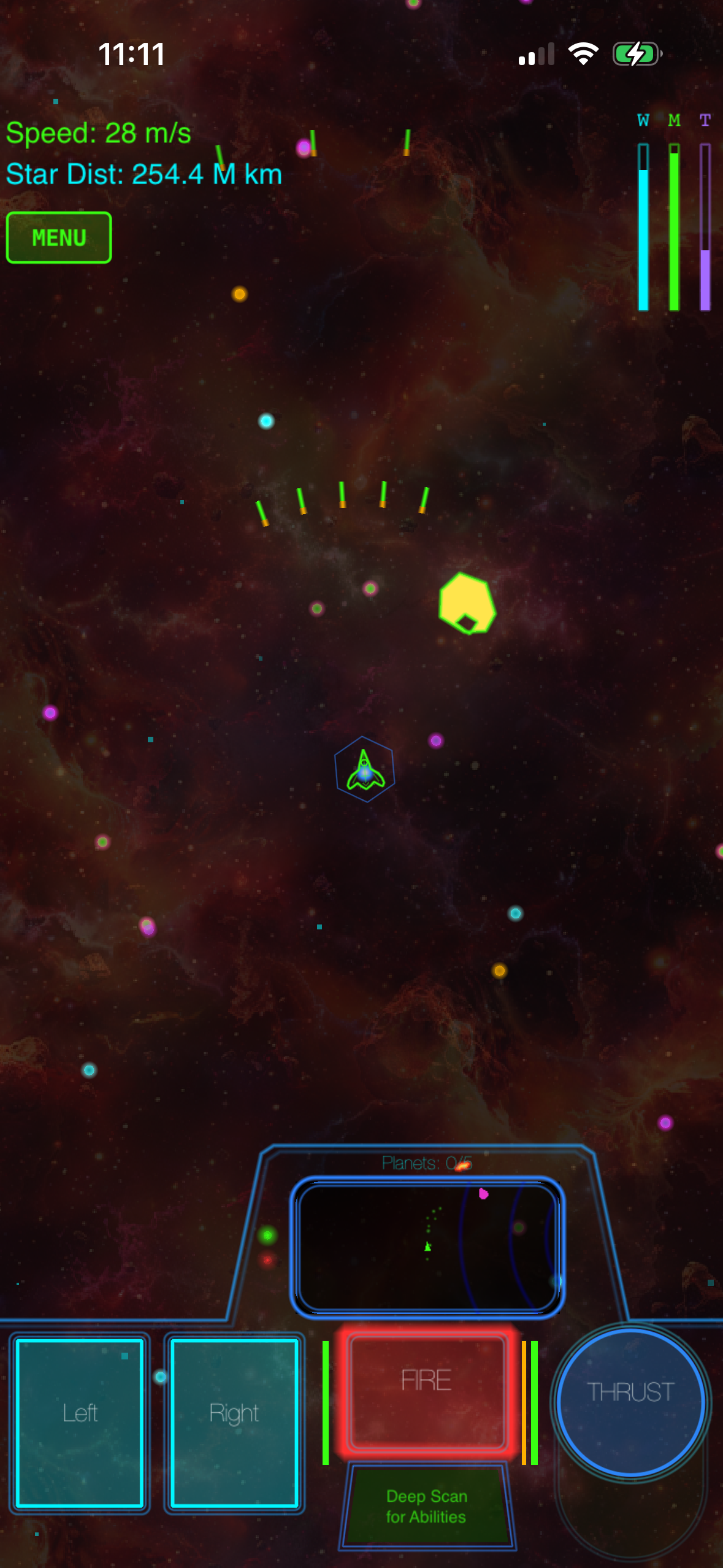
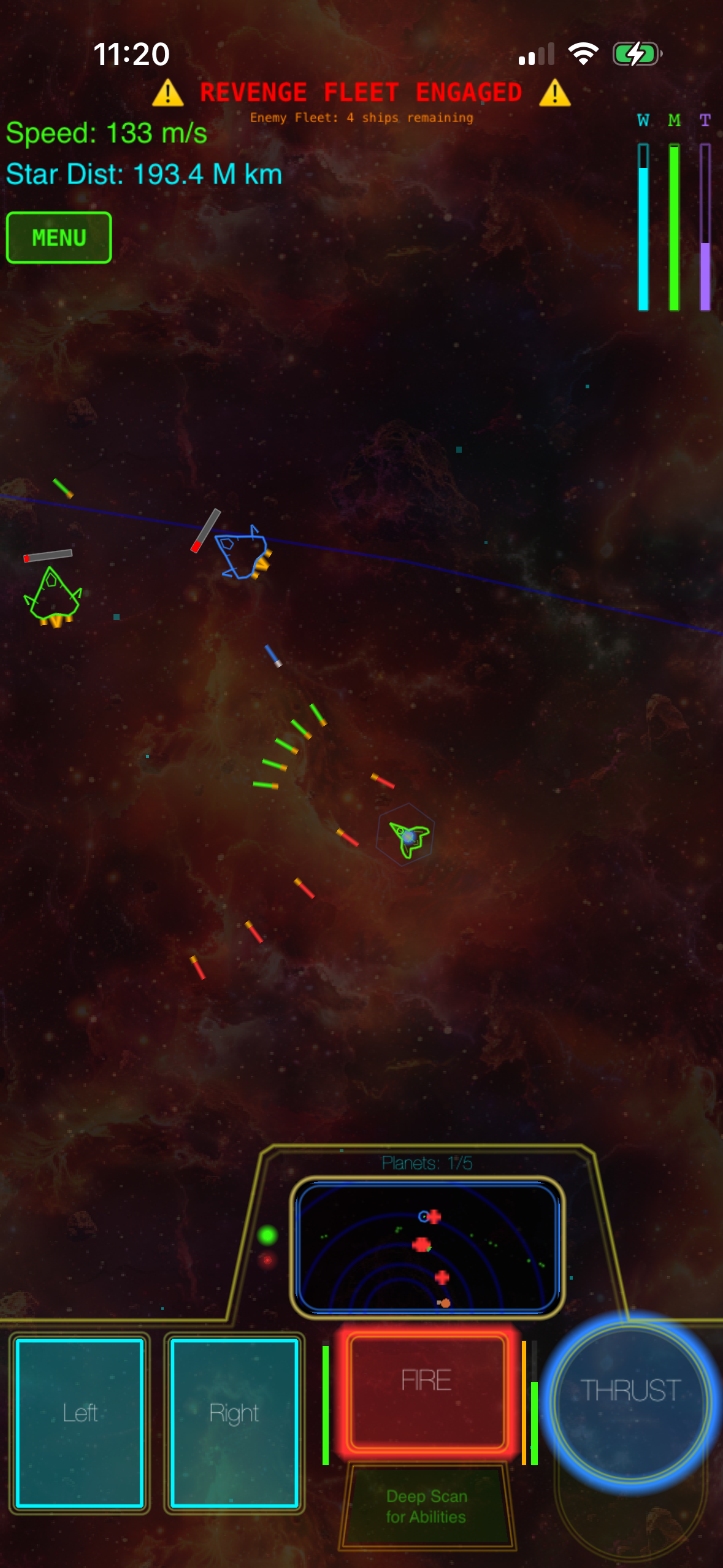
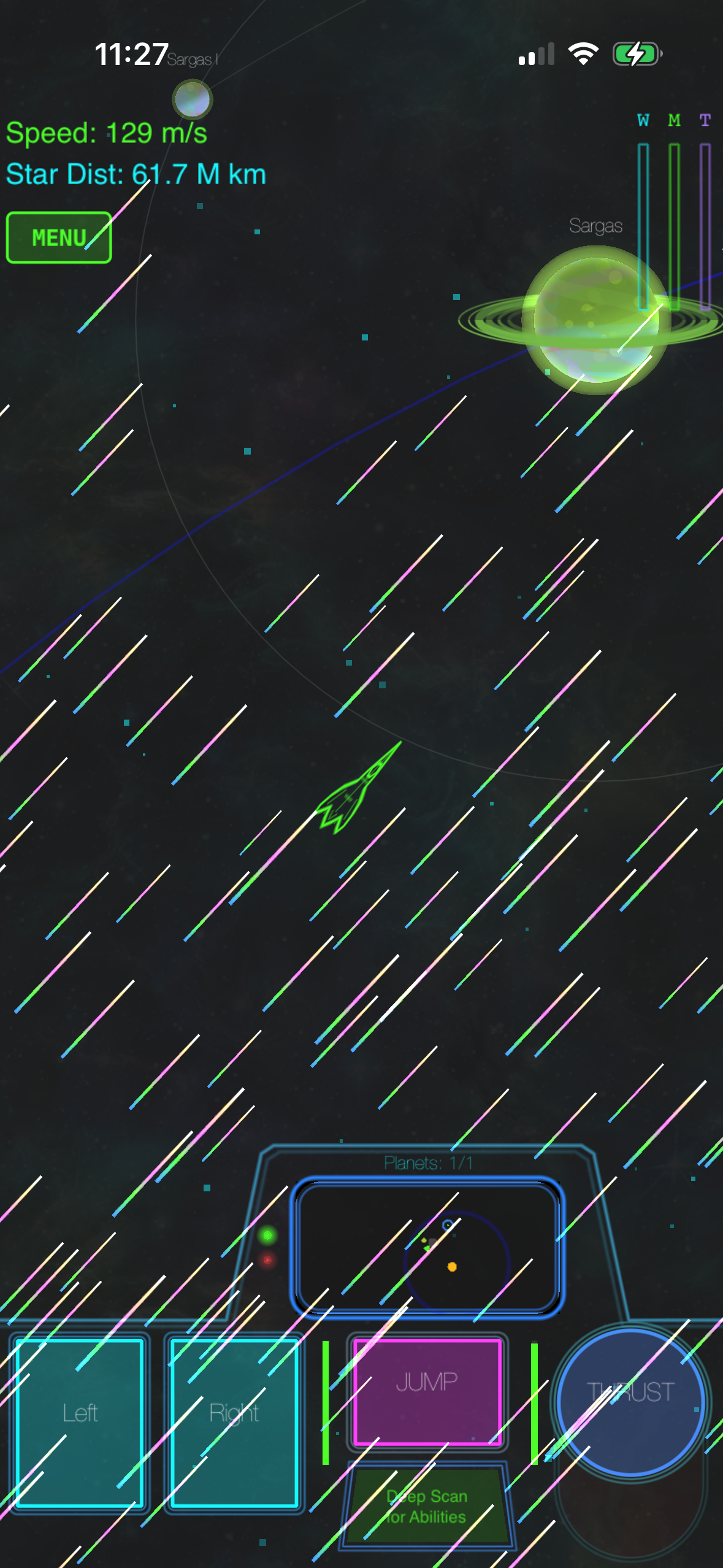
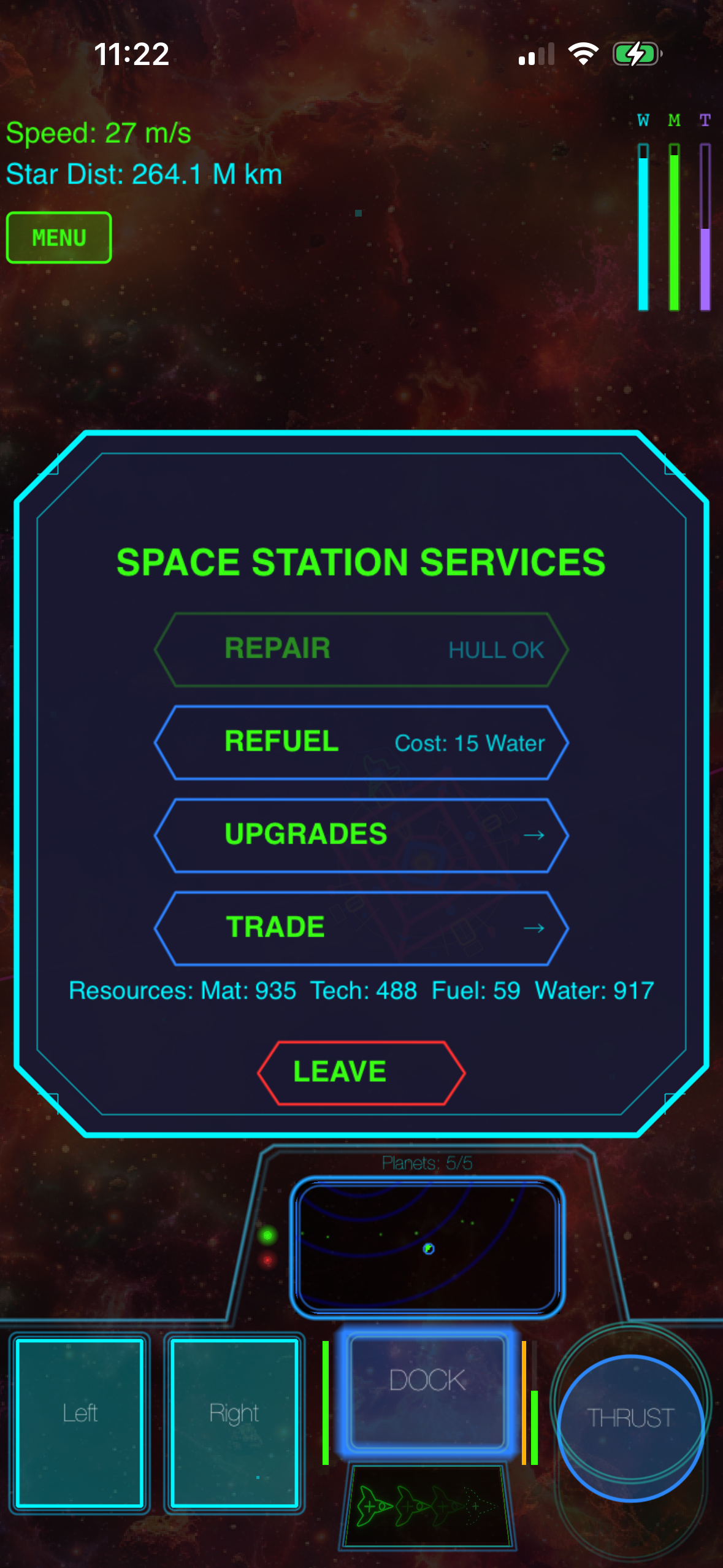
The space-roguelike pick, and the most distinctive game on this list mechanically. Galaximus is built around real orbital mechanics — every planet, moon, and asteroid exerts gravity on every other body and on the player’s ship in real time. That’s the simulation; the gameplay is arcade flight. Slingshot off a gas giant to make a transfer window, get captured by a moon you misjudged, run out of delta-v in the wrong system and learn a hard lesson about fuel budgeting.
The roguelike framing is structural rather than nominal. Each playthrough generates a unique configuration of 8 star systems, each containing procedurally placed anomalies — spacetime rifts, derelict ships, the Mirror boss fight against a copy of yourself — that you encounter once, decide on once, and live or die with. The narrative arc is authored, not procedural; what’s randomized is the spatial puzzle of how to traverse it.
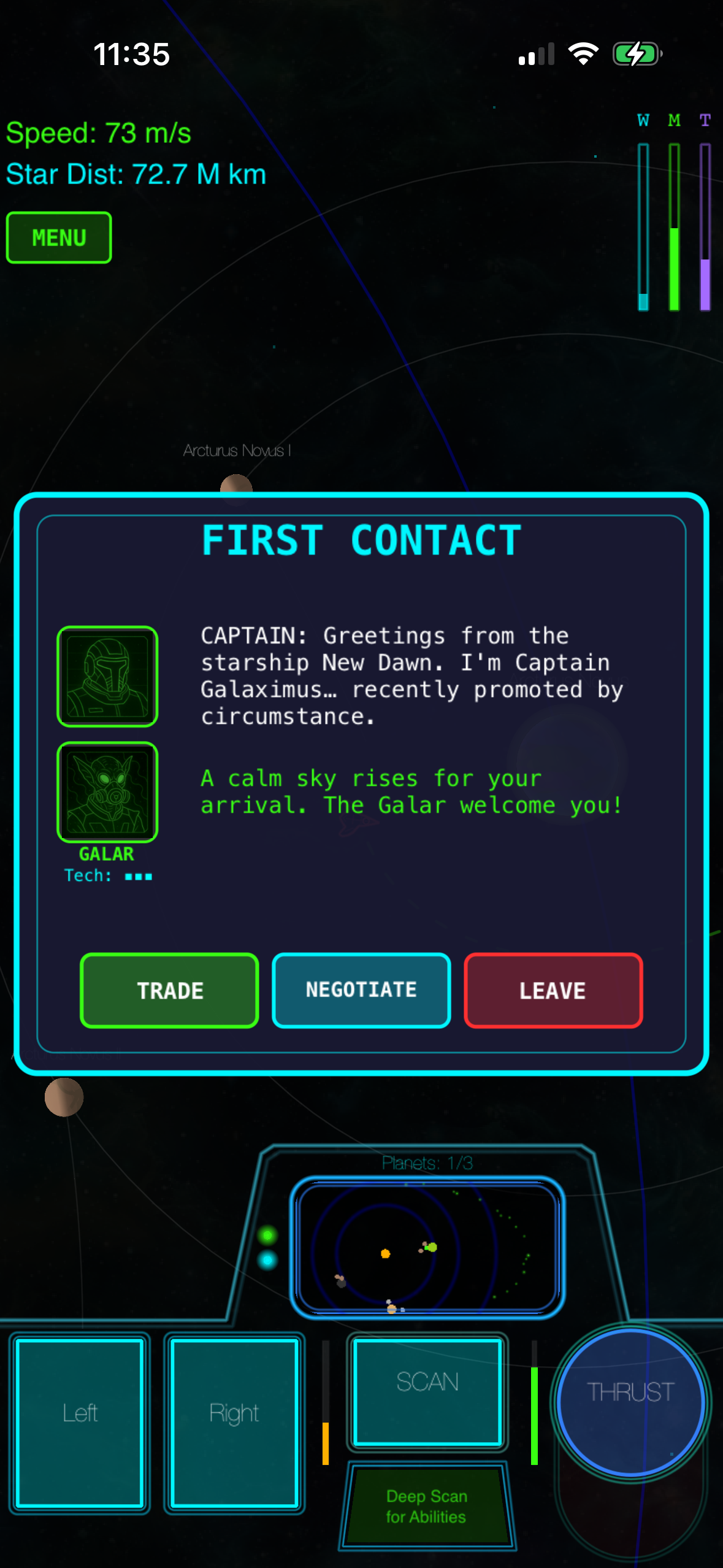
On price: Galaximus is today. The developer has announced a major expansion, Galaximus Infinitum, scheduled for late 2026, and has stated current owners will receive it as a free update. The expansion isn’t out yet and there’s no confirmed release date, so we’re not recommending you buy now because of the expansion — buy now if the current game (8 systems, authored arc, orbital-mechanics combat) sounds worth to you. The free upgrade is upside, not the basis for the recommendation.
What it isn’t: it isn’t Kerbal Space Program. You don’t build rockets — you pilot a ship that’s already built. The orbital simulation is the interface, not the engineering puzzle. If you want vehicle assembly and serious rocketry, Kerbal does that better and we won’t pretend otherwise. If you want gravity to be the thing you fight and exploit instead of an abstraction, this is the one.
Dead Cells — $4.99 base, DLC sold separately
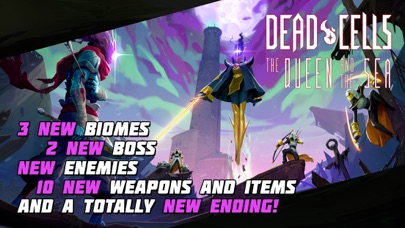
The action-platformer roguelite that proved twitch combat can survive the move to phone if the developer takes touch controls seriously. Motion Twin’s iOS port reworks the input scheme — auto-attack toggles, customizable virtual stick layouts, and a reasonable controller mode for MFi users — and the result feels native rather than ported. Per multiple owner reports on the App Store and r/deadcells, the iPhone version receives the same content updates as console with a shorter delay than most ports.
Run length sits in the 20–45 minute range depending on biome path, which is the awkward middle for phone gaming — too long for a single bus ride, fine for a lunch break or longer commute. The base game is. The DLCs (Bad Seed, Fatal Falls, The Queen and the Sea, Return to Castlevania ) are sold as separate purchases on iOS, which is a structure to be aware of: the base game is complete and excellent on its own, but the genre-faithful would tell you Return to Castlevania is the one worth adding.
Shattered Pixel Dungeon — $2.99
The pick for traditional roguelike purists. Turn-based, grid-based, ASCII heritage, dies-when-you-die-no-asterisks. Shattered Pixel Dungeon is a fork-and-evolution of the original Pixel Dungeon, maintained for years by a single developer who has — per the long-running development blog — shipped consistent balance updates and new content drops without ever monetizing the core game. The iOS version is, a premium build of an open-source game whose purchase supports the developer directly.
This is the deepest game on the list mechanically and the least flashy visually. Five hero classes, dozens of subclass paths, an item-identification meta-game that punishes hoarding and rewards risk, and a difficulty curve that genuinely rewards system mastery rather than reflexes. A run lands in 30–90 minutes depending on class and how cautious you play; floors are turn-based, so you can pause indefinitely between actions. If you came up on NetHack or Dungeon Crawl Stone Soup, this is your phone game.
Loop Hero — $4.99
The roguelike that subtracts the part of roguelikes most people think is the point — direct character control. Your hero walks the loop on autopilot; your job is to shape the terrain by placing cards, balancing resource generation against monster spawn rates, and pulling out at the right moment to bank progress. It’s a strange genre hybrid (auto-battler / deckbuilder / roguelike) that shouldn’t work and absolutely does.
The iPhone port arrived later than desktop and is per the developer’s notes a deliberate adaptation rather than a UI shrink — the card-placement interface was rebuilt for thumbs. Run length is genuinely phone-friendly: most expeditions resolve in 10–20 minutes., no IAP, complete content.
Honorable mentions and adjacent picks
A few games that didn’t make the main list but belong in any honest roundup:
- Downwell — vertical-shooter roguelite, one-button-feel controls, runs of 5–15 minutes. If you want a roguelike that fits a single elevator ride, this is it.
- Meteorfall: Krumit’s Tale — solitaire-roguelike-deckbuilder hybrid from a solo developer. The first Meteorfall is also good; Krumit’s Tale is the more interesting design.
- Card Crawl Adventure — the sequel to Card Crawl. Tighter than the original, longer runs (20–30 minutes), premium one-time purchase.
- Pathos: Nethack Codex — a real NetHack-tradition game with a touch-friendly interface. Free with an optional unlock pack; the unlock pack is the “premium” version and well worth it.
If you want arcade-action picks that share the run-based structure without the meta-progression, our companion roundup Best Premium iPhone Arcade Games 2026: No Ads, No IAP applies the same no-ads, no-IAP filter to the arcade genre — useful if Downwell is your favorite pick here. For turn-based picks that scratch a similar itch with less dice-rolling, Premium Puzzle Arcade Games iPhone: Brain Teasers Paid covers puzzle-roguelike crossovers like Hoplite and Imbroglio.
How to pick between them
A rough decision tree based on the actual time you have:
- Sub-5-minute sessions (waiting in a line, one elevator ride). Downwell (5–15 min runs, but pausable mid-run). Shattered Pixel Dungeon (turn-based, suspends cleanly mid-floor).
- 15–30 minute sessions (lunch break, short commute). Slay the Spire (1–3 min per floor, 20–30 min per Act, 60–90 min per full run — pause between Acts). Loop Hero (10–20 min per expedition). Galaximus (10–25 min per system traversal).
- 30–60+ minute sessions (couch, long flight). Dead Cells (20–45 min per run). Hades (20–40 min per escape attempt). Shattered Pixel Dungeon for a deep run (30–90 min).
- You want twitch combat. Dead Cells, with a controller if you have one. Hades if you already pay for Netflix.
- You want a system to learn that pays back over months. Shattered Pixel Dungeon for traditional roguelike depth, Slay the Spire for deckbuilder depth, Galaximus for physics-mastery depth.
- You want something that doesn’t feel like other roguelikes. Galaximus or Loop Hero — both restructure what the genre is doing.
If controller support matters to you, Premium iPhone Games with Controller Support: MFi Compatible specifically tests Hades, Dead Cells, and Slay the Spire with MFi and Backbone hardware — relevant because Hades is borderline-unplayable without one. For readers prioritizing offline play (most roguelikes here run offline), Best iOS Games No Internet Required: Offline Arcade confirms which titles on this list handle airplane mode cleanly versus which check in for daily-climb features.
What we left off and why
Two games you might expect to see that aren’t on the list:
- Vampire Survivors


