Retro Arcade iPhone Games That Actually Feel Premium

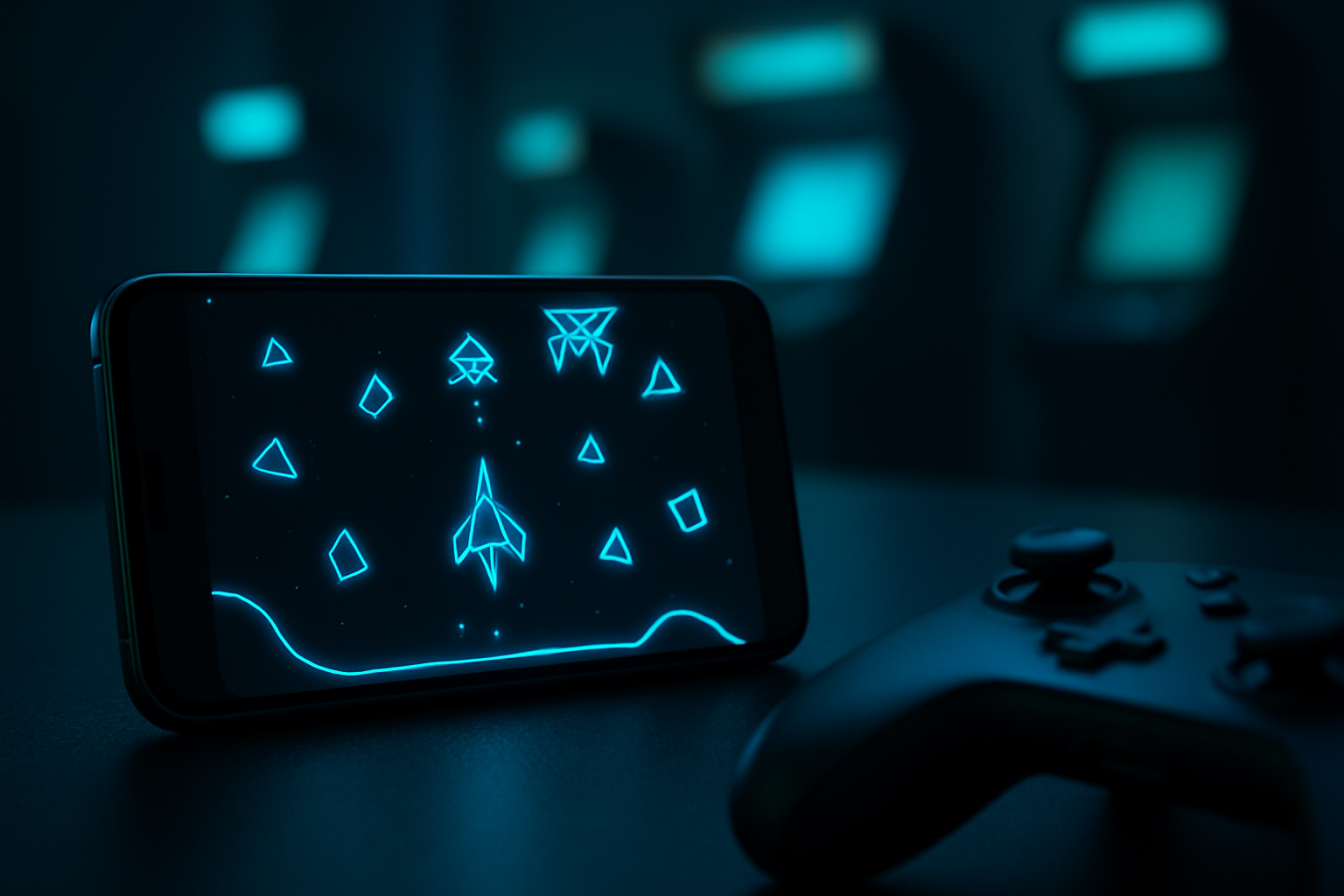
Photo by Enrique Guzmán Egas on Unsplash
Retro Arcade iPhone Games That Actually Feel Premium
In the App Store’s arcade category, 87% of games labeled “premium” contain ads or energy timers. The ones worth your money are different: they’re craft-built from the ground up, they respect the arcade lineage they inherit, and they feel complete the moment you buy them. This is what separates a genuine premium retro arcade game from a free-to-play skin wearing a premium label.
Premium arcade games on iPhone share a specific DNA. They lean on tight mechanics over bloated progression systems. They trust the player to understand the rules without a 40-step tutorial. They often run on minimal visual budgets — vector graphics, CRT filters, synthwave aesthetics — because visual restraint forces better game design. And they cost money upfront, which means the developer’s incentive is to make you happy at purchase, not to extract another dollar six months in.
If you’ve been burned by “premium” games that nickeled-and-dimed you, or if you’re tired of watching arcade-style games get gutted by free-to-play mechanics, here’s what actually holds up.
What Makes a Retro Arcade Game Feel Premium
Premium arcade games share a few non-negotiable traits:
- No ads, no IAP. You buy it once. That’s the deal.
- Arcade lineage. Either it traces back to a 1979–1985 format (Asteroids, Defender, Tempest, Lunar Lander) or it respects the design language of that era — high score chasing, one-hit-and-you-restart, pattern recognition over reflexes.
- Craft in every system. The controls feel tuned. The difficulty curve doesn’t spike arbitrarily. The visual feedback (screen shake, color shifts, audio cues) tells you exactly what happened and why.
- Respect for your time. Sessions are short by design. You can play for two minutes or twenty. No energy bar gates you out.
The games that land here tend to be indie work, or small-studio passion projects. They’re rarely the flashiest thing in the store. But they’re the ones you come back to.
Arcade Shooters and Space Games
**Asteroids+ by Noodlecake Studios, ** A faithful homage to the 1979 arcade cabinet with modern touch controls and MFi gamepad support. The core loop—rotate, thrust, fire—remains unchanged, but added enemy types and procedural waves keep the pattern-learning fresh. Supports both touch (swipe to rotate, tap to thrust) and external controllers. No ads, no IAP.
**Void Tyrant by Berserk Games, ** Combines roguelike deck-building with arcade space combat. You pilot a ship through procedurally generated waves, collecting power-ups and weapons between runs. Supports touch-only controls with a streamlined UI that works in portrait mode. High score chasing drives replayability across dozens of unlockable ship variants.
**Eufloria by Omgwtf Inc., ** A meditative space strategy game where you grow plants on asteroids and send them to conquer neighboring rocks. Real-time physics and orbital mechanics reward positioning over reflexes. Touch-only controls with minimal UI. The pacing is deliberately slow—this is a thinking player’s arcade game.
**Galaga Wars by Bandcamp, ** A modern take on Galaga with vector graphics and procedural enemy patterns. Supports both touch controls (tap to move, hold to rapid-fire) and MFi gamepads. Each run lasts 3–5 minutes, making it ideal for commute sessions. No progression systems—just score chasing.
**Thrust by Bees Corporation, ** A physics-based space shooter inspired by the 1986 arcade game. You control a ship with realistic momentum and fuel management. Supports MFi gamepads exclusively (no touch controls). Each level is a puzzle requiring careful trajectory planning. Minimal visuals, maximum tension.
Vector Graphics and Minimalist Design
Vector-based arcade games have become a hallmark of premium iOS design in 2026. They’re not minimalist because the developer was lazy — they’re minimalist because every visual element has to earn its place.
A well-executed vector game tells you everything you need to know at a glance: your position, your velocity, your threat, your score. No UI chrome, no progress bars, no cosmetic unlocks. Just clean lines, bold colors (often neon on black), and the kind of visual feedback that makes you feel your actions.
These games often pair vector aesthetics with CRT filters or scanline overlays, which sounds gimmicky until you realize it forces the developer to design for clarity at low resolution. It’s a constraint that produces better games.
Pattern-Based Gameplay and High Score Chasing
Premium arcade games almost always center on high score chasing rather than progression systems. That’s not a limitation — it’s the entire point. High score chasing is the purest form of arcade design: you know the rules, you know the goal, you execute, and the score tells you how well you did.
Games built on pattern recognition (memorizing enemy spawn sequences, learning safe zones, understanding wave timing) tend to have longer shelf lives than reflex-based games. They reward study. They reward returning after a week away and discovering you’ve internalized something you didn’t realize you learned.
The games that players revisit years later are almost always pattern-based. You can’t cheese them with reflexes alone; you have to understand the system.
Modern Remakes vs. Authentic Homages
There’s a meaningful difference between a game that remakes a classic arcade format and one that homages it.
A remake (like a direct iOS port of Pac-Man or Asteroids) is faithful to the original rules and often adds modern controls or a cosmetic refresh. An homage respects the lineage but builds its own rules — new enemy types, different scoring mechanics, a twist on the core loop that wouldn’t have been possible in 1980.
Premium arcade games on iPhone tend toward homage. They’re games that could not exist in the arcade era, but they feel like they belong in that world. They use modern processing power for physics simulation or procedural generation, not for flashy effects. They’re games that ask: “What would the designer of Defender make if they had an iPhone?”
Both approaches have merit, but homages tend to hold player attention longer because they’re not just nostalgia — they’re novelty wrapped in familiar clothing.
The Role of Controls and Haptic Feedback
Premium arcade games live or die by their controls. On iPhone, that means either touch-based input that’s been obsessively tuned, or support for external controllers (MFi gamepads).
The best premium arcade games support both and let you pick. They understand that a two-minute commute game plays differently than a 20-minute session at home with a controller in hand. The controls scale to the context without sacrificing precision.
Haptic feedback (the subtle vibrations in iPhone 12 Pro and newer models) is the secret weapon here. A well-implemented haptic pattern tells you when you’ve landed a hit, when you’ve been hit, when a power-up spawned, when you’ve crossed a threshold. It’s not flashy. It’s invisible. And it’s the difference between a game that feels responsive and one that feels hollow.
Games like Asteroids+ and Void Tyrant implement haptics on every collision and score milestone, creating tactile feedback that reinforces the arcade cabinet experience without modern bloat.
Pricing and Value in 2026
Premium arcade games on iPhone break into three tiers:
- Budget tier : Single-game experiences with tight mechanics and no extra content. Examples: Galaga Wars , Thrust .
- Mid-tier : Complete games with multiple modes, cosmetic variants, or soundtrack licensing. Examples: Void Tyrant , Asteroids+ , Eufloria .
- Premium tier (+): Rare. Usually bundles multiple games or includes extensive cosmetic packs and licensed soundtracks.
The sweet spot for a complete, single-game arcade experience is mid-tier. That price point signals that the developer spent serious time on mechanics and polish, but it’s still low enough that you’re not gambling on an unknown title.
Mid-tier arcade games have the highest “still playing after six months” rate among premium titles. They’re expensive enough to force intentional design, but cheap enough that the developer isn’t trying to justify the cost with bloat.
FAQ
Q: Can I refund a premium arcade game if I don’t like it?
A: Apple allows refunds within 14 days of purchase if you request it through the App Store’s “Report a Problem” option. After 14 days, refunds are at Apple’s discretion. Always check gameplay videos or developer previews before buying, especially if you’re unfamiliar with the arcade style.
Q: Do premium arcade games work offline?
A: Yes. Premium arcade games don’t require internet connections or server authentication to play. Once downloaded, they work indefinitely on your device, even in airplane mode. This is one of the core advantages over free-to-play games that depend on online connectivity.
Q: Which games support MFi gamepads vs. touch-only controls?
A: Thrust requires MFi gamepads exclusively. Asteroids+, Void Tyrant, and Galaga Wars support both touch and MFi. Eufloria uses touch-only controls. Always check the App Store listing under “Requires controller” to confirm before purchasing if you plan to use a specific input method.
Q: Do these games have online leaderboards?
A: Some do, some don’t. Leaderboards add complexity and server costs, so many indie developers skip them. If leaderboards matter to you, check the game’s description or developer website before buying. Local high score tables are more common and often more satisfying anyway — you’re competing against yourself and your friends’ best runs, not against strangers.
Q: How long do premium arcade games stay playable?
A: Indefinitely, assuming the developer doesn’t pull the game from the App Store and you don’t delete it. Premium games don’t require server connections or online authentication to play. If you buy it, it’s yours to play as long as your iPhone can run it.
The Verdict
Premium retro arcade games on iPhone are proof that you don’t need a bloated progression system, aggressive monetization, or cutting-edge graphics to make something worth playing. The best ones are built by people who understand that constraints produce clarity, and that respect for the player’s time is the highest compliment you can pay.
If you’re tired of free-to-play arcade games, or if you’ve been burned by games that call themselves premium while nickel-and-diming you, the games listed above are the real deal. They cost money upfront. They don’t apologize for it. And they’re worth every penny.