Best iPhone Games for Adults No Microtransactions 2026

Photo by Onur Binay on Unsplash
Best iPhone Games for Adults No Microtransactions 2026
Adult gamers have learned to be skeptical of the App Store’s “free” label. Energy timers, battle passes, and loot boxes have colonized even games marketed as premium. This guide cuts through the noise and surfaces the games that actually deliver: paid-once, complete experiences with no ads, no energy systems, no manipulative design patterns.
Pricing note: Games in this guide range from to. Most cluster and. Budget to build a solid library of five to eight titles.
The App Store’s search and curation algorithms favor free-to-play games because they generate engagement metrics. Premium paid games are algorithmically invisible—they don’t drive session time or ad impressions, so they’re buried. This is why most players never find them organically. That’s why this guide exists.
Why Premium Paid Games Matter
The shift to free-to-play has created a vacuum. Most “free” games are actually designed around engagement maximization: ads interrupt momentum, stamina systems gate progress behind wait timers, cosmetics create artificial scarcity and FOMO. Game design researcher Jonathan Blow has documented how these mechanics function as “dark patterns”—intentional friction designed to extract money or time.
Premium paid games operate differently: the developer trusts the game itself to be worth your money. No dark patterns needed. No engagement metrics to hit. Just gameplay tuned because the maker cared enough to finish it properly.
For adult gamers, this is a relief. You’re not being manipulated. You’re not grinding against invisible timers. You’re playing a game, not managing a business model.
Puzzle Games That Reward Thought Over Speed
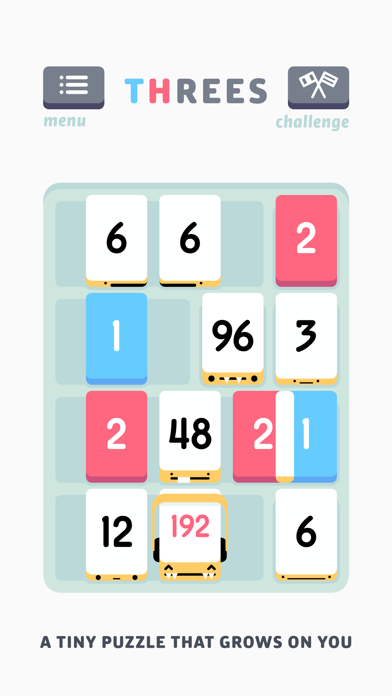
Threes! is a turn-based number-puzzle game that looks deceptively simple until you realize every move cascades into future constraints. There’s no timer. No leaderboard pressure. Just you, a grid, and the pleasure of finding elegant solutions. The game teaches you its logic through play, never through tutorial screens.
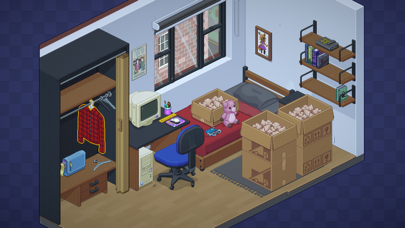
Similar in spirit but different in execution, Unpacking inverts the usual puzzle formula: instead of matching or rotating shapes, you’re arranging objects in rooms. It’s meditative, wordless, and deeply satisfying. The game respects silence and lets the visuals do the talking. No ads interrupt the flow. No IAP nudges you toward hints. The complete experience is there on day one.
Arcade Lineage Games with Real Craft
Asteroids: Gunner inherits the DNA of the 1979 arcade cabinet but adds real physics and a modern control scheme. You’re not fighting abstract vectors—you’re managing momentum and angle in a way that rewards patience over reflexes. The developer leaned into what made the original interesting (simple rules, emergent difficulty) and stripped away what didn’t translate to touch (quarter-fed quarter-hour sessions). This is arcade lineage done right: respectful to the past, honest about the present.
For players who want something faster and more chaotic, Geometry Wars 3: Dimensions takes the twin-stick shooter template and wraps it in neon geometry. It’s pure arcade energy—no story, no progression systems, just waves of enemies and the satisfaction of clearing the screen. The game shipped complete and has stayed complete. No seasonal events. No cosmetics to chase. Just the core experience, available forever.
Space Games for the Orbital-Mechanics Enthusiast
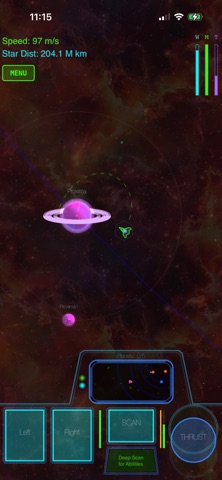
Galaximus is built on real orbital mechanics—the kind that respect Newton’s laws and punish sloppy positioning. You’re not shooting in a straight line; you’re calculating intercepts and managing velocity. The difficulty curve is precise: it teaches you the fundamentals through early levels, then gradually removes the training wheels. By the end, you’re flying like someone who understands physics. No grinding. No power-ups that trivialize challenge. Just you, your ship, and the geometry of space.
If you prefer a more exploratory approach, Universe Sandbox 2 lets you simulate gravity, collisions, and celestial mechanics at your own pace. It’s less a game and more a physics playground, but that’s the point—adult players often want the freedom to experiment rather than chase objectives. Build solar systems. Crash planets. Watch orbital decay in real time. The game gets out of your way and trusts you to find the fun.
Story-First Games Without Combat Friction
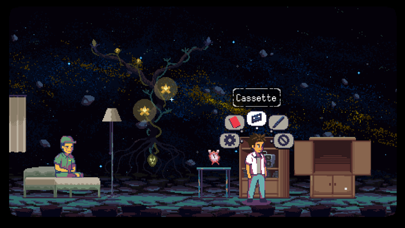
A Space for the Unbound is a 2D adventure set in rural Indonesia with a narrative about friendship, loss, and growing up. There’s no combat. No inventory management. No skill trees to optimize. You move through the world, talk to people, and watch the story unfold. The pixel art is hand-crafted and warm. The writing is specific and honest. It’s the kind of game that reminds you why you started playing games in the first place—not for points, but for moments.
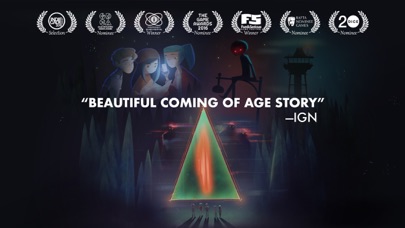
Oxenfree is a supernatural mystery told entirely through dialogue and exploration. You play as a teenager who accidentally opens a ghostly frequency on an abandoned island. The story branches based on what you say and when you say it. There’s no combat, no failure state, no way to “lose.” The game trusts you to engage with the narrative at your own pace. It’s the kind of experience that feels like reading a really good book, except you’re making choices.
Roguelikes for Players Who Want Challenge Without Grinding
Hades is a roguelike where each death moves the story forward. You’re not grinding the same level over and over until you’re overpowered—you’re learning enemy patterns, unlocking new weapons, and gradually understanding the narrative. The game respects your time by making every run feel distinct. Weapon variety is genuine: a sword plays completely differently from a spear, which plays differently from a gun. The visual craft is exceptional—character animation, particle effects, and UI design that feels intentional. No cosmetic shop. No battle pass. Just a complete game that was finished because the maker had something to say.
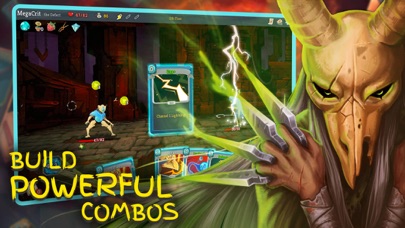
Slay the Spire is a deck-building roguelike where you construct a unique card deck on each run. There’s no RNG frustration because the game gives you meaningful choices at every step. You’re never at the mercy of randomness—you’re playing against odds and making calculated decisions. The game is infinitely replayable because the card combinations are genuinely different each time. It’s the kind of game that works perfectly on a phone: turn-based, no time pressure, deep strategy in a compact package.
Craft-Built Indie Games That Respect Your Intelligence
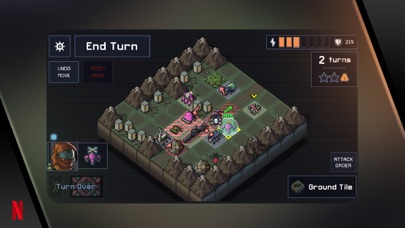
Into the Breach is a turn-based tactics game where you can see all enemy moves before you act. There’s no hidden information. No luck involved. Every loss is your fault, which sounds harsh until you realize it means every win is earned. The game’s pixel art is dense with detail—each mech has personality, each enemy type has a visual signature, each environment tells you something about the rules. The developer spent time on every frame because the game demanded it.
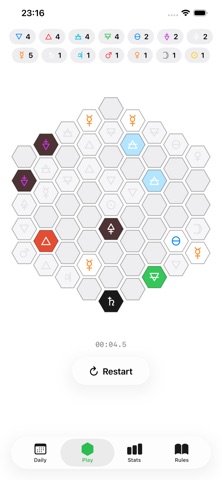
Opus Magnum is a puzzle game about alchemy where you design machines to transmute elements. You’re given a goal (create this compound) and the tools (a grid, some pipes, some catalysts), and you have to figure out the solution. There’s no single right answer—your solution might be elegant or brute-force, and the game doesn’t care as long as it works. This is a game for people who like thinking. No timers. No hints. Just you and the problem.
What to Avoid When Shopping for “Premium” Games
Not every game labeled “premium” on the App Store actually is. Some games charge an upfront price but then wall off content behind IAP. Others include ads despite the premium label. The games in this guide have been verified to be genuinely complete experiences—no ads, no IAP, no surprise paywalls.
When evaluating a game you’re considering, check the App Store reviews for mentions of ads or IAP. Read the description carefully—if it mentions “cosmetics,” “season passes,” or “battle pass,” it’s not a pure premium game. Look at the screenshots; if you see a currency shop or a level-up bar, be skeptical. The safest bet is to check indie game communities like r/iosgaming or TouchArcade. These communities flag games that advertise as premium but contain predatory monetization within 48 hours of launch, making them reliable early-warning systems for false advertising.
Price is not a guarantee of quality, but it is a guarantee of completeness. A game has to deliver worth of experience, or players will refund it. A free game can afford to be predatory because the monetization happens after you’re already invested. Paid games have to earn your trust upfront.
The Long View: Building a Library Worth Keeping
The games above represent different moods, different time commitments, and different skill ceilings. Some are 20-minute commute games. Some are 50-hour experiences. Some are permanent fixtures on your phone. What they share is honesty: they’re finished products made by developers who believe the game itself is the value proposition.
Building a library of paid games means you’re not beholden to seasonal events or engagement metrics. You’re not competing against your own time through artificial scarcity. You own the games, and they’re yours to play whenever you want, in whatever order you want. That freedom is worth more than any cosmetic.
FAQ
Can I transfer these games to a new iPhone? Yes. Games are tied to your Apple ID, not your device. When you upgrade, sign in with the same Apple ID, and all purchased games appear in your library. You can redownload them instantly.
Do these games work on iPad? Most do. Check the App Store listing for “Requires iPad” or “Universal” designation. Games like Hades, Slay the Spire, and Into the Breach are optimized for larger screens and play beautifully on iPad.
Will these games work in five years? Probably. Paid games have no server dependency (unlike online multiplayer games). As long as iOS supports the app’s minimum OS version, it will run. Even if Apple stops supporting the app, you own a local copy that works on your current device.
Do I need an internet connection to play? No. All games in this guide work offline. Download them once, and they’re yours to play anywhere without signal.
Why are some of these games more expensive than others? Scope and development time. A puzzle game like Threes! took months to perfect but is relatively simple mechanically. A game like Hades took years and involved voice acting, animation, and narrative branching. Price reflects the work invested, not artificial scarcity.
What if I don’t like one of these games? The App Store gives you 14 days to request a refund. Try a game, and if it doesn’t click, get your money back. Premium games have to earn your trust because you’re voting with your wallet. That’s how the market works when there are no dark patterns to keep you hooked.
The Verdict
Adult gamers deserve games that trust them. Games that don’t manipulate. Games that finish what they start. The titles above represent the best of what the App Store has to offer when you’re willing to pay for quality and expect completeness in return.
Your library won’t grow as fast as it would if you were downloading free-to-play games, but every game you add will be one you actually want to play. That’s a trade worth making.