Best iPhone Roguelike Games 2026: Indie Dungeon Crawlers

Photo by Maurice Nguyen on Unsplash
Best iPhone Roguelike Games 2026: Indie Dungeon Crawlers
Roguelikes on iPhone have matured into one of the platform’s strongest genres. Roguelikes force you to start fresh after each run—permadeath is the core mechanic, not an obstacle to overcome with upgrades. A procedurally generated dungeon, limited resources, and the knowledge that one mistake ends everything create a tension that no amount of unlockable progression can replicate.
This guide covers premium, IAP-free roguelikes worth your time in 2026. These are games where the developer leaned into the genre’s core appeal: learning through failure, finding synergies, and earning victories through skill and knowledge rather than grinding.
What Makes a Roguelike Work on iPhone
The best iPhone roguelikes respect the platform’s constraints instead of fighting them. Touch controls demand either turn-based gameplay or carefully tuned real-time systems. Procedural generation needs to feel fair—random, but not arbitrary. And crucially, runs need to be completable in 30 minutes to 2 hours, because most players aren’t sitting down for extended sessions on their phones.
The games below nail these requirements. They’re not roguelike-lites dressed up in roguelike language; they’re games where permadeath is the point, not an obstacle to overcome with enough grinding.
Deck-Building and Strategic Roguelikes
Slay the Spire
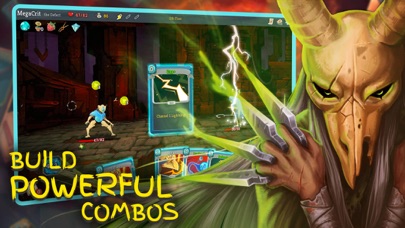
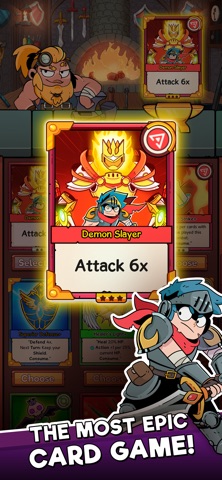
Slay the Spire is the standard-bearer for deck-building roguelikes, and the iPhone version is feature-complete and stable. You build a card deck as you climb a procedurally generated spire, facing enemies with different attack patterns and requiring different strategies. The genius of the design is that no single card is overpowered—strength comes from synergy. A card that seems weak in isolation becomes essential when paired with the right relics and other cards.
Each run teaches you something. You’ll learn which cards combo together, which relics are worth pivoting your deck around, and how to recognize when you’re building toward a coherent strategy versus just grabbing the highest-damage cards. Runs typically last 45 minutes to an hour, and the game has enough depth that you’ll be discovering new synergies hundreds of hours in. The iPhone port runs at 60fps on iPhone 13 and later, with stable performance on iPhone 12 Pro and above. The game respects your time: you can quit mid-run and resume later, and the difficulty scaling means you’re never locked out of progress by a single bad decision early on.
Monster Train
Monster Train borrowed the deck-building DNA from Slay the Spire and built something distinct: a game where you’re not just collecting cards, but building a “train” of units that stack on three lanes. Units synergize based on their clans and placement, creating combinatorial depth that rivals Slay the Spire but feels mechanically different.
The run structure is tighter—most runs finish in 30-40 minutes per average player data—and the visual clarity of the lane system makes it easy to see what’s happening at a glance. The iPhone version runs smoothly with well-adapted touch controls for the lane-based layout. The game has a genuine learning curve; your first 10 runs will feel chaotic, but by run 20 you’ll start seeing the shape of viable strategies.
Real-Time Action Roguelikes
Hades
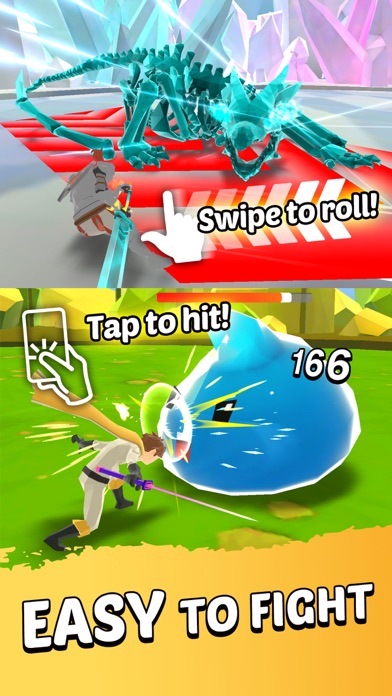
Hades is the exception that proves the rule: a real-time roguelike that works beautifully on iPhone despite demanding fast reflexes. The secret is in the design—Supergiant Games built a game where positioning and timing matter more than twitch speed, and where every weapon has a distinct playstyle that rewards mastery over panic.
You play as Zagreus, escaping the underworld in repeated attempts, with the story advancing across your failures. Each run lasts 20-30 minutes, and the narrative hooks—conversations with NPCs, story progression tied to your deaths—give you reasons to keep playing even when you’re not chasing a flawless run. The iPhone port maintains the visual polish and controls responsiveness of the original. Stable performance requires iPhone 13 or later; iPhone 12 Pro can run it but may experience occasional frame drops during intense combat sequences.
The weapon variety is exceptional. A spear plays nothing like a sword, which plays nothing like a gun. You’ll find yourself gravitating toward certain weapons, but the game’s design encourages you to experiment—runs with unfamiliar weapons often teach you something about positioning or timing you’d missed before.
Vampire Survivors (Roguelike Adjacent)
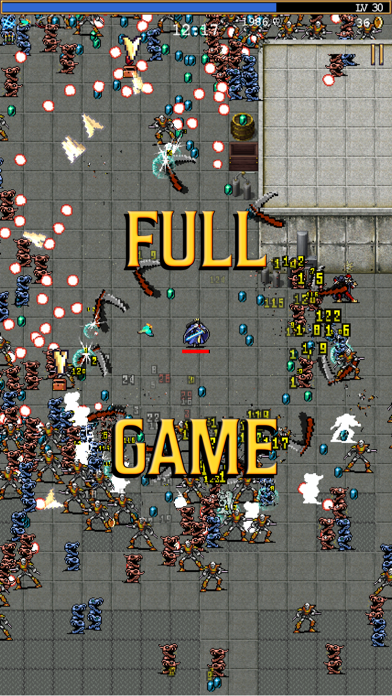
Vampire Survivors sits at the edge of roguelike territory—it’s more roguelike-lite in structure, with persistent progression between runs, but the core loop is genuinely roguelike: you enter a procedurally seeded arena, survive waves of enemies, and either complete the run or die trying. Each run is self-contained, and mastery comes from learning enemy patterns and understanding how your build scales.
The game is pure flow state. You’re not managing a deck or choosing dialogue options; you’re moving, dodging, and watching your character’s power grow exponentially as the screen fills with visual chaos. Runs last 15-30 minutes, making it perfect for short play sessions. The iPhone version handles the visual intensity well on iPhone 12 and later; iPhone 11 and earlier may experience frame-rate dips when the screen is packed with effects.
Grid-Based and Procedural Roguelikes
Brogue
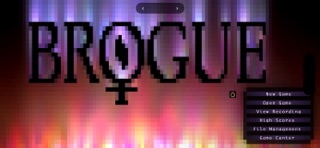
Brogue is a text-based dungeon crawler in the tradition of Rogue and NetHack, but with a clarity and fairness that makes it accessible to players who’ve never touched a roguelike before. You navigate a procedurally generated dungeon, managing inventory, identifying potions and scrolls, and fighting monsters with turn-based combat.
The design philosophy is uncompromising: permadeath is permanent, there’s no tutorial beyond a brief explanation of controls, and the dungeon is genuinely dangerous. But Brogue is fair—the game never kills you through randomness alone. Every death is traceable to a decision you made, which is exactly what makes roguelikes rewarding. The iPhone version preserves the original game’s balance and fairness while making the text-based interface work on a touchscreen.
Runs can last anywhere from 30 minutes to several hours depending on how deep you push, and the learning curve is steep. But that’s the point—Brogue respects your intelligence and rewards mastery.
Peglin
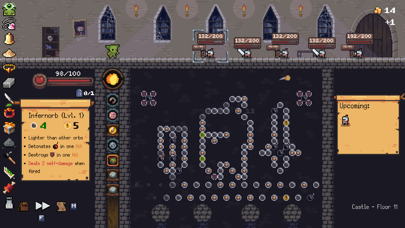
Peglin is a roguelike built around pachinko mechanics: you flick a ball down a pegged board to deal damage, collect resources, and progress through a dungeon. It sounds gimmicky, but the design is surprisingly deep. You’re managing aim, predicting bounces, and deciding when to risk a shot versus playing it safe.
The visual design is clean and minimalist, with a satisfying physics simulation that feels responsive on touch. Each run lasts 20-40 minutes, and the pachinko mechanic creates moments of genuine tension—a critical hit or a devastating miss can swing the entire run. The iPhone version controls beautifully; the flick mechanic feels natural and the physics simulation is stable across devices.
Narrative-Driven Roguelikes
Inscryption
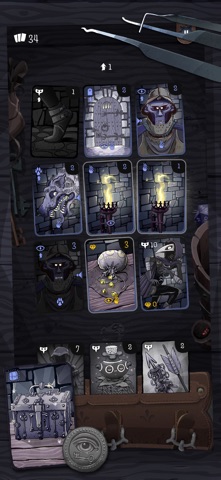
Inscryption is a deck-building roguelike wrapped in a horror-mystery narrative. You play a card game against an opponent in a cabin, with the stakes gradually becoming clear as the story unfolds. The card system is simpler than Slay the Spire—you’re building a deck of creatures and spells to defeat enemies—but the narrative framing and environmental storytelling elevate it beyond pure mechanics.
The game respects player curiosity. Clues are scattered throughout the environment, and piecing together the full story requires multiple playthroughs and careful observation. The iPhone version preserves the atmosphere and mystery of the original while handling the card-game interface smoothly on touch.
Runs vary wildly in length depending on how much you explore and how far you push, but expect 30-60 minutes per attempt. The narrative payoff makes repeated runs feel fresh rather than repetitive.
Why Roguelikes Thrive on iPhone
The genre’s constraints align perfectly with mobile play. Permadeath creates natural stopping points—you die, the run ends, you put the phone down. Procedural generation means no two runs feel identical, so replaying doesn’t feel like grinding. And the best roguelikes on iPhone are turn-based or have generous timing windows, so you’re not fighting the platform’s input limitations.
The games listed here are also all premium—you pay once and own the full experience. No energy timers, no battle passes, no seasonal content gates. You buy the game and it’s yours to play at your own pace, as many times as you want.
FAQ
Can I pause mid-run?
Yes, all of these games let you quit and resume later. Your run state is saved, so you can pick up exactly where you left off.
Which game has the shortest learning curve?
Hades. The story progression and forgiving difficulty settings make it accessible to players new to roguelikes. Brogue has the steepest curve; expect to die repeatedly before understanding core mechanics.
Do any of these games require online connection?
No. These are single-player, offline experiences. That’s by design—roguelikes are about personal mastery and learning through failure, not competing against others.
How much do these games cost?
Prices range from to depending on the title. All are one-time purchases with no additional costs or paywalls.
Which game is best for short play sessions?
Vampire Survivors and Peglin, both completable in 15-30 minutes. Slay the Spire and Monster Train run 30-45 minutes per run.
The Roguelike Renaissance on iPhone
The games above represent the best of what roguelikes can be on iPhone. They’re not compromises or ports of games designed for other platforms; they’re games built with the medium in mind, respecting both the genre’s traditions and the platform’s strengths.
If you’re tired of free-to-play grind-fests and battle passes, roguelikes offer something different: a complete game that respects your time and rewards mastery. Pick one that matches your preferred playstyle, embrace permadeath, and expect to fail your way toward understanding.


