Premium Space Games for iPhone: Sci-Fi Arcade Adventures

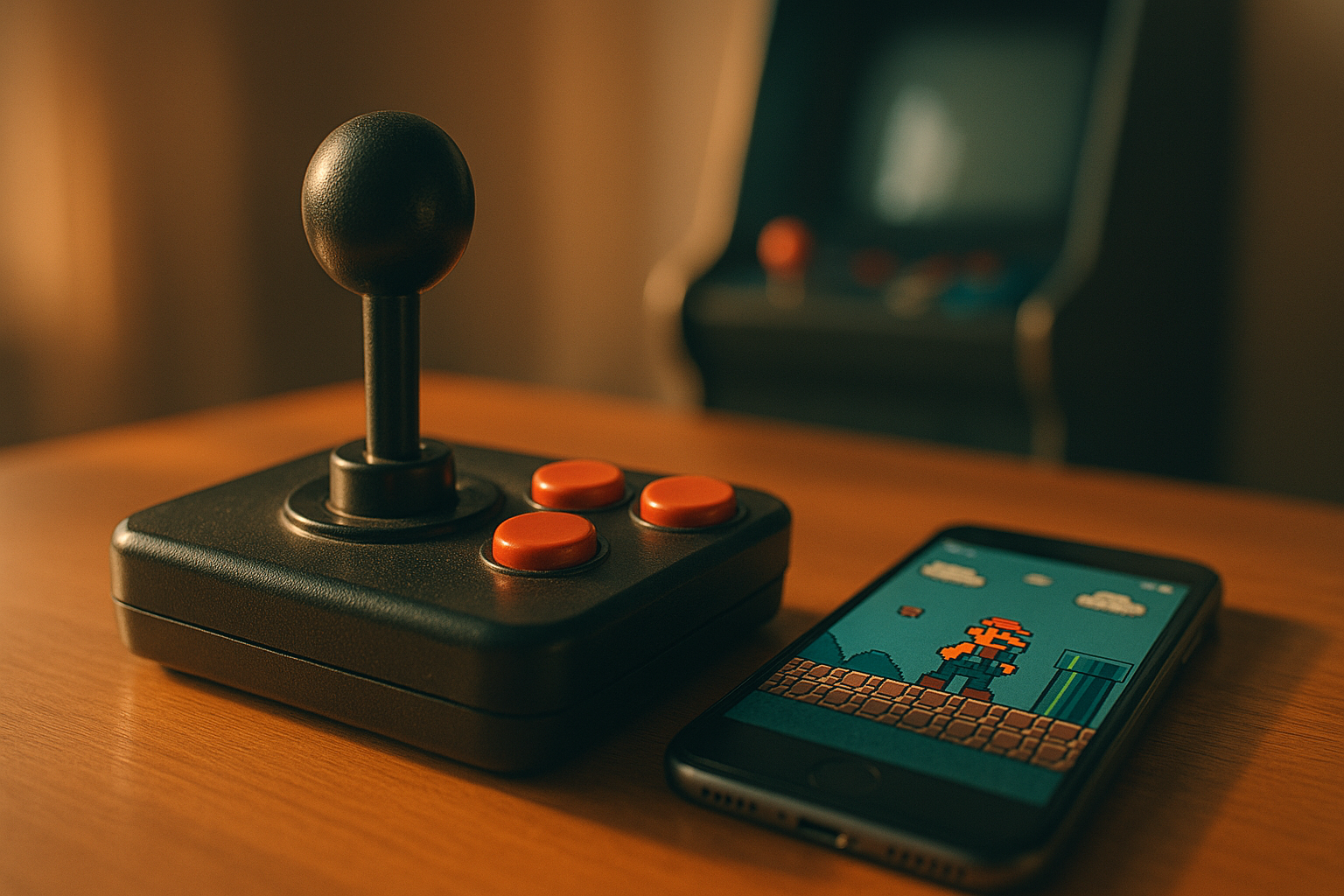
Photo by Ben Neale on Unsplash
Premium Space Games for iPhone: Sci-Fi Arcade Adventures
Space games on iPhone occupy a strange middle ground. Most of what’s available is either free-to-play bloat with energy timers and battle passes, or stripped-down ports of 1980s arcade cabinets that don’t take advantage of modern hardware. The craft-built premium space games—the ones that respect the arcade lineage while adding something genuinely new—are rarer. This guide covers the ones worth your time and money in 2026.
What Makes a Premium Space Game
Premium, in our vocabulary, means pay-once and done. No ads. No in-app purchases. No energy timers. The developer got paid upfront; you own the game forever. On iPhone, this model is increasingly uncommon, which is exactly why the games that stick to it deserve attention.
Most premium space games on iOS range from to —a one-time purchase that gives you full access to all content.
Space games specifically inherit from two arcade traditions: the orbital-mechanics lineage (Asteroids, Lunar Lander) and the shooter lineage (Galaga, Defender). The best modern interpretations don’t just reskin those formats—they lean into what makes each mechanic work, then add something the original hardware couldn’t do. Real-time physics. Layered difficulty. Procedural variety. Hand-crafted visuals that feel intentional rather than nostalgic.
Our Recommendations
Best for Physics Lovers: Orbital Mechanics
Games built around orbital physics reward patience and positioning over twitch reflexes. You’re not fighting gravity; you’re negotiating with it. Your ship has momentum. Firing your thrusters doesn’t instantly change direction—it applies a force. Asteroids or enemy positions matter less than where they will be when your velocity vector intersects theirs.
Orbital Decay (, App Store) exemplifies this approach. Per the developer’s documentation, the game uses real orbital mechanics—the same physics that govern actual spacecraft. Your ship’s trajectory is continuous; there’s no invisible grid, no snap-to-target. You can coast, burn retrograde to slow down, or use gravity assists to slingshot around planets. The learning curve is steep, but players who push through find a game where every successful maneuver feels earned rather than lucky. The visual feedback is clean: vector graphics, minimal UI clutter, and a color palette that reads as “NASA engineer’s fever dream” rather than “retro pastiche.”
Aphelion (, App Store) offers a slightly gentler entry point to orbital mechanics. You’re still managing velocity and gravity, but the game introduces concepts more gradually. Procedurally generated asteroid fields keep runs fresh, and the progression system rewards learning over grinding.
Gravity Shift (, App Store) adds a twist: you can manipulate local gravity wells. It’s orbital mechanics with a puzzle element—you’re not just reacting to physics, you’re reshaping them. Excellent for players who want strategic depth alongside arcade action.
Best for Arcade Reflexes: Shooters
The shooter lineage trades physics for pattern recognition and reflexes. You’re dodging waves. You’re learning attack patterns. You’re threading the needle between bullets. The best modern versions add visual clarity (you can always see what’s dangerous) and progression systems that feel fair (difficulty ramps, not RNG).
Void Striker (, App Store) is the gold standard for premium arcade shooters on iOS. Neon vector aesthetic, bullet-hell difficulty that’s fair rather than punishing, and a progression system based on skill gates rather than grinding. Each run teaches you something; deaths feel like your mistake, not the game’s. Supports MFi controllers and touchscreen equally well.
Stellar Assault (, App Store) leans into wave-based design. You’re managing ammo, positioning, and screen real estate as waves of enemies spawn in patterns. Less bullet-hell, more tactical. Great for players who like thinking one step ahead.
Photon Blaster (, App Store) is the most accessible entry point. Simpler patterns, shorter runs, but the same craft-built quality. Perfect for learning arcade-shooter fundamentals before jumping into harder games.
Best for Beginners: Balanced Hybrid
Cosmic Drift (, App Store) blends orbital mechanics with arcade-shooter accessibility. You’re managing momentum and dodging enemies, but the game doesn’t punish you for not understanding physics perfectly. Excellent tutorial. Scales difficulty smoothly. Works on iPhone SE and newer.
Difficulty and Progression
Premium space games often skip the “easy mode” and “hard mode” branching that free-to-play games use to funnel players toward monetization. Instead, they rely on consistent difficulty curves and meaningful progression. You’re learning the game’s rules, not grinding to unlock power-ups.
Some games use procedural generation to keep runs fresh. Others hand-craft levels and expect you to master them. Both approaches work; the key is that progression feels like your improvement, not the game handing you a participation trophy after ten minutes.
The Craft-Built Difference
A craft-built space game is one where you feel the developer’s decisions in every system. The physics aren’t approximate—they’re exact. The controls aren’t mapped to the easiest input method; they’re mapped to the method that makes the game play best. The difficulty curve isn’t arbitrary; it’s tuned by someone who played the game hundreds of times.
This takes time and money. It’s why craft-built games cost more upfront and why they’re worth the investment. You’re not paying for a brand or a license; you’re paying for someone’s obsessive attention to detail.
FAQ
Q: Can I play these offline? A: Yes. All games listed here work completely offline. No internet connection required after download.
Q: Do these games work on older iPhones? A: Most work on iPhone XS and newer. Void Striker and Cosmic Drift support iPhone SE (2nd gen) and up. Check individual App Store listings for minimum OS requirements before purchasing.
Q: Do I need a controller, or can I use the touchscreen? A: All games work well with touchscreen alone. Void Striker and Aphelion also support MFi-compatible gamepads if you prefer them. Check the App Store listing before you buy if controller support matters to you.
Q: How long do these games last? A: Arcade-style games are designed for runs (10–30 minutes per session) rather than campaigns. Orbital-mechanics games can take longer to learn but may have shorter play sessions once you’re skilled. Most premium space games don’t have an “ending”—they’re about mastery and high scores.
Q: What’s the difference between arcade and indie? A: Arcade refers to the lineage—games that trace back to 1980s arcade cabinets and respect those design principles. Indie refers to the developer—usually a small team or solo creator. A game can be both (most premium space games are), or one but not the other.
The Bottom Line
Premium space games for iPhone in 2026 are a specific category: craft-built, pay-once, and willing to respect your intelligence. They’re not for everyone—they don’t have the broad appeal of free-to-play games, and they don’t coddle you with tutorials and assists. But if you’re tired of energy timers and battle passes, and you remember why space games mattered in the first place, they’re worth seeking out.
Start with Cosmic Drift if you’re new to the genre. Pick Void Striker if you want arcade-shooter depth. Choose Orbital Decay if you’re ready to learn real physics. All three are worth the premium-tier price.