Best iPhone Roguelike Games 2026: Paid Editions

Photo by Onur Binay on Unsplash
Best iPhone Roguelike Games 2026: Paid Editions
Premium roguelikes hit an inflection point in 2026: free-to-play monetization finally broke the genre enough that players demanded the alternative. Energy timers, ad breaks, and power-creep IAP fracture the roguelike loop—the one thing roguelikes do best is repetition, and monetization interrupts it. These five games prove that premium pricing (pay once, own forever) is the only model that respects both the genre and your wallet. No energy meters, no ads, no “come back tomorrow” mechanics. Just the core loop roguelikes do best: short runs, procedural challenge, meaningful progression, and the sting of permanent death.
Galaximus: Orbital Roguelike Mastery
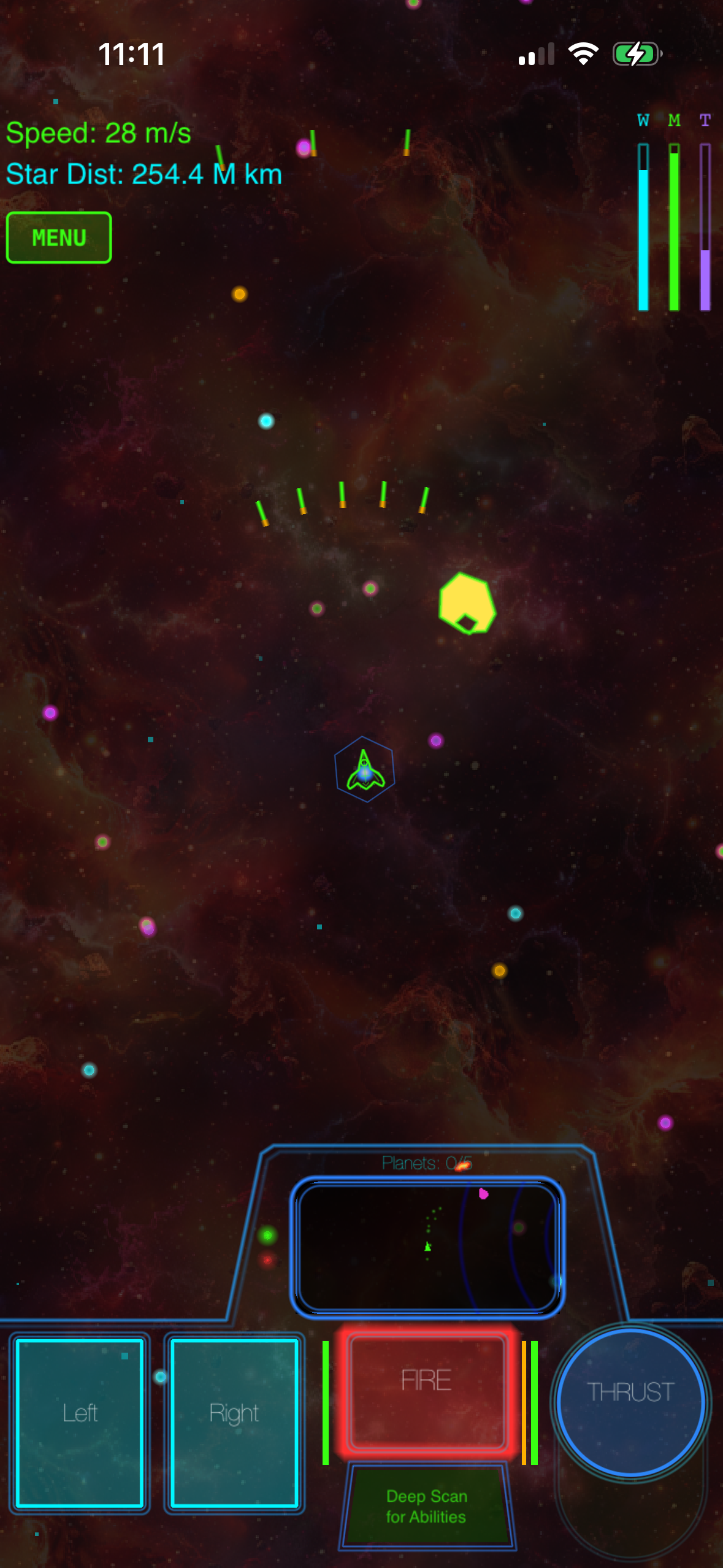
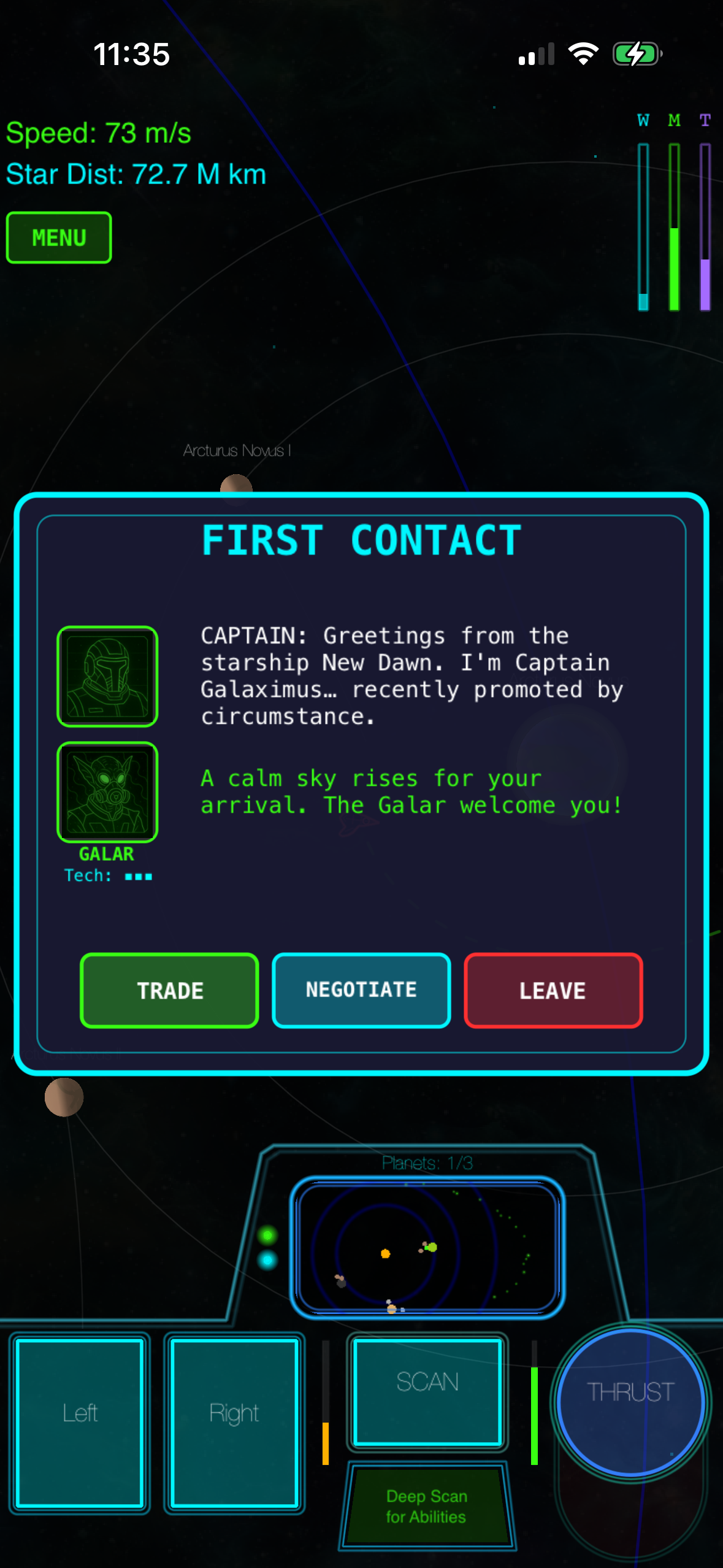
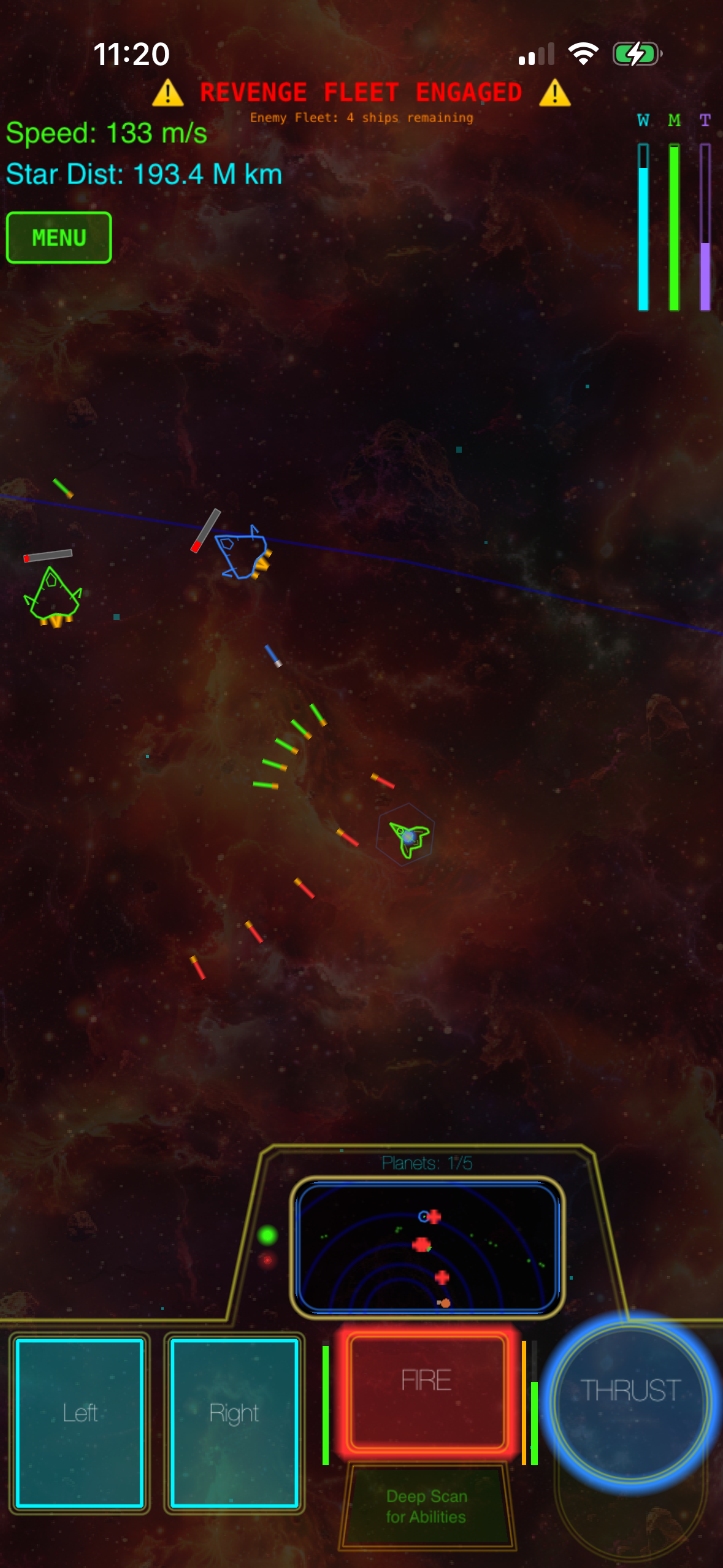
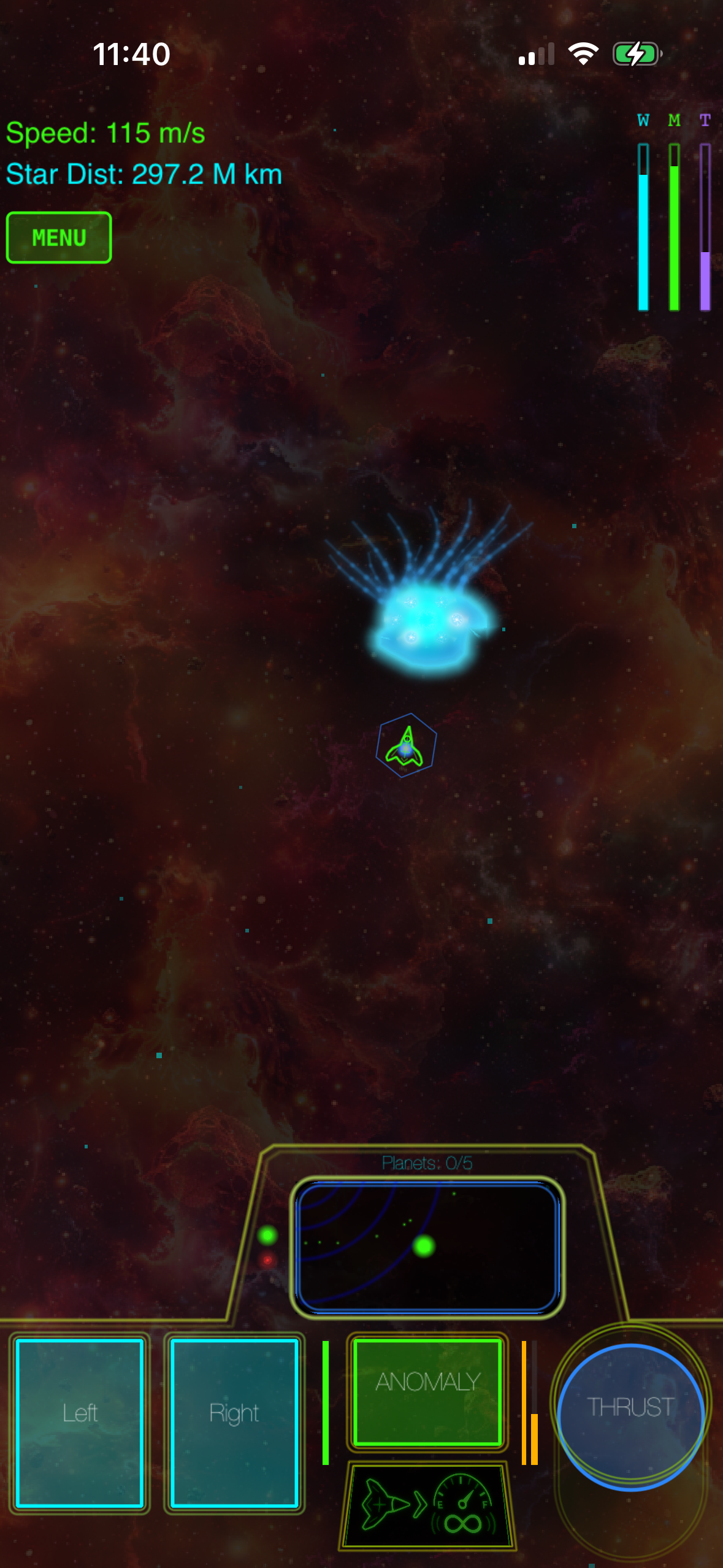
Galaximus stands apart in the roguelike space because it treats gravity as the core mechanic. Every celestial body obeys real orbital mechanics—planets orbit suns, moons orbit planets, asteroids tumble through gravity wells. The player ship is subject to all of it. Mastery comes from using gravity as your engine: slingshots, orbital captures, fuel-efficient transfer windows.
Each playthrough generates a unique configuration of eight procedurally arranged star systems. You navigate from system to system, encounter anomalies (spacetime rifts, derelict ships, distress beacons), manage fuel and resources, and work toward a narrative endpoint. Per developer spec, runs take 30–60 minutes depending on how deep you push.
The learning curve is real—gravity is the interface, and it requires 30 minutes of focused play to feel intuitive. After that, mastery is achievable. The physics rewards patient positioning over twitch reflexes, which sets it apart from arcade roguelikes that lean on reaction speed.
Galaximus launches at. A major expansion called Galaximus Infinitum—open-galaxy sandbox, planetary surface exploration, outpost building, faction warfare—launches in late 2026. Players who buy now receive Infinitum as a free upgrade; after Infinitum ships, the combined game moves to.
Hades: Narrative Roguelike with Weapon Depth
Supergiant Games’ Hades is the roguelike that proved narrative and permanent death could coexist. You play Zagreus, son of Hades, escaping the underworld. Each escape attempt is a run; each death sends you back to the start with permanent narrative progress—characters remember you, relationships deepen, story unfolds across dozens of runs.
Combat is fast, responsive, and built on a weapon-swap system. Six base weapons, each with multiple upgrade paths, unlock distinct playstyles. A spear-and-shield run feels nothing like a bow run. Boon selection (gifts from gods that modify your abilities) adds layer-deep build variety.
Runs take 20–45 minutes. The game respects your time: you can exit mid-run and resume later without penalty. Death is never punishing in the way roguelikes usually punish—your resources stay, your story stays, your upgrades stay. Only your current run resets.
Hades is and worth it. No ads, no IAP. The game shipped complete; post-launch content was free.
Asteroids: Recharged — Vector Roguelike Lineage
Supergiant’s Asteroids: Recharged takes the 1979 Atari arcade game and rebuilds it as a roguelike. You control a ship in a vector-graphics arena, shooting asteroids, managing a shield, and surviving waves of increasing difficulty.
What makes it roguelike: each run is procedurally configured. Asteroid spawns, enemy types, and power-up placement vary. Between runs, you unlock permanent upgrades—better shield recharge, wider firing arcs, new ship variants. Runs last 10–15 minutes, making it ideal for play sessions that fit between other things.
The visual style is pure arcade—neon lines, minimal geometry, CRT-scan aesthetic. The mechanical feel is arcade too: tight controls, immediate feedback, skill-based progression. If you grew up with Asteroids and want that lineage respected while adding modern roguelike depth, this is it.
Asteroids: Recharged.
Downwell: Vertical Descent Mastery
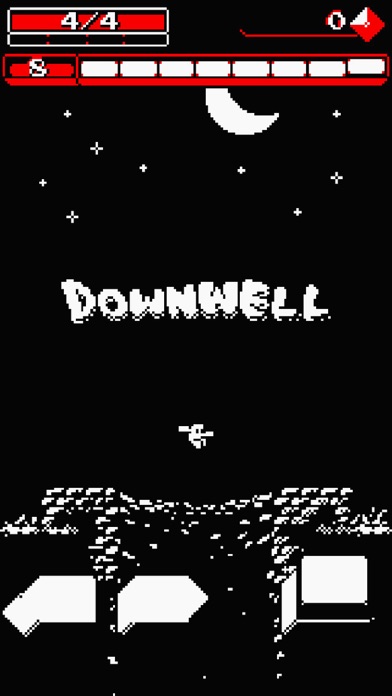
Downwell is a vertical-descent roguelike where you fall down an endless well, shooting sideways to slow your descent and destroy enemies. One mechanic, perfected.
The gun fires left or right depending on which way you’re moving. Killing enemies refills your ammo. The deeper you go, the more complex enemy patterns become. Runs last 15–20 minutes. The game is brutal—one hit kills you—but fair. Every death is your mistake, never the game’s.
The art style is minimalist: black background, red enemies, cyan bullets. The soundtrack is a relentless synth pulse. It’s hypnotic in the way the best arcade games are.
Downwell and is one of the best roguelike values on iPhone. The simplicity is deceptive—there’s depth in positioning, timing, and resource management that keeps runs fresh across dozens of playthroughs.
Slay the Spire: Deck-Building Roguelike
Slay the Spire is a roguelike deckbuilder where you climb a spire, fighting enemies by playing cards. Your deck is your loadout. Every card you add or remove shapes how future fights feel.
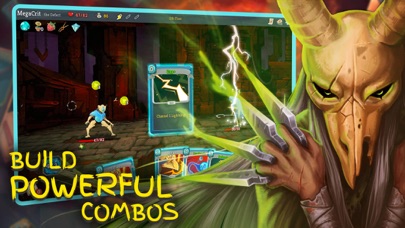
Runs are structured: you pick a path up the spire, encountering fights, shops, and rests. In each fight, you draw cards from your deck and play them in sequence. Enemies attack in predictable patterns—you can plan several turns ahead. This makes Slay the Spire a game of decision-making, not reflexes.
Card synergies are the heart of it. A card that triggers twice pairs with cards that trigger when you draw. Another deck leans on exhausting cards for value. A third focuses on scaling block. The same 50 cards can generate wildly different strategies depending on what you pick up.
Runs take 45–90 minutes. The game is dense—every decision matters. If you like systems and optimization, Slay the Spire is roguelike design at its peak.
Slay the Spire.
Vampire Survivors Meets Roguelike: Brotato
Brotato is a top-down survivor roguelike where you’re a potato shooting in all directions, surrounded by enemies. You don’t move—you rotate and fire. Enemies come in waves; between waves, you pick upgrades. Runs last 15–30 minutes.
The appeal is in the upgrade path. Pick five upgrades per wave from a randomized list. Some boost your gun, others add new weapons, others heal you or increase your size. The combinations create emergent playstyles. One run you’re a minigun-focused tank; the next you’re a glass cannon with rapid-fire lasers.
Brotato. It’s a port of an indie hit, and the port is solid. No ads, no IAP. The game respects the roguelike loop—short runs, meaningful choices, progression that persists.
Luck be a Landlord: Deck Roguelike with Slots
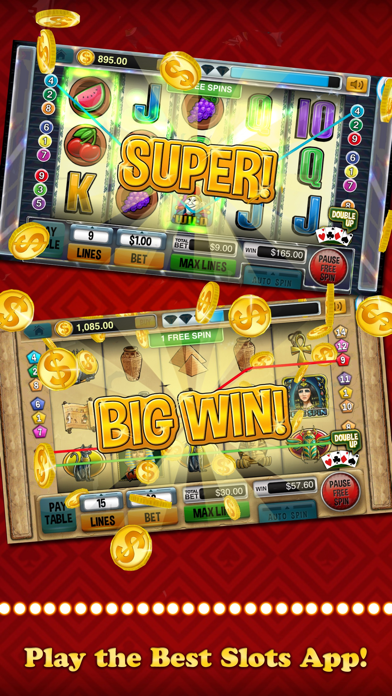
Luck be a Landlord is a roguelike where your deck is made of slot-machine tiles. Each turn, you spin your tiles, match symbols, and earn money to pay rent or buy new tiles. It’s a deck-building roguelike filtered through a slots metaphor.
The core loop is tight: spin, match, earn, spend, repeat. Between runs, you unlock new tiles and modifiers. Each tile has a distinct symbol, behavior, and synergy. A tile that doubles adjacent tiles pairs with high-value tiles. Another tile that removes itself pairs with tiles that reward removal.
Runs take 20–40 minutes. The game is surprisingly strategic for something that looks like a luck-based slots game. Luck is part of the design, but decision-making—which tiles to buy, when to sell, what synergies to chase—is where mastery lives.
Luck be a Landlord.
Peglin: Pachinko Roguelike
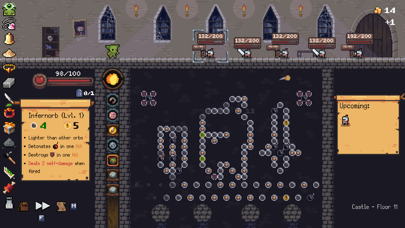
Peglin is a roguelike where you shoot balls up a pachinko board, collecting balls and orbs that modify your abilities. Combat happens through board physics—where your balls land determines what you hit and what damage you deal.
Each run, you navigate a map, encountering enemies. In each fight, you have a limited number of balls to fire. Your aim and the board physics determine the outcome. Between fights, you collect orbs—permanent upgrades that modify your abilities or add new ones. Runs take 45–90 minutes.
The visual style is colorful and charming. The mechanical feel is part luck, part skill—you can’t control where the ball lands exactly, but you can aim and choose which orbs to prioritize. If you like roguelikes that blend chance and skill, Peglin earns its place.
Peglin.
What Makes a Premium Roguelike Worth Buying
The best roguelikes on iPhone in 2026 share a few traits:
- Runs are short enough to fit your schedule. 15–90 minutes, not 3-hour slogs. Roguelikes are about repetition; if runs are too long, the loop breaks.
- Permanent progression exists outside of runs. Unlocked upgrades, story beats, new weapons, new mechanics. Death stings less when you know something persisted.
- The core loop is tight. One mechanic, mastered. Or a small set of mechanics that interact deeply. Bloat kills roguelikes.
- No monetization breaks the loop. No energy timers, no ads, no power-creep IAP. You own the full game on day one.
All five of these games hit those marks. None of them waste your time or money.
Related Reading
If you’re building a premium game library, these companion articles cover related ground:
- Best Premium Space Games for iPhone 2026 — Space games that share Galaximus’s focus on physics and exploration.
- One-Time Purchase iPhone Games: Best Value 2026 — Broader guide to premium games across all genres.
FAQ
Do I need to be good at games to enjoy roguelikes? Not at all. Modern roguelikes scale difficulty and offer accessibility options. Slay the Spire has a difficulty slider. Hades lets you adjust god-mode scaling. Downwell is hard but fair—every death teaches you something. Start on easier settings and adjust as you improve.
How long do roguelike games stay fresh? Players on r/iosgaming and TouchArcade report 20–100+ hours from a single roguelike before the novelty fully wears. Slay the Spire players specifically cite 80–150 hours before diminishing returns set in, thanks to dense card synergies and high-difficulty ascension modes. Procedural generation helps extend lifespan, but eventually you’ll see most combinations. The best roguelikes add post-launch content or balance patches to extend engagement.
Can I play roguelikes offline? Yes. All five games listed here work offline. Galaximus, Hades, Asteroids: Recharged, Downwell, and Slay the Spire are single-player games with no required internet connection. Download once, play anywhere.
What’s the difference between a roguelike and a roguelite? A roguelike has permanent death with no progression carryover (classic Rogue design). A roguelite has permanent death but allows some progression to persist between runs (unlocked upgrades, story beats, new weapons). Most modern games blur the line. Downwell is closer to pure roguelike. Hades is roguelite. Both are worth playing.
Which roguelike should I start with if I’m new? Start with Downwell or Asteroids: Recharged. Both have simple core mechanics, short runs (15–20 minutes), and immediate feedback. Once you’re comfortable with the roguelike loop, move to Slay the Spire or Hades for deeper systems. Galaximus has the steepest learning curve due to orbital mechanics, so save it for after you’ve played a few others.
What’s Next for Premium Roguelikes
As free-to-play roguelikes saturate the App Store with monetization interruptions, premium roguelikes are carving out a dedicated audience. 2026 marks the year players stopped tolerating energy timers in a genre built on repetition. Expect more premium roguelike launches in 2027—developers are watching these five games prove the model works.
Get Galaximus on the App Store: Get it on the App Store