Best Minimalist iPhone Games: Vector & Indie Design

Photo by Onur Binay on Unsplash
Best Minimalist iPhone Games: Vector & Indie Design
Minimalist games strip away visual noise and distraction, leaving pure mechanics and elegant aesthetics. On iPhone, the best of these are built around vector graphics—clean lines, flat colors, and geometric shapes that run efficiently while looking intentional rather than cheap. These aren’t free-to-play games padded with ads and timers; they’re premium, craft-built titles where every pixel serves the design.
Why Minimalist Design Matters on iPhone
Vector graphics aren’t just pretty—they’re purposeful. A minimalist game running on vector rendering uses less battery, scales perfectly across screen sizes from SE to Pro Max, and forces designers to communicate through shape and color rather than texture or particle spam. The result is games that feel responsive and immediate, where every visual element has a job.
The best minimalist games on iOS share a discipline: they commit to a constraint (one mechanic, one color palette, one interaction model) and explore it completely. This is the opposite of free-to-play design, which piles on features, currencies, and cosmetics. Minimalist premium games trust that focused, well-tuned gameplay is enough.
How to Choose Your Minimalist Game
Different minimalist games serve different moods. Use this guide to pick your entry point:
| Want meditative, low-pressure play? | Two Dots or Alto’s Adventure | | Want skill-based challenge with arcade roots? | Duet or Asteroids: Gunner | | Want pure puzzle depth and replayability? | Threes! | | Want narrative or emotional resonance? | Alto’s Adventure | | Want local multiplayer on one screen? | Pong Quest |
Start with Threes! if you want pure puzzle depth and don’t mind spending hours on a single game. Pick Alto’s Adventure if you want narrative and meditative flow. Choose Duet if you want skill-based challenge that rewards practice.
Geometric Puzzle Games with Vector Elegance
Vector-based puzzle games live in the space between visual simplicity and mechanical depth. The aesthetic isn’t a limitation—it’s the point.
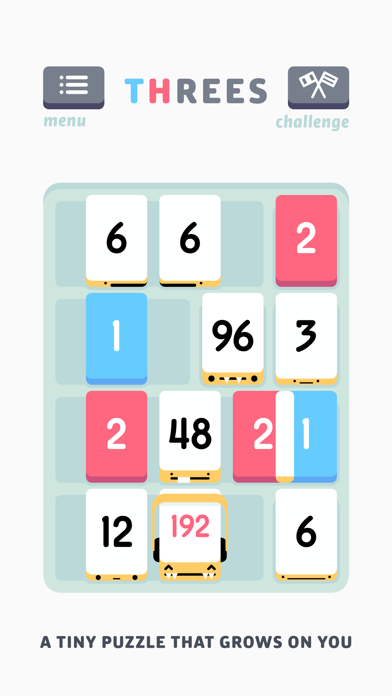
Threes! stands as the gold standard. It’s a number-sliding puzzle where you combine tiles to reach higher powers of three. On paper, that sounds like a math game. In practice, it’s about pattern recognition and forward planning. The vector design—clean numerals, soft pastel colors, minimal animation—lets you focus entirely on the board state. The game respects your intelligence; there’s no tutorial explaining what “combine” means, and no timers punishing you for thinking. Players report spending hundreds of hours on a single game, returning to it months later.
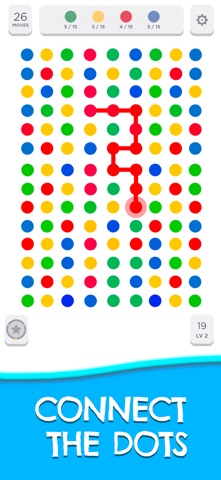
Two Dots takes connection-puzzle mechanics and wraps them in vector simplicity. You draw lines between same-colored dots on a grid. The constraint is elegant: you can’t cross your own line. That single rule generates surprising depth. The visual language—flat dots, clean grid lines, color transitions—never interferes with reading the board. The game includes both timed and untimed modes, and the untimed version is genuinely meditative rather than stressful.
Duet is a rotation puzzle disguised as an action game. Two circles orbit a central point; you rotate them left and right to dodge incoming geometric obstacles. It sounds simple until you realize the obstacles are designed to require split-second timing and spatial planning. The vector aesthetic—clean circles, flat geometric hazards, minimal color—makes the threat clear instantly. No particle effects to parse, no visual clutter to hide the challenge.

Action Games Built on Minimalist Geometry
Minimalism in action games demands precision. If you’re stripping away visual complexity, the mechanics have to be perfectly tuned, because there’s nowhere to hide a sloppy hit detection or unresponsive controls.
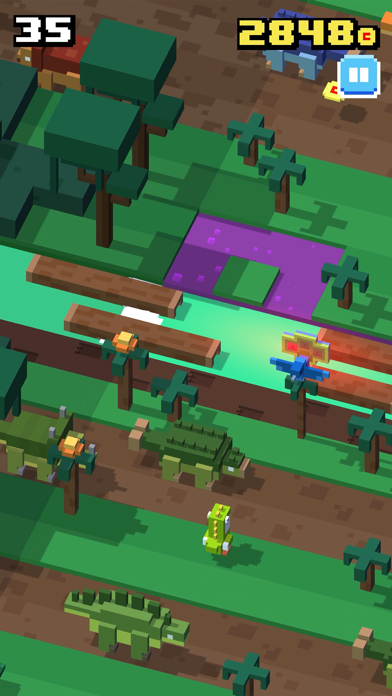
Crossy Road proved that voxel-based (a 3D cousin of vector) minimalism could work at scale. You guide a character across an endless landscape of blocky obstacles, one tile at a time. The visual style—primary colors, simple geometry, no texture maps—runs smoothly on older iPhones while feeling modern. The one-touch control (tap to move forward, hold to turn) is so intuitive that the game teaches itself.
Alto’s Adventure is an endless runner, but one built on the principle that minimalism can carry emotional weight. The game features hand-drawn vector landscapes—rolling hills, simple trees, a day-night cycle—and a protagonist who’s just trying to get home. There’s no score-chasing pressure; the game has an ending, and it’s surprisingly moving. The mechanics are tight (flick to jump, hold to flip), but the real achievement is that the visual restraint (limited color palette, simple shapes) makes the landscape feel vast and peaceful rather than repetitive.

Arcade Lineage in Vector Form
Some of the best minimalist games trace back to arcade formats from the 1970s and 80s, but rebuild them for modern phones with vector clarity.
Asteroids: Gunner respects the arcade lineage while modernizing the aesthetic. You control a ship and shoot rocks, but the vector rendering makes every shot and collision feel precise. The game includes multiple difficulty modes and wave-based progression, so it scales from casual to genuinely challenging. The physics are tuned to reward positioning and patience over pure reflexes—you can succeed by playing defensively, which is a meaningful departure from the twitch-based original.
Pong Quest is Pong, but with RPG progression layered on top. You control a paddle and volley a ball, but each successful hit unlocks a modifier (faster ball, wider paddle, scoring multipliers). The vector aesthetic—clean paddles, simple ball, minimalist court—stays true to the original while the progression system gives it surprising depth. It works beautifully as a local-multiplayer game on a single screen, which is rare on modern iOS.
Minimalist Design as Performance Philosophy
Vector graphics on iPhone aren’t just an aesthetic choice—they’re a practical one. Games built on vector rendering tend to run at higher frame rates on older hardware, drain battery more slowly, and scale to any screen size without quality loss. This matters for players who care about smooth gameplay over visual spectacle.
Games like Threes! and Duet run at 60 fps on iPhone SE and iPhone 15 Pro alike, per developer specs, because there’s no texture streaming, no shadow calculations, no post-processing pipeline to bog down the GPU. The minimalist philosophy extends to the code: fewer assets to load, fewer states to manage, fewer reasons for the game to stutter or crash.
For indie developers, vector-based minimalism also means faster iteration. You can tweak a color palette or adjust a shape’s proportions without rebuilding assets or waiting for render farms. This is why so many craft-built indie games lean into minimalism—it’s not just about aesthetics, it’s about sustainable development.
The Craft in Constraint
The games that succeed as minimalist titles aren’t minimalist by accident or budget limitation. They’re minimalist by design conviction. The developers behind Two Dots, Threes!, and Duet made a choice: we will communicate through shape, color, and motion, and we will make that enough.
This constraint forces clarity. When you can’t rely on detailed graphics to sell the experience, every mechanic has to pull its weight. Every animation has to serve the gameplay. Every color choice has to mean something. The result is games that feel intentional in a way that texture-heavy, feature-bloated titles rarely achieve.
For players, this means games that age well. A minimalist game from 2015 looks almost as fresh in 2026 as it did on release day, because the aesthetic wasn’t chasing a trend. It was solving a problem: how do you make a game that’s beautiful, fast, and focused?
FAQ
Are minimalist games too simple for experienced players? Not at all. Minimalism describes the visual and mechanical presentation, not the depth. Games like Duet and Threes! have skill ceilings that take dozens of hours to approach. The simplicity is in the interface; the complexity is in the strategy and execution.
Do vector-based games run better on older iPhones? Yes. Vector rendering is less computationally expensive than texture mapping and complex lighting. Games built on vector graphics tend to maintain 60 fps on older hardware where 3D games might drop frames. This makes them a smart choice if you’re using an older device or want better battery life.
Why are most minimalist games premium (paid) rather than free-to-play? Free-to-play games rely on monetization mechanics—battle passes, cosmetics, energy timers—that add visual and mechanical clutter. Minimalist design philosophy is fundamentally at odds with that model. Premium games can afford to be minimal because they’re selling the experience itself, not selling into the experience.
What’s the difference between minimalist and retro games? Retro games often reference 1980s aesthetics (pixel art, CRT scanlines, chiptune audio). Minimalist games strip away all historical reference and focus on pure geometric simplicity. Some games (like Alto’s Adventure) blur the line by using hand-drawn vector art that feels nostalgic without being explicitly retro. For more on retro-inspired design, see our guide to arcade-influenced games.
Do I need a newer iPhone to play vector games? No. Vector-based games run on iPhone SE and older devices because the rendering pipeline is simpler than 3D games. Per App Store listings, games like Threes! and Two Dots work on iPhone 6s and later. If you’re on an older device, minimalist vector games are often your best bet for smooth, modern gameplay.
Next Steps
Start with Threes! if you want pure puzzle depth, or Alto’s Adventure if you want narrative and meditative flow. Both are one-time purchases with no ads or in-app spending. If you want skill-based challenge, pick Duet. Each of these games will give you 20+ hours of focused, craft-built gameplay.


