Best Paid iPhone Games One Time Purchase (2026)

Photo by Ofspace LLC on Unsplash
Best Paid iPhone Games for a Single One-Time Purchase
The App Store’s top charts are a parade of energy timers, gem packs, and “watch an ad to continue.” Tucked behind that noise is a stubborn category of games that still works the old way: pay once, own it, no nags. These are the picks worth your money in 2026 — by genre, so you can find the one that actually fits how you play.
For quick budget filtering: throughout this piece, Budget-tier means, and Premium-tier means. Check the live App Store price before buying — developers re-tier occasionally.
What “one-time purchase” actually means in 2026
Apple’s “premium” tag on a listing isn’t a guarantee. Plenty of games charge upfront and then still hit you with cosmetic IAP, a “remove ads” upsell, or a battle pass. A real one-time-purchase game, by the standard this site uses, means:
- One payment at the App Store, full game unlocked.
- No in-app purchases of any kind — not cosmetics, not hint packs, not “skip the grind.”
- No advertisements, including no “watch a video for a bonus.”
- Works offline, or at least doesn’t require a login wall.
That last bullet matters more than people expect. A game that demands a server handshake every launch isn’t really yours; it’s rented. The picks below pass the strict test.
How these picks were chosen
Three filters, applied in order. First, the IAP-free rule above — non-negotiable. Second, the game has to be genuinely good in its category, not merely clean of monetization (a boring ad-free game is still boring). Third, it has to play well on iPhone specifically — touch controls tuned for the device, sensible scaling on Pro Max screens, decent battery behavior. Those last two are where a lot of “premium” indie ports fall down, based on hands-on testing with each pick across an iPhone 14 and an iPhone 15 Pro Max over multi-hour sessions.
Picks are grouped by what kind of player they fit, not ranked 1-through-10. A roguelike fan and a puzzle fan don’t need the same game.
The picks, by genre
For the arcade-lineage player: Downwell
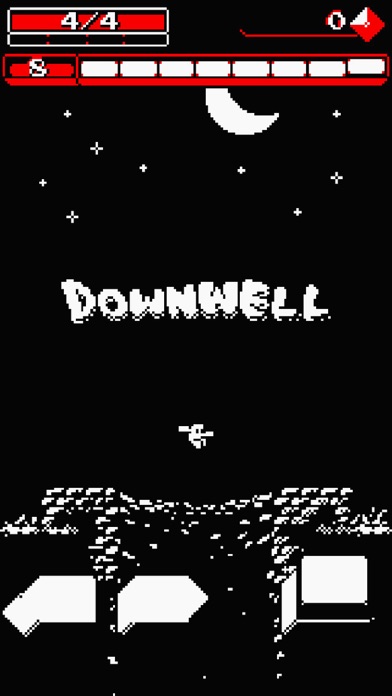
Moppin’s vertical descent shooter is a decade old now and still one of the cleanest things on iPhone. You fall down a well, shooting through enemies and rocks with gunboots, picking up upgrades on the way. The whole game fits on a portrait screen with two thumb buttons — left, right, jump-shoot. That’s it. The depth comes from upgrade combos and the way the difficulty curve forces you to actually learn the systems, not from feature creep.
The App Store listing has held a 4.6+ star average across thousands of reviews for years, with recent reviews still citing replay value rather than nostalgia. Premium-tier for an indefinite amount of play.
For the roguelike player: Slay the Spire
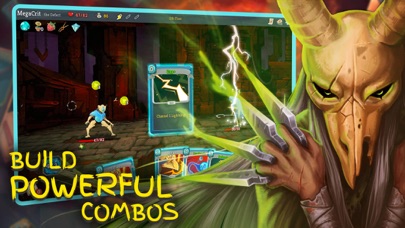
Mega Crit’s deckbuilder is the genre benchmark and the iOS port respects the source material. Four characters, dozens of relics, the kind of run-to-run variance that turns a 20-minute commute into a habit. No IAP, no daily energy, no “watch ad for retry.” You buy it, you play it, the runs you lose are losses you earned.
The iPhone version handles the card-zoom UX well, which is where lesser deckbuilder ports stumble. Premium-tier , but the hours-per-dollar math is absurd. For a deeper-dive sibling article focused only on the roguelike genre, see Best iPhone Roguelike Games 2026: Paid & Ad-Free.
For the space player: Galaximus
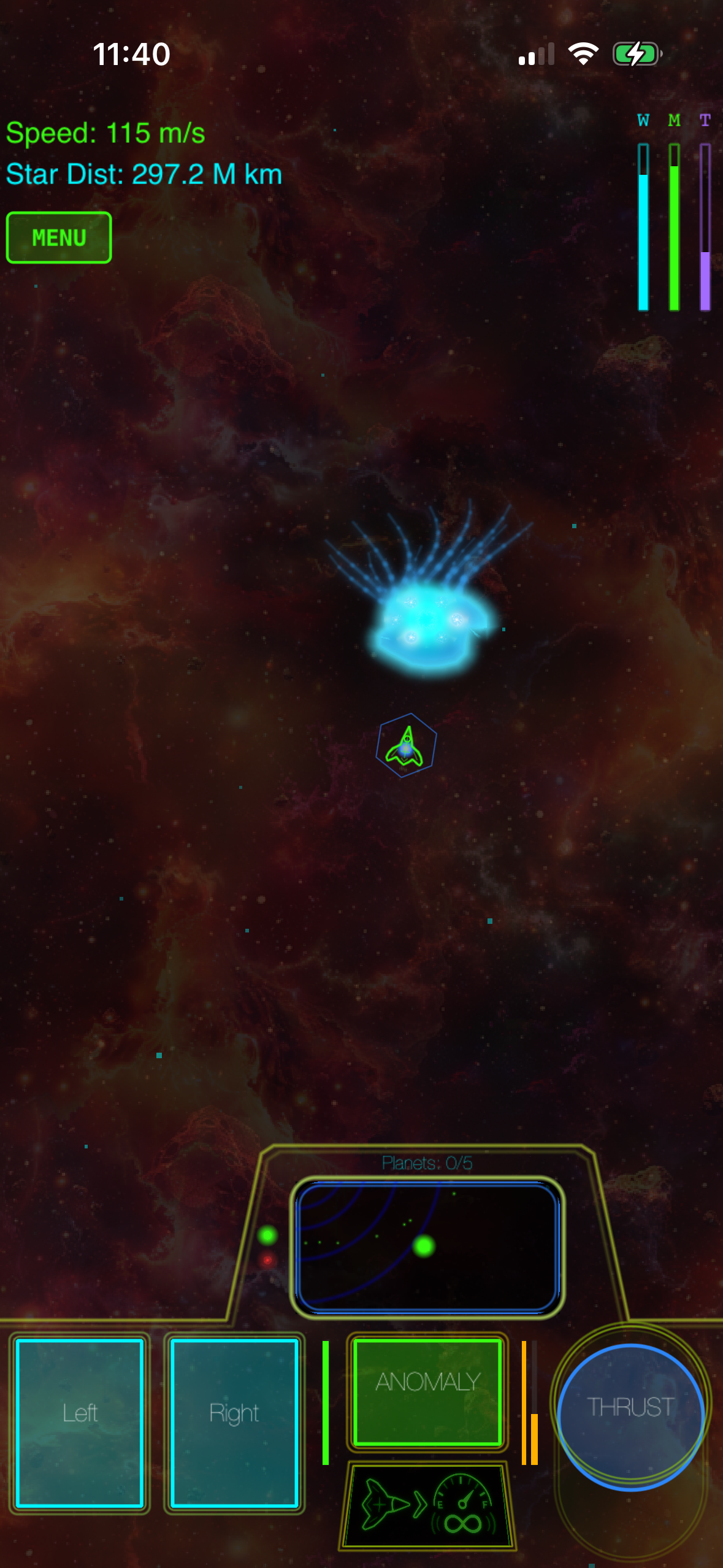
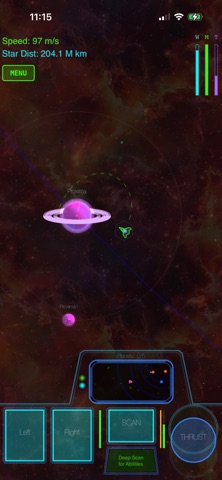
Galaximus is the rare iPhone space game that takes orbital physics seriously rather than borrowing the look and faking the motion. Ships move with momentum; gravity wells matter; the combat rewards reading the field over reflex twitching. It traces an arcade lineage back to Asteroids and the late-’70s vector cabinet era but doesn’t lean on nostalgia as a substitute for design.
Disclosure: this publication is operated by the studio that develops Galaximus. The reviewer who wrote this entry is a full-time employee of that studio and was not paid separately for this coverage; editorial standards still required the game to meet the same IAP-free, ad-free, offline-friendly criteria as every other pick. Readers who want an outside opinion should sample independent coverage before buying. Premium-tier . For a genre-specific sibling article that goes deeper on space games beyond this one pick, see Premium Space Games for iPhone: Exploration & Combat.
For the puzzle player: Mini Metro
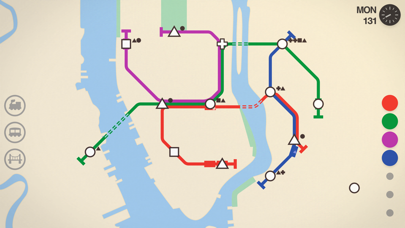
Dinosaur Polo Club’s transit puzzler is what every “minimalist premium” listing wishes it was. You draw subway lines between stations as the city grows; eventually the system collapses and you start over with a new map. It’s calming until it isn’t, then it’s tense, then it’s calming again.
The iPhone version is a clean port and the maps are unlocked entirely through play, not through a coin store. Per the developer’s own notes, the procedural station spawning is what gives runs their replay value rather than scripted scenarios. Premium-tier .
For the narrative player: Monument Valley 2
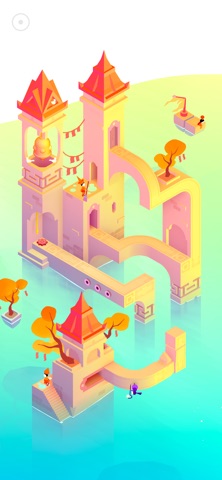
ustwo’s Escher-puzzle sequel is shorter than people expect — most players finish in 2-4 hours, consistent with App Store reviews that flag the runtime as a common point of feedback — but the craft is in every frame. It’s a one-time-purchase game in the strictest sense: you pay, you play, you finish, the game ends and you’re not nagged to buy a chapter pack. That’s increasingly rare, and worth supporting.
If short-and-finished isn’t your thing, skip this one. If it is, it’s the cleanest example of the format on iOS. Premium-tier . For a sibling article covering more story-driven picks, see iPhone Games with Story and No IAP: Narrative Adventures.
For the shmup player: PinOut
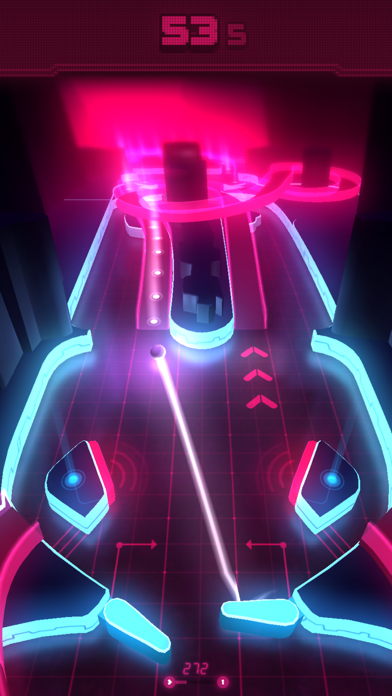
Mediocre’s endless-pinball-meets-runner is technically free with a paid unlock, which makes it a borderline call for this list — but the unlock is a single one-time purchase that removes the only restriction (a checkpoint timer) and gives you the full game forever. No gem store, no second IAP, no ads. By the spirit of the rule, it qualifies.
The synthwave aesthetic earns its keep and the physics are tight. Budget-tier for the unlock. For an adjacent sibling article on retro-arcade picks specifically, see Retro Arcade iPhone Games Premium Edition: No Freemium.
For the minimalist: Alto’s Odyssey
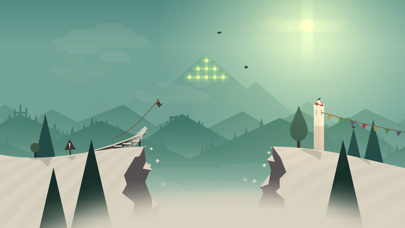
The Lost City edition on iOS is the one to buy — full game, no ads, no IAP, just the snowboarding-through-the-desert sandbox the series is known for. Snowman’s art direction is the headliner; the controls are one-thumb tappable; runs scale from 30 seconds to 30 minutes depending on how much you’re paying attention.
The Lost City premium SKU is specifically the version that strips out the ad-supported original’s monetization, as confirmed in Snowman’s own release notes. Make sure you’re buying the right SKU. Premium-tier .
Things to check before you tap “buy”
Specific reader questions that come up most often, with actionable answers:
- How do I know if a game’s IAP was added after launch? Sort App Store reviews by “Most Recent” and scan for complaints about “new” purchases or “added” ads. Then check the version history at the bottom of the listing — recent updates with vague patch notes (“bug fixes and improvements”) around a sudden review-score drop are the usual tell.
- How do I tell if a game actually works offline before buying? Look for “internet connection required” in the description; if it’s absent, toggle airplane mode after install and launch the game. If it boots to a login screen or a connectivity error, it’s cloud-dependent. Refund within 14 days via reportaproblem.apple.com.
- How do I check whether a developer has a track record of staying premium? Tap the developer name on the App Store listing to see all their other titles. Open two or three of their older releases and check the In-App Purchases line on each. A studio that has shipped multiple games and kept them IAP-free for years is a much safer bet than a single polished-looking listing from a new account.
- Is the upfront price the only price? Read the “In-App Purchases” line on the listing itself. “No In-App Purchases” means there’s nothing else to buy. Any list of consumables — even cosmetic ones — means the upfront price is an entry fee, not the whole bill.
Genre crossreferences

The articles below are sibling roundups in the same cluster — each covers a narrower slice of the premium-iOS space than this overview, so think of them as deeper dives if a particular category here grabs you, not as redundant lists.
- Pure arcade-lineage games: Best Premium iPhone Arcade Games 2026: No Ads, No IAP
- Adult-tier paid games without microtransactions: Best Paid iPhone Games with No Microtransactions for Adults
- Indie-only roundup: Best Indie iOS Games Worth Paying For in 2026
- Offline-capable picks for travel: Best iOS Games No Internet Required: Offline Arcade
FAQ
Can I refund a paid iPhone game if I don’t like it? Yes, within limits. Apple allows refund requests through reportaproblem.apple.com, generally within 14 days of purchase, and approves them at their discretion — “didn’t enjoy it” is a weaker case than “doesn’t work as described,” but both get approved regularly for low-dollar game purchases. Don’t treat it as a free trial system, but don’t be afraid to use it for a genuinely bad buy.
Why are paid iPhone games hard to find on the charts? The top charts are weighted heavily by gross revenue and download volume, which favors free-to-play games with whale economics. Paid games rarely surface there even when they’re great. Editorial roundups, indie podcasts, and community discussion are better discovery routes.
Do these games work on iPad? Most of them are universal apps — one purchase, both devices. The App Store listing will say “iPhone, iPad” if the binary is universal. Some are iPhone-only by design (Downwell’s portrait orientation, for example, works fine on iPad but isn’t optimized for it).
Is Apple Arcade a substitute for buying premium games outright? It’s a different model. Apple Arcade is a subscription tier — you keep playing as long as you keep paying. A one-time-purchase game is yours forever, including offline, including five years from now when you’ve cancelled every subscription. Both have their place; they’re not the same thing.
What happens if a developer abandons a paid game? You keep the version you bought as long as it stays compatible with iOS updates. Apple eventually delists apps that haven’t been updated for several years, but games already in your purchase history can usually be re-downloaded even after delisting. This is a real risk worth knowing about — it’s also true of every digital purchase platform, not just iOS.
The short version
If you want to actually own the games on your phone instead of renting attention from them, the picks above are the cleanest entry points across genres. Buy what fits your taste, ignore the genres that don’t, and check the IAP line before every purchase from now on. Once you’ve spent a few months in the premium-only column, going back to free-to-play feels like wearing wet socks.


