Best Vector Graphics Games for iPhone in 2026

Photo by Ben Neale on Unsplash
Best Vector Graphics Games for iPhone in 2026
Vector graphics on iPhone have a specific appeal: clean lines, instant readability, and the sense that every visual element earns its place. There’s no room for filler when your game is built from geometry. The best vector-graphics games on iOS lean into that constraint, building arcade-style gameplay where visual clarity and mechanical precision reinforce each other. This guide covers the premium vector games worth your time — no ads, no energy timers, just well-made play.
Why Vector Graphics Matter for Arcade Games
In Super Hexagon, the vector hexagon’s outline is your hitbox; raster graphics at that density would blur the boundary between safe space and collision. This is why vector graphics aren’t a nostalgia choice — they’re a design philosophy rooted in clarity. When a game is built from clean lines and geometric shapes, every pixel communicates something about the game state. A rotating shield isn’t decoration; it’s a hitbox you can read instantly. A shrinking circle isn’t filler; it’s a timer made visible.
On iPhone specifically, vector graphics scale perfectly across screen sizes and resolutions without the bloat of pre-rendered assets. A vector game that runs smooth on an iPhone 12 will run smooth on an iPhone 16 Pro Max. That consistency lets developers focus on what matters: tuning the feel of movement, collision, and feedback until it’s tight.
The vector-graphics games worth playing aren’t retro by accident — they’re retro by choice, and that choice has teeth. These games prove that minimalist visuals don’t mean minimal gameplay.
Arcade-Lineage Vector Games
Asteroids Recharged
The original Asteroids arcade cabinet (1979) defined vector-graphics gameplay. Asteroids Recharged respects that lineage while adding modern physics and a progression system that doesn’t feel like grinding. You rotate, thrust, and shoot in a bounded play area while asteroids fragment into smaller pieces. The vector aesthetic is faithful to the arcade original, but the physics feel snappier — acceleration and momentum reward patient positioning over twitch reflexes.
The game includes multiple difficulty modes and challenge variants that recontextualize the core loop without breaking it. Most players report 30-50 hours of engagement across all challenge modes before exhausting the content.
Geometry Wars 3: Dimensions
Geometry Wars 3 is a bullet-hell game built from neon vector geometry. Waves of enemies spawn in geometric patterns, and your ship (a small vector shape) must weave between projectiles while firing back. The game runs at high frame rates and the vector rendering keeps the screen readable even when dozens of enemies and projectiles fill the play area.
The game includes a campaign mode with level-based challenges and a classic arcade survival mode. Multiplayer is local-only (no online), but the couch-play experience is smooth and responsive. The vector aesthetic is essential here — raster graphics at this density would be muddy; vectors stay crisp even at full chaos.
Minimalist Geometry & Puzzle Games
Duet

Duet is a rotating-geometry puzzle game where you control two dots orbiting a center point. Obstacles scroll toward you, and you rotate your orbiting pair to slip through gaps. The game is built entirely from simple shapes — circles, rectangles, lines — but the visual clarity is absolute. You always know where your hitbox is and where the danger lies.
The difficulty progression is deliberate. Early levels teach the mechanic; mid-game levels introduce rotating obstacles and narrow windows; late-game levels combine multiple constraints into patterns that demand genuine problem-solving. The game takes 4-6 hours to complete, with optional “hard” variants that extend playtime significantly.
Super Hexagon
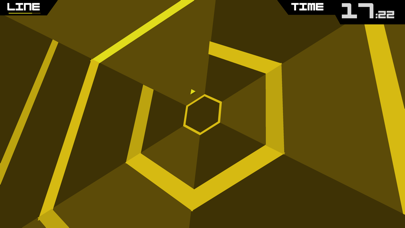
Super Hexagon is a six-sided bullet-hell game where you control a triangle at the center of a rotating hexagon. Walls scroll inward from the edges, and you rotate around the hexagon’s perimeter to avoid them. The entire game is vector geometry — no sprites, no textures, just lines and fills.
The game is hard. Early runs last 30 seconds. Mastering it takes dozens of hours. But the vector design is crucial — the geometric clarity means you always understand the hitbox relationship between your triangle and the incoming walls. Players who click with the game report 50+ hours of engagement, driven entirely by the satisfaction of improving at a clean, skill-based challenge.
Threes!
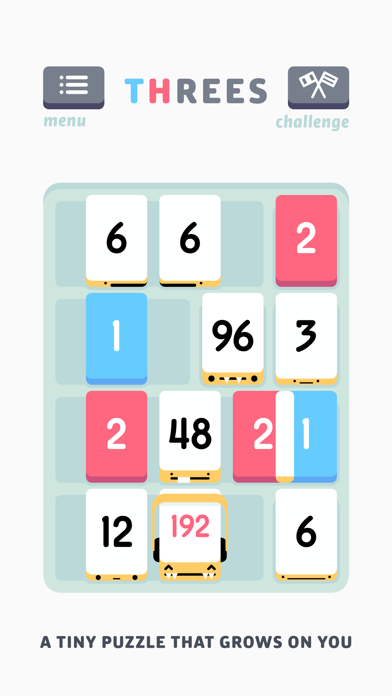
Threes! is a number-matching puzzle where you slide tiles on a 4×4 grid, combining matching numbers (1+1=2, 2+2=4, etc.). The game is built from clean vector UI — each number tile is a simple colored square with typography. No skeuomorphism, no bevels, just geometry and readability.
The strategic depth comes from planning multiple moves ahead and understanding how the random new tiles will reshape your board. Players spend 20-100 hours with the game depending on how deeply they engage with the optional “Endless” mode. The vector design keeps the UI responsive and the board state instantly readable, even under time pressure.
Space & Sci-Fi Vector Games
Galaximus
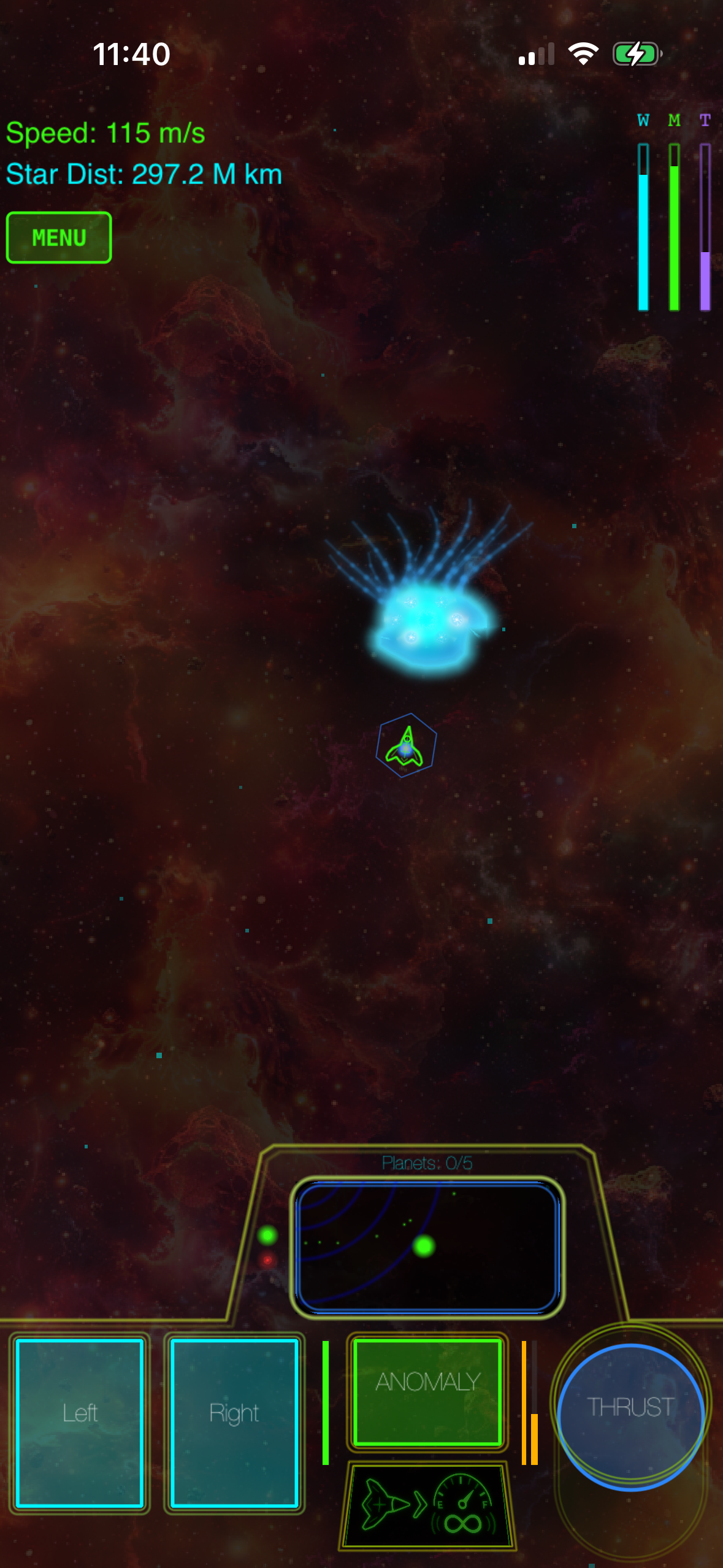
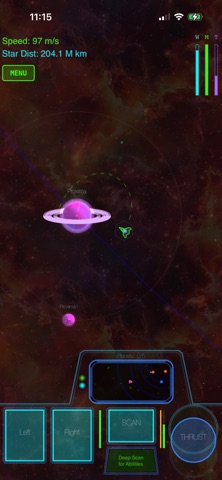
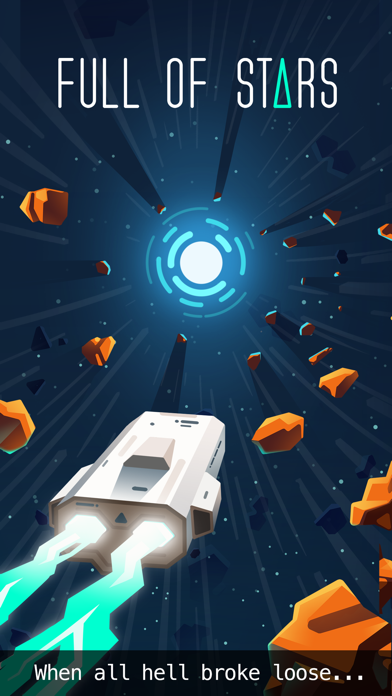
Galaximus is a space-arcade game built on real orbital mechanics. You pilot a ship in a gravitational field, and your trajectory depends on thrust vectors and orbital physics rather than arcade-style instant acceleration. The visuals are vector-style — clean lines, minimal color palette, geometric ship design — which makes the physics relationship immediately clear.
The game teaches orbital mechanics through play. Early missions guide you through basic maneuvers; later missions require multi-stage burns and gravity-assist planning. The physics simulation is accurate enough that real astronauts have reported recognizing actual orbital techniques in the gameplay.
The game is a premium-tier title with no ads, no IAP, and no energy timers. Difficulty scales across multiple challenge modes, and the progression respects player skill rather than demanding grinding.
Lunar Rescue
Lunar Rescue is a modern interpretation of the 1979 arcade game of the same name. You pilot a lander down to the lunar surface, managing fuel and descent rate while avoiding obstacles. The vector aesthetic is clean and functional — your lander is a simple geometric shape, the terrain is outlined in vector lines, and the fuel gauge is a straightforward bar.
The game’s challenge comes from physics management, not reflex speed. Descending too fast wastes fuel; descending too slowly runs out of fuel before you land. Each attempt teaches you the relationship between throttle, descent rate, and fuel burn. Most players report 8-15 hours to master all landing zones.
Why These Games Don’t Need Flashy Graphics
Vector graphics in arcade games aren’t a limitation — they’re a feature. When your game is built from geometry, every visual element has a job. A rotating shield isn’t eye candy; it’s a hitbox. A shrinking circle isn’t decoration; it’s a timer. This economy of design forces developers to focus on what actually matters: responsive controls, fair difficulty, and feedback that tells you exactly what’s happening.
The games listed here all share a commitment to clarity. They assume you want to understand the game state instantly and make decisions based on that understanding. That’s the opposite of modern free-to-play games, which often layer visual noise specifically to obscure what’s happening so you’ll spend money to understand it.
Vector graphics also age better than raster assets. A vector game from 2015 looks nearly identical on a 2026 iPhone because the geometry scales perfectly. Raster games from the same era often look soft or pixelated on modern high-density screens. If you’re building a game you hope players will return to in five years, vector graphics are the smarter choice.
Controller Support & Play Context
Of the seven games listed here, three support MFi controllers: Asteroids Recharged, Geometry Wars 3, and Galaximus. These games feel closer to arcade hardware when played with an external gamepad, offering analog stick precision instead of touch-screen taps.
The remaining four — Duet, Super Hexagon, Threes!, and Lunar Rescue — are optimized for touch controls and feel right on a phone in landscape or portrait mode. Touch-only games aren’t worse; they’re just designed for a different input context.
If you’re planning to play docked on an iPad or with a controller, check the App Store listing for that specific game to confirm controller support.
FAQ
Q: Which of these games has the steepest learning curve? A: Super Hexagon by far. Early runs last 30 seconds, and meaningful progress takes 10+ hours of practice. Asteroids Recharged is demanding but more forgiving. Duet has the gentlest curve — it teaches the mechanic before ramping difficulty.
Q: Can I transfer my save between iPhone and iPad? A: Most of these games support iCloud save sync, but it varies by title. Check the App Store listing for each game. Duet, Threes!, and Galaximus all support cross-device sync. Super Hexagon stores progress locally on each device.
Q: Do any of these have ads or in-app purchases? A: None of the games listed here include ads or IAP. They’re premium-tier games — you pay once and own the full experience. No energy timers, no battle passes, no “watch an ad to continue.”
Q: Which should I start with? A: If you want a complete campaign, start with Duet (4-6 hours). If you want a skill-based endless challenge, start with Super Hexagon (30-second runs, 50+ hours to master). If you want something gentler, start with Threes! or Galaximus.
Q: Do these games work offline? A: Yes. All the games listed here are offline-playable. No internet connection required. Some have optional online leaderboards, but the core game works without a network connection.
Next Steps
Vector-graphics games prove that visual minimalism doesn’t mean minimal gameplay. The best ones — Super Hexagon, Duet, Asteroids Recharged, Galaximus — use their geometric constraints to focus attention on what matters: the feel of control, the fairness of difficulty, and the satisfaction of mastery.
Start with Duet if you want a 4-6 hour campaign with a clear endpoint. Start with Super Hexagon if you want a skill-based endless challenge that rewards dozens of hours of practice. Either way, you’re choosing a game built by developers who care about the feel of play, and that care is visible in every line.