Indie Puzzle Games for iPhone: Premium & Ad-Free

Photo by Leeder Bose on Unsplash
Indie Puzzle Games for iPhone: Premium & Ad-Free
Premium puzzle games on iPhone are a specific breed: they cost real money upfront, they don’t interrupt you with ads, and they trust you to engage with the mechanics rather than the monetization. This article covers indie-developed and indie-spirited puzzle games worth your money in 2026 — titles built by people who care about problem-solving craft, not engagement metrics.
What Makes a Puzzle Game Worth Paying For
A premium puzzle game earns its price by respecting three commitments: mechanical depth (the core system has layers you discover over time), no artificial friction (no energy bars, no ads, no pressure to spend more), and intentional design (every level teaches something, or surprises you, or both).
The free-to-play model trains players to expect puzzle games as time-wasters — something to fill airport queues. Premium indies flip that: they’re designed as complete experiences. You buy once, you own it, and the developer’s incentive is to make you want to keep playing, not to make you pay to keep playing.
This distinction matters because it changes how a game is designed. A premium puzzle game can have a hard level 47 that takes you two hours to solve, because you already paid and the developer doesn’t lose money if you spend time instead of money. A free-to-play game would call that a “difficulty wall” and offer you a skip button for.
The Contemplative Puzzle: A Monster’s Expedition
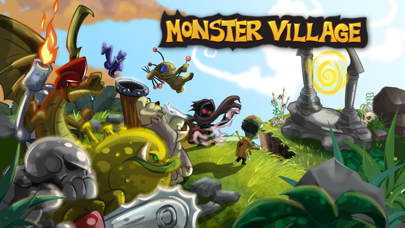
A Monster’s Expedition is a turn-based puzzle game about pushing blocks across an island. You control a small monster, and your goal is to reach the exit of each level using blocks, logs, and the terrain itself as tools. Every move is deliberate and reversible — you can undo as far back as you want.
The mechanical genius here is the undo system. Because you can always rewind, the game doesn’t punish experimentation — it encourages it. You’re free to push a block into a corner, realize it was the wrong move, and try again without penalty. This removes the anxiety that plagues many puzzle games and lets you focus purely on the logic.
According to player reports on r/iosgaming, the difficulty curve is generous early but escalates meaningfully by the midgame. Most owners report 10-15 hours for a full playthrough, with optional puzzles that extend playtime substantially. The art style is deliberately minimal — isometric voxel graphics in warm colors — which keeps the visual noise low and the puzzle logic front-and-center.
**Price: **
The Minimalist Slider: Threes!
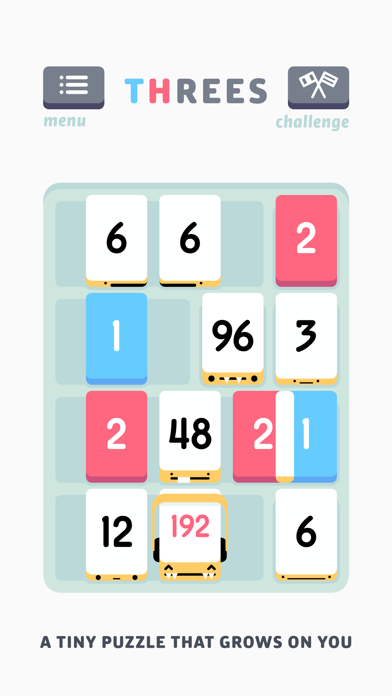
Threes! is a sliding-tile number game where you combine tiles to build larger numbers. Slide two 1s together and they become a 2. Slide two 2s together and they become a 3. Continue until you’ve built the largest number you can fit on the board.
What separates Threes! from a hundred other number-sliding games is its restraint. The board is small. The rules are simple. The animations are buttery. There are no power-ups, no boosters, no “one more turn” pressure — just you, the tiles, and the geometry of the board. The game ends when you can’t move anymore, and that’s that.
Per multiple owner reports across TouchArcade forums and App Store reviews, Threes! is the gold standard of minimalist puzzle design. The developer, Sirvo, spent months tuning the feel of each animation and the balance of each number tier. Every detail — from the sound design to the way tiles slide — reflects deliberate iteration.
The game is also genuinely difficult at the high end. Reaching a 384 or 768 tile requires real skill and pattern recognition, not luck. This gives the game a skill ceiling that keeps experienced players engaged long after casual players have moved on.
**Price: **
The Rule-Breaking Puzzle: Baba Is You
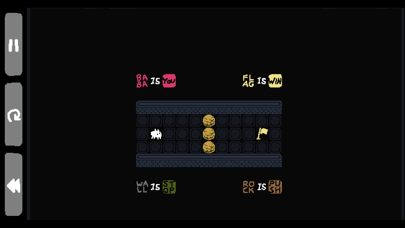
Baba Is You is a Sokoban-style puzzle game where you push objects around a grid. The twist: the rules of the game are also objects you can push around and rearrange.
In the first level, you see the text “BABA IS YOU” and “FLAG IS WIN.” These aren’t just flavor — they’re the actual rules. If you push the word YOU onto the word BABA, then suddenly you are controlling the flag, not Baba. If you push the word WIN onto the word BABA, then reaching Baba means you win. The game teaches you to read the rules as puzzle pieces.
This is a genuinely innovative design that rewards lateral thinking. Many players report that Baba Is You changed how they think about puzzle games in general — the experience of “wait, I can do what?” happens repeatedly across the 200+ levels.
Per developer interviews and player reports, the difficulty is steep. Early levels are tutorials, but by world 2 or 3, the game expects you to think in ways that feel completely foreign. This isn’t a flaw — it’s the point. The game is teaching you a new language, and the difficulty is the learning curve.
**Price: **
The Atmospheric Mystery: The Room: Pocket Edition
The Room: Pocket Edition is an object-manipulation puzzle game where you examine a mysterious locked box and figure out how to open it. You rotate the box, zoom in on details, find hidden mechanisms, and solve puzzles to unlock compartments.
The appeal is partly mechanical and partly atmospheric. Each puzzle is satisfying to solve — there’s real tactile feedback in the interaction design — but the real draw is the sense of discovery. You’re exploring a physical object, uncovering its secrets, and the game rewards careful observation through subtle audio cues and visual feedback.
Per player reports on r/iosgaming, The Room: Pocket Edition is the most accessible entry in the Room series. The original The Room (also premium, also excellent) is denser and longer, but the Pocket Edition is more focused and better-paced for mobile play. Most owners report 3-5 hours for a complete playthrough.
**Price: **
The Transit Puzzle: Mini Metro
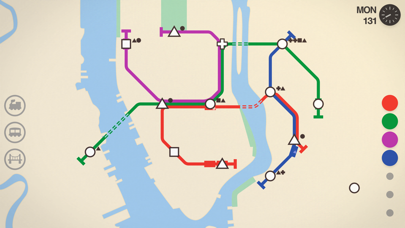
Mini Metro is a minimalist puzzle game where you design subway systems for growing cities. You draw lines connecting stations, and trains follow your routes. As the city expands, you must balance coverage, efficiency, and the limited space on your map.
The puzzle isn’t about speed — it’s about planning. You’re solving a constraint-satisfaction problem: how do you serve all passengers without creating bottlenecks? The game escalates by introducing new station types (interchanges, terminals) that force you to rethink your entire network.
Per player reports across TouchArcade and the App Store, Mini Metro offers 50+ hours of content across different cities and difficulty modes. The art style is deliberately stark — just lines, dots, and minimal color — which makes the puzzle logic the sole focus. The game has no ads, no energy system, and no pressure to spend more.
**Price: **
The Pattern-Recognition Deep Dive: Nonogram Puzzle by Easybrain
Nonogram puzzles (also called Picross) are logic puzzles where you fill in a grid based on numbered clues. If a row has the clue “3 1 2,” it means there’s a group of 3 filled cells, then at least one empty cell, then 1 filled cell, then at least one empty cell, then 2 filled cells.
The appeal is meditative. Unlike timed puzzles, Nonograms reward patience and systematic thinking. You’re not racing the clock — you’re solving a logical constraint problem. According to player reports across puzzle communities, Nonogram enthusiasts often describe the experience as “like meditation but with a picture at the end.”
Nonogram Puzzle by Easybrain offers hundreds of puzzles, clean interface, offline play, and no ads. Per App Store reviews, the difficulty progression is well-balanced and the hint system is helpful without being intrusive.
Price: (or free with ads; premium unlock available)
The Word-Logic Hybrid: Letterpress
Letterpress is a word-based puzzle game where you and an opponent take turns spelling words on a shared board. The twist: words you spell claim tiles for your color, and you earn bonuses for surrounding opponent tiles with your own.
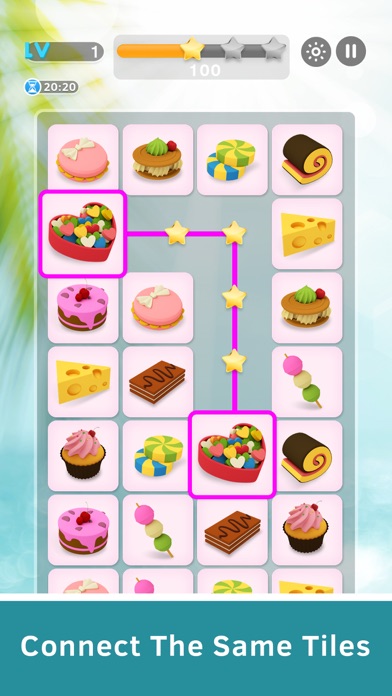
It’s Scrabble meets strategy game. The puzzle isn’t just “what words can I make” — it’s “what words should I make to control the board.” This adds a layer of tactical thinking that pure word games don’t have.
Per player reports on TouchArcade and the App Store, Letterpress has strong replay value for word-game enthusiasts, especially when playing asynchronously against friends. The single-player puzzle modes provide solid training for board control strategy.
**Price: **
Premium Puzzle Games: Price Reference
| Game | Price | Playtime |
|---|---|---|
| A Monster’s Expedition | 10-15 hours | |
| Threes! | 5-20 hours | |
| Baba Is You | 15-30 hours | |
| Mini Metro | 20-50 hours | |
| The Room: Pocket Edition | 3-5 hours | |
| Nonogram Puzzle by Easybrain | 50+ hours | |
| Letterpress | 10+ hours |
Why Premium Puzzles Matter in 2026
The free-to-play puzzle game market is saturated with thousands of games competing for your attention using energy systems, ads, and false scarcity. The signal-to-noise ratio is terrible.
Premium indie puzzle games are the antidote. They’re built by people who care about the craft of puzzle design. They cost real money, which means the developer’s incentive is to make something genuinely good, not something that maximizes engagement metrics.
In 2026, paying for a puzzle game upfront is an act of quality filtering. It’s saying “I want a game designed for my enjoyment, not for my wallet.” And the indie developers who make these games have heard that message.
FAQ
Can I refund a puzzle game if I don’t like it?
Yes. Apple allows refunds within 14 days of purchase if you request one through the App Store. Go to Settings > [Your Name] > Media & Purchases > Purchase History, find the app, and select “Report a Problem.” Be honest about why — if you genuinely didn’t enjoy it, Apple will usually approve the refund.
Do these games work on iPad too?
Most do. Check the App Store listing under “Information” — it’ll say “Requires iOS X.X or later” and list compatible devices. All games recommended here work on both iPhone and iPad, though some (like The Room series) are better on larger screens.
What’s the difference between “premium” and “free with ads”?
Premium means you pay once and own the full game with no ads and no in-app purchases. Free with ads means you get the game free but ads interrupt your play, and you can pay to remove them. Some games split the difference (free with optional ads, premium unlock available). This article focuses on true premium games where you own the full experience upfront.
How long do premium puzzle games last?
It varies significantly. The Room: Pocket Edition is 3-5 hours. Nonogram Puzzle offers 50+ hours of content. Baba Is You is 15-30 hours depending on how many optional puzzles you tackle. Check the App Store reviews and gameplay videos to get a sense of playtime before buying.
Can I play these games offline?
Yes. All games recommended here work completely offline. No internet connection required.
Are there puzzle games that work well on Apple Arcade?
Apple Arcade includes some excellent puzzle games (like Mini Metro), but this article focuses on premium indie games you own outright. Arcade is a subscription service (/month), while these games are one-time purchases ranging from to.
The Bottom Line
Premium indie puzzle games represent some of the best design work on iPhone in 2026. They’re built by people who respect your time, your attention, and your intelligence. They don’t have ads, they don’t have energy timers, and they don’t have hidden paywalls. You pay once, you own the game, and the developer’s only incentive is to make something genuinely excellent.
If you’re tired of free-to-play puzzle games that feel designed to frustrate you into spending money, premium indie puzzles are the antidote. Start with one of the picks above — find the mechanic that speaks to you — and you’ll understand why so many players have moved away from free games entirely.


