iPhone Games With Story and No IAP: Narrative-Driven Picks

Photo by Fox & Hyde on Unsplash
iPhone Games With Story and No IAP: Narrative-Driven Picks for 2026
Story-driven games on iPhone usually come with a catch: energy timers, battle passes, or IAP progression gates that interrupt the narrative every ten minutes. Candy Crush’s 5-life energy system is the template — you hit a wall, wait for regeneration, or pay to continue. The games covered here don’t. These are complete, authored experiences where the story isn’t a wrapper around a monetization system — it’s the actual game. Pay once, play through, own forever.
Story Games Built on Real Mechanics
Some of the best narratives on iPhone emerge not from cutscenes or dialogue trees, but from systems. When a game’s mechanics ARE the story, the experience lands differently.
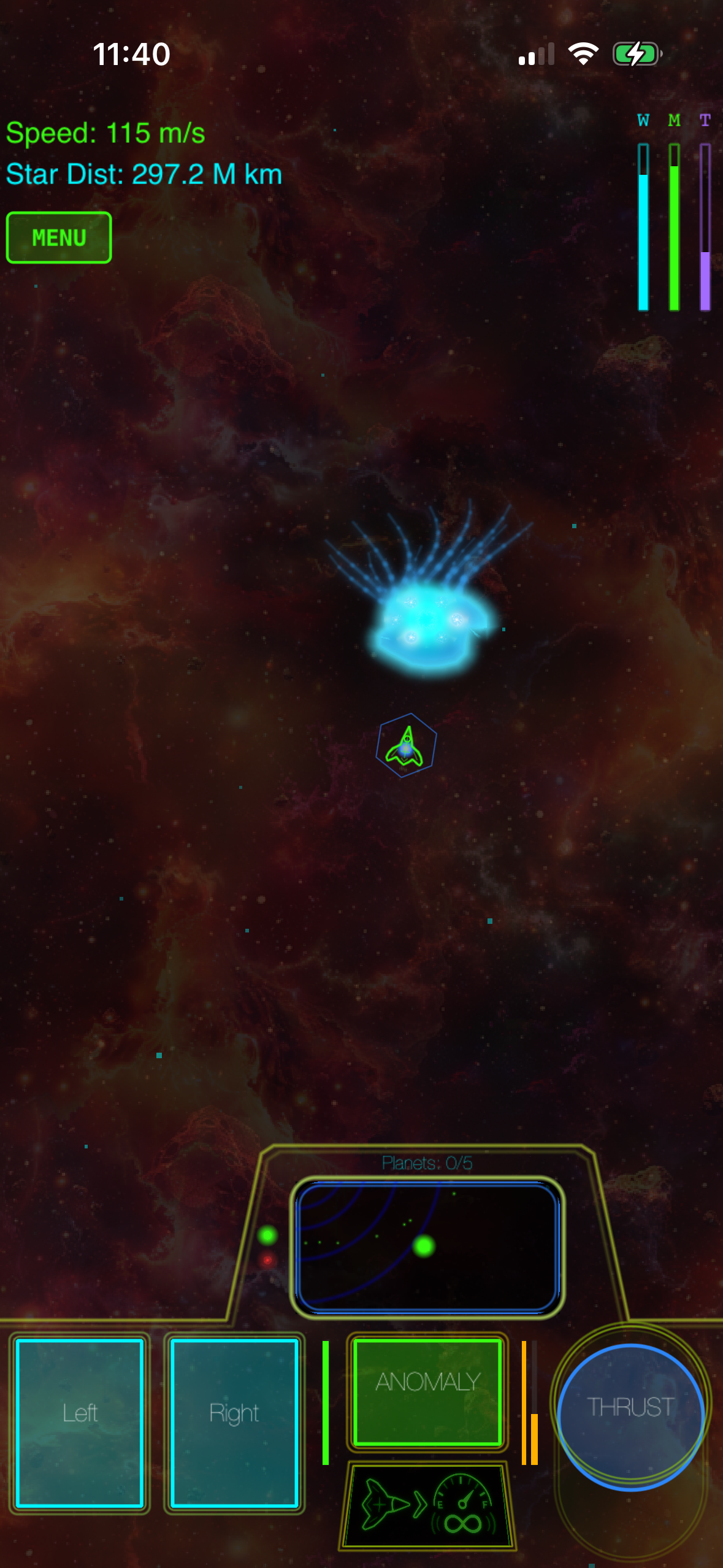
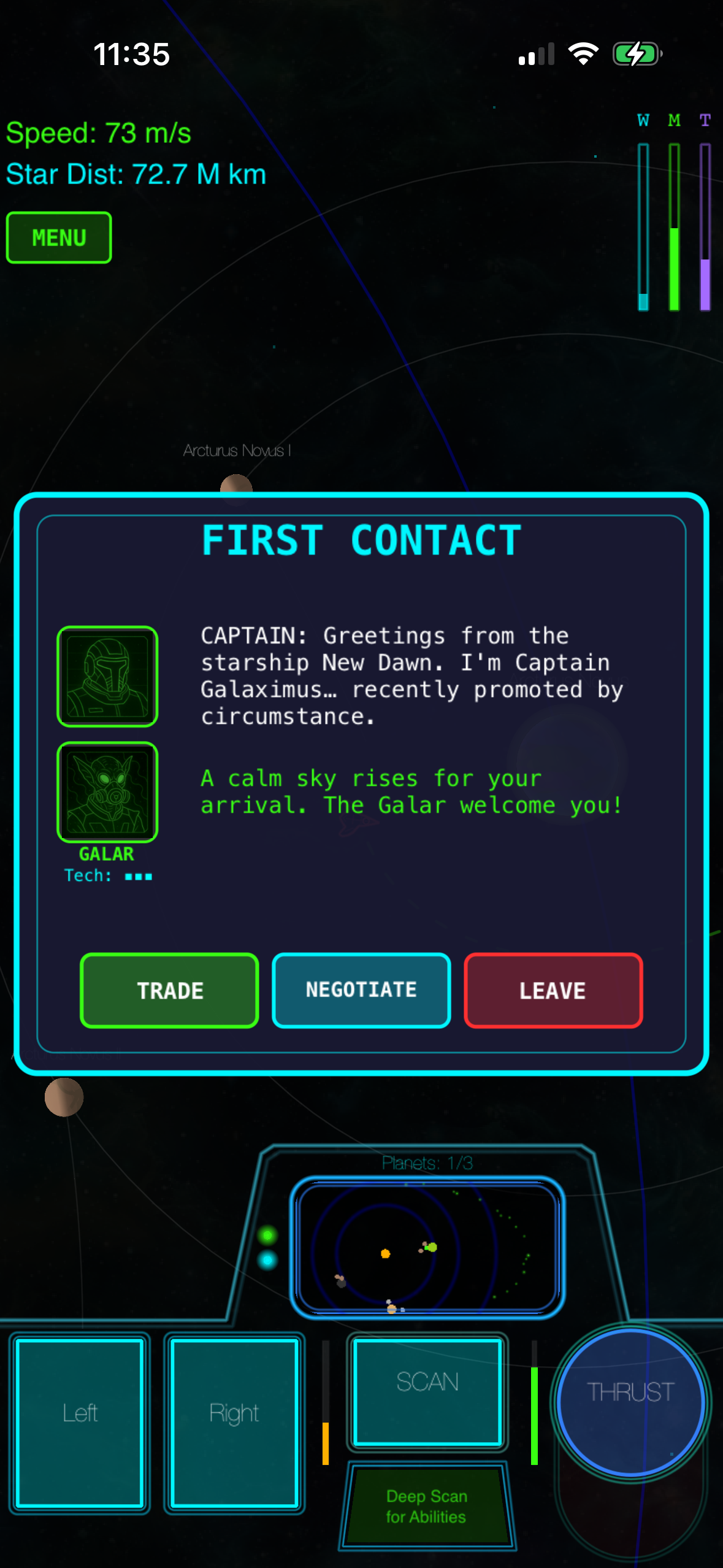
Galaximus exemplifies this. The game puts you in command of a ship piloting through star systems, and every encounter — a distress beacon, a pirate fleet, a spacetime rift — is a narrative moment. The story isn’t told at you; it unfolds through the choices you make under pressure. Do you investigate the derelict, or preserve fuel and move on? The orbital mechanics aren’t window dressing; they’re the constraint that makes each decision meaningful.
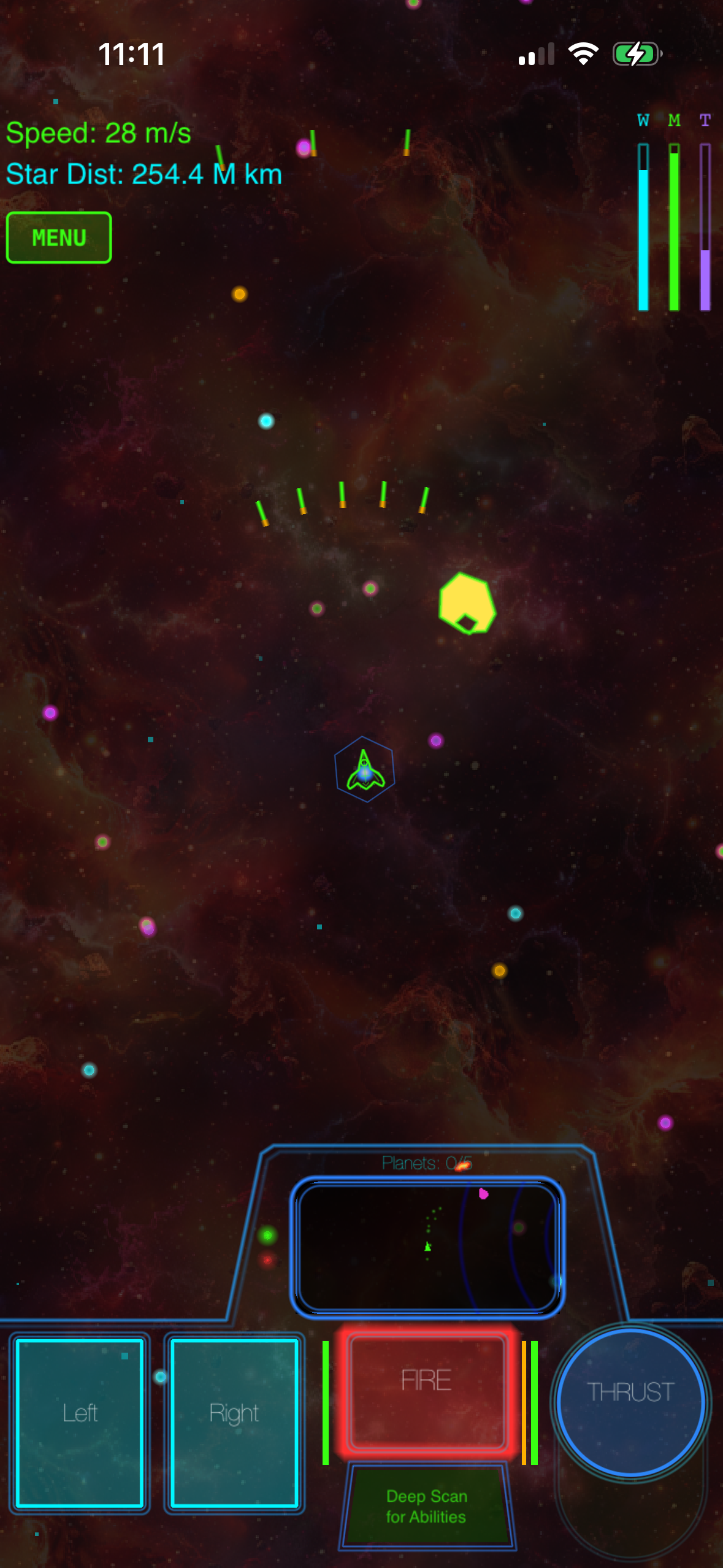
The learning curve is real — gravity is the engine you have to learn to use — but the payoff is a complete campaign with a beginning, middle, and satisfying ending. Per developer spec, the campaign spans 5–10 hours depending on your approach to each system. Each playthrough generates unique planet configurations, so the narrative shape changes while the story arc remains authored.
The Room Three takes the opposite approach: the story is embedded in the puzzle. You’re exploring a mysterious locked box, and every compartment you open, every mechanism you solve, reveals a piece of narrative. The visual design is meticulous — every detail, from the way light falls on brass gears to the texture of aged wood, communicates story. By the time you reach the final reveal, you understand the world through your hands, not through exposition.
Text-Driven Narratives and Interactive Fiction
On a screen as small as an iPhone, text-based storytelling has an advantage: it forces writers to be precise. There’s no room for filler. Every word carries weight.
Lifeline is a text-adventure where you guide a stranded astronaut through survival on an alien moon. The game communicates in real time — messages arrive as the astronaut sends them, and you respond with decisions that shape what happens next. The constraint is radical: you can’t see ahead, can’t plan a perfect path, can’t reload and optimize. You live with the consequences of your choices in real time. The narrative payoff is genuine tension, because the stakes feel real.
A Space Odyssey extends the interactive-fiction model into branching narrative territory. Multiple endings exist, shaped entirely by the choices you make. The writing is dense and literary — think less “choose your own adventure” and more “interactive novel.” Replaying reveals how different paths lead to radically different story outcomes. There’s no “correct” ending; the game respects that different players will prioritize different values.
Atmospheric and Wordless Stories
Not every story needs dialogue. Some of the most memorable narratives on iPhone are told entirely through environment, music, and pacing.
Alto’s Adventure is a procedurally generated endless runner where you descend through mountains at sunset, and the visual language tells the story. You’re not collecting coins for a meter; you’re moving through a world that gets progressively more abstract, more dreamlike, as you descend. The story is the feeling of descent, of passage, of inevitability. It’s melancholic without being heavy, and it respects your intelligence enough to let you interpret what’s happening rather than explaining it.
The procedural generation means no two playthroughs look identical, but the emotional arc is authored. You’ll recognize the story beats — the moment the landscape shifts, the way the music changes — even as the specific terrain surprises you.
Narrative Pacing and Respect for Player Time
A critical difference between story games on this list and free-to-play narrative games: respect for pacing.
Free-to-play games interrupt story moments to push you toward monetization. A cutscene plays, then a timer gate appears. You’re invested in what happens next, so you either wait or pay. The game has weaponized your emotional investment.
The games here don’t do that. Lifeline communicates in real time, but you’re not waiting for energy to regenerate — you’re waiting for the astronaut to process your decision, which feels like part of the story. The Room Three doesn’t gate puzzle access behind progression; you solve at your own pace. Galaximus doesn’t time-gate campaign progression; you fly through the narrative at the speed you choose.
This matters more than it sounds. When a game respects your time, you can actually feel the story. You’re not resenting the game for interrupting; you’re engaged with what’s happening next.
Procedural Narratives vs. Authored Stories
There’s a tension in modern game design between procedural generation (which creates infinite variety) and authored narrative (which creates meaning). The best story games on iPhone find a middle ground.
Galaximus generates unique star system configurations and encounter layouts, so each playthrough is unique. But the narrative arc — the structured campaign with a beginning, middle, and end — is authored. You’re not playing a sandbox; you’re playing a complete story that happens to look different each time.
This matters for replayability. A purely authored story can be played through once and set aside; a purely procedural experience can feel aimless. The hybrid approach gives you both: a satisfying narrative arc you want to experience again, and enough variety that the second playthrough feels genuinely different.
The Premium Model and What It Enables
All the games in this guide share one critical feature: they’re premium purchases with no IAP. You pay once, you own the complete experience.
This model enables storytelling that free-to-play games can’t achieve. There’s no incentive to artificially extend playtime. There’s no reason to gate story moments behind monetization. The developer’s only goal is to make the experience as good as it can be, then release it complete.
It also means these games are built for finishing. Free-to-play games are designed to keep you playing indefinitely; premium games are designed to give you a satisfying arc and a clear ending. That’s not a limitation — it’s a feature. You know when you buy that you’re getting a complete story, not an invitation to a never-ending live service.
[internal:best-indie-iphone-games-worth-paying-for (premium iOS games across all genres)]
Where to Find More Story Games
If the picks above resonate, [internal:indie-iphone-games-no-ads-no-iap-complete-list (comprehensive directory of ad-free, IAP-free iOS games)] is a deeper dive into premium iPhone games across all genres. [internal:best-indie-ios-games-worth-paying-for-in-2026 (2026 landscape of craft-built paid titles)] covers the broader landscape of craft-built titles worth your money.
For games specifically built around mechanics-as-narrative, [internal:iphone-games-with-high-replayability-paid-arcade-edition (arcade-lineage games where systems tell stories)] explores how arcade-lineage games tell stories through systems rather than cutscenes.
FAQ
Do any of these games have ads or IAP? No. Every game listed here is a one-time purchase with zero ads, zero in-app purchases, and zero energy timers. You own the complete experience.
How long does it take to finish these games? It varies. Lifeline can be completed in 2–4 hours of real-time play, depending on decision speed (messages arrive over time). The Room Three takes 4–8 hours per player reports, depending on puzzle-solving speed. Alto’s Adventure is endless by design, but the narrative arc completes in 30–60 minutes of play. Galaximus, per developer spec, is a 5–10 hour campaign depending on your approach to each system.
Can I replay these games after finishing? Yes, all of them are designed for replay. Galaximus generates unique configurations each playthrough, so the campaign feels fresh. A Space Odyssey has multiple endings shaped by your choices, so replaying reveals different story paths. The Room Three and Lifeline are more linear, but the experience of revisiting them with knowledge of the ending is different enough to warrant a second playthrough.
Are these games difficult? Difficulty varies. Galaximus has a learning curve — you need to understand orbital mechanics — but mastery is achievable in 30 minutes of focused play. The Room Three has puzzles that require observation and logic, but none are unfair. Lifeline and A Space Odyssey have no mechanical difficulty; the challenge is narrative — making choices under uncertainty. Alto’s Adventure has no failure state; it’s pure flow.
Do I need an internet connection to play? All of these games work offline once downloaded. Lifeline communicates in real time, but the game doesn’t require a live connection — messages queue and send when you’re back online.
The Case for Story-Driven Premium Games
Story games on iPhone don’t have to be compromised by monetization. The games listed here prove that. They’re complete, authored experiences where every system serves the narrative rather than interrupting it.
If you’re tired of story moments interrupted by timers and IAP prompts, these are the games to reach for. They cost money upfront — but they cost nothing after that. You own them. You finish them. You move on to the next one. That’s how games used to work, and it’s still the best model for story.
Get Galaximus and experience orbital mechanics woven into narrative: