Retro Arcade iPhone Games Premium: 80s Nostalgia Done Right

Photo by Ben Neale on Unsplash
Retro Arcade iPhone Games Premium: 80s Nostalgia Done Right
Five premium arcade games on iPhone in 2026 prove that physics-based gameplay and zero monetization can coexist. It’s not about nostalgia tourism. It’s about developers who understand what made 1980s arcade games work—tight controls, clear feedback loops, and mechanics that reward mastery—and who refuse to dilute that with ads, energy timers, or battle passes. When you pay once for an arcade game in 2026, you’re buying something that respects your time and your money.
This guide covers craft-built premium arcade titles that trace real lineage back to the arcade era. Not every retro-styled game belongs here; plenty of modern titles wear 80s aesthetics as costume. The ones that matter are the ones where you can feel the developer’s attention to every system. They’re priced to own, not to extract.
What “Premium Arcade” Actually Means
In the App Store’s definition, “premium” just means you pay upfront. But we’re more rigorous: a premium arcade game commits to zero monetization tricks.
No ads. Not even on the pause screen. Not “ad-free after level 5.” Not “watch an ad to continue.” Gone.
No in-app purchases. No cosmetics, no power-ups, no shortcuts. You buy the game once and own the full experience.
No energy meters or stamina systems. Play until you decide to stop, not until the game decides for you.
No subscription requirement. Not Apple Arcade, not a monthly pass. One purchase, forever access.
This is rare on iPhone in 2026. Most “premium” games in the top charts either run ads or have IAP hiding behind the free download. When a developer commits to zero monetization, they’re betting that the game itself is good enough. That bet is worth respecting.
The Arcade Lineage: What Separates Craft from Costume
True arcade-lineage games trace back to specific 1979–1985 cabinet formats and respect the mechanical DNA even when they reinterpret the visuals.
Asteroids lineage (shooting, vector graphics, screen-wrapping): the player ship is vulnerable, ammunition is infinite but momentum matters, and the challenge comes from positioning, not reflexes alone. Asteroids: Gunner inherits this directly.
Lunar Lander lineage (gravity simulation, fuel management, precision landing): the player must understand how gravity works and use it efficiently. Twitch reflexes fail; patience and planning win. Lunar Lander Deluxe and Galaximus both draw from this lineage, though Galaximus expands it into orbital mechanics.
Defender lineage (side-scrolling action, screen-wrapping, resource management): the player has limited lives and must balance offense with defense across a scrolling play space. This lineage is less represented in current premium arcade releases; most modern games have moved toward endless or campaign structures that don’t require the constant resource pressure Defender demanded.
Tempest lineage (tunnel shooting, rotational mechanics): the player rotates around a fixed axis and fires into depth. Visually abstract, mechanically precise. Like Defender lineage, this specific mechanical DNA is rare in 2026 premium releases, with most rotational games either simplified for touch controls or reimagined into different frameworks.
Games that genuinely inherit from these lineages don’t just borrow aesthetics—they inherit the control scheme, the feedback loop, and the reward structure. A game that calls itself “retro” but uses swipe-to-aim instead of rotational controls isn’t Asteroids; it’s something else wearing Asteroids’ clothes.
Physics-Based Arcade: Gravity as Gameplay
Some of the most interesting premium arcade games on iPhone in 2026 are built on real physics simulation. Gravity becomes the interface, not a visual effect.
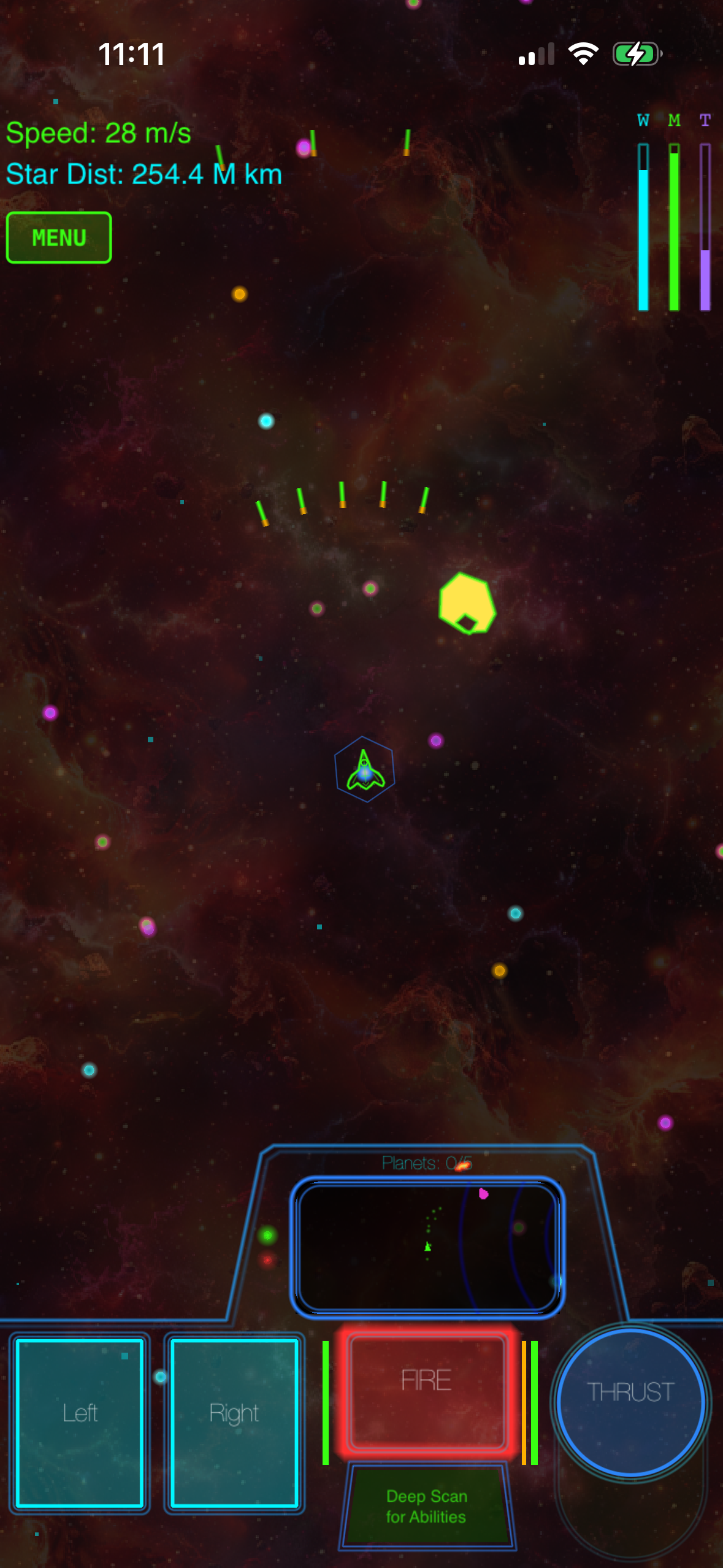
Galaximus is the clearest example of this approach. The orbital mechanics use Unity Physics engine for real-time gravitational interactions—every body affects every other body in real time. The player ship isn’t immune; it’s subject to the same forces as planets and asteroids. Mastery comes from learning to use gravity as your engine: slingshots around planets to gain speed, orbital captures to slow down, transfer windows to reach distant systems efficiently. The learning curve is real—30 minutes of focused play to get comfortable—but the payoff is that you can feel the physics working, and that’s a sensation no faked-gravity space game delivers.
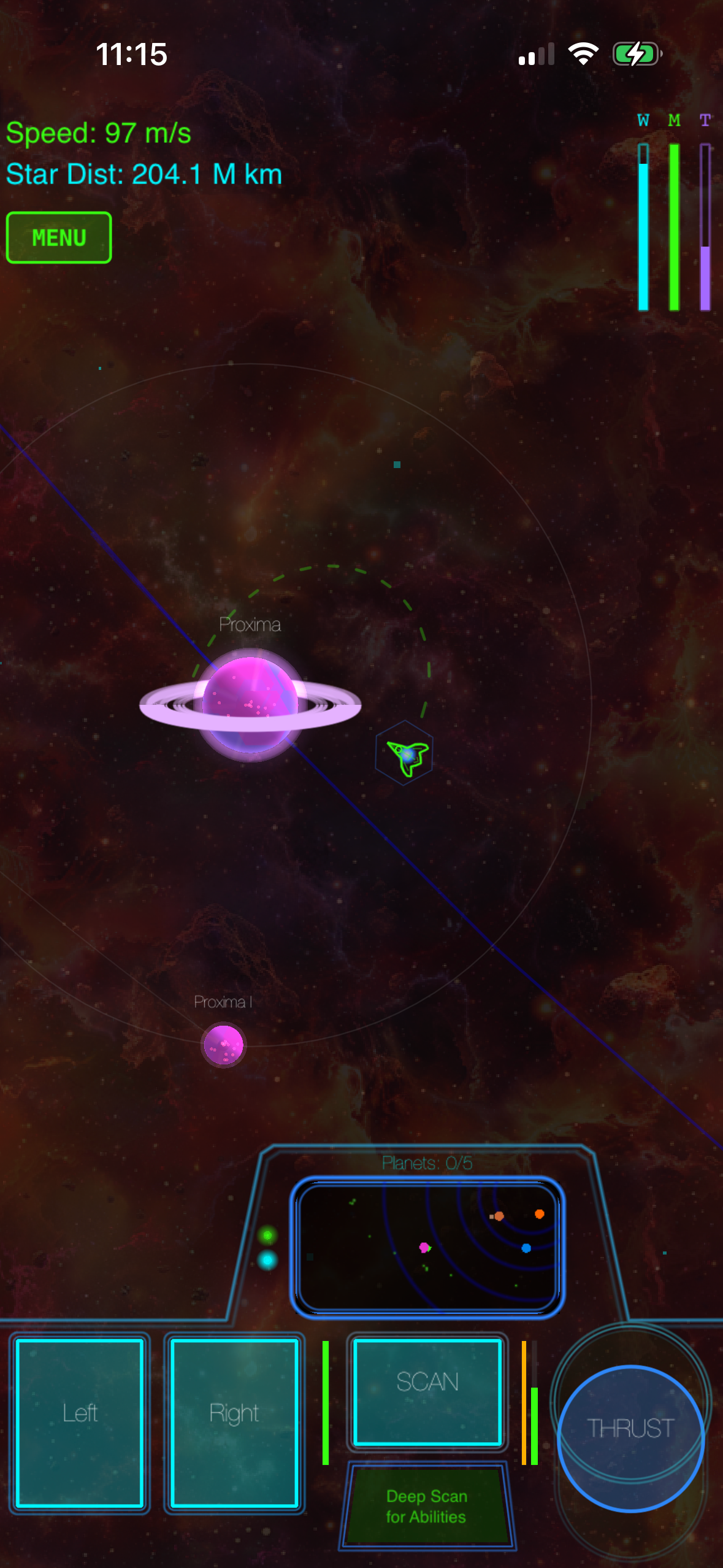
The difference between real and faked gravity becomes obvious when you’re trying to land near a planet. In a game that fakes gravity for accessibility, the planet pulls you down on a predictable curve. In a game with real gravity, the planet pulls you toward its center of mass. You have to think in three dimensions. You have to plan your approach. That difficulty is the entire point—it’s what makes mastery satisfying.
Lunar Lander Deluxe leans into the same principle. You have limited fuel and you’re descending toward a landing zone under gravity. Every decision—when to burn, how hard, at what angle—has real consequences. There’s no “correct” approach; there are dozens of fuel-efficient paths, and finding them is the game.
Games built on real physics aren’t for everyone. If you want a 5-minute arcade session with zero learning curve, they’re overkill. But if you want a game that rewards planning and precision over reflexes, physics-based arcade is where that lives on iPhone in 2026.
Vector Graphics and the Minimalist Aesthetic
Premium arcade games in 2026 are split between two visual approaches: vector graphics (clean lines, neon colors, abstract geometry) and hand-drawn pixel art (detailed, nostalgic, often synthwave-influenced).
Vector graphics are the closer heir to original arcade aesthetics. Asteroids was vector. Tempest was vector. Battlezone was vector. On modern iPhones, vector graphics scale perfectly to any screen size, render at 60 fps without breaking a sweat, and create a visual language that feels deliberately abstract rather than retro-by-limitation.
The best vector-arcade games use color and glow effects to create depth and feedback. When you fire a weapon, the screen flashes. When you hit an enemy, the entire play space pulses. The visuals aren’t decorative; they’re part of the feedback loop. Geometry Wars 3: Dimensions is the gold standard here—neon abstraction where every visual element tells you something about game state.
Pixel art and synthwave aesthetics are a different lineage. Games like Hyper Light Drifter use hand-drawn sprites and a color palette that evokes 80s arcade cabinets without actually mimicking them. The aesthetic is “inspired by” rather than “faithful to.” That’s a legitimate choice, and it often pairs better with narrative and atmosphere.
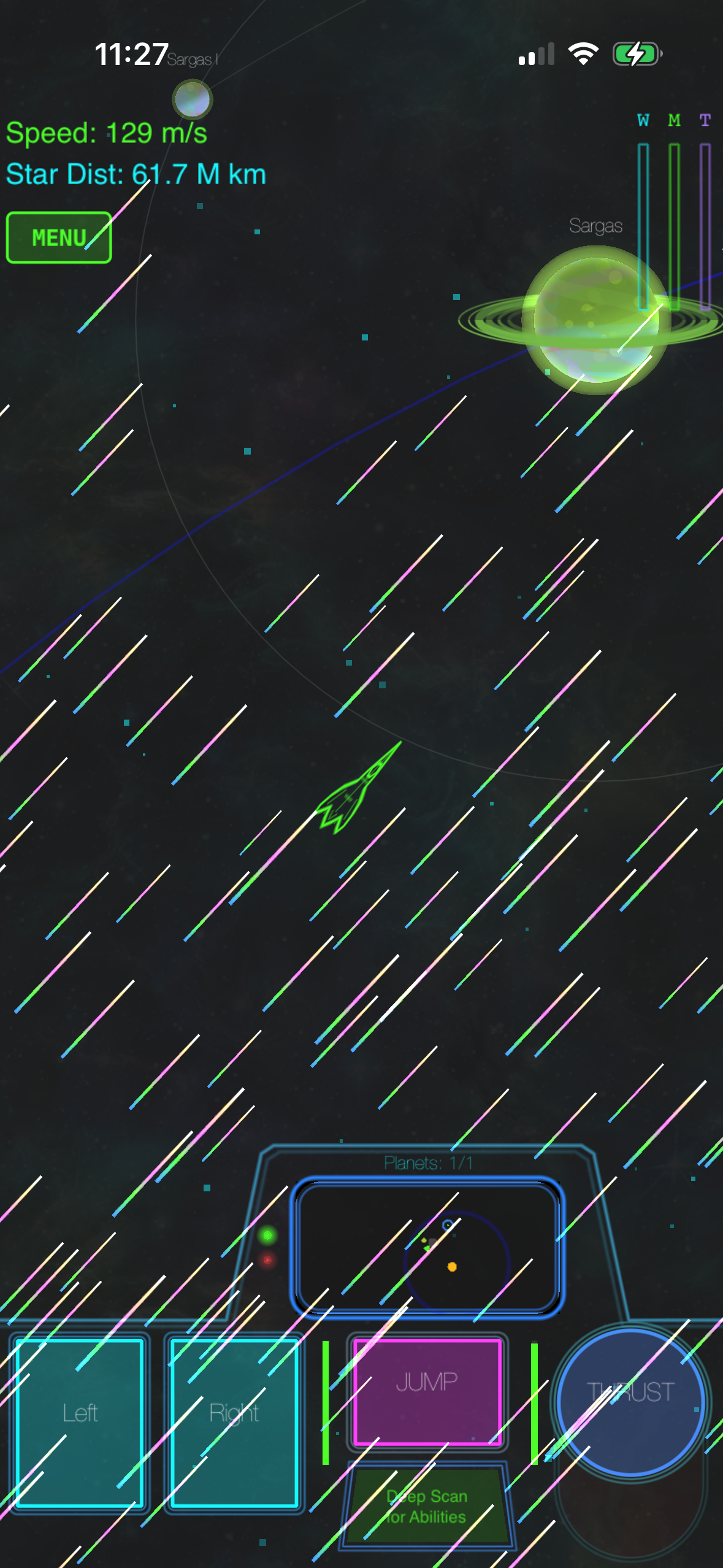
What matters is that craft-built arcade games commit to their visual language. They don’t mix vector and pixel art carelessly. They don’t add photorealistic shadows to abstract geometry. They understand that constraints—whether self-imposed or inherited from arcade hardware—create aesthetic coherence.
The Control Scheme Question: Touch, Buttons, and Feel
Premium arcade games on iPhone face a constraint original arcade cabinets never had: the screen is the controller.
This splits into three approaches:
Touch-based controls (swipe, tap, tilt): responsive and intuitive for casual play, but they occlude part of the screen and can feel imprecise for games that demand positioning. Works well for games where you’re tapping targets, less well for games where you’re rotating around a fixed point.
Button-based controls (virtual joystick + fire buttons): more screen real estate, clearer feedback, but requires the player to learn a control scheme. Pays off in games with high skill ceilings.
Controller support (MFi gamepad): the best feel for arcade games, but requires hardware the player may not own. Premium games that support controllers without requiring them are doing it right.
Galaximus uses a hybrid approach: a virtual joystick for directional input combined with on-screen thrust and rotation buttons. Virtual controls are responsive enough for casual play, but the game’s physics-based nature rewards precision. Players who stick with it for 30 minutes discover that positioning matters more than reflexes, and the controls stop feeling like a limitation. Controller support is built in for players who want it.
The control scheme is where most arcade ports fail. A developer who doesn’t respect the original game’s control DNA will make something that looks like Asteroids but plays like a mobile game wearing Asteroids’ costume. The craft-built titles in this guide all pass the feel test—they work on iPhone without apologizing for it.
Campaign vs. Endless: The Structure Question
Original arcade games were endless—you played until you died, then you fed another quarter. Modern premium arcade games have split into two camps: campaign-driven and endless.
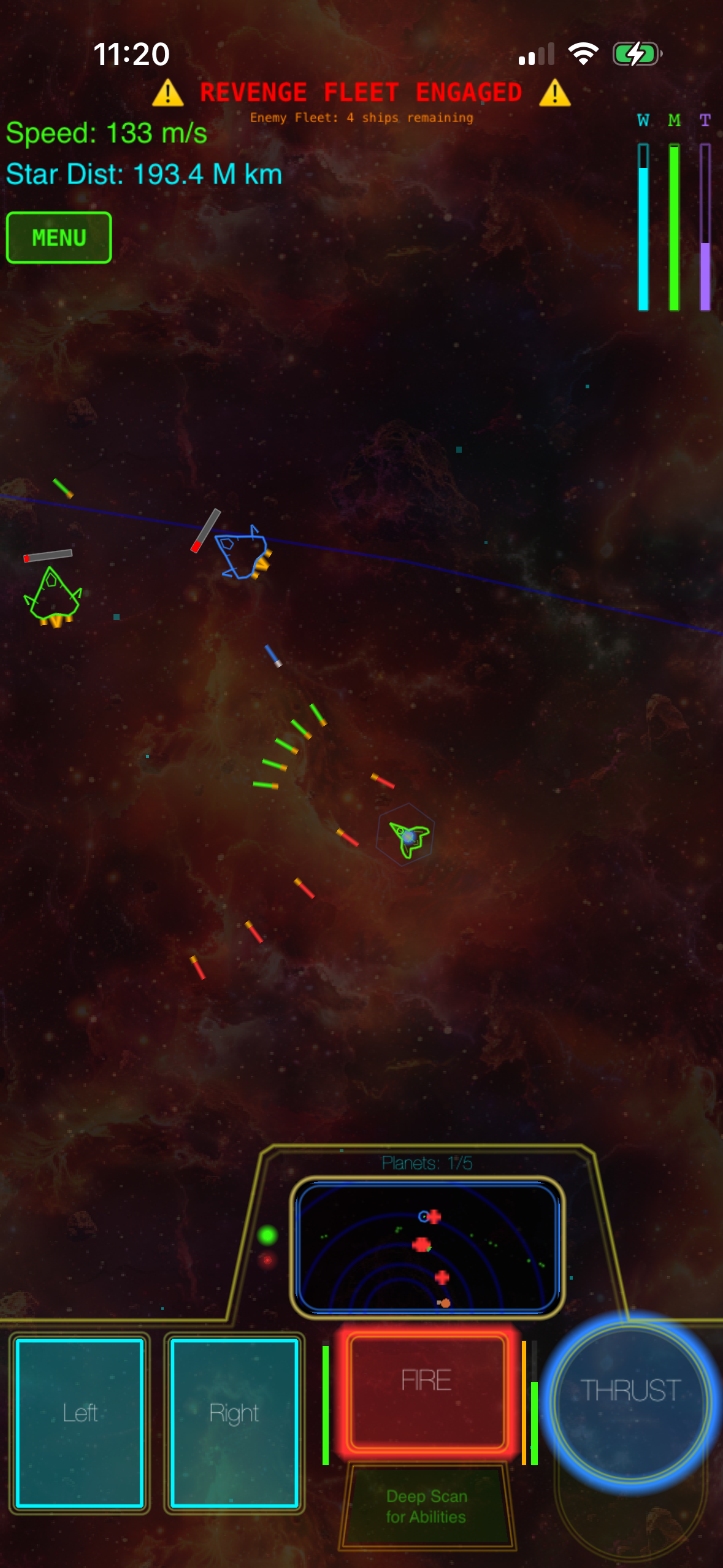
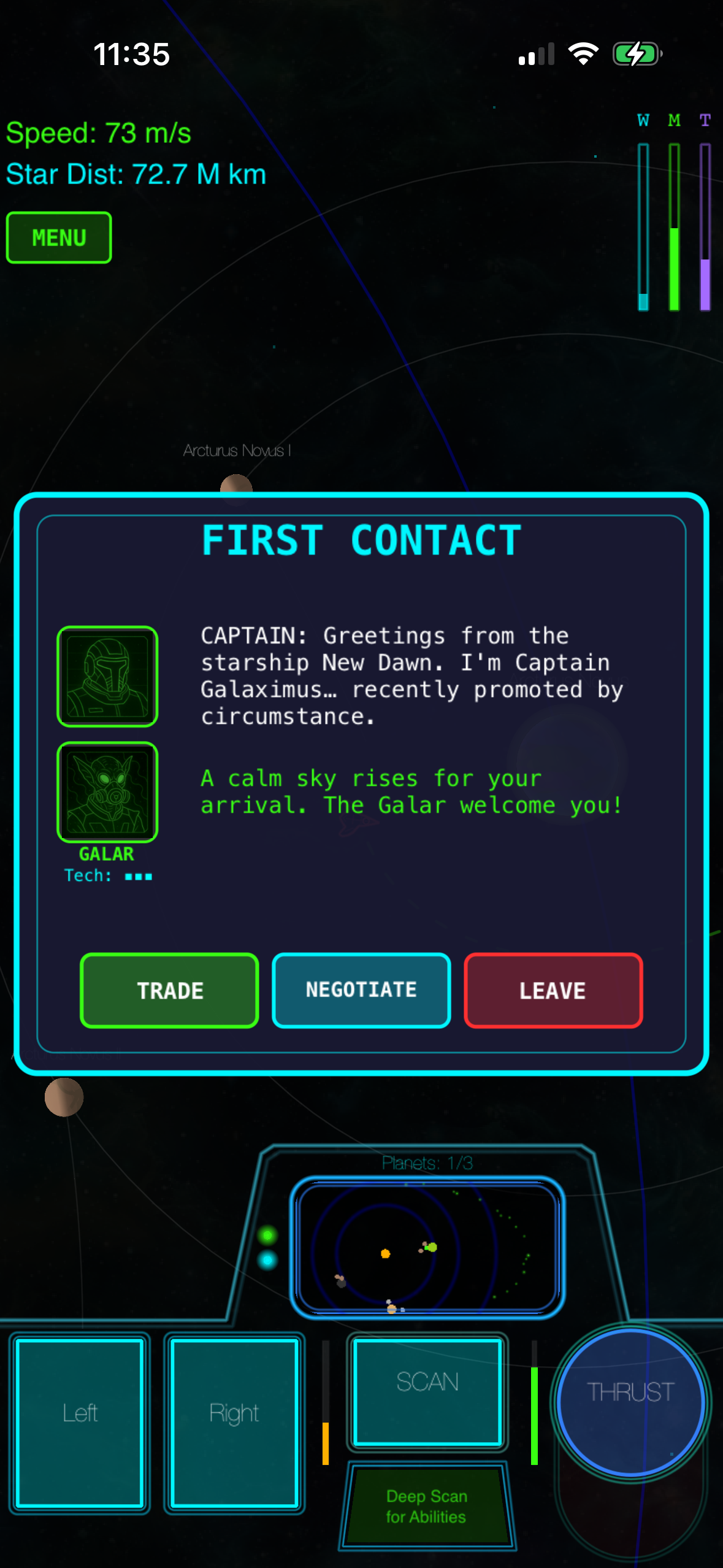
Campaign-driven games have a beginning, middle, and end. Galaximus has an 8-system arc (as of May 2026) with a narrative frame and a final encounter. Hyper Light Drifter has a structured world to explore with bosses and story beats. These games are designed to be completed. Replay comes from procedural generation or from the satisfaction of mastering difficult sections.
Endless games follow the original arcade model: you play until you lose, then you try again. Geometry Wars 3 has both—campaign levels and endless arcade modes. Asteroids: Gunner leans pure endless. The skill ceiling is the only limit.
Neither is objectively better. Campaign-driven games feel more like “complete experiences.” Endless games feel more like “arcade.” The best premium arcade games on iPhone in 2026 are the ones that know which structure they’re building and commit to it fully.
Procedural Generation and Replay Value
Most premium arcade games in 2026 use procedural generation to extend replay value without adding content. Each playthrough generates unique enemy waves, planet configurations, or level layouts.
The key is that procedural generation isn’t a substitute for design—it’s a tool that amplifies it. A well-designed arcade game with procedural generation stays interesting across dozens of playthroughs. A poorly designed one gets tedious fast because the underlying mechanics don’t support variation.
Galaximus uses procedural generation for star system configurations: each playthrough generates unique planet positions, asteroid distributions, and anomaly placements. The core systems (orbital mechanics, combat, exploration) stay the same, but the specific challenges you face are always different. That works because the physics engine is robust enough to handle infinite variations.
Games that lean on procedural generation to hide weak base mechanics don’t hold up. Procedural generation is a multiplier on craft, not a substitute for it.
The Premium Pricing Moment: Launch Tiers and Expansion Strategy
In 2026, premium arcade games are experimenting with launch-tier pricing. Galaximus launched at, and players who purchased at launch receive the upcoming Infinitum expansion (open-galaxy sandbox, planetary surface exploration, outpost building) as a free upgrade. After Infinitum ships, the combined game will move to.
This is a real time-limited offer, and it’s worth factoring into your buying decision. If you’re interested in Galaximus, buying at the launch tier means you get the expansion included. If you wait until after Infinitum launches, you’ll pay more for the same content.
Other premium developers are experimenting with different models—some bundle expansions into a single higher price upfront, others release smaller games with optional cosmetic DLC (which is fine as long as it doesn’t affect gameplay). The best approach is the one where the developer is transparent about what you’re buying and what future content costs.
Where to Start: Three Entry Points
If you’re new to premium arcade games on iPhone, here are three entry points depending on what appeals to you:
If you want pure arcade reflex gameplay: Asteroids: Gunner or Geometry Wars 3: Dimensions. Both are faithful to arcade lineage, zero learning curve, play-until-you-lose structure. 15 minutes in, you know if you like it.
If you want physics and strategy: Galaximus or Lunar Lander Deluxe. Both require understanding how gravity works, but the payoff is mastery that feels earned. Plan for 30 minutes to get comfortable.
If you want narrative and atmosphere: Hyper Light Drifter. It’s action-arcade with a story, hand-drawn pixel art, and a synthwave soundtrack. Closer to a complete adventure than a pure arcade experience.
FAQ
Q: Do I need a controller to play premium arcade games on iPhone?
A: No. All the games in this guide work with touch controls. Controller support is optional on most of them. Touch controls have a learning curve on physics-based games (like Galaximus), but they work fine once you’re comfortable.
Q: Can I play premium arcade games offline?
A: Yes. All the games in this guide work offline. No internet required. This is a feature of premium games—they don’t need to phone home for verification or ads.
Q: How long do premium arcade games last?
A: Depends on the game. Endless arcade games (Asteroids, Geometry Wars) have no ending—you play until you lose. Campaign-driven games (Galaximus, Hyper Light Drifter) take 5-15 hours to complete depending on difficulty and exploration. Replay value comes from mastery and procedural variation.
Q: What’s the difference between “retro” and “arcade-lineage”?
A: “Retro” is aesthetic—pixel art, 8-bit sounds, CRT filters. “Arcade-lineage” means the game inherits mechanical DNA from a specific 1979-1985 cabinet format. A game can be retro without being arcade-lineage, and vice versa. The best premium arcade games on iPhone are lineage-faithful, whether they look retro or modern.
Q: Do these games work on older iPhone models?
A: Most require iOS 14 or later. Check the App Store listing for your specific device. Physics-heavy games like Galaximus benefit from newer processors but run on iPhone 11 and later.
The Craft-Built Standard
Premium arcade games on iPhone in 2026 aren’t about nostalgia tourism or visual novelty. They’re about developers who understand arcade design deeply enough to reinterpret it for modern hardware without losing what made the originals work.
When you buy a premium arcade game, you’re buying a complete experience designed by someone who cared enough to get the details right. No ads interrupting your flow. No timers forcing you to wait. No cosmetics dangling in front of you. Just the game, the mechanics, and the skill ceiling.
That standard is worth supporting. It’s rare enough on iPhone that when you find it, you’ve found something worth keeping.