Best Retro-Inspired Indie Games for iPhone 2026

Photo by Enrique Guzmán Egas on Unsplash
Best Retro-Inspired Indie Games for iPhone 2026
Retro-inspired indie games on iPhone aren’t about pixel-perfect emulation or nostalgia as a substitute for craft. The best ones in 2026 take the principles that made arcade games work—tight controls, clear feedback, high skill ceiling—and rebuild them with modern tools and genuine design intent. Vector graphics, procedural audio, real physics, IAP-free monetization: these are the moves indie developers are making to honor arcade lineage while shipping something that couldn’t have existed in 1982.
This guide covers five premium indie titles that nail the retro-inspired formula without feeling like museum pieces. Each one respects its arcade roots while doing something specific that only works on modern hardware or through modern indie sensibility.
What “Retro-Inspired” Actually Means in 2026
The retro-game revival on iPhone has matured past aesthetic cosplay. In 2026, a retro-inspired indie game means one of two things: either it’s solving a design problem the way arcade engineers solved it (high skill ceiling, immediate feedback, no padding), or it’s deliberately choosing a visual language (vector, pixel, wireframe, synthwave) that serves the mechanics, not the other way around.
The worst retro-inspired games slap a CRT filter on a free-to-play title and call it craft. The best ones—the ones worth your money—understand that retro design constraints created elegance. Removing the constraint without replacing it with new intent just leaves you with a thin game in a vintage wrapper.
The five titles below each picked a specific constraint and built something real inside it.
Galaximus: Orbital Mechanics as the Core Language
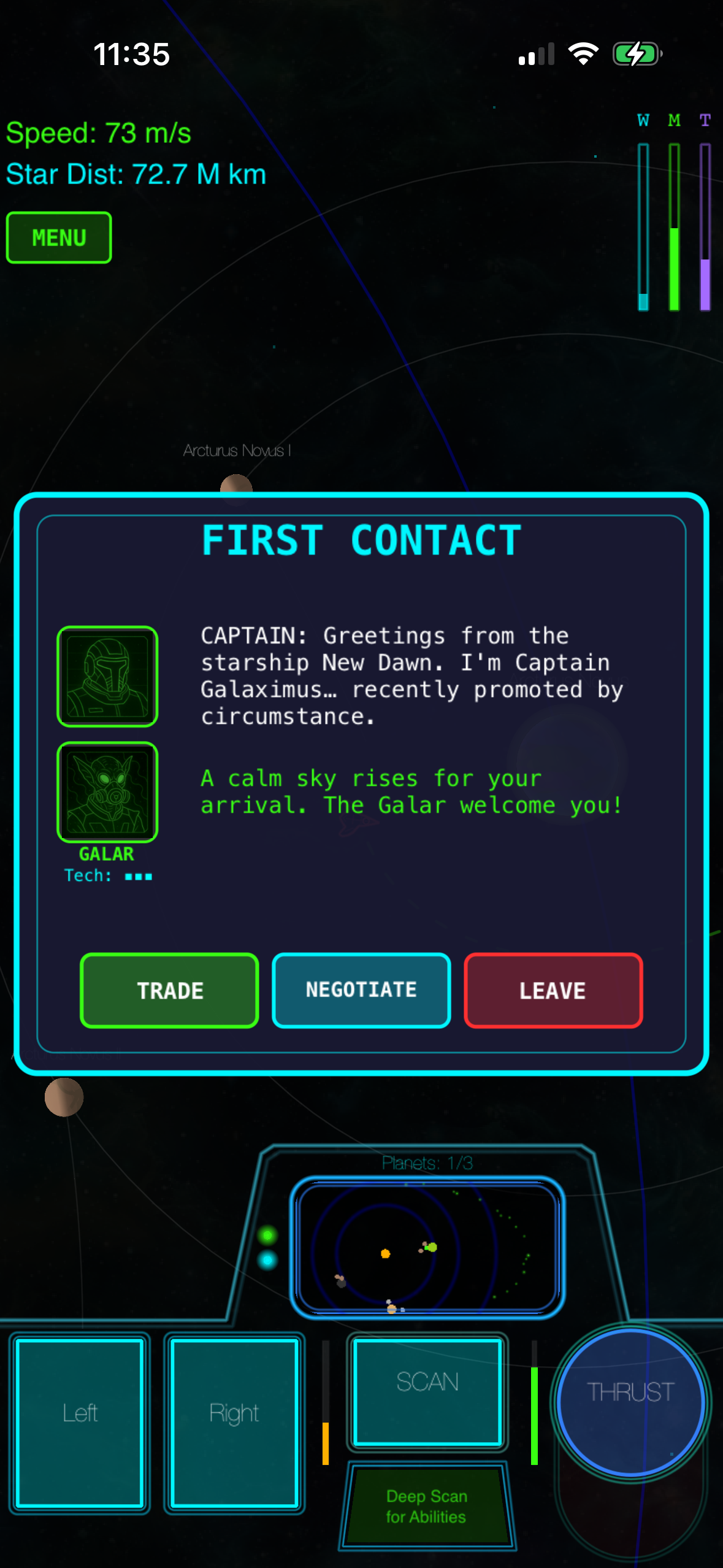
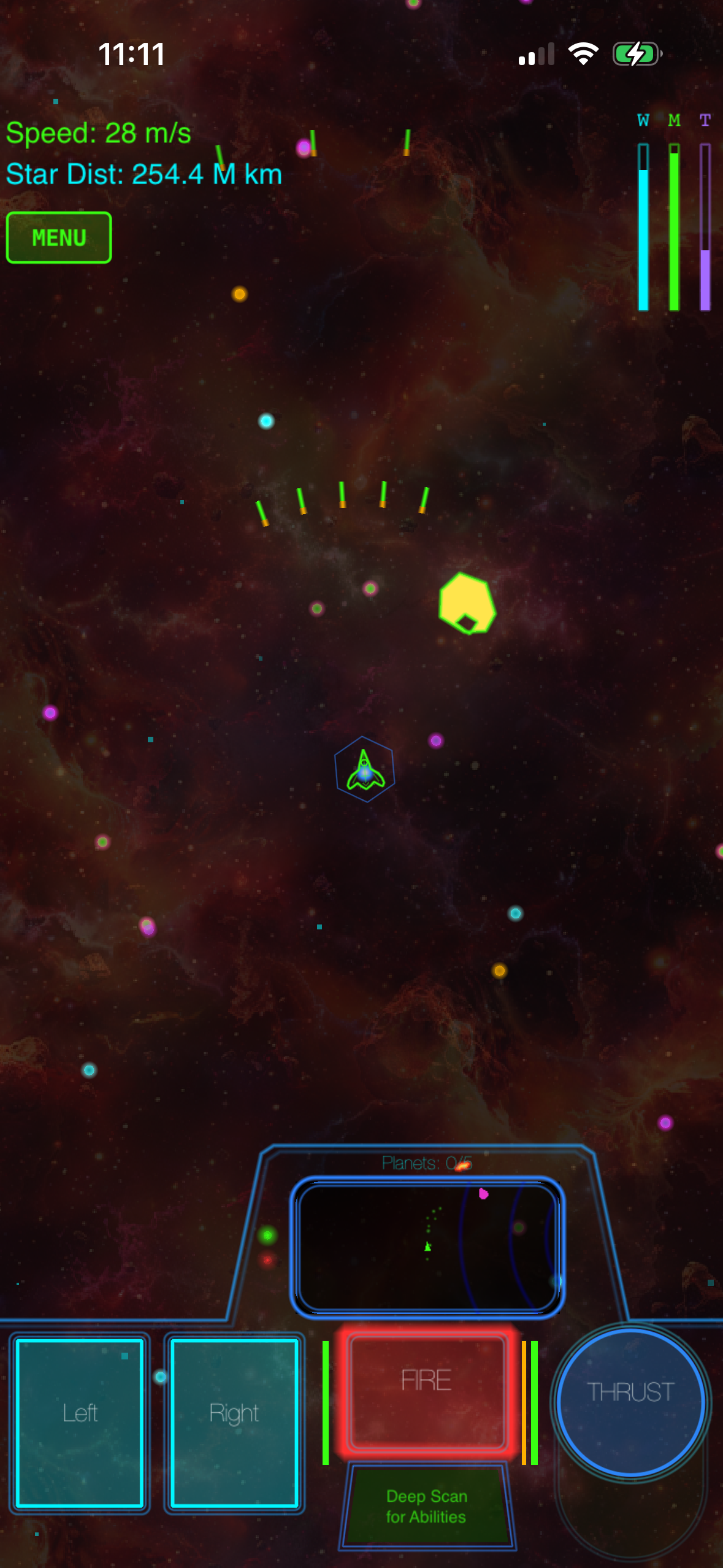
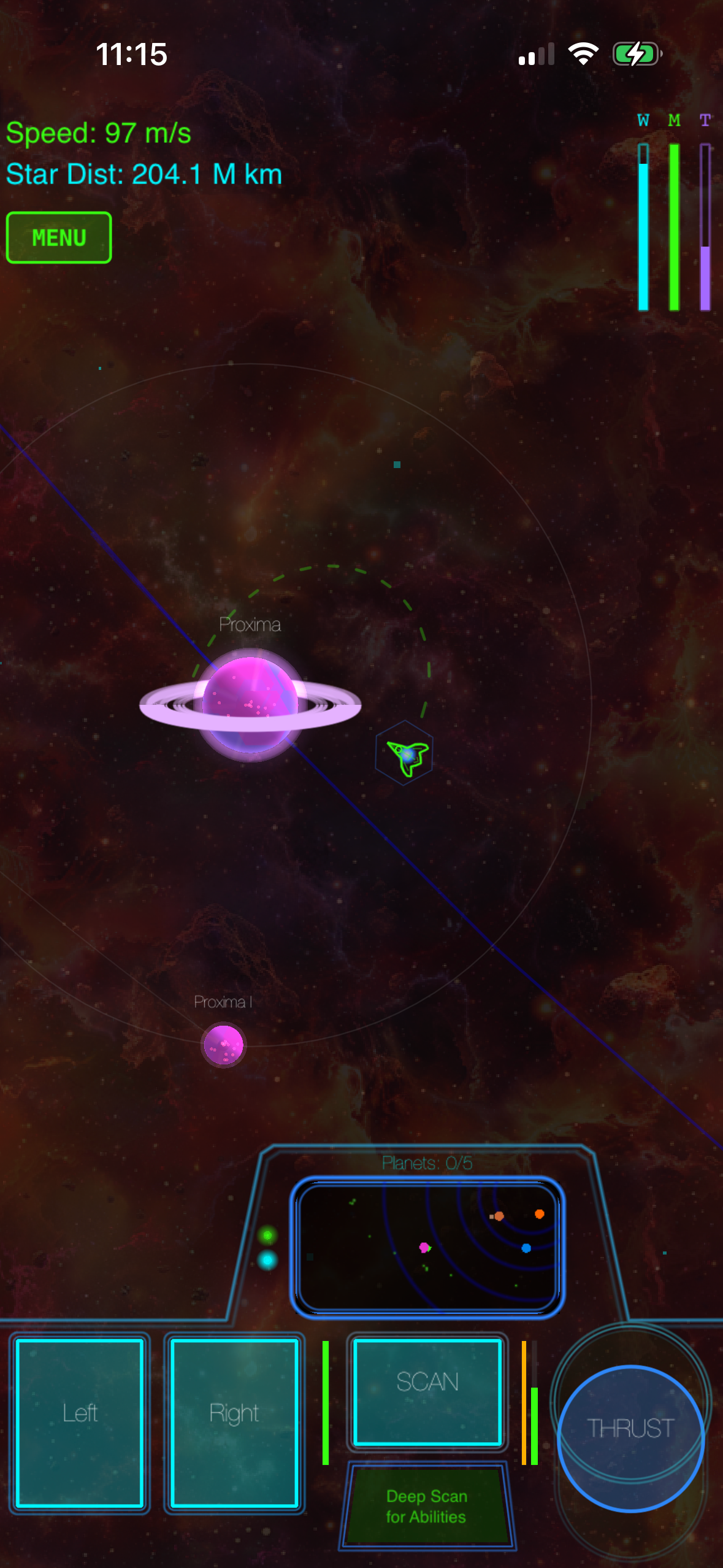
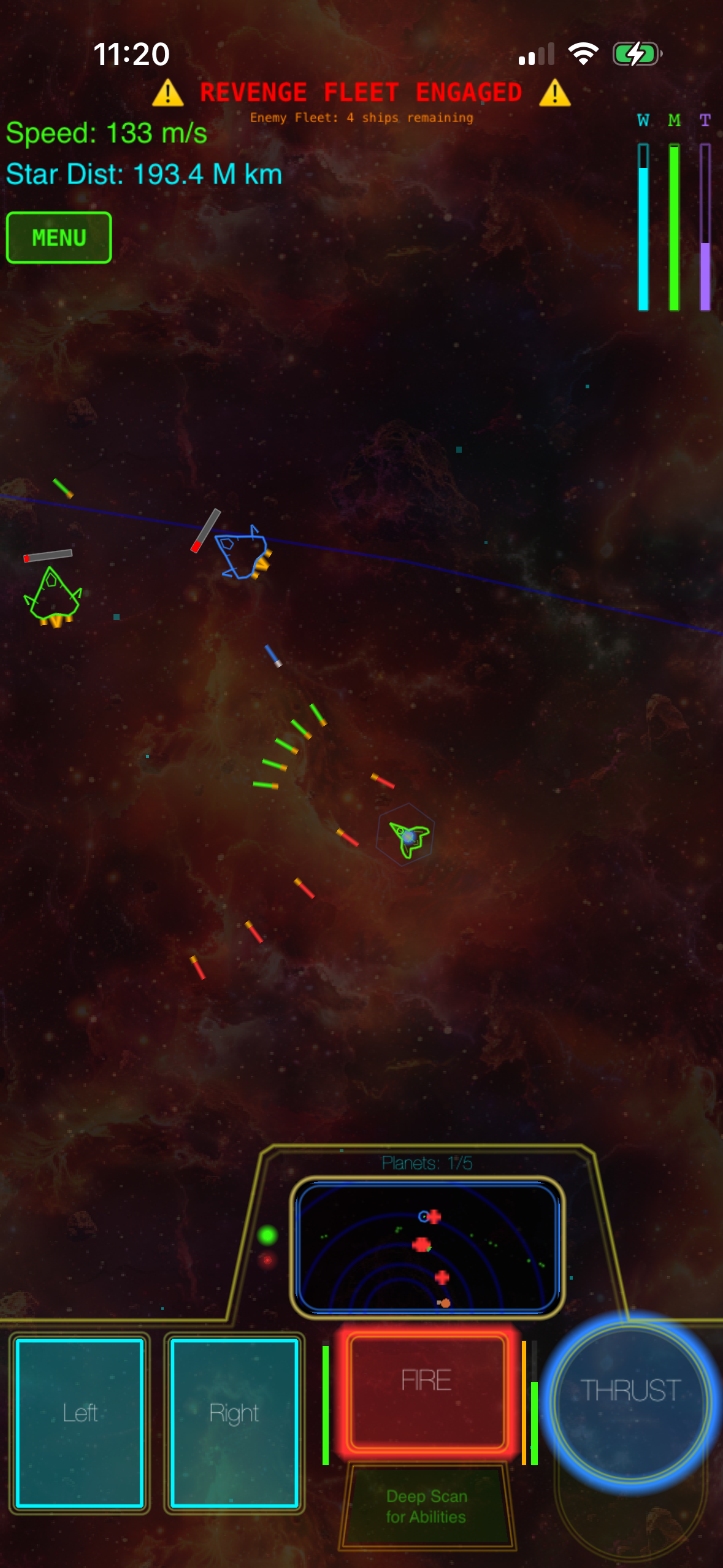
Galaximus [, App Store] strips arcade action down to its essential layer: a ship, gravity, and the player’s ability to use one to master the other. Every celestial body in the game obeys real orbital mechanics. The player ship is subject to all of it. Mastery comes from learning to slingshot around planets, capture into stable orbits, and use gravity wells as fuel-free engines.
The retro inspiration here is direct: Lunar Lander and Asteroids both put the player inside a physics system and made learning that system the game. Galaximus does the same thing, but with a simulation accurate enough that a player’s intuition about gravity actually transfers to real-world orbital mechanics. That’s not nostalgia—that’s respect for the lineage.
The learning curve is real. New players spend the first 20 minutes adjusting to the fact that their ship doesn’t have a traditional “forward” direction; instead, they’re managing velocity and using gravity as a tool. After that adjustment, the payoff is immediate: every victory feels like you understood the system, not that you got lucky. The procedurally configured star systems mean each playthrough generates a unique set of challenges, but the narrative arc stays authored and complete.
The game is premium-tier, IAP-free. No ads, no energy timers. The visual language is vector arcade—neon lines and minimal geometry—which matches the mechanical simplicity perfectly.
Asteroids Recharged: Respecting the Template
Asteroids Recharged [, App Store] is a straight line back to Atari’s 1979 cabinet, but it’s not a port. The core loop is identical: you’re a ship at the center of the screen, asteroids come at you, you shoot them, they fragment into smaller rocks. But the developers (Dodge Roll Games) added one modern layer: power-ups that transform your weapon into something wild—homing missiles, spreadshot, time-slow, ricocheting projectiles.
The genius move is that these power-ups don’t break the game; they extend the skill expression. A veteran player with a spreadshot still needs to manage positioning and timing the same way they would with a basic laser. The power-ups are toys, not crutches.
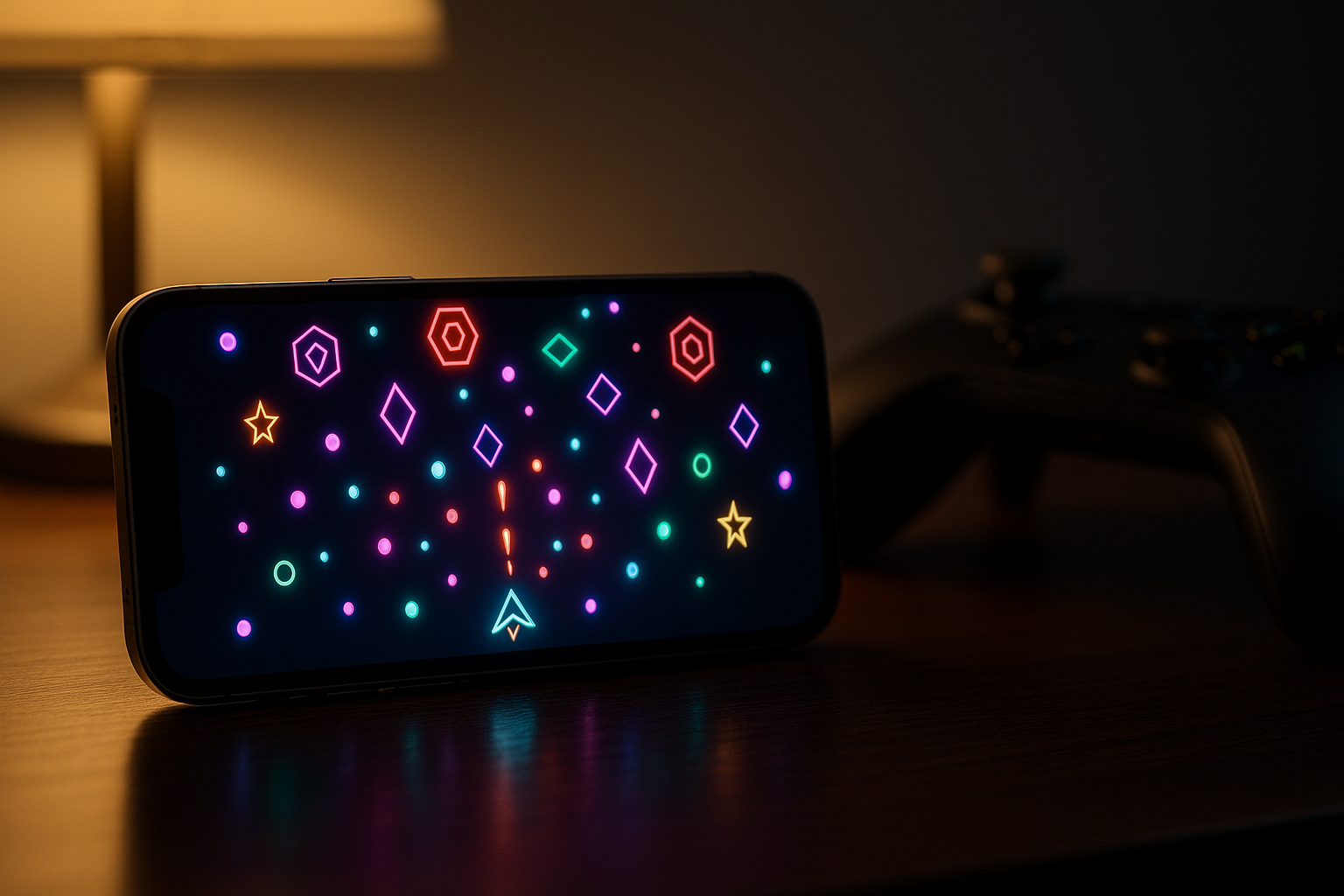
The visual style is clean vector geometry—no CRT filter, no ironic pixel art. Just lines, collision, and feedback. The controls are responsive on a touchscreen, and the difficulty curve respects both new players (early waves are forgiving) and arcade veterans (late-game waves demand pattern recognition and positioning that rivals the original cabinet).
It’s budget-tier pricing and completely IAP-free. If you want proof that retro arcade design still works without modification, Asteroids Recharged is it.
Neon Abyss: Synthwave Roguelike with Pixel Craft
Neon Abyss [, App Store] is a roguelike with a visual identity so specific—neon-soaked synthwave, hand-drawn pixel art, 80s sci-fi aesthetic—that the retro inspiration could feel like window dressing. Instead, the developers (Veewo Games) made the aesthetic inform the game design. The synth soundtrack isn’t ironic; it’s the emotional core. The neon color palette isn’t decoration; it’s how you read the screen during fast action sequences.
The mechanical core is a roguelike run: you descend through procedurally generated levels, collect weapons and power-ups, fight bosses, and either win or restart. What keeps it interesting across multiple runs is the sheer variety of weapon combinations and the way each run feels genuinely different. The retro inspiration shows in how tightly tuned the difficulty is—you’re never drowning in options, but you always have meaningful choices.
The pixel art is hand-drawn, not procedurally generated or AI-assisted. You can see the craft in animation frames, in the way enemies telegraph attacks, in the boss design. The synthwave atmosphere serves the gameplay, not the other way around.
Mid-tier pricing, IAP-free. If you want a retro-inspired game that proves modern indie sensibility can coexist with genuine homage, Neon Abyss delivers.
Threes!: The Retro Puzzle Cabinet Reimagined
Threes! [, App Store] is a number-sliding puzzle game that sounds simple—slide tiles on a grid, combine matching numbers, reach 2048—but the design is so tight that it feels like a retro arcade puzzle cabinet (think Tetris, Puyo Puyo) had a conversation with modern indie minimalism.
The retro inspiration is structural: like the best arcade puzzlers, Threes! has a single core mechanic that scales in complexity as you play. Early moves feel intuitive; later moves demand forward planning and spatial reasoning. The game doesn’t explain itself with tutorials; it teaches through play. That’s arcade design.
The modern indie layer is the aesthetic: clean typography, a muted color palette, no animations that don’t serve clarity. The soundtrack is minimal—just enough to anchor the experience without distracting. Every design choice exists to make the core puzzle more readable, not more decorative.
It’s budget-tier pricing and completely free of IAP. The game is also available on other platforms (web, desktop, other mobile), but the iPhone version is the definitive one—the touchscreen interaction is perfect for the sliding mechanic.
Star Realms: Retro Sci-Fi Strategy Wrapped in Deck-Building
Star Realms [Free with optional cosmetics, App Store] started as a physical card game, but the iOS version (by Wise Wizard Games) is where it shines. The retro inspiration is visual and thematic: the UI is designed to look like a retro sci-fi command console, all neon lines and minimalist geometry. The factions are named after classic sci-fi tropes (the Star Empire, the Trade Federation, the Machine Cult, the Blob). The whole experience feels like you’re playing a strategy game on a 1980s space-station computer.
The mechanical core is deck-building: you start with a weak deck of cards, buy better cards from a shared market, and build a deck that can either deal damage to your opponent or generate enough resources to buy even better cards. It’s a tight economic system with genuine strategic depth. The retro inspiration shows in how the game respects your intelligence—there are no hand-holding tutorials, no “suggested moves,” no AI telling you what to do. You figure it out or you lose. That’s arcade-era game design.
The game is playable solo (against AI opponents of varying difficulty) or multiplayer (asynchronous or real-time). The cosmetics are visual only—alternate card art, faction skins—and don’t affect gameplay. The retro aesthetic isn’t ironic; it’s the lens through which the entire strategy unfolds.
Premium-Only Model: Why It Matters for Retro Games
Every game listed above is either one-time purchase or free-to-play without battle passes, energy timers, or seasonal monetization. This matters for retro-inspired games specifically because the arcade-era game design—high skill ceiling, immediate feedback, no padding—doesn’t coexist well with time-gating or loot-box randomization. Those mechanics are designed to extend engagement by creating artificial scarcity. Retro design creates engagement by making the game good.
How Retro Inspiration Differs from Retro Emulation
It’s worth clarifying: this guide is about games inspired by retro design, not emulated ports of original arcade cabinets. There’s a place for those ports—playing the actual Asteroids arcade game on your phone has a specific value—but they’re not what’s interesting in 2026. What’s interesting is what happens when a modern indie developer understands why an arcade game worked and then applies that understanding to a new idea.
Galaximus understands why Lunar Lander worked (physics as the interface) and rebuilds it with accurate orbital mechanics. Asteroids Recharged understands why the original Asteroids worked (simple core loop, scaling difficulty, satisfying feedback) and adds one modern layer (power-ups as skill expression). Neon Abyss understands why roguelikes work (procedural variety, tight economy, meaningful choices) and wraps it in a visual identity that serves the gameplay instead of decorating it.
That’s the difference between retro inspiration and retro cosplay.
FAQ
Q: Do I need a controller to play these games? A: No. All five games are optimized for touchscreen. Some (like Galaximus) also support external controllers if you want them, but touchscreen controls are the intended interface.
Q: Are these games hard? A: They have real learning curves, yes. Galaximus has the steepest curve—you need to understand orbital mechanics. Asteroids Recharged and Threes! are easier to pick up but harder to master. Neon Abyss and Star Realms are medium difficulty with good difficulty scaling. None of them are unfair; they just respect your intelligence and don’t hold your hand.
Q: Can I play these offline? A: Galaximus, Asteroids Recharged, Threes!, and Neon Abyss are fully offline. Star Realms requires an internet connection for multiplayer, but the single-player campaign is fully playable offline after install with no additional authentication required.
Q: How long do these games take to complete? A: Galaximus has a structured 8-system campaign (roughly 4-6 hours for a first playthrough, with replay incentive from procedural generation). Asteroids Recharged and Neon Abyss are score-chase / roguelike games with no defined “end”—they’re designed for repeated sessions. Threes! is a puzzle game with no time limit. Star Realms is campaign-based or multiplayer-based depending on mode. All five are designed for long-term engagement, not one-session completions.
Q: Do these games get updates? A: Galaximus is in active development with a major expansion (Galaximus Infinitum) coming in late 2026. Asteroids Recharged, Neon Abyss, and Star Realms receive periodic balance updates and occasional new content. Threes! is feature-complete and receives maintenance updates only.
The Retro-Inspired Indie Game Landscape in 2026
Retro inspiration on iPhone has moved past novelty. In 2026, the best retro-inspired indie games are the ones that understand the why behind arcade design—why constraints created elegance, why feedback matters, why a high skill ceiling makes a game worth returning to—and then apply that understanding to new mechanics or new visual languages.
The five games above represent that maturity. They’re not trying to be the original Asteroids or Lunar Lander. They’re trying to be worthy successors to the design principles those games established. And they succeed.