iPhone Games Like Asteroids: Modern Arcade Reimagined

Photo by Ben Neale on Unsplash
iPhone Games Like Asteroids: Modern Arcade Reimagined
If you’re hunting for iPhone games that capture the essence of Asteroids—that clean, geometric chaos of dodging and shooting in a void—you’ll find the formula has evolved. Physics engines and procedurally generated encounters now replace fixed enemy patterns. The best modern takes add gravity simulation, narrative moments, or roguelike structure, but they all respect the core loop: position, aim, time your shot, survive.
How We Chose
This guide focuses on five premium games released in 2023 or later that either employ real physics simulation, procedural generation, or both. We excluded free-to-play titles with ads or energy timers, and we prioritized games that acknowledge Asteroids’ design lineage rather than simply borrowing the space-shooter aesthetic. These five represent distinct approaches to the arcade formula, not a ranked list.
What Made Asteroids Work (and Still Does)
The 1979 Atari arcade cabinet succeeded because it solved a design problem elegantly: how do you make a game feel dangerous and rewarding with minimal visual information? The answer was constraint. A single player ship, faceless asteroids, no story, no progression treadmill—just the core loop of position, aim, and timing.
Modern takes on this formula don’t abandon the core; they extend it. Some add gravity. Some add narrative. Some add procedural generation. But the best ones respect the lineage: they understand that Asteroids worked because every decision the player made mattered immediately, and failure felt fair.
The vector-graphics aesthetic matters too. Asteroids’ stark wireframe style created a visual language that mobile screens now handle beautifully. Games that lean into that language—clean lines, neon outlines, minimal color palettes—inherit the arcade’s clarity without feeling dated.
Physics-Driven Space Arcade: The Galaximus Approach
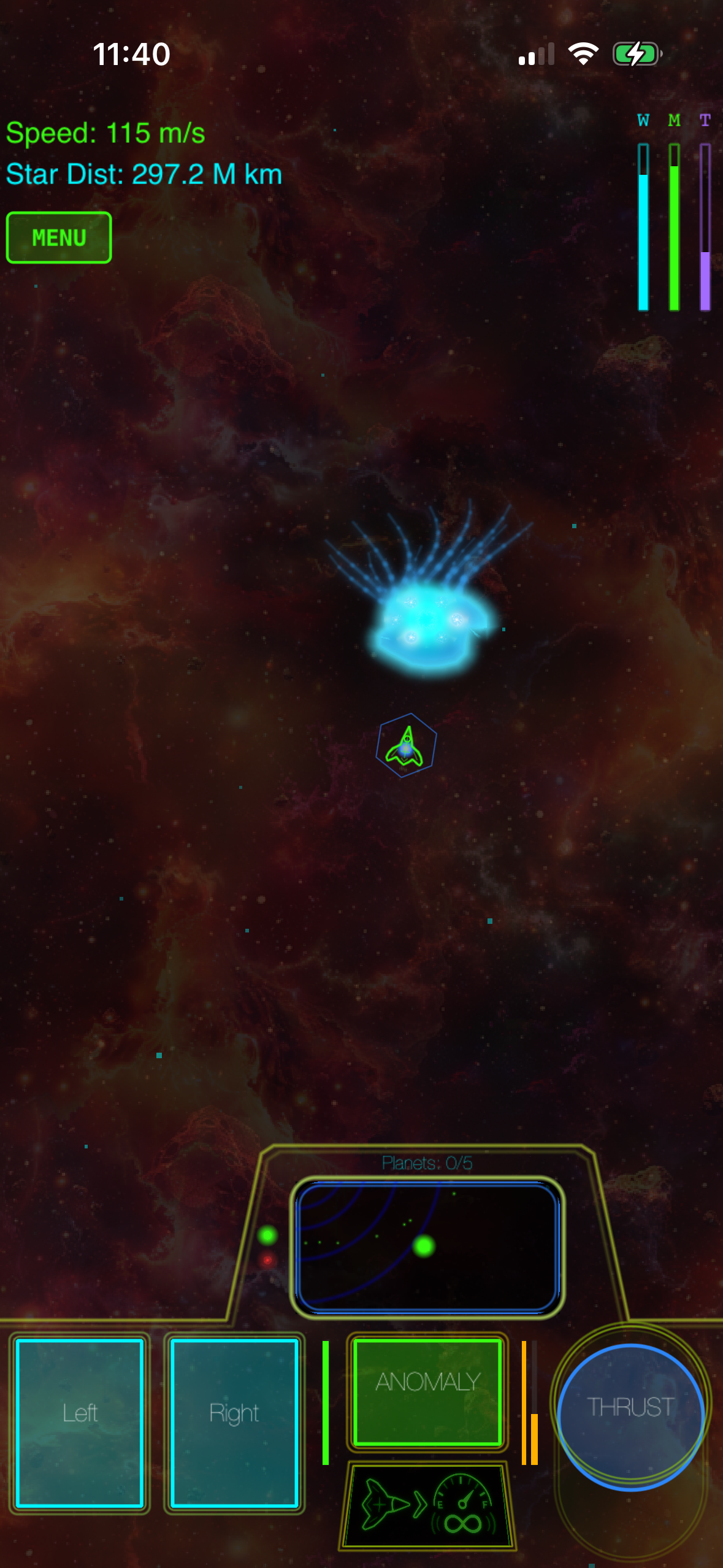
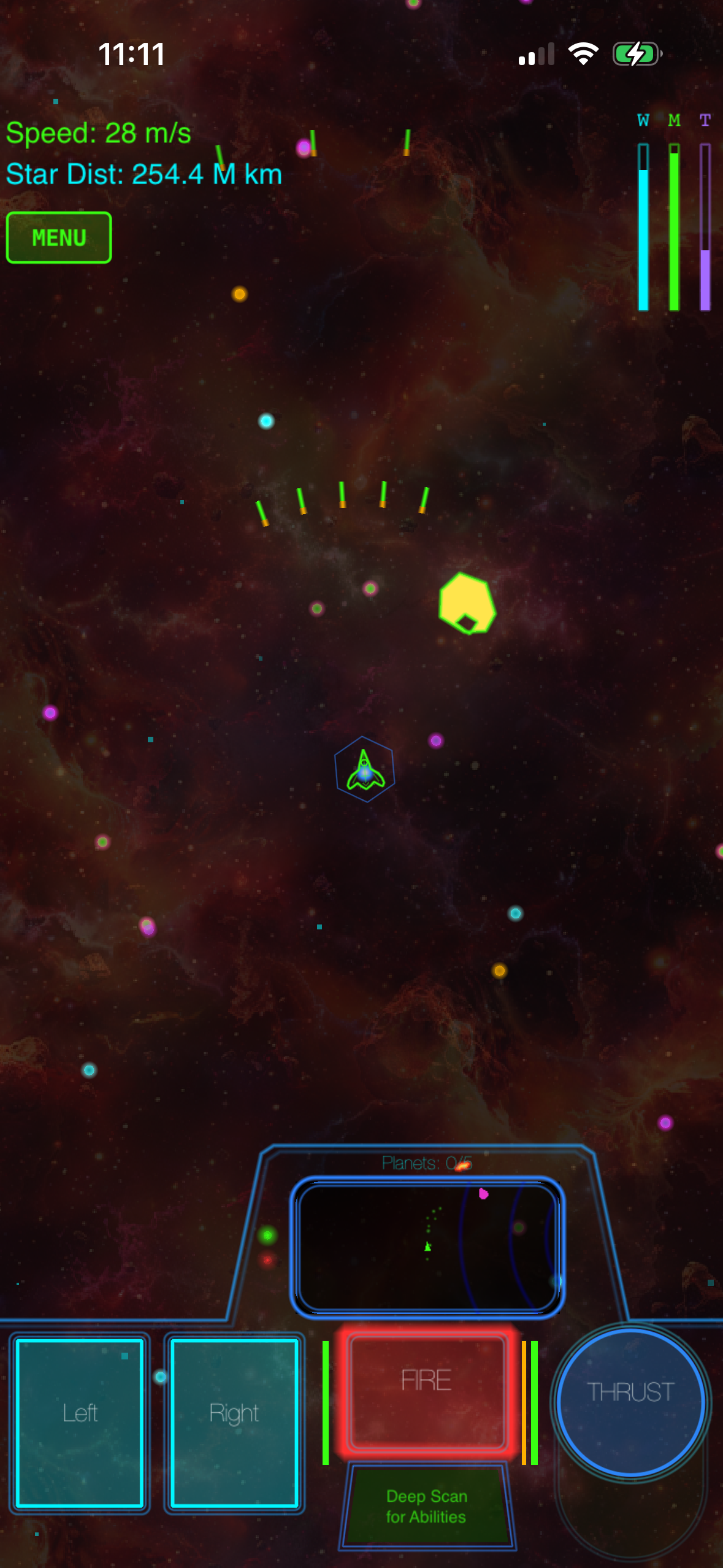
The most significant departure from the Asteroids formula on modern iPhone is the introduction of real orbital mechanics. Galaximus builds on arcade-action principles but replaces the flat Newtonian movement model with actual gravity simulation. Every body in space exerts pull on every other body in real time.
This changes everything about positioning. In Asteroids, you move in straight lines until you thrust again. In Galaximus, you’re always falling toward something—a planet, a star, an asteroid. The learning curve is real; the payoff is mastery of a system that rewards planning over reflexes. A slingshot maneuver—using a planet’s gravity well to gain speed for free—becomes the core skill you build toward.
The game ships complete with a structured 8-system campaign. Each playthrough generates unique planet configurations, so the topology is different every time, but the narrative arc is authored. You’re not playing an endless procedural sandbox; you’re flying a specific story with a beginning, middle, and satisfying ending.
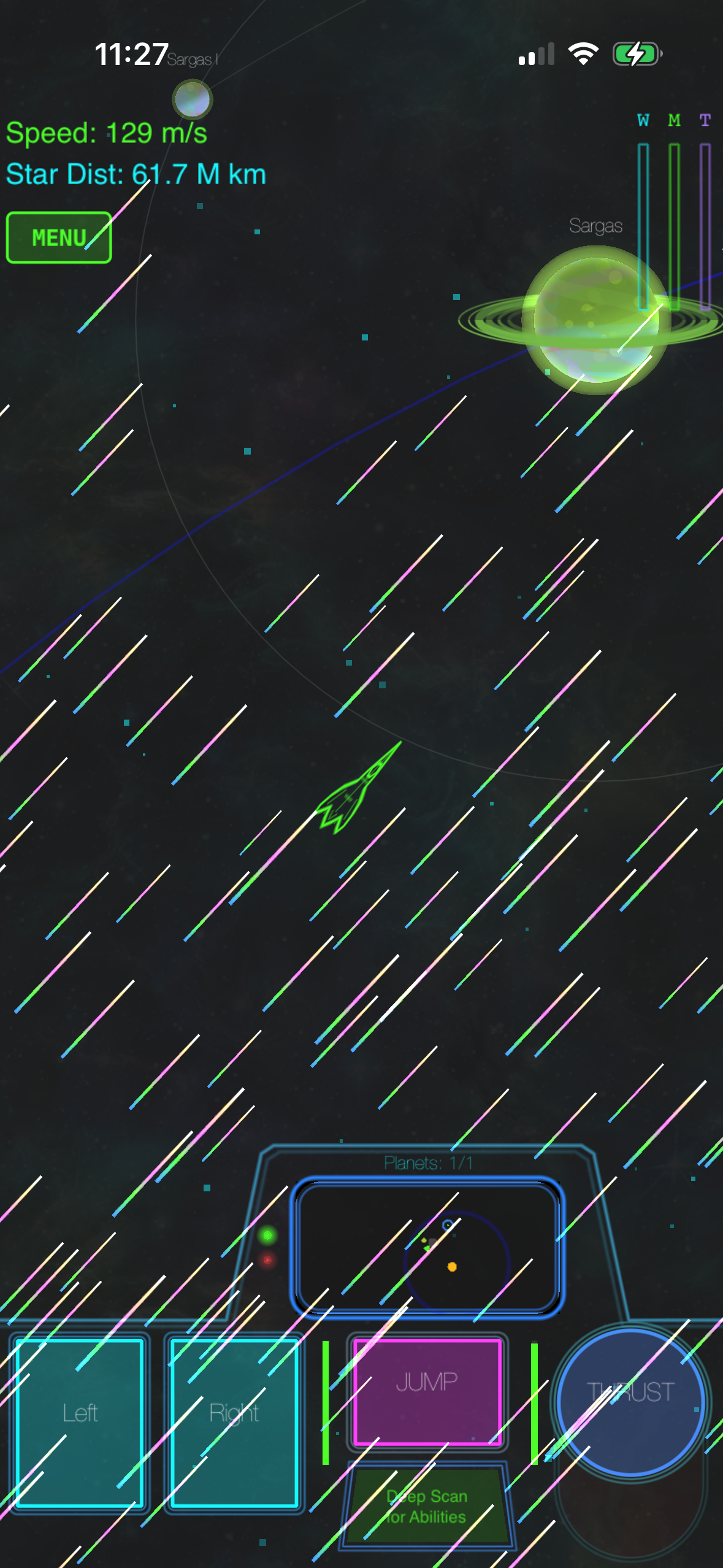
Galaximus is premium-only: no ads, no in-app purchases, no energy timers. Pay once at and the game is yours forever.
Twin-Stick and Geometric Abstraction: Geometry Wars Legacy
If you want the Asteroids spirit without physics simulation, Geometry Wars 3: Dimensions Evolved is the modern reference. It’s a twin-stick shooter built on the same geometric-abstraction principle that made Asteroids iconic: all information on screen, no UI clutter, pure visual clarity.
Geometry Wars adds waves of enemies instead of asteroids, but the core loop is similar—position yourself, manage your fire rate, don’t get surrounded. The “Dimensions” subtitle refers to the game’s shift toward 3D geometry, but on iPhone it plays as a 2.5D experience where spatial awareness is everything. The touch controls map twin-stick input to left and right screen halves, which works better than it has any right to.
The game respects the arcade lineage by making progression optional. You can chase high scores on the leaderboard, or you can play campaign mode with unlockables. Neither feels like a grind; the game understands that arcade players want immediate feedback, not a battle pass.
Roguelike Arcade: Peglin and Procedural Encounters
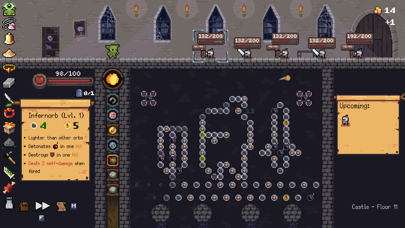
Peglin takes the arcade spirit in a different direction: roguelike pachinko meets arcade shooting. You’re flinging a ball down a board filled with pegs and enemies. The ball bounces according to physics; enemies spawn in patterns; each run is procedurally configured. It’s not Asteroids, but it honors the same design principle—random encounters, fair failure states, and the satisfaction of mastering a system.
The genius of Peglin is that it makes procedural generation feel like arcade randomness. Early arcade games didn’t have procedural generation; they had hand-authored enemy patterns that felt random because you hadn’t memorized them yet. Peglin recaptures that feeling by making each run feel authored even though it’s generated.
Progression is tied to unlocks and build variety, not to a story campaign. You’re chasing a high run, not a narrative endpoint. That’s arcade DNA.
Narrative-Driven Arcade: Duality and Boss Encounters
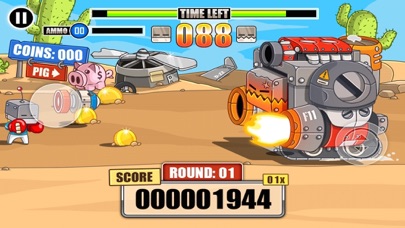
Duality is a single-player arcade shooter with hand-authored story moments woven into the action. You’re piloting a ship through sci-fi encounters—some are pure combat, some are dialogue, some are exploration. The game doesn’t try to be a narrative epic; it’s a series of arcade moments connected by a loose plot.
What matters is that Duality respects the arcade format while adding context. You’re not shooting abstract shapes; you’re engaging with a sci-fi scenario that has stakes. The boss encounters are memorable because they’re tied to characters you’ve met, not just difficulty spikes.
The control scheme is touch-optimized for single-hand play, which is a smart mobile-specific design choice. You’re not managing a twin-stick layout; you’re tapping and dragging to move and aim. It’s simpler than Geometry Wars but more tactile than pure Asteroids.
Retro-Faithful Homage: Asteroids: Gunner and Direct Lineage
If you want the Asteroids formula with modern production values, Asteroids: Gunner is the straightforward answer. It keeps the core loop—dodge, aim, shoot—but adds weapon variety, progression through waves, and visual polish that respects the original without trying to reinvent it.
The game doesn’t overthink the formula. You’re destroying asteroids. You unlock better weapons. You chase high scores. It’s not trying to be a narrative experience or a physics simulation; it’s Asteroids with the rough edges sanded off and a modern control scheme that works on touch.
This is the right choice if you want arcade nostalgia without learning a new system. The learning curve is minimal; mastery comes from pattern recognition and timing, just like the original.
Touch Controls and the Mobile Arcade Advantage
The constraints that made Asteroids work in 1979—minimal visual information, clear feedback, immediate consequences—are exactly what makes arcade games work on small screens. Desktop ports of these games often feel overengineered; iPhone versions feel native.
Touch controls, when well-designed, offer advantages over joystick-era arcade games. Many players find tapping to aim more precise than rotating a joystick; dragging to move gives you finer positional control. The trade-off is that you lose the tactile feedback of physical buttons, but modern games compensate with haptic feedback and responsive audio design.
The vector-graphics aesthetic is also a win on mobile. Wireframe visuals don’t require high-resolution textures or complex shaders. They scale beautifully from iPhone SE to iPhone Pro Max. And they age better than realistic graphics—a vector-arcade game from 2020 looks as clean today as it did on launch.
Choosing Your Asteroids Successor
The choice depends on what aspect of Asteroids you loved most:
- If you loved the pure arcade loop: Asteroids: Gunner or Geometry Wars 3.
- If you loved the vector aesthetic: Any of the above, but especially Geometry Wars and Galaximus for their neon-outline design language.
- If you loved the sense of mastery: Galaximus, where learning gravity becomes the payoff.
- If you loved procedural randomness: Peglin, where each run feels different.
- If you want story context: Duality, where arcade action has narrative stakes.
None of these games are free-to-play with ads or energy timers. They’re all premium purchases—you pay once and own the complete game. That’s a deliberate choice by indie developers who remember when arcade games shipped finished.
FAQ
Do these games work offline?
Yes. Galaximus, Geometry Wars 3, Peglin, Duality, and Asteroids: Gunner all work without an internet connection. No online multiplayer, no cloud saves required—they’re single-player experiences designed to work anywhere.
Can I sync progress across devices?
Geometry Wars 3 supports iCloud sync for campaign progress and leaderboard data. Galaximus does not currently support cross-device sync. Peglin, Duality, and Asteroids: Gunner are iPhone-exclusive or don’t offer cross-device progression. If device sync matters to you, Geometry Wars 3 is your best option.
Which has the shortest play sessions?
Asteroids: Gunner and Geometry Wars 3 support quick 5-10 minute runs. Duality has story moments that can be completed in 15-20 minute chunks. Peglin runs vary but average 20-30 minutes. Galaximus campaign sessions are 30-45 minutes per system. For commute-friendly play, Asteroids: Gunner is the winner.
Do any of these have leaderboards?
Geometry Wars 3 has robust leaderboard support with global rankings. Asteroids: Gunner includes local score tracking. Galaximus focuses on campaign completion rather than score chasing. Peglin and Duality are more progression-focused than leaderboard-focused.
Which one should I buy first if I only have budget for one?
If you want the most different experience from the original Asteroids, pick Galaximus—the gravity mechanic is genuinely novel and the campaign is substantial. If you want the most familiar experience, pick Asteroids: Gunner. If you want the best all-around arcade game regardless of Asteroids lineage, Geometry Wars 3 is the safest bet.
What’s Next
The future of arcade games on mobile points toward AI-generated enemy patterns that adapt to player skill in real time, and cross-device cloud saves that let you pick up a run on your iPad and finish it on your iPhone. The vector-graphics aesthetic will likely persist—it’s efficient and timeless. But the core loop that made Asteroids work in 1979 will remain the foundation: clear rules, fair failure, immediate feedback, and the satisfaction of mastery.