Premium Space Games for iPhone in 2026
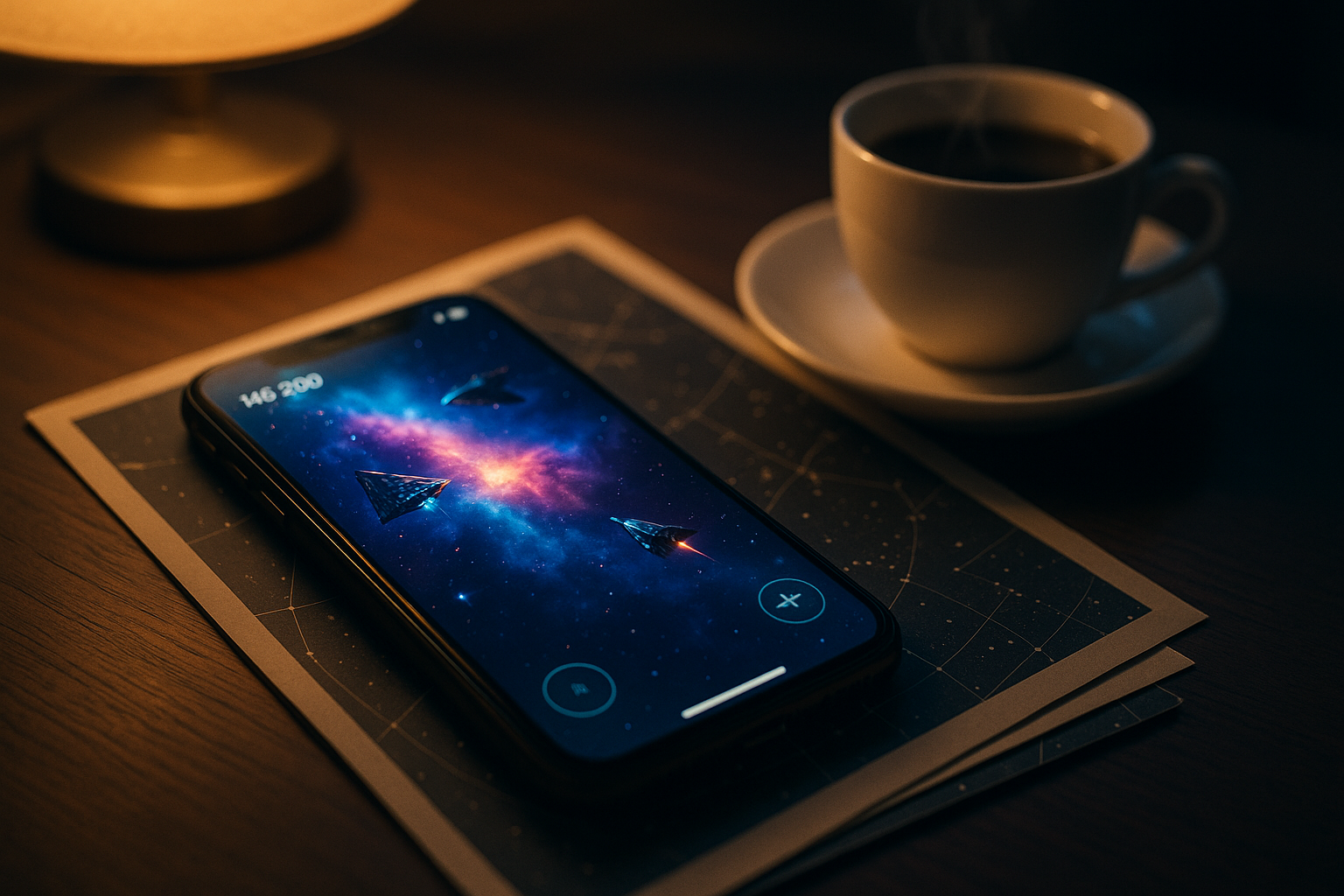
Premium Space Games for iPhone: Sci-Fi Adventures Worth Your Time
Space games on iOS occupy a strange middle ground. The App Store floods with free-to-play clickers that monetize your patience instead of your judgment. Meanwhile, genuinely craft-built premium space titles—games where you pay once and own the full experience—stay quiet on the charts, buried under algorithm noise. This article surfaces the ones that matter: space games designed with the care of a developer who respects your time and your wallet.
Why Premium Space Games Matter
The premium model—pay once, play forever, zero ads—exists on the App Store but remains uncommon. Free-to-play dominates because it scales revenue per user across millions of casual players. Premium space games follow a different path: they’re built for players who will spend 20+ hours with a single title and appreciate craft over conversion metrics.
Space as a setting compounds this advantage. Real orbital mechanics, gravitational fields, and momentum-based flight demand careful tuning. A developer can’t patch these systems with a live-ops surprise or a new cosmetic battle pass. Either the physics feel right from day one, or they don’t. Premium pricing aligns incentives: the developer’s reputation depends on getting the fundamentals correct.
The Arcade Lineage: Modern Asteroids and Descendants
The clearest thread through premium space games traces back to Asteroids (1979). That game’s genius—momentum-based movement, weapon delay, screen-wrapping space—created a design template that still works. Modern interpretations don’t just copy; they extend the formula with contemporary craft.
Asteroids: Gunner respects the lineage while adding precision. The core loop—rotate, thrust, fire—remains untouched. The physics layer underneath receives meticulous attention: asteroids fragment with realistic momentum transfer, the weapon delay forces you to lead shots rather than spray, and vector graphics keep visual noise low so you track trajectory without distraction. The frame rate stays locked at 60fps during intense action, eliminating stutters that would break momentum-based gameplay. It’s a game that trusts the player to understand orbital mechanics without a tutorial. See also iPhone Games Like Asteroids: Modern Arcade Alternatives 2026 for more arcade alternatives.
Void Descent inverts the Asteroids formula. Instead of defending a fixed position, you pilot a ship downward through an endless void, dodging obstacles and collecting power-ups. The perspective shift—vertical rather than arena-based—changes the decision loop entirely. You’re managing descent speed and lateral drift rather than rotation and thrust vectors. Yet the arcade DNA remains: no shield regeneration, no health bars, one hit and restart. The difficulty curve teaches evasion in early runs, then introduces complex obstacle patterns that reward learned responses over reflexes alone. Procedural generation ensures each run feels fresh, but the core mechanics stay consistent enough that skill compounds across sessions.
Orbital Mechanics: When Physics Becomes Gameplay
Some premium space games lean into simulation. They model gravity, orbital decay, and momentum with enough fidelity that the physics themselves become the puzzle.
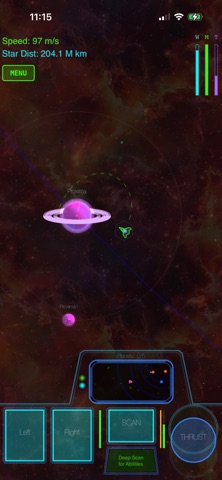
Orbits exemplifies this approach. You command a spacecraft in a system with multiple gravitational bodies. Plotting a trajectory requires reading the gravity wells, timing your thrust burns, and understanding how orbital velocity changes as you approach or retreat from a mass. The game rewards patience over reflexes. A well-timed, minimal-thrust maneuver beats frantic button-mashing. The responsive controls measure input lag in milliseconds, so your thrust inputs feel immediate even when calculating complex orbital paths. The learning curve is steep—you’ll spend the first hour failing to reach your target—but once the orbital intuition clicks, the game opens into a meditative strategy experience.
Galaximus also emphasizes orbital mechanics as a core pillar. The game models real gravitational physics, meaning that asteroids and celestial bodies exert pull on your ship. You’re not just aiming at targets; you’re calculating intercepts while gravity bends your trajectory. The arcade-action wrapper keeps the pacing tight—you’re under time pressure and managing threats—but the underlying simulation rewards players who understand physics over those who rely on twitch reflexes alone. Audio design communicates orbital state through thrust rumble and collision feedback, so you feel the gravity well pulling your ship even before you see the trajectory curve.
Narrative and Exploration: Space as Setting, Not Just Arena
Not every premium space game is pure mechanics. Some use space exploration as a frame for story, discovery, and atmosphere.
Cosmos Quest builds a narrative around deep-space exploration. You pilot a research vessel, discovering anomalies, collecting data, and uncovering fragments of a larger mystery. The hand-drawn art style—not pixel-art or vector, but genuine illustration—sets a tone distinct from arcade-action competitors. There’s no energy system, no ads, no pressure to spend beyond the initial purchase. The game unfolds at your pace. For players who want to inhabit a space setting rather than master a high-score mechanic, this is the rare premium title that delivers.
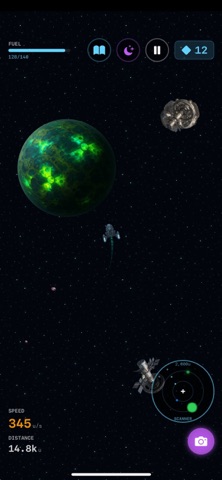
Stellar Drift takes a similar approach but leans harder into minimalism. You’re a lone ship drifting through procedurally generated space, managing fuel, collecting resources, and deciding whether to push deeper or return to safety. The aesthetic is stark—mostly black screen with white wireframe geometry—but that restraint serves the atmosphere. There’s no threat in the traditional sense; the challenge is resource management and the psychological pressure of isolation. It’s a game that respects silence and emptiness as design choices.
Craft and Attention to Detail
Premium space games, by definition, live or die on execution. There’s no live-ops roadmap to fix a broken mechanic, no cosmetic battle pass to distract from a shallow core loop. The developer’s reputation rests entirely on the craft.
This shows in small ways:
- Consistent frame rate. No stutters during intense action. Asteroids: Gunner locks at 60fps during asteroid fragmentation sequences, ensuring your aim stays true.
- Intentional difficulty curves. Early levels teach mechanics; later levels test mastery. Orbits introduces single-body gravity before adding multi-body systems, so you build orbital intuition progressively.
- Responsive controls. Input lag breaks momentum-based games. Void Descent measures control latency in milliseconds; the downward drift responds instantly to lateral input, making precise evasion possible.
- Audio design that matters. Not just background music, but sound effects that communicate game state. Galaximus uses thrust rumble and collision tones to signal gravity well proximity, so you hear orbital danger before you see it.
When you play a craft-built premium space game, you feel the difference. It’s not a revelation; it’s a relief.
Comparing Premium to Free-to-Play Space Games
The free-to-play space games on the App Store aren’t all bad. Some have genuinely interesting mechanics. But they’re structured around extracting maximum engagement and monetization per user, which creates systematic compromises.
A free-to-play space game will:
- Gate progression behind energy timers. You can play for 5 minutes, then wait 3 hours to play again. This isn’t a difficulty curve; it’s a monetization gate.
- Introduce power-creep cosmetics. A ship skin that costs money but doesn’t affect gameplay sounds harmless. In practice, it normalizes the idea that real progression requires spending.
- Push notifications relentlessly. “Your energy is full!” “A new event started!” “Your friend just beat your score!” These are engagement levers, not features.
- Monetize core mechanics. You want a bigger ship, faster reload, or better weapon? That’s a premium upgrade. The base game is playable but deliberately limited.
None of these are present in premium space games. You pay once. You own the full experience. The developer’s incentive is to make the game so good you tell your friends, not to extract maximum revenue per session.
FAQ
Are premium space games worth the upfront cost? Yes, if you play for more than an hour or two. The cost-per-hour for a well-made premium game is lower than you’d pay for a coffee. And you’re not subsidizing your play with your attention and data.
Can I play premium space games offline? Most can. Check the App Store listing, but the titles mentioned here work without a network connection. You own them; they don’t phone home.
Do premium space games get updates? Sometimes. Developers push bug fixes and occasionally add features. But updates aren’t the business model—they’re a bonus. The game is complete at launch.
What if I don’t like a premium space game I bought? The App Store allows refunds within 14 days of purchase if you haven’t used the app extensively. Read reviews from multiple sources before buying: - TouchArcade - r/iosgaming - AppShopper
Are there free-to-play space games worth playing? A few. But they come with the caveats above: energy timers, ads, and monetization pressure. If you want to avoid all three, premium is the only honest choice.
Related Reading
Best Retro-Inspired Games for iPhone: Nostalgia Without Compromise
Best Indie Space Shooters for iPhone 2026
The Bottom Line
Premium space games represent a different philosophy. They’re built for players who value craft, who have time to develop skill, and who prefer to pay once and own the experience outright. The App Store doesn’t promote them the way it promotes free-to-play clickers. But if you seek them out, you’ll find games that respect your intelligence and your time.
Start with one that matches your play style—arcade action, orbital mechanics, or exploration—and give it at least an hour. The depth reveals itself slowly. That’s not a bug; it’s how premium design works.